Table of Contents (click to expand)
No, the continents will not sink into magma. The continents do not float on water or on a sea of lava either; they sit on top of Earth’s mantle, which is solid rock. That mantle flows extremely slowly under heat and pressure, which lets the tectonic plates drift, but it never actually melts beneath the crust.
You may recall from your high school science class that Earth is made of three layers, namely the crust, mantle and core. The outer part of the core is molten metal, and the layer just above it (the mantle) is searing hot rock. So is it possible that the continents, which are basically perched over all that heat, might one day sink into it?
Let’s investigate this terrifying prospect!
Layers Of Earth
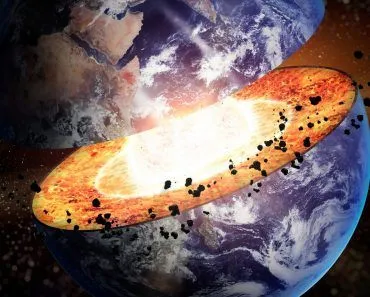
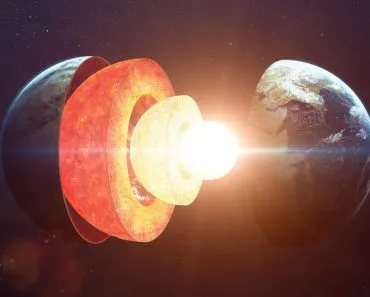
The main layers of our blue dot include the crust, mantle, and core.
The crust is the outermost layer of the Earth. It is mainly made of three types of rocks: igneous rocks (formed from the solidification of lava), sedimentary rocks (formed from the deposition of particles and minerals), and metamorphic rocks (formed from the transformation of igneous and sedimentary rocks under heat and pressure). The crust is home to rocks, soil, and the seafloor, which make up the familiar environment in which we live.
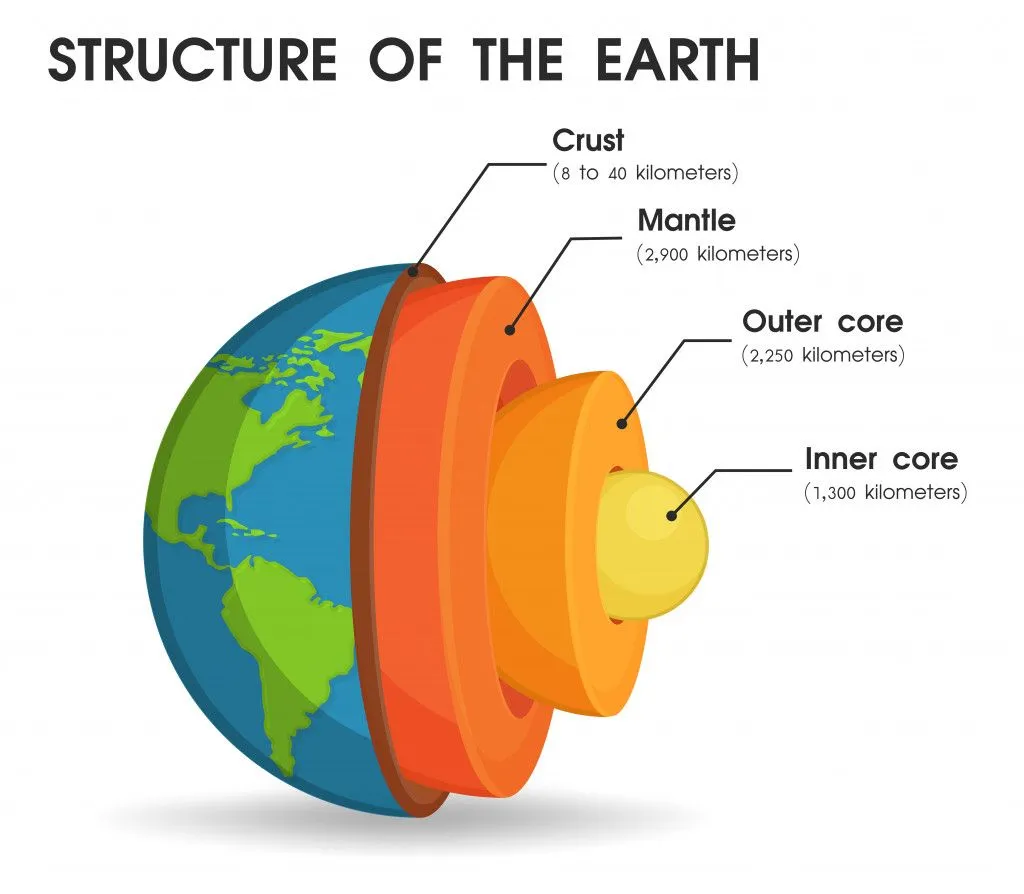
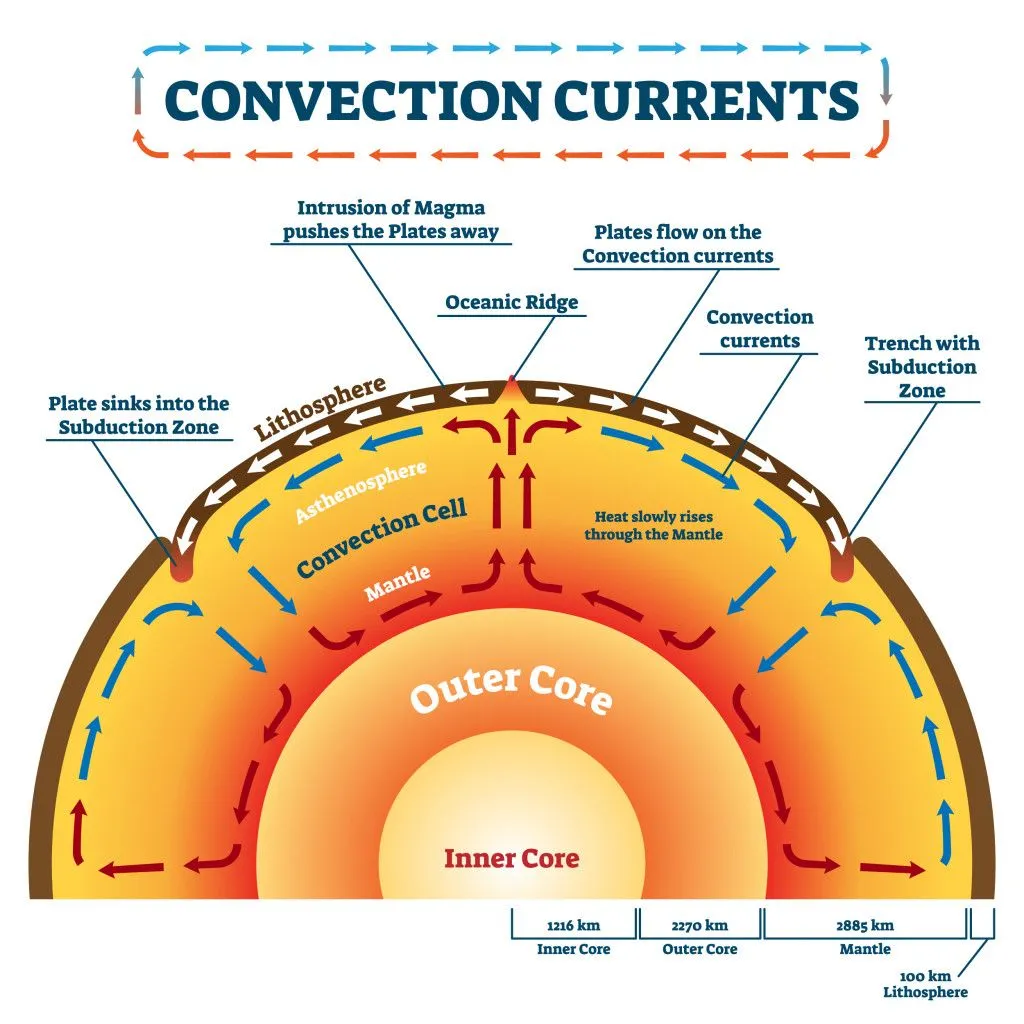
The next layer is the mantle. Sitting just below the crust, it is made of silicate rocks rich in iron and magnesium (mostly the mineral peridotite). Most people picture the mantle as lava, but it is actually solid rock. It just ‘flows’ extremely slowly under tremendous pressure and heat, the way a glacier flows even though ice is solid.
The innermost layer of the Earth is called the core. This layer is split into the outer core (fluid) and the inner core (solid). The outer core is a churning ocean of liquid iron and nickel (with a sprinkle of lighter elements like sulfur and oxygen) at roughly 4,000 to 5,500 °C (7,200 to 9,900 °F), which is about as hot as the Sun’s surface. The inner core is a solid ball of mostly iron and nickel. You might wonder why this is solid, whereas the outer core is liquid. Well, the pressure in the Earth’s inner core is so enormous that, despite the even higher temperatures, the metal cannot melt.
From the information above, it can be deduced that deep below our feet are endless kilometers of lava and extremely hot rocks. Does that mean we’re floating on these layers?! Are the countries and continents really floating?
How Do The Continents Float?
There is no sea of molten rock upon which the continents float. The mantle is a substantial layer of solid rock that lies under the continental and oceanic crusts.
The outer core (a layer of liquid iron and nickel, not liquid rock) begins about 2,900 km (1,800 miles) under the surface of the Earth and is sealed off from us by the thick solid mantle above it.
Given that knowledge, why do tectonic plates move at all?
The tectonic plates drift because they’re perched on a layer of solid rock that is just ductile enough to flow extremely slowly, almost like a liquid, under convective heat (the flow of a fluid carrying heat from one point to another).
Now, where does lava come from? Isn’t lava just molten rocks? Does the lava from volcanoes travel all the way up from Earth’s outer core?
Well, no.
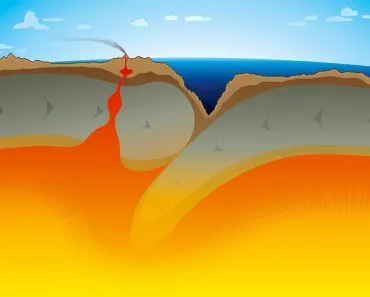
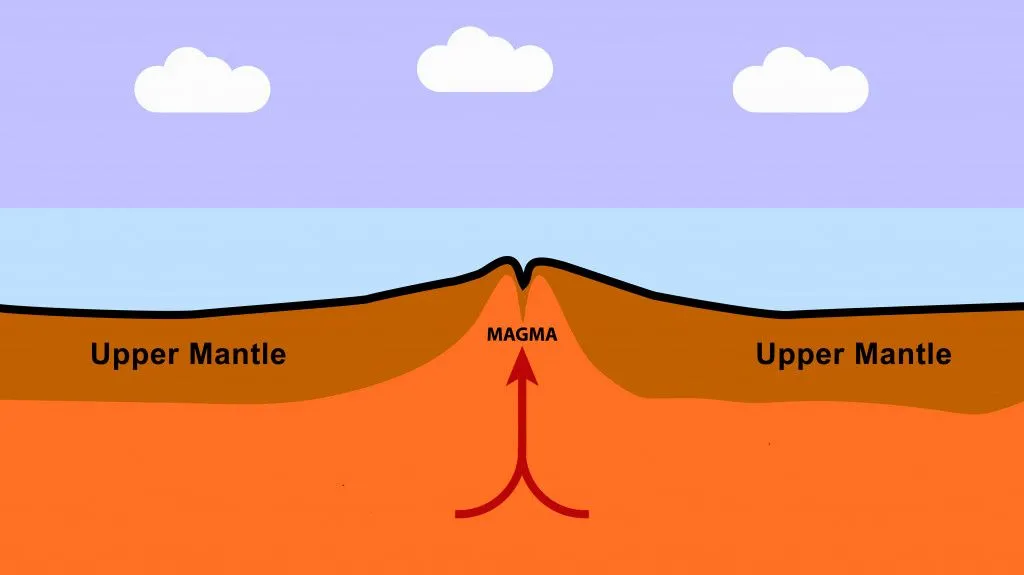
Instead of emerging from a vast ocean of magma, the molten lava that spews from volcanoes is formed just beneath the volcano. When two tectonic plates come into contact, one may be pushed under the other plate, creating magma, as pressure changes cause the rock to melt. As it does so, the subducted plate pushes water into the upper mantle, lowering the pressure to the point where the rock can melt. Magma forms in specific areas of the mantle near subduction zones. Volcanoes can then be produced as the mantle rises.
What Are Subduction Zones?
If either or both of the colliding tectonic plates are made of oceanic lithosphere, a subduction zone develops at the boundary. The denser oceanic plate slides back down into the mantle it once came from. Basically, the cold oceanic lithosphere gets recycled.
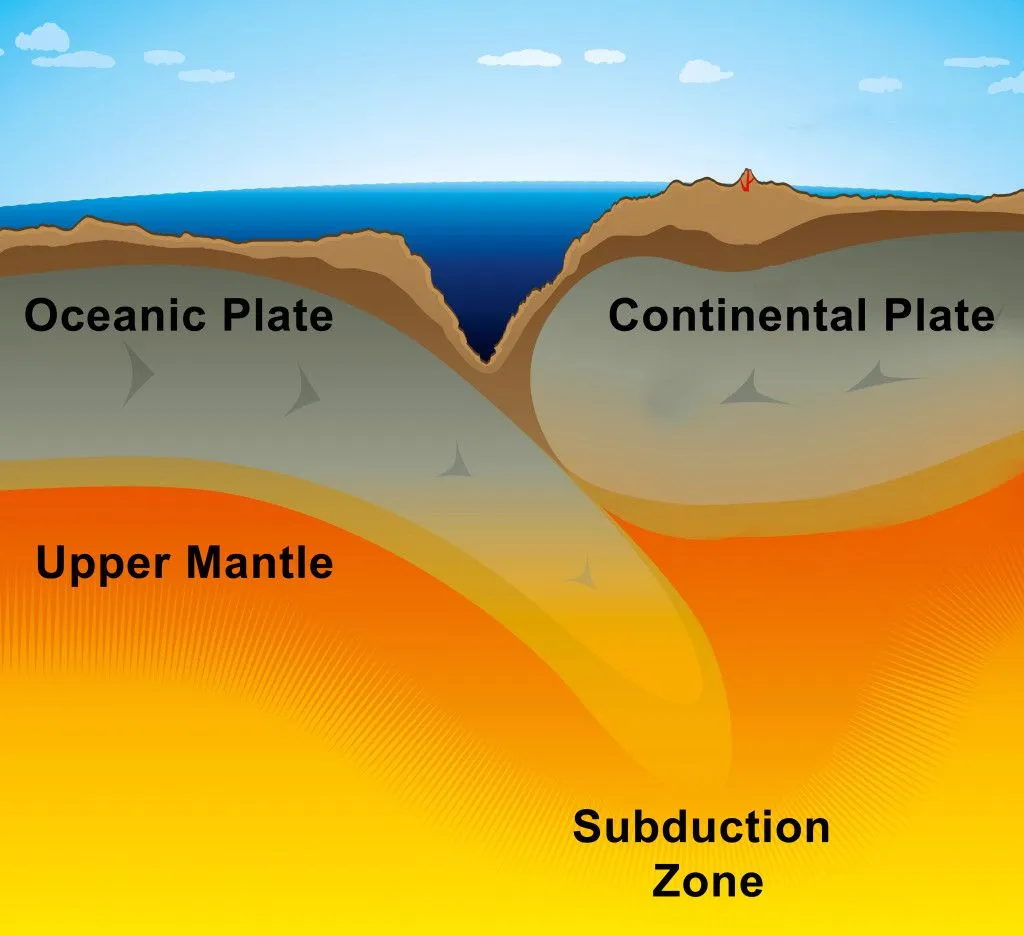
The critical idea here is that magma does not exist as a vast sea of lava immediately beneath the crust, but instead forms in discrete pockets due to tectonic plate movement.
However, if the rocks in the magma experience heat convection, can the crusts also be involved in this?
Can The Continents Really Sink?
Continental and oceanic crusts differ in mineral composition, affecting a number of their physical properties, such as density.
The oceanic crust is made of basalt. The underlying mantle partly melts, then crystallizes, forming the rock known as basalt.
Basalt has a density of around 3 grams per cubic centimeter. Peridotite, the material that makes up the mantle, has a density of roughly 3.3 grams per cubic centimeter. The oceanic crust will therefore be on top of the mantle when it partially melts and re-crystallizes as basalt.
Because continental crust is created through several cycles of partial melting, it has an even lower density than oceanic crust, roughly 2.7 grams per cubic centimeter.
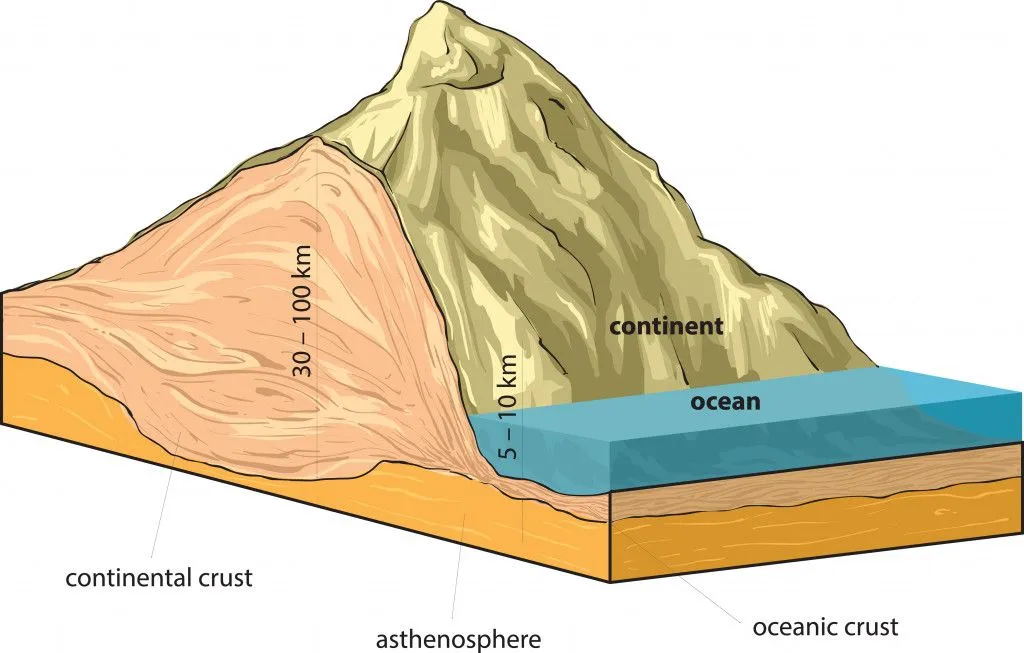
The oceanic plate, however, does experience subduction because it is denser. In other words, the oceanic plate dips beneath the continental plate at the boundary. Not to worry though, this is the slow churn of plate tectonics over millions of years, and new oceanic crust is constantly being created at mid-ocean ridges to replace what gets recycled.
All in all, neither continental nor oceanic crust can sink into magma, so you can safely remove that from your list of existential worries!
References (click to expand)
- Earth's Interior. National Geographic
- Inside the Earth - This Dynamic Earth. U.S. Geological Survey
- What are metamorphic rocks? | U.S. Geological Survey. The United States Geological Survey
- What keeps the continents floating on a sea of molten rock?. West Texas A&M University
- What are the oceanic and continental crusts made out of and how did they "float" on the asthenosphere instead of sinking? - UCSB Science Line. The University of California, Santa Barbara
- Core. National Geographic Education
- Subduction Zones. Columbia University