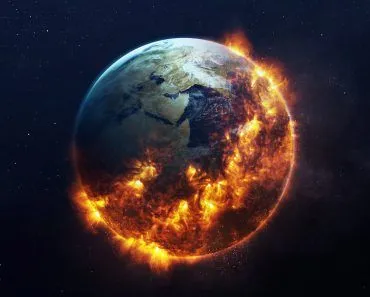
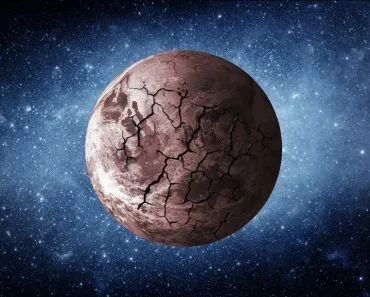
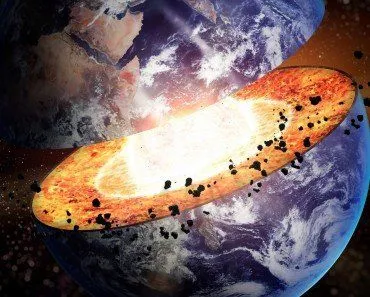
If Earth’s land and oceans switched, the planet would heat up and the climate would be far more extreme, not more moderate. Without oceans to buffer temperature, days would be scorching and nights freezing, rainfall would collapse, atmospheric oxygen and CO2 would shift, and most life as we know it would not survive.
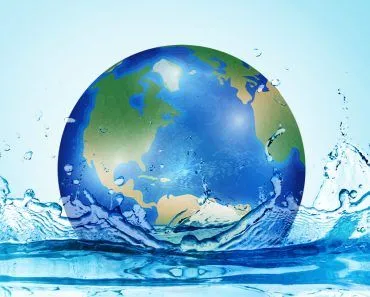
The Earth’s surface is composed of roughly 71% water and 29% land, where the oceans hold almost 97% of all the water resources on the planet. The Earth would have been drastically different if this ratio had been reversed, with a solid landmass making up most of Earth’s surface.
Also, for this hypothetical discussion, let’s assume that everything would be opposite, which means that the high landmasses would be turned into deep trenches. The differences would be innumerable, with the Earth supporting a totally different form of life, if life was even possible! With this strange premise firmly in our minds, let’s see what living on such a planet would entail.
Is There More Land Or Water On Earth?
There is far more water than land. About 71% of Earth’s surface is covered by ocean, leaving only roughly 29% as land, so for every square kilometer of continent there are nearly two and a half square kilometers of sea. The contrast is even starker when you weigh the water itself: the oceans hold close to 97% of all the water on the planet, while every river, lake, glacier, and underground aquifer combined makes up the small remainder. That is why Earth looks blue from space, and why the famous “Blue Marble” photograph below is mostly ocean with continents scattered across it.

This lopsided split is not a cosmetic detail; it is the engine behind almost everything in this article. Because water has such a high heat capacity and covers so much of the globe, it acts as a giant thermostat, soaking up sunlight, redistributing heat, and feeding the rain that falls over land. Flip the ratio so that land dominates and water becomes the rare exception, and you pull out the single biggest stabilizer the planet has. Everything that follows, from runaway temperatures to a collapsing water cycle, traces back to this one number: most of Earth is, and has always been, ocean.
The Temperature Of The Earth Would Increase
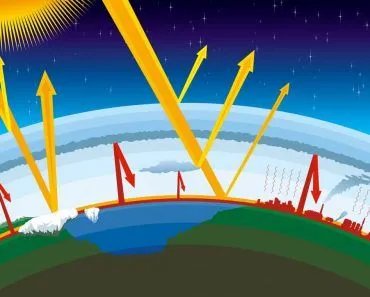
The oceans play a pivotal role in decreasing Earth’s temperature. Huge amounts of water evaporate from oceans, thereby preventing a drastic rise in Earth’s temperature during each day. If most of the surface was land, however, then the land would be extremely hot, turning most of it into deserts, while the ice caps would grow smaller, flooding all the nearby land. Oceans moderate temperature, since water has a high specific heat capacity, which means that it absorbs more heat without a significant rise in temperature, unlike the land. Without such huge water reservoirs, the temperature rise of Earth would be far from gradual. Another thing that could happen is a decrease in greenhouse gas absorption by the oceans. This means that oceans, which are natural carbon dioxide sinks, would be unable to absorb all the extra greenhouse gases, thus leading to a highly saturated atmosphere. Global warming would speed up and Earth’s temperature would rise, similar to Venus, where global warming is abundant.
The Climate Would Be Very Erratic
If more of Earth was covered by land than water, the global climate would be far more extreme, not more moderate. Oceans are the planet’s biggest thermal flywheel: water’s specific heat capacity is roughly four times that of dry soil, so today’s oceans soak up summer heat and slowly release it through winter, keeping coastal climates mild and damping out temperature swings. Remove most of that water and you remove the brake. Land heats up and cools down quickly, so days would be scorching, nights would be freezing, and seasons would swing harder. The most continental interiors today (think Siberia or central Australia) already see swings of 50 °C between summer and winter; on a mostly-land Earth, that kind of swing would be the rule, not the exception.
Storms would change too. Hurricanes and monsoons draw their energy from warm ocean water, and a much smaller ocean would feed fewer of them. But the remaining basins, hotter and saltier, could spin up nastier individual storms. The wind belts and jet streams would reorganize around the new land masses, and rainfall would be patchy: a few wet regions near the leftover seas, vast dry interiors everywhere else.
Composition Of The Atmosphere
If Earth were mostly covered with land, atmospheric water would crash. Today, oceans account for roughly 86% of global evaporation and feed almost all of the rain that falls anywhere on the planet. Shrink the oceans and you shrink the water-vapor budget that drives the entire hydrological cycle. The atmosphere would become drier, and clouds would form only over the few remaining seas and lakes. Far inland, the air would feel like a desert: low humidity, dust, and sharp diurnal temperature swings.
Oxygen would take a hit, too. Marine phytoplankton produce somewhere between 50% and 80% of the oxygen we breathe, and they live in the surface layer of the oceans. With far less ocean to sit in, that production would collapse, and atmospheric oxygen would gradually decline over geological timescales. At the same time, the oceans’ role as a CO2 sink would weaken; today the oceans absorb roughly a quarter of the CO2 humans emit. With that buffer gone, atmospheric CO2 would build up faster, pulling the climate even further from anything we’d recognize.
Effect On Life
Life on a mostly-land Earth would look unrecognizable. The oceans currently host an astonishing share of the biosphere, from microbial mats to coral reefs to the great whales, and they form the base of the food chain for most marine and many terrestrial species. Lose the oceans and you lose most of that biomass overnight. The few remaining seas would become refuges, and species that depended on the wider ocean (tuna, sharks, baleen whales) would not survive the contraction.
On land, things wouldn’t be much easier. Plants and animals are tuned to today’s rainfall, humidity, and temperature ranges. A drier, more extreme climate would favor desert-adapted organisms (succulents, reptiles, drought-tolerant grasses) and push everyone else toward extinction. Human agriculture, which depends on dependable monsoons, snowmelt, and groundwater, would buckle long before the rest of the ecosystem.
Survival Would Be Difficult
For people, the bottleneck would be water itself. Today, freshwater is already unevenly distributed; on a mostly-land planet it would be vanishingly rare in most places. Civilizations would cluster around the remaining seas, big rivers, and aquifers (much as Egypt clustered along the Nile, but on a planetary scale). Long-distance trade would shift almost entirely to land and air, since marine shipping carries about 80% of world trade today and would lose most of its routes.
Food security would be the next failure point. Roughly 3 billion people rely on seafood as a major protein source, and another large share depends on rain-fed agriculture in regions that would now be effectively desert. Combine the loss of fisheries, the collapse of arable land, and the more violent climate, and you have a recipe for mass migration and dieback, not gradual adaptation. The optimistic line above (that life would find a way) still holds at the level of microbes and hardy extremophiles. For complex life, and especially for us, this is not a planet we would inherit comfortably.
What If The Oceans Stopped Moving?
A close cousin of the “no oceans” thought experiment is a subtler one: keep the water, but switch off its circulation. Today the seas are never still. A planet-spanning loop called the global ocean conveyor belt (or thermohaline circulation, from thermo for heat and haline for salt) carries warm surface water toward the poles, where it cools, grows saltier and denser as sea ice forms, and sinks toward the seafloor before creeping back toward the equator. According to NOAA, any single parcel of water takes roughly 1,000 years to complete one circuit, moving more than 100 times the flow of the Amazon River at just a few centimeters per second.

That slow march is doing a lot of quiet work. The conveyor hauls heat from the tropics to higher latitudes, which is a big part of why western Europe is far milder than other places at the same distance from the equator. If the currents stalled, that heat delivery would stop. NOAA notes that a shutdown could bring drastic cooling to Europe, and knock-on changes worldwide, as the warmth normally ferried north simply stays in the tropics. The poles would chill, the tropics would bake, and the temperature gap between them, which drives our winds and weather, would widen. So even an Earth that kept all its water but lost its currents would end up with a harsher, more divided climate, for many of the same reasons a mostly-land Earth would: take away the ocean’s ability to move heat around, and the planet loses its thermostat.
Economy and Civilizations
The absence of natural barriers, like oceans, would result in a single large landmass. This large landmass would likely lead to more nations and more conflicts, as a united government would be unable to govern such a large area. Civilizations have historically flourished near water sources due to trade and easy accessibility, so conflicts would almost certainly arise due to water scarcity.
Pangea: The world as it was in the beginning
On the upside, there would be ease of connectivity between places through land and air travel. However, marine transport would be hit the hardest, as there would be limited use for water transport. Countries that depend on seafood and aquaculture would go bankrupt. Since life near oceans would be so scarce, people living there would lose their major food source and likely starve. Even in the continental areas, agriculture depends on water being abundant. If proper water demands couldn’t be met, it is highly probable that the human race would go extinct.
Life Always Finds A Way
References (click to expand)
- What role does the ocean play in the weather?. The National Ocean Service
- How Long Can Oceans Continue To Absorb Earth's Excess Heat? Yale Environment 360
- Oceans Found to Absorb Half of All Man-Made Carbon Dioxide - news.nationalgeographic.com
- NOAA, partners: Earth’s oceans and ecosystems still absorbing about half the greenhouse gases emitted by people - www.noaanews.noaa.gov:80
- Save the Plankton, Breathe Freely | National Geographic Society. National Geographic
- Ocean's Oxygen Starts Running Low. Scientific American.
- Marine energy - Wikipedia. Wikipedia
- How Much Water is There on Earth? U.S. Geological Survey
- How much water is in the ocean? NOAA National Ocean Service
- What is the global ocean conveyor belt? NOAA National Ocean Service
- The Global Conveyor Belt: Effects of Climate Change. NOAA National Ocean Service