Table of Contents (click to expand)
Humans cannot live underwater unassisted, because we have no gills and our lungs collapse under deep-ocean pressure. With pressurized habitats like Aquarius Reef Base off Florida, scientists have stayed underwater for up to 31 days. The real limits aren’t breathing or drowning, but pressure, decompression sickness (the bends), and gas supply.
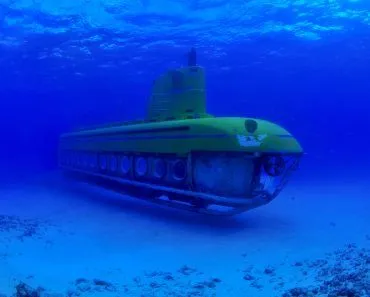
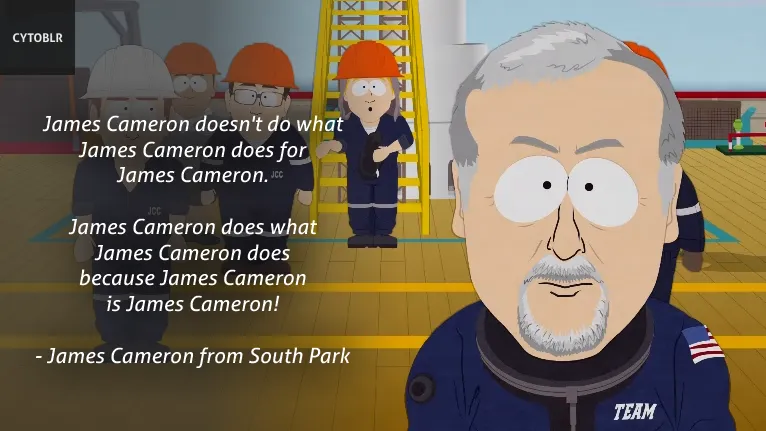
Let me narrow this question down a bit first, as the initial reaction from almost all of you is obviously….NO. So let’s break it down. Can we go really deep into the ocean? Yes, we can. James Cameron (yes, the “Titanic” guy) became the first person to descend solo to the bottom of the Mariana Trench in 2012. Before him, only Jacques Piccard and Don Walsh had ever made it that deep, descending together in the bathyscaphe Trieste back in 1960. Since 2019, with billionaire-funded expeditions on Victor Vescovo’s submersible Limiting Factor, around two dozen more people have made the trip.
Can we stay underwater for a long time? Yes, we can. Fabien Cousteau, grandson of the famous explorer Jacques Cousteau, managed to live 31 days in the undersea laboratory Aquarius in 2014 (the aptly-named “Mission 31”), setting a new record for the longest stay aboard the habitat. However, can we live underwater without utilizing any expensive equipment and a Hollywood-size budget? Probably not.
Shrimps And Other Mysteries
What must be mentioned here is the absolute disregard we seem to have for the ocean. More than 80% of the ocean remains unmapped, unobserved, and unexplored, according to NOAA. As of 2025, only about 27% of the global seafloor had been mapped in modern detail (per the Seabed 2030 project). We know more about our solar system than about our own planet’s major bodies of water! In fact, we have better maps of Mars than we have of our own ocean floor. We hardly know anything about our own Blue Planet, and funding never seems to land on an oceanographer’s front door. Apparently, governments aren’t curious about the potential of something that covers 71% of our planet.

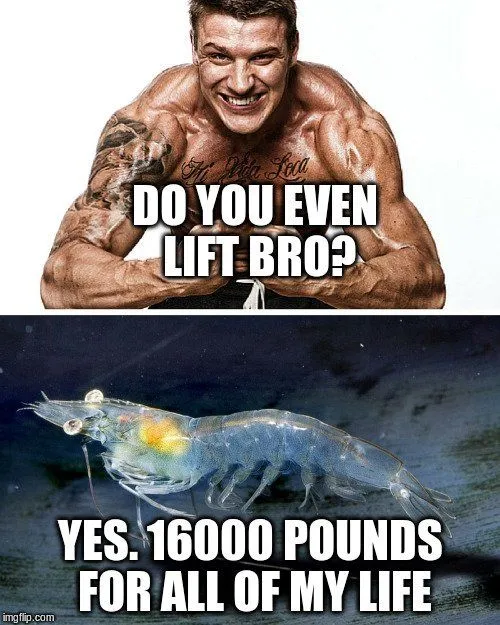
It has also been claimed that we don’t even know about most of the creatures that thrive in the depths of the ocean. Yes, they do exist – a whole range of creatures that we have never seen or studied. Explorers who went to the bottom of the roughly 6.8-mile deep (10,935 meters, per Vescovo’s 2020 survey) Mariana Trench have noted colonies of amphipods – creatures that bear a resemblance to shrimps, but are transparent.
Therefore, if tiny shrimps can live down there, we can too, right? Nope. You see, it isn’t breathing underwater that would be a problem. Drowning is something easily avoidable with the technology we have for scuba divers and other rescue teams. Pressure is what would really kill you. It would kill you quickly enough, but not in a pleasant or pretty way. For instance, those tiny shrimps that live at the bottom of the ocean might seem unassuming to you, but they are carrying on their miniature shoulders a pressure of 16,000 pounds per square inch (1125 kg per square centimeter). Furthermore, they’re achieving this without a shell or any kind of protection to boot. Pretty badass, huh?
Diving Danger
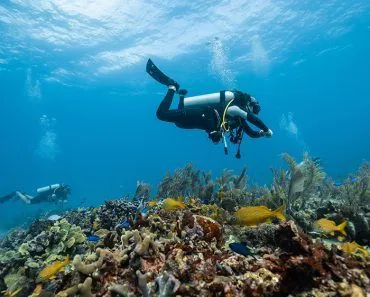
Water kills people with its density. In fact, at sea level, it is roughly 800 times denser than air! If you rose to a height of 150 meters, which is around half of the Eiffel Tower, the change in air pressure would hardly be discernible to you. However, if you dove the same depth underwater, your veins would collapse and your lungs would compress to the size of a Coke can. Not that this has ever stopped free divers from achieving this feat. Apparently, having your organs deformed is an exhilarating experience. However, even to reach such depths, divers need weights to drag them down very quickly. The deepest anyone has ever gone on a single breath using only their own swimming power (a discipline called constant weight) is 133 meters – a record set by Russia’s Alexey Molchanov in 2024. With the help of a weighted sled (an event called no-limits apnea, since retired by AIDA as too dangerous), Austria’s Herbert Nitsch dropped to 253.2 meters in 2012, lingered for about a nanosecond, and barely made it back up.
The ocean floor, on average, is about 2.3 miles (3,682 meters) below sea level (per NOAA). The pressure at this point is equivalent to being underneath a stack of 14 loaded cement trucks. Most people would think that humans would get squashed to a pulp under such high water pressure, but that is not the case. We are mostly composed of water ourselves, so the body would basically remain at the same pressure. It is the gases in our lungs, however, that would cause us trouble. These gases do compress and would kill you without a doubt.
The Bends
However, the real terror lies not in diving great depths, but in coming back up. To start with, the air we breathe is about 78% nitrogen. When you put the human body under pressure, this nitrogen would transform into tiny bubbles and be absorbed by tissues and blood. If the pressure is changed too rapidly – for example, during a quick ascent to the surface – the nitrogen bubbles would fizz up like soda. Blood would clog, cells would be deprived of oxygen, and the pain caused would be so excruciating that the sufferers may even pass out from the pain. This condition has a dreaded name that anyone who has ever gone a dive will recognize – the Bends.

There are only two strategies to avoid the Bends. One would be the route taken by free divers – very short exposure to the changes in pressure. The other technique would be that of oceanographers that work in undersea laboratories, such as the Aquarius. They ascend slowly enough to let the nitrogen bubbles dissipate harmlessly. Scientists work for weeks at a stretch in Aquarius, so they take their time while ascending. About 16 hours of their time, to be more precise.
How Long Can A Human Survive Underwater?
This is the question most of you actually came here to ask, and the honest answer is: not very long. Strip away the scuba tank and you are running purely on the oxygen already sitting in your lungs and blood. For most people, that buys somewhere between 30 and 90 seconds before the urge to breathe becomes impossible to ignore. With a little practice, a healthy person can stretch that to a few minutes, but the clock never really stops ticking.

Trained freedivers can take the body to almost ridiculous extremes. The longest anyone has ever held their breath on a single lungful of ordinary air is 11 minutes and 35 seconds, a static apnea record set by France's Stéphane Mifsud in 2009 and ratified by the freediving federation AIDA. You may have seen even wilder numbers floating around, such as Croatia's Budimir Šobat clocking 24 minutes and 37 seconds in 2021, with the mark later pushed past 29 minutes. Those belong to a separate category, though, in which the diver spends up to half an hour breathing pure oxygen beforehand, loading the body with far more oxygen than a normal breath ever could.
For the rest of us, the real hazard is that breath-holding underwater can switch off the lights with no warning at all, a phenomenon called shallow-water or hypoxic blackout. During breath-holding games, fainting can strike within about two minutes, and once you are unconscious below the surface the water finishes the job. Even in an ordinary drowning, rescuers have only roughly six to eight minutes before the brain suffers severe, irreversible damage from oxygen starvation. So while "surviving" on a held breath is measured in minutes for the elite and seconds for everyone else, genuinely living underwater is a wholly different challenge.
Will Humans Ever Live Underwater?
Here is the surprising part: we already have, in short bursts. Since the 1960s, humans have been moving into purpose-built undersea habitats, sealed steel rooms kept at a pressure that holds the water out and lets aquanauts come and go through an open hatch in the floor. Jacques Cousteau led the charge with his Conshelf experiments. Conshelf I (1962) parked two oceanauts 10 meters (about 33 feet) down off Marseille for a week, and the more ambitious Conshelf II (1963) housed half a dozen of them at the bottom of the Red Sea for a full month.

The US Navy ran its own program, SEALAB, through the same decade, pushing teams past 60 meters (around 200 feet). It was risky work: SEALAB III was scrapped in 1969 after an aquanaut died during the preparations. Today only one of these stations is left standing. Aquarius Reef Base rests on the seafloor 19 meters (62 feet) down, about 8.7 kilometers (5.4 miles) off Key Largo, Florida, and is the world's only operational undersea research laboratory. It is where Fabien Cousteau, Jacques' grandson, logged his record-setting 31-day stay in 2014.
So why aren't there sprawling underwater cities yet? The same villains from earlier in this article get in the way: pressure, gas supply, and the ever-present threat of the bends every time someone heads back to the surface. Building a structure that can hold back the crushing weight of the sea is brutally expensive, and the deeper you go, the steeper the bill (a problem submarine engineers know all too well, which is why submarines can implode when their hulls fail). The dream isn't dead, though. Fabien Cousteau is now planning Proteus, a 4,000-square-foot, two-story habitat off Curaçao roughly ten times the size of Aquarius, which he likes to call the "International Space Station of the sea." For now it lives in design renderings, but it shows that the idea of actually living beneath the waves refuses to sink.

The ocean is an incredibly mysterious place, and when it comes to actually studying it, we have hardly scratched the surface. Therefore, anyone who claims that exploration of the Earth is no longer necessary, as all the corners of the map have been filled in – think again!
References (click to expand)
- How much of the ocean have we explored? NOAA Ocean Exploration
- How deep is the ocean? NOAA National Ocean Service
- Aquarius Reef Base. FIU Institute of Environment
- Mariana Trench. Wikipedia
- Mission 31 - Fabien Cousteau. Wikipedia
- Underwater habitat. Wikipedia
- Will we ever... live in underwater cities? BBC Future
- Freediving - static apnea (men). Guinness World Records
- 56-year-old freediver holds breath for almost 25 minutes. Guinness World Records
- The Limits of Breath Holding. Scientific American
- Underwater breath-holding challenges may cause drowning. CHOC
- Jacques Cousteau's Grandson Wants to Build the International Space Station of the Sea. Smithsonian Magazine