Dimples are universally considered a physically attractive feature. Contrary to this positive perception, it actually results from a genetic defect that gives rise to a double or bifid zygomaticus muscle underlying the cheeks.
Male leads in rom-coms are often seen flashing their signature dimples when they smile charmingly at their leading lady. No one can forget the charm of Hugh Grant’s dimples in rom-coms like Bridget Jones’s Diary and Notting Hill!
Fans of the most popular boyband in the world – BTS, are mesmerized by the dimples of RM, the group’s leader – who even wrote a song (called ‘Dimple’), where he calls it ‘a kiss on the cheek left by a fairy’.
Men also love their dimpled celebrity crushes, from Miranda Kerr to Rachel McAdams. Fans of these celebrities swear by the magic of their trademark dimpled smiles.
Dimples are often viewed as a physically attractive feature by society, irrespective of gender. Why is it that not everyone has dimples? What are dimples anyway? Are they hereditary, and if yes, how are they inherited?
What Are Dimples?
A dimple simply means a depression or indentation on the human body. They come in different types based on their anatomical location. For example, fovea mentalis is a chin dimple, whereas fossa lumbales laterales refers to dimples on the back.

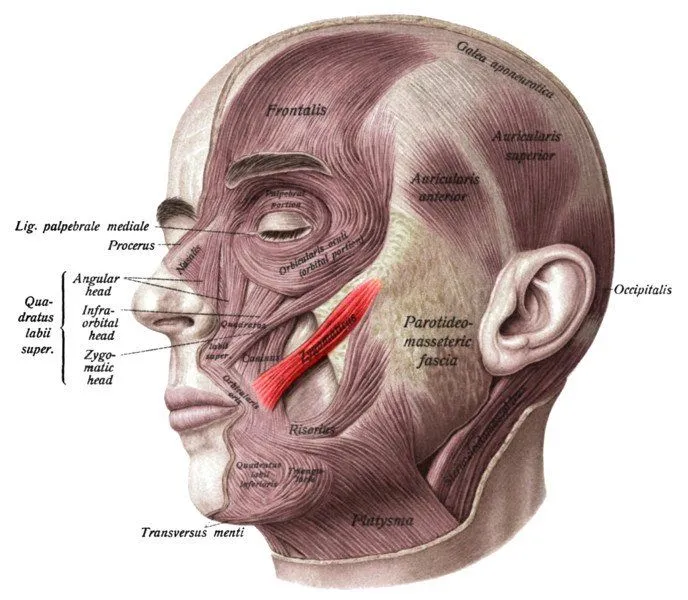
However, the term dimple is most commonly used to refer to facial dimples, or fovea buccalis. These occur in both genders, either unilaterally or bilaterally. Anatomically, these occur either due to a double or bifid zygomaticus major muscle on the face.
Why is this visible only when a person smiles? When the person smiles, the muscle pulls the skin inwards, revealing a pit in the middle where there is no underlying muscle. Plainly speaking, dimples are simply anatomical defects that occur in facial muscles.
Are Dimples a Birth Defect, Deformity, or Disability?
This is the question most people are really asking when they look up dimples, and the word 'defect' can sound alarming. In medicine, though, the terms birth defect, deformity, and disability each mean something quite specific.

The World Health Organization defines a birth defect, or congenital anomaly, as a structural or functional abnormality that arises during life in the womb and carries genuine medical consequences. These are conditions that can impair how the body works, may need medical or surgical treatment, and can contribute to long-term disability. That is a high bar, and a dimple clears none of it.
A cheek dimple does not interfere with how your face moves, eats, or expresses emotion. It needs no treatment, causes no pain, and signals no hidden health problem. The double or bifid zygomaticus major muscle behind it is simply a common anatomical variation found in plenty of perfectly healthy people. In this sense, the word 'defect' is being used loosely. It means only that the muscle developed differently from the textbook single band, not that anything has gone wrong.
So, strictly speaking, dimples are neither a birth defect nor a deformity nor a disability. They belong with the other harmless inherited quirks of human anatomy, such as a widow's peak or attached earlobes. If anything, they are a charming reminder of how much natural variation hides inside an ordinary smile.
How Do Dimples Form, and Why Can They Come and Go?
To see where a dimple comes from, we have to go back to the womb. As an embryo develops, the muscles of the face take shape out of connective tissue. In most people, the zygomaticus major grows as a single continuous band that runs from the cheekbone down to the corner of the mouth. In people who will have dimples, this muscle instead develops in a double, or bifid, form, splitting into two bundles with a small gap between them.
Some fibers of the lower bundle attach directly to the underside of the skin rather than to bone or other muscle. When you smile and the zygomaticus major contracts, it tugs the skin inward at that anchoring point, creating the small pit we call a dimple. At rest there is nothing pulling on the skin, which is why the dimple disappears the instant you stop smiling.
Dimples are not always a fixed, lifelong feature. Babies and young children often show them partly because of the rounder cushion of fat in their cheeks, and some of these early dimples fade as the face lengthens and slims with age. Now and then, a dimple even appears later in life. This habit of coming and going is one reason geneticists describe dimples as an 'irregular dominant' trait rather than a cleanly inherited one, a nuance we dig into in our look at why some people have dimples.
How Are Dimples Inherited?
We have seen how dimples are minor physical defects in the muscles, but how are these inherited?
Dimples are usually described as following an autosomal dominant form of inheritance, although geneticists more cautiously call them an 'irregular dominant' trait, because some dimpled children appear from non-dimpled parents and some dimples fade as the face matures.
Inheritance of autosomal traits does not depend on the gender of the parent or offspring, as opposed to sex-linked inheritance. A dominant trait shows up in anyone who carries even a single copy of the underlying gene, whereas a recessive trait only shows up if both copies of the gene (one from each parent) are recessive.
This means that this trait is located in non-sex chromosomes and is always visible in anyone who carries even one copy of the gene. Therefore, it takes only one parent (irrespective of gender) with dimples for it to be inherited by the offspring. However, the probability of inheritance depends on the genetic makeup of the dimpled parent.
To understand this, we need to delve deeper into the genetic makeup of the parents and this trait’s inheritance using a Punnett Square, which helps to visualize the possible combinations of the genes in the offspring.
Consider a dimpled parent – Dd, with one copy of the gene for dimples – D and another parent with no dimple gene – dd. Their offspring will end up with two genes that are jumbled combinations of the parental genes. This means that 2 of the 4 combinations will contain ‘D’, the dimple gene, meaning that half the progeny will inherit dimples.
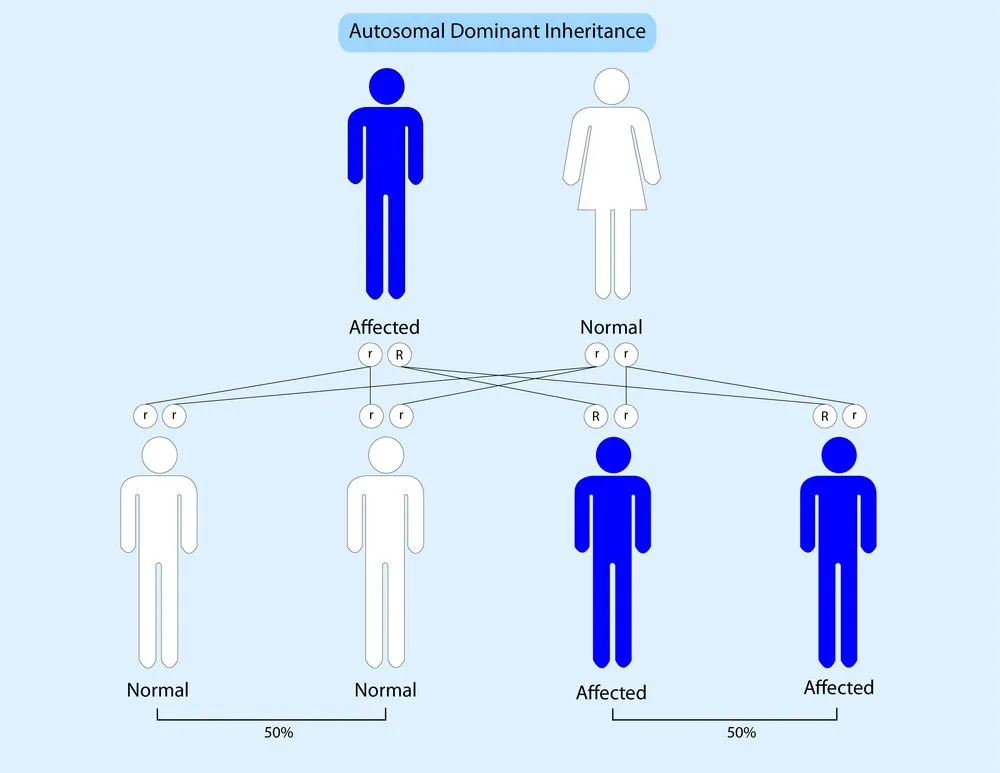
What would have happened if the parent with dimples had two copies of the defective gene ‘D’? If such a parent DD and a parent with no dimples dd have children, all children end up with the same combination – Dd, which means that they will inherit dimples at a chance of one hundred percent. Therefore, the chances of inheriting dimples are higher if the dimpled parent contains two copies of the dimple gene.
There are notable examples of the inheritance of dimples in public view. For example, all three children born to a “dimpled” Jennifer Garner and “non-dimpled” Ben Affleck have dimples! Since it’s a dominant trait, although one parent, Ben Affleck, doesn’t have dimples, all of their children inherited it. Just one copy of the defective gene, from Jennifer Garner, resulted in the successful inheritance of dimples in their two daughters and one son.
The gene responsible for facial dimples is said to be carried by chromosome 5, and it influences the formation of connective tissue during the development of the embryo. Inheriting a single copy of the gene will cause a defective zygomaticus major muscle to develop, resulting in the formation of dimples. Therefore, dimples are minor genetic defects.
Artificial Dimples
Dimples are viewed as physically attractive traits across cultures. Chinese culture views them as a symbol of good luck, and Arabian culture views them as a mark of beauty. Due to this, many people request plastic surgeons to create them! These surgeons create dimples by making scars in the dermis in the face and scraping the muscular attachment away in the region. This will result in the skin caving in when the muscle is engaged in a smile, revealing natural-looking dimples!
Conclusion
Dimples are considered a physically attractive feature across many cultures. However, it is not well known that such features result from anatomical genetic defects in the facial muscles. Arising from a double or bifid zygomaticus muscle underlying the cheeks, these become obvious when someone smiles. Inheriting even a single copy of a defective gene that influences the formation of connective tissue in the embryo will give rise to dimples.
While some are born with it, others resort to expensive plastic surgery techniques to artificially create them. It’s hard for us to fathom that something so attractive is really nothing but a flaw in our anatomy!
References (click to expand)
- ANIBOR, E., Yvonne, M. O., GODSWILL, O. O., & Avwerosuo, E. F. (2021). Prevalence of Facial Dimples among the Ndokwa People in Delta State, Nigeria. Eastern Journal Of Medicine. LookUs Bilisim A.S.
- Pessa, J. E., Zadoo, V. P., Garza, P. A., Adrian, E. K., Dewitt, A. I., & Garza, J. R. (1998). Double or bifid zygomaticus major muscle: Anatomy, incidence, and clinical correlation. Clinical Anatomy. Wiley.
- ANATOMICAL SKIN DIMPLES - ResearchGate. ResearchGate
- Prevalence of Facial Dimples amongst South-western Nigerians: A case study of Ilorin, Kwara State of Nigeria | Omotoso | International Journal of Biomedical and Health Sciences - www.ojs.klobexjournals.com
- (2018) New Landmarks for the Surgical Creation of Dimples Based .... The National Center for Biotechnology Information
- Birth defects (congenital disorders). World Health Organization.
- Are facial dimples determined by genetics? MedlinePlus Genetics, U.S. National Library of Medicine.
- The Genetics of Dimples. Ask a Geneticist, The Tech Interactive.