Siblings of the same parents look different because each child inherits a unique random shuffle of their parents' DNA. During meiosis (the formation of eggs and sperm), each parent's 23 pairs of chromosomes are reshuffled by two mechanisms (crossing over and independent assortment), producing roughly 8 million possible chromosome combinations per parent and an effectively unique mix in every child. Diet, environment, and rare new mutations layer additional differences on top of that genetic variation.
Have you ever looked at a child and felt an overwhelming sense of familiarity, as though you somehow recognize the face, but not the child to whom it belongs? Later, has it ever turned out to be the child of a couple you know? If this hasn’t happened, then perhaps you have remarked about the striking resemblance of a child to their father or mother? On the other hand, however, sometimes you see two children from the same couple that look utterly different from one another.
This begs the question: how can two children from the same parents look so different?
Meet The Chromosomes
The journey of a child from being an embryo to a full-grown baby is quite amazing in and of itself. It all starts when sperm from a male meets the egg of a female. The fusion results in the formation of an embryo, and this embryo, after going through various stages of development over the course of nine months, becomes a baby.
The Packets Of Personality
Every human being has a set of chromosomes. If you are hearing this term for the first time, then there are a few things you should know. Basically, a chromosome is a package that contains the majority of the DNA in a living being.
Now, before this concepts confuses you any further, just remember that DNA (Deoxyribonucleic acid) is a molecule that is like a blueprint. It contains all of the genetic information to make a human a human (or rat DNA will instruct to make a rat, and so on).
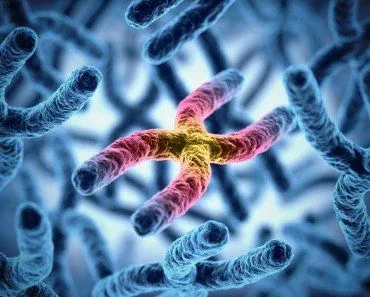
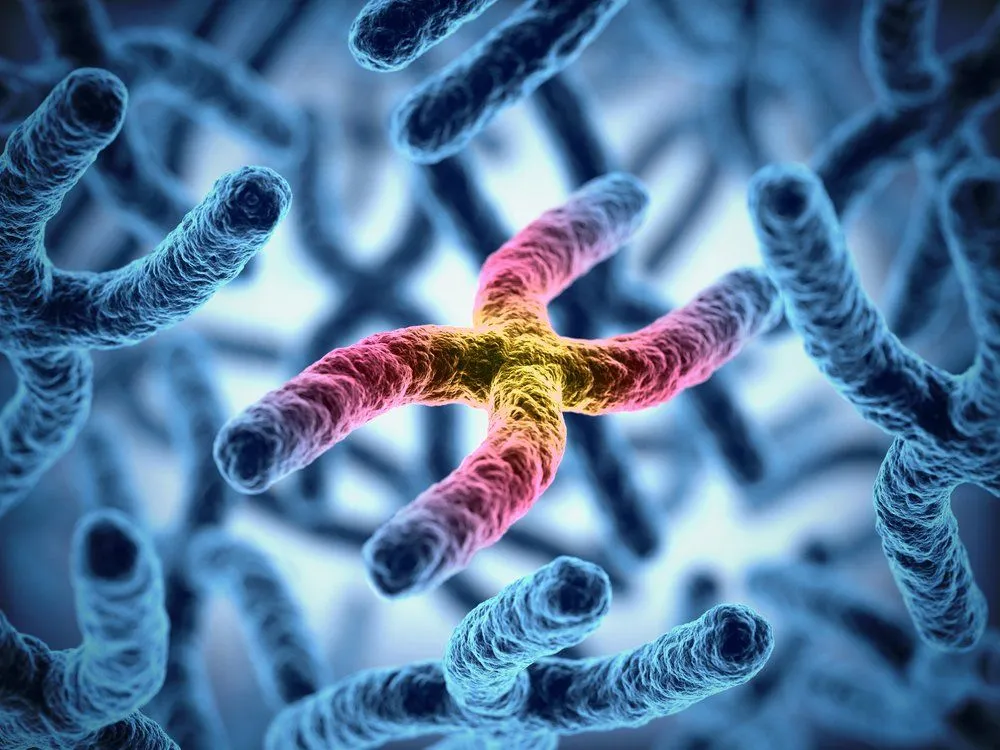
Chromosomes come in pairs – one from the mother and one from the father. If you look at the picture below, there are two X-shaped chromosomes. The total number of these chromosomes – humans have 23 pairs of chromosomes – differs across animals. A horse has 32 pairs of chromosomes (so, 64 individual chromosomes), while a dog has 39 pairs (78 individual chromosomes) and a fruit fly has just 4 pairs.
Each chromosome contains a set of genes, and so, each pair chromosome contains two copies of every gene (one from the mother and one from the father).
Mix And Match
On the 23 pairs of chromosomes are 20,000 genes. When our bodies make either the sperm or the egg, the number of chromosomes are halves. So, if two sperm cells are formed (this is hypothetical, sperm formation is more complex), one will have one chromosome and the other will have the other set. So, eggs and sperms each only have 23 chromosomes (not pairs).
When an egg and a sperm fuse, the chromosomes pair up once again. In humans, the resultant embryo once more has 46 chromosomes (23 pairs). Hence the child gets new chromosomes, the genes in which contain a mix of both their father’s and mother’s genes.
There is no specific protocol for which sperm/egg gets which chromosome; it is random. Two extra mechanisms during this halving (called meiosis) supercharge the shuffling. First, in crossing over, the maternal and paternal copies of each chromosome physically swap segments of DNA before being separated. Second, in independent assortment, each of the 23 chromosome pairs sorts into the egg or sperm independently of the others, giving 223 ≈ 8.4 million possible combinations from one parent alone. Multiply that by the same number from the other parent, and every child gets a near-unique deck of cards.
Alleles, Genes And Shuffling
Of the more than 8 billion people on Earth today, none are completely genetically identical (except identical twins, who develop from a single fertilised egg). Our 50% percent chance doesn’t account for all the strangely shaped noses, and slightly wonky smiles. This diversity comes from the fact that genes have different flavors.
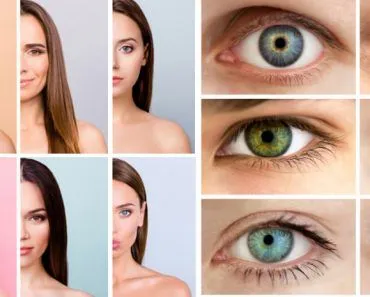
Before trying to puzzle out this problem any further, try looking at it this way. Your physical features are decided by a random mix-and-match of the genes from your four grandparents (two from the father’s side and two from the mother’s). This is the reason that siblings from the same parents can sometimes look so dissimilar, because the set of genes in one person can be immensely different from the other, despite having the same parents.
Why Aren’t Children Identical To Either Parent?
So far we’ve seen why two siblings differ from each other, but readers often ask a slightly different question: if a child gets exactly half of their genes from each parent, why don’t they turn out as a perfect blend, or simply identical to mom or dad? The answer lies in the same shuffling we just met, plus one extra wrinkle.

It’s true that you inherit half of your chromosomes from your mother and half from your father, with one chromosome of every pair coming from each side. But here is the twist: thanks to crossing over, the single chromosome you hand down is not a clean copy of one you received. Before your eggs or sperm form, during meiosis the maternal and paternal copies of each chromosome physically swap stretches of DNA, so each chromosome you pass on is already a patchwork of both of your parents. Your child therefore inherits a recombined mosaic, not an untouched half of you.
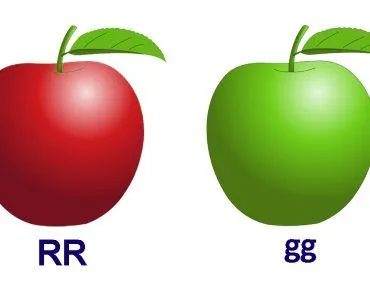
On top of that, many traits are governed by dominant and recessive alleles. A dominant allele can show up with just one copy, while a recessive one only appears if a child inherits two copies, one from each parent. A child can carry a recessive version of a gene from you without ever displaying it, which is why a feature can seem to “skip” a generation and surface in a child or grandchild. Put random recombination together with hidden recessive genes, and a child is virtually guaranteed to resemble each parent in places while being a carbon copy of neither.
What About Twins? Identical vs. Fraternal
If genetic shuffling makes every child unique, how do identical twins exist at all? Twins are the perfect way to see the difference between sharing a womb and sharing a genome, and they come in two very different kinds.

Identical twins (the technical term is monozygotic) form when a single egg is fertilized by a single sperm and the resulting fertilized egg then splits into two. Because both came from the same starting cell, they share essentially the same genome and are nearly always the same sex. This is the one case where the random shuffle is bypassed, which is exactly why they can look so strikingly alike.
Fraternal twins (or dizygotic) are a completely different story. They form when two separate eggs are released and each is fertilized by a different sperm during the same pregnancy. Genetically, fraternal twins are no more alike than any two siblings born years apart, sharing about 50% of their variable genes on average. That is why a boy and a girl can be twins, and why fraternal twins can look as different as any other brother and sister. Interestingly, the tendency to release more than one egg, and so to have fraternal twins, can run in families, whereas identical twinning appears to happen largely at random.
Clearing Up A Few Common Mix-Ups
This topic turns up in a lot of biology homework, and the same misunderstandings come up again and again. Let’s settle the three big ones.
“Do siblings have the same set of chromosomes?” Not quite. Two siblings each carry 23 pairs of chromosomes, but the specific combination packed into the egg and sperm that made them is reshuffled every time. Thanks to independent assortment and crossing over, you would not expect two children of the same parents to receive an identical set of chromosomes, which is the whole reason they differ.
“Does a child inherit chromosomes from only one parent?” No. Every child receives half of their chromosomes from their mother and half from their father, one from each homologous pair. A child can look more like one parent, but that comes down to which dominant traits happened to show through, not because the genes came from a single side.
“Do siblings differ because they have different numbers of chromosomes?” No again. Barring a medical condition, every healthy person has the same 46 chromosomes. Siblings look different because they inherit different combinations of genes, not different quantities of them.
Role Of The Environment
It’s not just the genes that shape your physical personality, environmental factors also play a significant role. In genetic language, ‘environment’ means the conditions in which you grow, the foods that you eat, the level of physical activities you engage in; all these affect how you are going to look as you grow old. Since the environment of your siblings can be quite different from yours, therefore they can look very different from you.
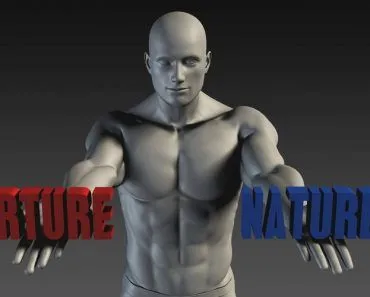
Nature has its own way of selective, yet random, choosing of the genes that shape your personality and the environment that plays a vital role in your upbringing; this is why there’s no point in fretting about how different you may look from your sibling!
References (click to expand)
- DNA Is Constantly Changing through the Process of ... - Nature. Nature
- Siblings Share Genes, But Rarely Personalities - NPR. National Public Radio
- Genetics, Meiosis. StatPearls. NCBI Bookshelf.
- Fraternal Twins. National Human Genome Research Institute (genome.gov).
- Identical Twins. National Human Genome Research Institute (genome.gov).
- Is the probability of having twins determined by genetics? MedlinePlus Genetics.
- What are Dominant and Recessive? Learn.Genetics, University of Utah.