In animal studies, cancer nanobots can kill cancer cells. These tiny DNA-built robots seek out a tumor, dock onto its blood vessels, and release a clotting enzyme that cuts off its blood supply, shrinking the tumor while sparing healthy tissue. So far this works in mice, not people, so nanobots are not yet a cancer cure in humans.
Do you recall the scene from I, Robot where Dr. Calvin injects nanites into Sonny to wipe out his artificial intelligence? How could those tiny silver objects in that liquid possibly wipe out the robot’s entire intelligence? The process seemed so simple and easy, but also raised plenty of questions about nanites! Nanites, nanoids, nanorobots and nanobots all fall under the umbrella of Nanotechnology.
The idea goes back further than you might think. In his famous 1959 talk There’s Plenty of Room at the Bottom, the American physicist Richard Feynman floated the wild notion of “swallowing the surgeon”, a tiny machine small enough to slip into a blood vessel, travel to the heart, and snip out a faulty valve from the inside. He didn’t use the word “nanobot” (that came later), and he credited the swallowable-surgeon idea to his student Albert Hibbs, but the seed was planted. Since then, a lot of research has gone into seeing what these molecular devices could actually do, and one of the most exciting applications is in cancer therapy. A quick but important caveat: the experiment we’ll discuss here was only performed on animals. The use of nanobots in humans has yet to be proven, so this article in no way offers a cure for cancer, merely a fascinating option that could be developed in the future.
Now, let’s try to understand a bit more about nanotechnology and cancer cells.
What Is Nanotechnology?
Nanotechnology is the branch of science that deals with changing matter on a molecular scale anywhere between 1 to 100 nanometers (nm). Just how small is a nanometer? Imagine you’re holding a meter-long thread in your hand. One meter is approximately 39 inches long or 100 centimeters. Now, try and measure only 1 cm (one hundredth of a meter) of that thread and hold it in your hand. Simple, right! But what if I tell you to measure one billionth of a meter? It’s physically impossible! You couldn’t even see something that small through a laboratory microscope.
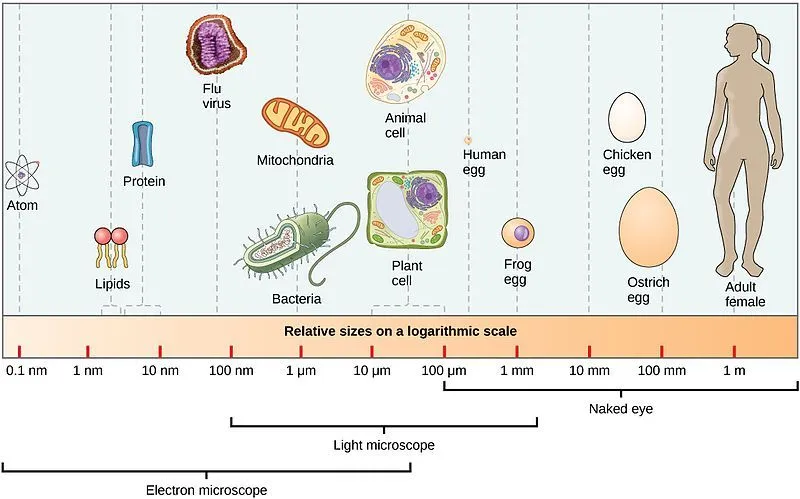
Well, that’s exactly how small one nanometer is. However, thanks to technology, we don’t have to go through such an “impossible” ordeal to get our beloved nanoparticles.
What Are Nanorobotics (Nanobots)?
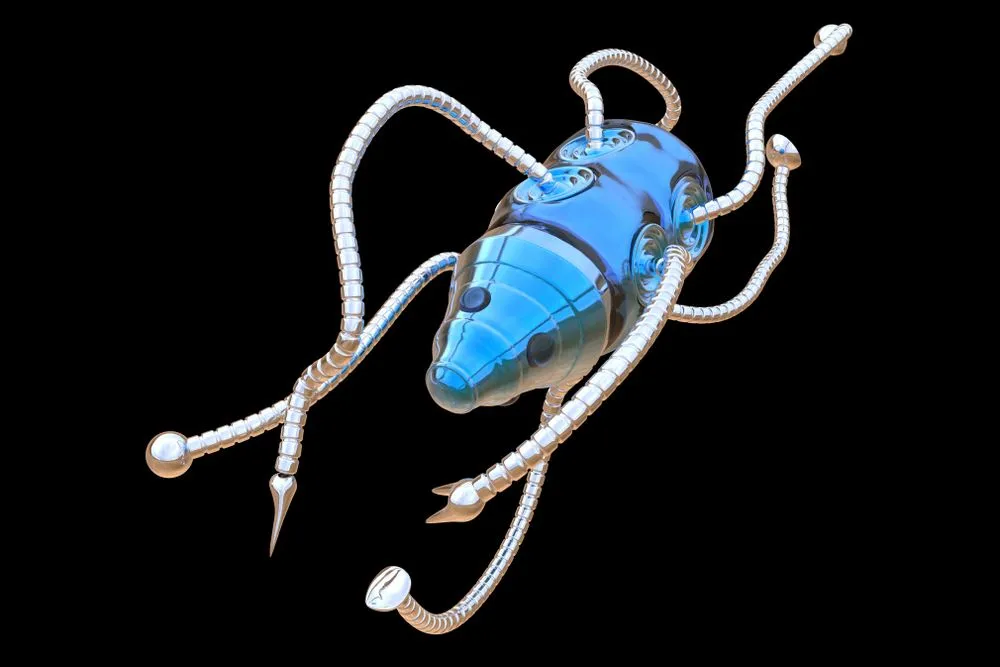
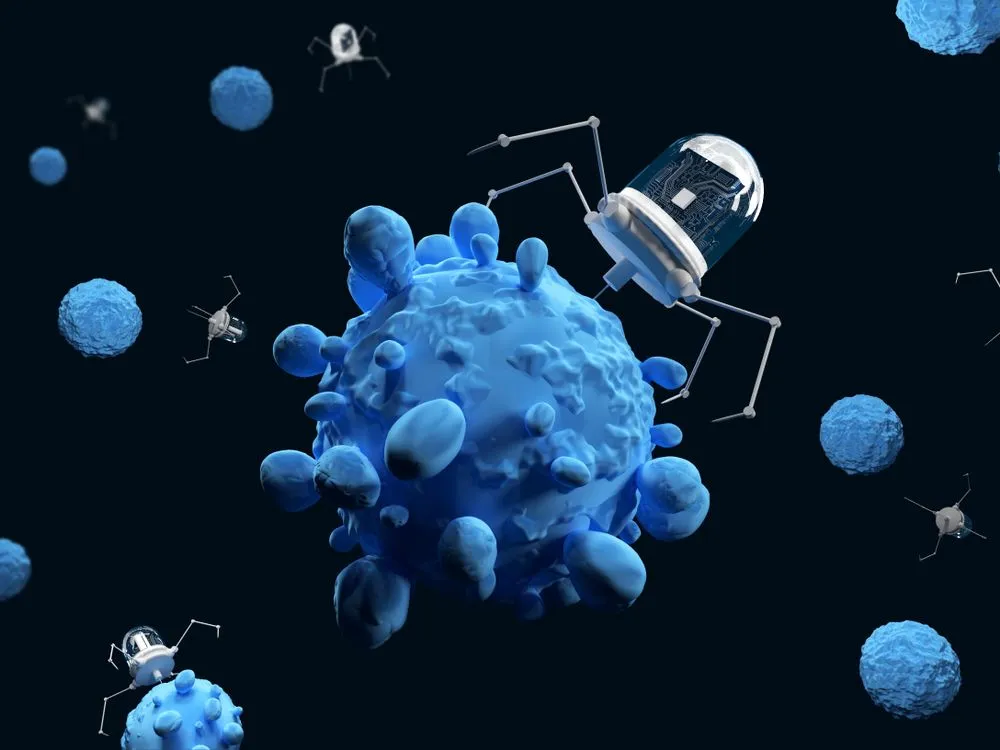
Nanorobotics is one of the theoretical arms in the field of nanotechnology that deals with the development of molecular devices called nanorobots or nanobots. In medicine, the term nanorobots are molecules that possess a novel property, allowing them to perform a specific task in the body. Imagine nanobots like really small robots working in our bodies towards a particular goal! Nanobots are engineered in order to identify enemy cells and act against them. This action is possible with the help of a biological sensor, which forms an essential part of nanobots. Upon identifying the target cell, the nanobot releases the drug on site, allowing maximum specificity, while preventing damage to other healthy parts of the body. This mechanism has been widely used in killing cancer cells.
How Are Cancer Cells Formed?
Cells respond to different signals of growth and are systematically controlled. Normal cell growth requires a perfect balance in genetic signals to allow proliferation and later cell death. However, cancer cells seem to turn a blind eye to these cellular signals and instead proliferate in an uncontrolled manner. These cells begin to resist cell signals that control division and divide rapidly, invading other healthy tissues. They support themselves by attracting blood vessels in order to propagate and proliferate, even when such support structures are not required.
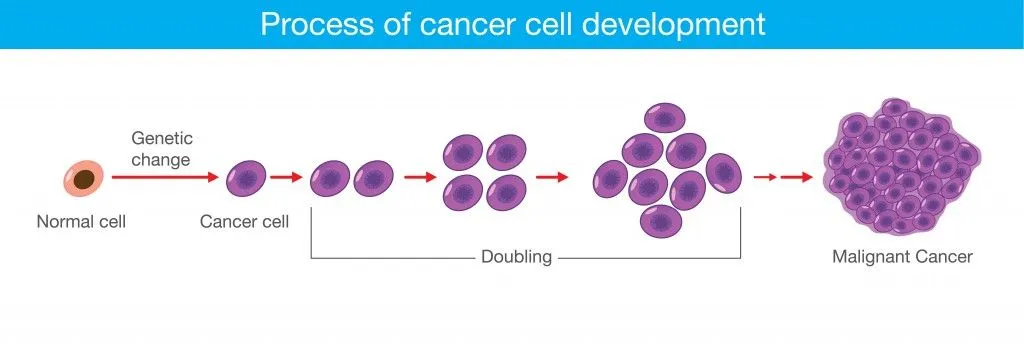
Cancer can be either benign or malignant. Benign cancer cells are the obedient type of cells; they usually stay within the boundaries of normal tissue. On the other hand, malignant cells have acquired the ability to break the tissue boundary and invade other neighboring healthy tissues, wreaking havoc in the body.
The question is, how do normal cells suddenly lose control and “go rogue”? This question unfortunately does not have a simple answer. One of the many reasons for cancer cell formation is a change in the structure of DNA, which causes a loss of signaling among cells and leads to uncontrolled cell division.
The Role Of Nanotechnology In Killing Cancer Cells
The advent of nanomedicine, the science of using nano-sized devices for diagnosis, avoidance and treatment of various diseases, has changed the face of modern medicine. These tiny particles have the ability to alter the dynamics of the body with minimal side effects.
A landmark study published in Nature Biotechnology in 2018, a collaboration between China’s National Center for Nanoscience and Technology and Arizona State University, showed precisely how nanobots can kill cancer cells in mice. These nanobots were built using DNA origami, a technique that folds a single long strand of DNA into a precise shape, here a flat sheet roughly 90 nanometers (nm) long that rolls up into a tube carrying the blood-clotting enzyme thrombin tucked safely inside.
On its surface, the nanobot carries a DNA tag that locks onto a protein called nucleolin. Crucially, nucleolin isn’t scattered everywhere; it sits on the surface of the blood-vessel cells that feed a tumor, making it a reliable “you have arrived” signal. When the tag grabs nucleolin, the tube springs open and dumps its thrombin right at the tumor’s blood vessels, triggering clots that cut off the tumor’s blood supply and starve it. Because the feeding vessels of almost every solid tumor look alike, the same trick worked across breast, lung, ovarian and skin cancer models. In the melanoma group, the tumors shrank dramatically, three of eight mice showed complete tumor regression, and median survival more than doubled, from about 20 days to 45, with no clots turning up in the heart, liver, lungs or kidneys.
Have Nanobots Been Used In Humans For Cancer Therapy?
Nanobots might prove to be a novel method as an alternative to chemotherapy-related cancer treatment. Chemotherapy has been widely used to kill cancer cells, but it has some very serious side effects. It kills all rapidly dividing cells, like cancer cells, along with other healthy cells. This is one of the main reasons why hair loss is observed among people undergoing chemotherapy, since hair follicles grow so rapidly in the body.
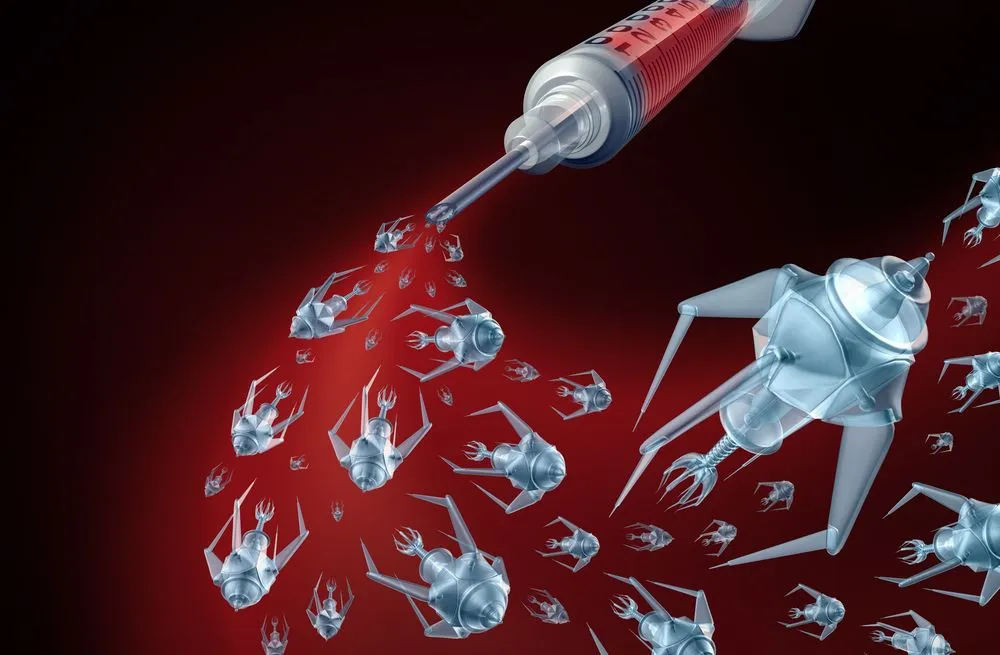
This is where nanotechnology sweeps us off our feet due to its remarkable specificity. Nanobots have several binding sites that allow them to bind to many cells and release the drug.
Sadly, all that glitters is not gold… using nanotechnology in humans comes with its fair share of drawbacks, mostly because the body treats these devices as foreign. One of the most important questions still being worked out is toxicity: how harmful is the nanoparticle itself, and what does it do once it’s inside us? Nanoparticles can slip across biological barriers, such as the blood-brain barrier, the lining of the small intestine, or the skin inside the nose, and that can trigger an inflammatory response or more serious side effects.
A lot of research is being done to make nanorobotics a clinical reality. So far the testing has been carried out in mice and pigs to map out the side effects and overall safety of injecting nanobots. The original DNA nanorobot, for instance, was reported to be safe and immunologically inert not just in mice but also in Bama miniature pigs, an encouraging sign for eventual human trials. If all goes well, we may yet see nanobots used in real cancer treatment in the not-too-distant future… fingers crossed!
What’s New In Cancer Nanobot Research?
The field hasn’t stood still since that first DNA nanorobot. In 2024, a team at Sweden’s Karolinska Institutet, writing in Nature Nanotechnology, built a DNA origami structure that hides a “weapon”, a cluster of six cell-killing peptides, until it reaches a tumor. The clever part is the trigger: the weapon stays sheathed at the normal blood pH of 7.4 and only springs out in the slightly acidic environment around a tumor (around pH 6.5). In mice with breast tumors, this hidden-weapon nanobot cut tumor growth by about 70% compared to an inactive version, while leaving healthy tissue alone.
Researchers are also experimenting with nanobots you can steer from outside the body. In a 2025 study, scientists used tiny gold “nanospikes” (about 500 nm across) coated in nickel so they respond to a magnetic field. Switch on the field and the spikes spin, drilling pores into tumor cells so that a standard chemotherapy drug can flood in. Paired with chemotherapy in mouse models of liver, cervical and colon cancer, the magnetic nanobots delivered roughly 61% greater tumor shrinkage and 100% survival in the treated group, beating either treatment on its own.
None of this has reached human patients yet, and there’s a long road of safety testing and clinical trials ahead. But the direction of travel is clear: nanobots are getting smarter about finding tumors and gentler on the rest of the body.
References (click to expand)
- Vega Baudrit, J. R. (2017, May 23). Nanobots: Development and Future. International Journal of Biosensors & Bioelectronics. MedCrave Group, LLC.
- Brenner, S. (2010, October). Nanomedicine: promises and challenges for the future of public health. International Journal of Nanomedicine. Informa UK Limited.
- Cancer-fighting nano-robots programmed to seek and destroy .... europeanpharmaceuticalreview.com
- Saha. (2009). Nanomedicine: Promising Tiny Machine for the Healthcare in Future-A Review. Oman Medical Journal. Oman Medical Journal.
- Li, S., et al. (2018). A DNA nanorobot functions as a cancer therapeutic in response to a molecular trigger in vivo. Nature Biotechnology. PubMed/NCBI.
- Wang, Y., et al. (2024). A DNA robotic switch with regulated autonomous display of cytotoxic ligand nanopatterns. Nature Nanotechnology.
- Mechanical Agitation-Assisted Transmembrane Drug Delivery by Magnetically Powered Spiky Nanorobots (2025). Research (AAAS). PMC/NCBI.
- Feynman, R. P. (1960). There’s Plenty of Room at the Bottom. Engineering and Science. California Institute of Technology.