Table of Contents (click to expand)
The idea of a self-acting machine goes back to Archytas of Tarentum, who built a steam-powered wooden pigeon around 350 BC. The modern story starts in 1961, when George Devol and Joseph Engelberger installed Unimate, the first industrial robot, at a New Jersey GM plant. Robots since then have moved from factory arms to Mars rovers, social robots like Sony AIBO and Nadine, and today's humanoid robots such as Tesla Optimus and Figure 02.
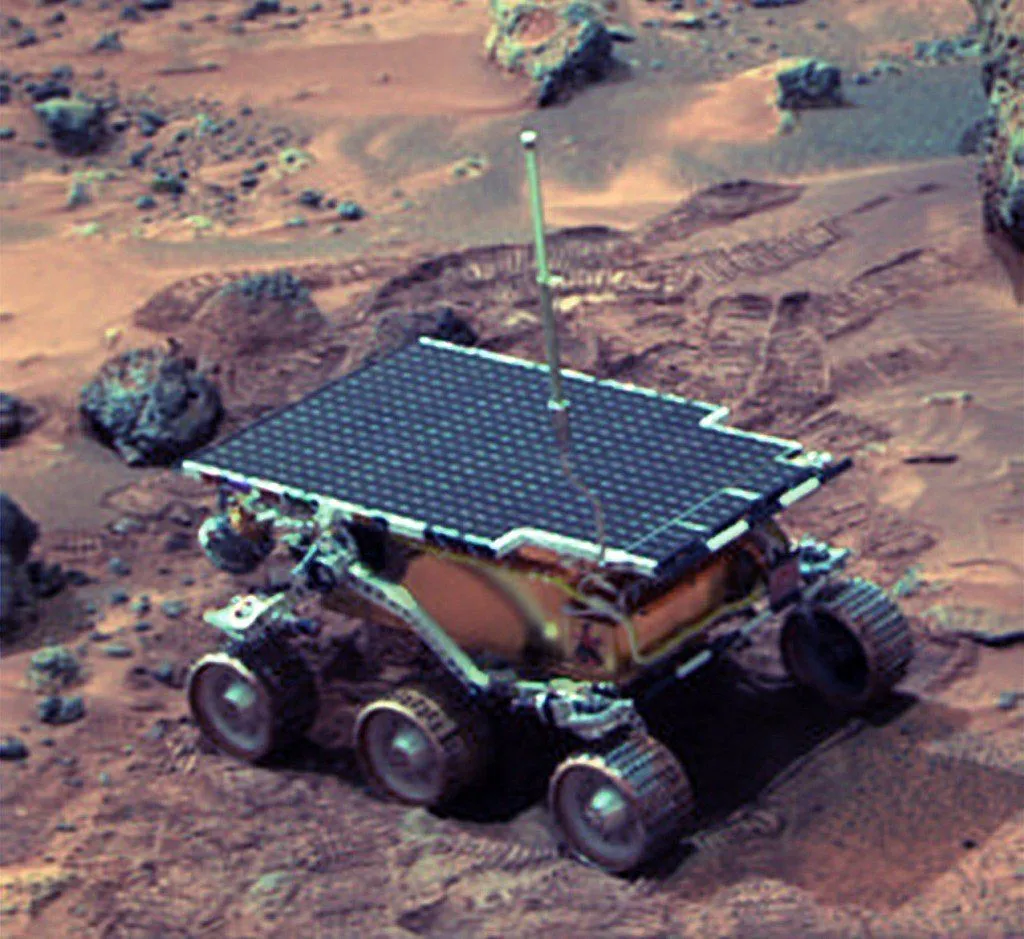
The word ‘robot’ conjures up an array of images for most people, from R2D2 and C3PO of Star Wars fame, to the hyper-masculine Arnold Schwarzenegger in the Terminator series or the Rover Sojourner, which explored the Martian landscape as part of the Mars Pathfinder mission.
The idea of self-acting machines is, surprisingly, almost as old as recorded science. Around 350 BC, the Greek philosopher and engineer Archytas of Tarentum is said to have built a wooden pigeon propelled by jets of steam or compressed air, often cited as the first “robot” in history. Centuries of clockwork automata followed, but the modern story really begins in 1936, when Alan Turing famously introduced the concept of a theoretical computer, the Turing Machine.
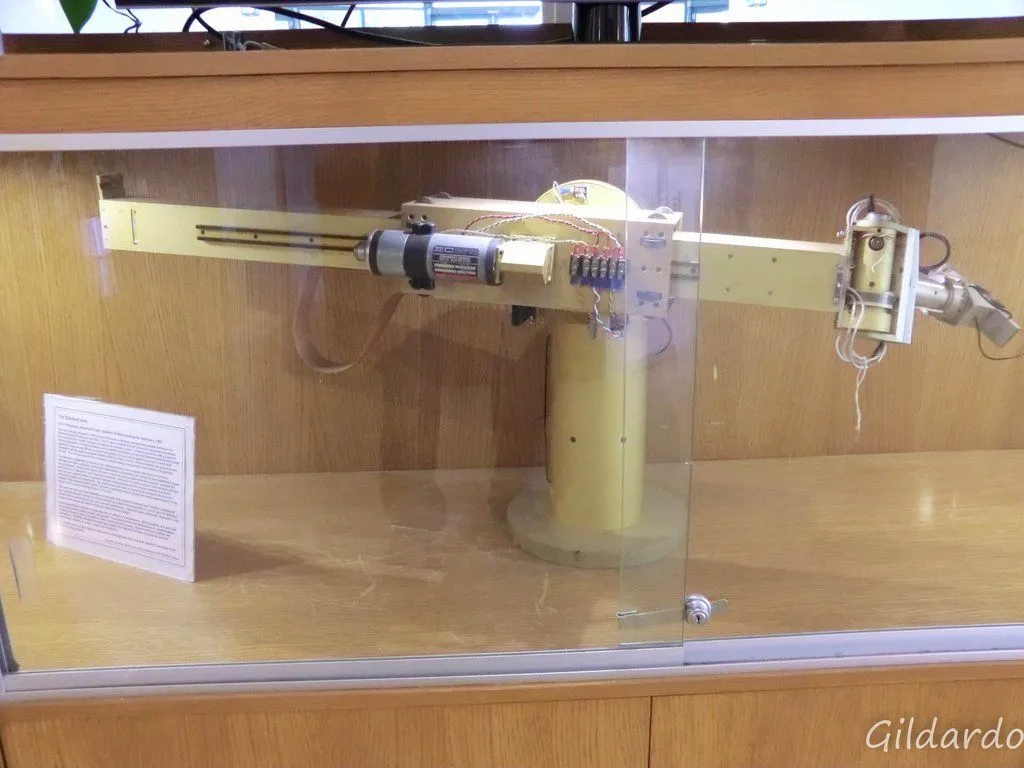
In 1974, MIT engineer David Silver built the Silver Arm, capable of assembling small parts together using touch sensors, which pushed robotics into more delicate, dexterous territory.
In 1985, a robotic arm called the PUMA 200 was used by Dr. Yik San Kwoh in Long Beach, California, to orient a needle for a CT-guided brain biopsy. It was the first time a robot was used in human surgery. The PUMA 200 was later retired from the operating room over safety concerns, but it opened the door to modern surgical robots.
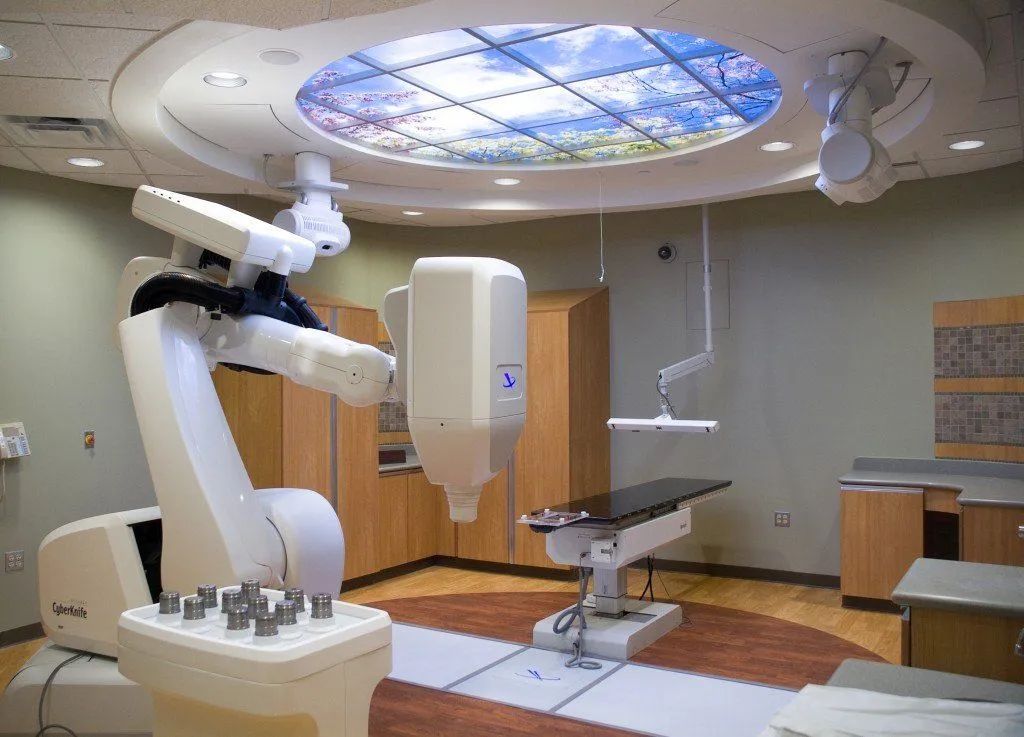
In the early 1990s, Stanford neurosurgeon Dr. John Adler designed the CyberKnife, a robotic radiosurgery system that uses X-rays to locate tumors and then targets them with focused beams of radiation. He founded Accuray in 1992 to commercialize it, and the first patient was treated at Stanford in 1994.
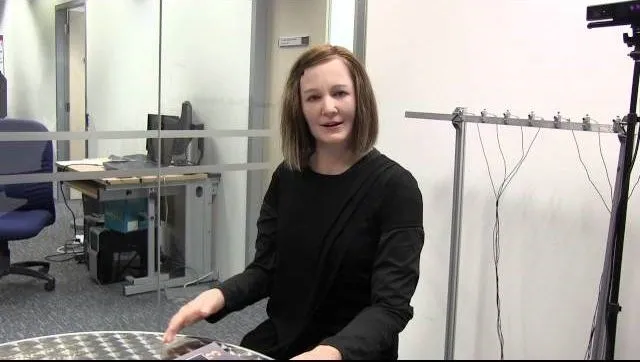
In 2015, Nanyang Technological University Singapore unveiled Nadine, at the time one of the most lifelike social robots ever built (and modeled on her creator, Prof. Nadia Magnenat Thalmann). Nadine operated as a university receptionist, and scientists continue to work on robots that can provide childcare and offer companionship to lonely elderly people.
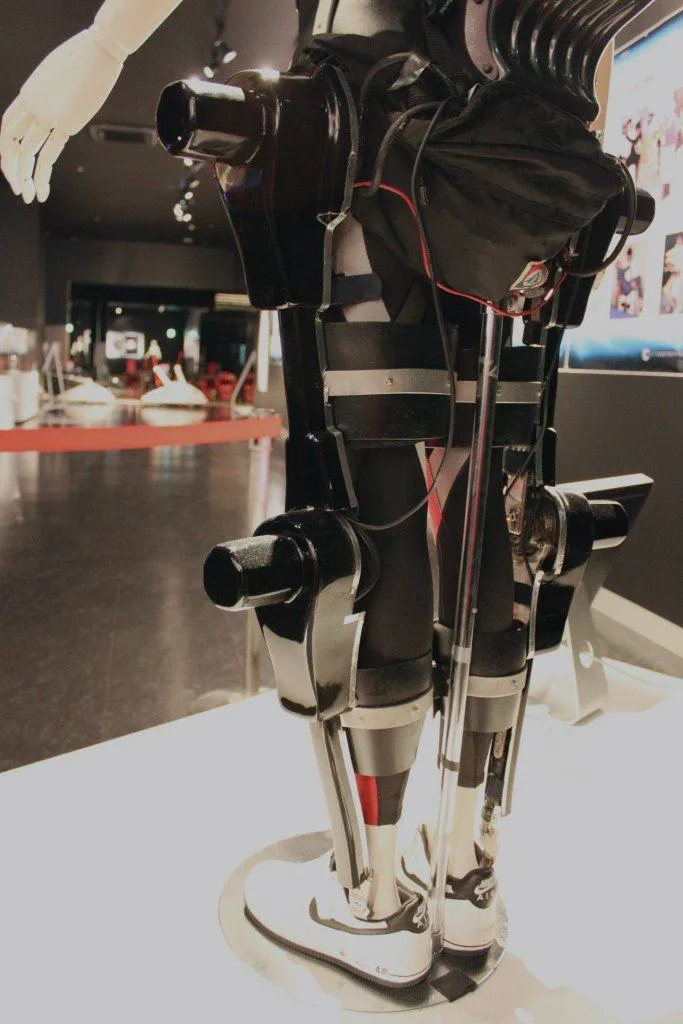
Perhaps one of the most life-changing applications of robotics is the wearable suit known as HAL (Hybrid Assistive Limb), developed by Prof. Yoshiyuki Sankai at the University of Tsukuba and sold by Cyberdyne Inc. HAL doesn't actually read the brain directly; instead, electrodes on the skin pick up the faint bio-electric signals the brain sends to the muscles, and the suit's motors move the limbs in step with the wearer's intent. That makes it especially useful for people with mobility problems and the elderly.
The decade after 2015 turned out to be the busiest in robotics history. In June 2020, Boston Dynamics began selling its four-legged Spot robot to the public, the first commercially available robot from the company. On 19 April 2021, NASA’s tiny Ingenuity helicopter, dropped off by the Perseverance rover, performed the first powered flight on another planet, hovering for 39 seconds in the thin Martian atmosphere. In 2022, Tesla unveiled its Optimus humanoid prototype, kicking off a race to build general-purpose human-shaped robots for factories and homes. By 2024, Boston Dynamics had retired its hydraulic Atlas and replaced it with a sleek all-electric version, Figure AI was deploying its Figure 02 humanoids at a BMW plant in Spartanburg, and China’s Unitree released the H1 and G1 humanoids at prices that started under $20,000. In parallel, a 2023 model from Google DeepMind called RT-2 showed that large language models could let robots translate web-scale knowledge into real-world actions, accelerating the shift from carefully scripted machines to robots that can reason their way through new tasks.
Robots are doing more good than harm in terms of improving our quality of life. A few years down the line, just like mobile phones, robots might become an integral part of our lives. The question is… is that what we really want?
Early Beginnings
In 350 B.C., the Greek mathematician Archytas built a mechanical bird termed ‘The Pigeon’, which was propelled with the help of steam.

One of the first instances of robotics used in day-to-day life was the use of Egyptian water clocks, where human figurines were used to strike the hour bells. It measured time as a result of the force of water falling through it at a constant rate.
In the 14th century, Leonardo Da Vinci designed a mechanical man that looked like an armored knight. The mechanisms inside the armored knight were designed to make the knight move as though there were a real person inside.
After about three centuries, a French inventor named Jacques de Vaucanson began building automata (a moving mechanical device made in imitation of a human being). He built three of them in total. The first was a flute player that could play twelve songs, followed by the second one, which played a flute and a drum or tambourine, and the third automata, which was a duck that moved, quacked, flapped its wings and even ate and digested food. It had a very clever design, considering that this was still the 17th century!

The first modern robot was made in 1810. It was a soldier with an automatic bellows (a device with an air bag that emits a stream of air when squeezed together with two handles, used for blowing air into a fire) that could blow a trumpet. The creator was Friedrich Kauffman from Dresden, Germany,
Further Advancements
In the year 1898, Nikola Tesla built a remote-controlled robot boat and demonstrated it at Madison Square Garden.

In 1932, the first true robot toy was produced in Japan. Named ‘Lilliput’, it was a wind-up toy that walked. Lilliput was made from tinplate and stood just 15 cm tall.
The year 1936 brought a major revolution in mathematics. This was the year when Alan Turing famously invented the concept of a theoretical computer called the Turing Machine.
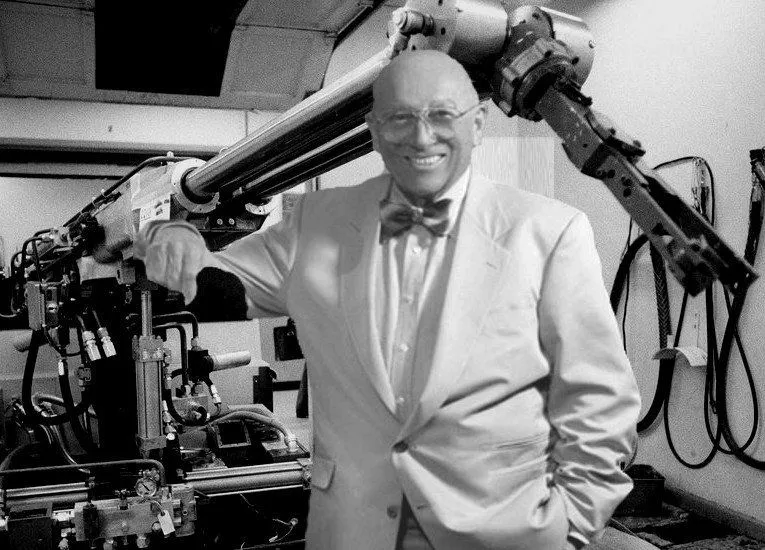
With the arrival of programmable computers in the 1940s, the first real robots began to take shape. The earliest robots as we know them today were created by George Devol in the 1950s. He invented and patented a reprogrammable manipulator (basically a robot) called Unimate. Unfortunately, he couldn’t sell it! In the 1960s, Joseph Engleberger bought the Unimate patent and modified it into an industrial robot, selling it under the label ‘Unimation’. It was a programmable robotic arm that was installed seven years later, on the assembly line of New Jersey General Motors. This arm performed dangerous and repetitive tasks on the assembly line. For his efforts and success, Engleberger is known in the industry as “the Father of Robotics”.
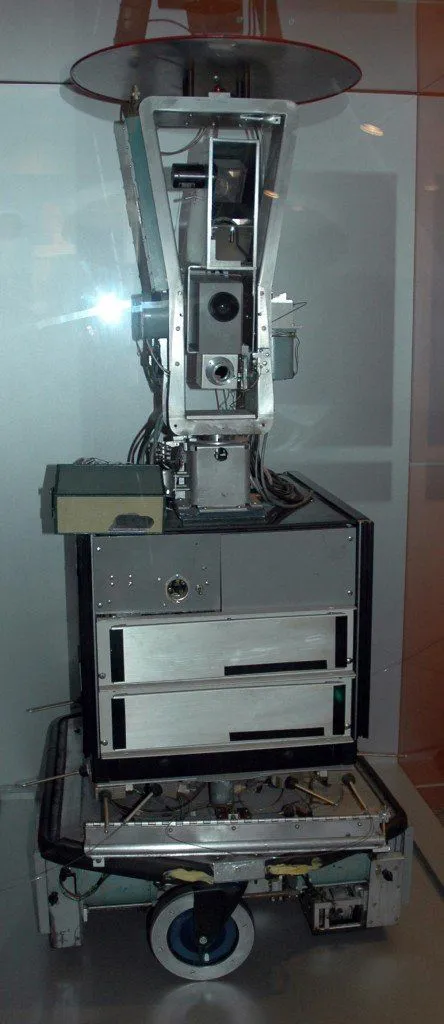
In 1966, the Stanford Research Institute created Shakey, the first general-purpose mobile robot able to reason concerning its own actions. While other robots would have to be instructed on each individual step in order to complete a larger task, Shakey could analyze commands and break them down into basic chunks by itself. These actions involved traveling from one location to another, turning light switches on and off, opening and closing the doors, climbing up and down from rigid objects, and pushing movable objects around.
Three years later, Victor Scheinman, a Mechanical Engineering student working in the Stanford Artificial Intelligence Lab (SAIL) created the Stanford Arm. The arm’s design became a standard for the design of future robot arms. In fact, it is still being used today.
In 1974, he opened his own company that produced the Silver Arm. This arm was capable of assembling small parts together using touch sensors.
In 1985, the first robot, called Puma350, was used in the medical field for surgery. Its purpose was to orient a needle for a brain biopsy under computerized tomography guidance. It was discontinued later due to safety issues.
Later, in 1992, Dr. John Adler came up with the concept of CyberKnife, a robot that images a patient with X-rays to look for tumors in the body.
1997 was perhaps one of the most important years for robotics. It was the year of the Mars Pathfinder mission. The robotic Mars rover Sojourner was released onto Mars’ surface and its job was to transmit data back to Earth from the Martian soil.
In the year 1999, Sony released AIBO, a robotic dog with the ability to learn, entertain and communicate with its owner.
With further advancements in technology, robots started becoming more and more autonomous. In 2002, a batch of SDR-4C robots was introduced, which remembered people’s faces, danced to disco and even sung in harmony.
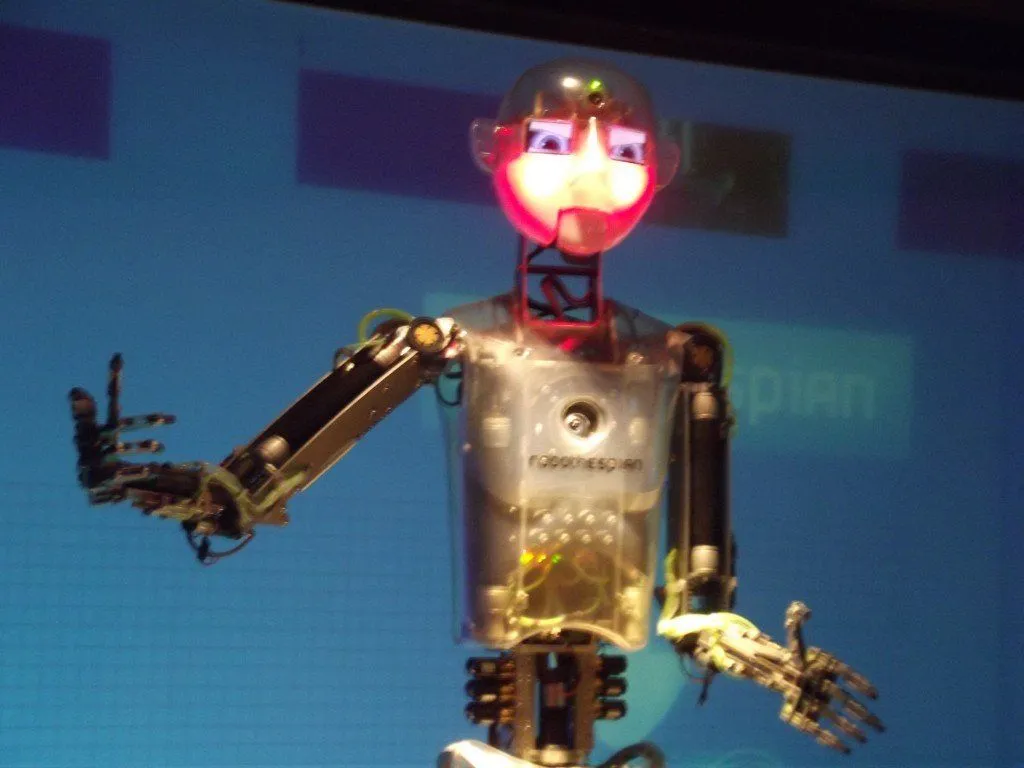
Soon, inventors started making robots more human-like. In recent years, features like artificial skin tissues, emotions, self-awareness and autonomous thinking have been incorporated in robots. Robothespian is one such machine that is capable of entertaining and communicating with people. It is fully interactive and multilingual.
In 2015, Nanyang Technological University Singapore unveiled Nadine, at the time one of the most lifelike social robots ever built (and modeled on her creator, Prof. Nadia Magnenat Thalmann). Nadine operated as a university receptionist, and scientists continue to work on robots that can provide childcare and offer companionship to lonely elderly people.
Perhaps one of the most life-changing applications of robotics is the wearable suit known as HAL (Hybrid Assistive Limb), developed by Prof. Yoshiyuki Sankai at the University of Tsukuba and sold by Cyberdyne Inc. HAL doesn't read the brain directly; electrodes on the skin pick up the faint bio-electric signals the brain sends to the muscles, and the suit's motors move the limbs in step with the wearer's intent. That makes it especially useful for people with mobility problems and the elderly.
Robots are actually doing more good than harm in terms of improving our quality of life. A few years down the line, just like mobile phones, robots might become an integral part of our lives. The question is…. is that what we really want?
Where Does The Word ‘Robot’ Come From?
The word ‘robot’ feels ancient, but it is barely a century old, and it was born on a stage rather than in a laboratory. In 1920, the Czech writer Karel Čapek finished a play called R.U.R., short for Rossumovi Univerzální Roboti, or Rossum’s Universal Robots, which was first performed in 1921. The play imagines a factory that mass-produces artificial workers to do humanity’s labor, and Čapek needed a name for these tireless servants.

His first instinct was to call them ‘laboři’, from the Latin labor, meaning work, but he thought it sounded too stiff and artificial. He turned to his brother, the painter Josef Čapek, who suggested ‘roboti’. Čapek later publicly credited Josef, and not himself, as the true inventor of the word.
The root is the Czech word robota, which meant the forced labor that serfs once owed their masters, and it traces back further to rab, meaning slave. So the very first robots were named after drudgery and servitude, a fitting label for machines we build to do the jobs we would rather avoid. Fittingly, the robots of R.U.R. were not the clanking metal machines we picture today. They were artificial living beings, closer to what we would now call androids, and (in classic science-fiction fashion) they eventually rise up against their creators.
Why Were Robots Created In The First Place?
Strip away the Mars rovers and the humanoid showpieces, and almost every robot on this timeline exists for the same reason: to take on work that is a bad fit for a human being. Engineers in the field often sum this up as the three D’s, which stand for dull, dirty, and dangerous.

‘Dull’ covers the monotonous, endlessly repetitive tasks that wear people down, like the part-handling and welding that Unimate first took over on the General Motors assembly line. ‘Dirty’ refers to filthy or hazardous surroundings, from foundry floors and chemical plants to the handling of toxic materials. ‘Dangerous’ covers anything that puts life and limb at risk, which is exactly why a robot was sent to trundle across the surface of Mars rather than an astronaut, and why robotic arms are used to defuse bombs and inspect the insides of nuclear reactors.
Seen this way, the whole history of robotics is a steady handoff of the jobs humans find boring, unpleasant, or deadly. The payoff is not just safety; it is precision and consistency too. A surgical system like the CyberKnife can hold aim on a tumor more steadily than any human hand, and a welding robot can lay down an identical weld thousands of times without tiring. That combination, sparing people from grim work while doing it more reliably, is the thread that connects a steam-powered pigeon to a factory full of humanoids.
References (click to expand)
- History of robots - Wikipedia. Wikipedia
- Evolutionary robotics - Wikipedia. Wikipedia
- Floreano, D., & Keller, L. (2010, January 26). Evolution of Adaptive Behaviour in Robots by Means of Darwinian Selection. PLoS Biology. Public Library of Science (PLoS).
- The Inside Story of Unimate, the First Industrial Robot. IEEE Spectrum.
- Boston Dynamics Launches Commercial Sales of Spot Robot (2020). Boston Dynamics.
- NASA Ingenuity Mars Helicopter Succeeds in Historic First Flight (2021). NASA.
- R.U.R. - Wikipedia. Wikipedia.
- Karel Čapek - Wikipedia. Wikipedia.
- A New Framework Guiding Dull, Dirty, Dangerous Robots. IEEE Spectrum.