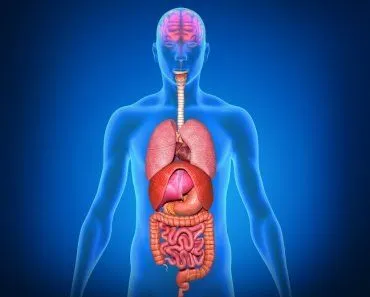
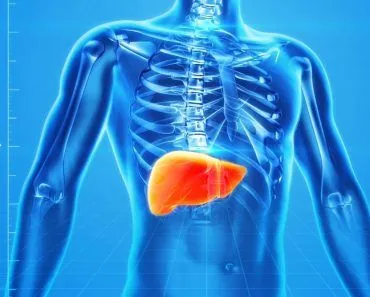
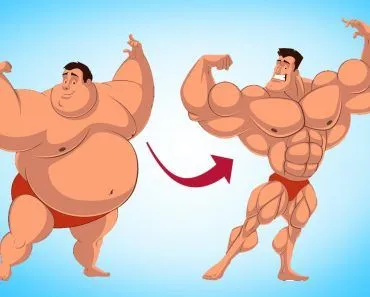
Owing to a larger physique, the organs of a larger person provide for the body by enlarging in size, which is done by increased fat storage in the adipocytes.
Do you remember clenching your fist as a child to visualize the size of your heart? You would hold your fist against your chest just to see how much space your heart occupied in your body. What if a sumo wrestler did the same thing? What is the size of his heart? Keeping his large fist in mind, the size of his heart would be assumed to be bigger. But is it true? Do large people have large organs?
The Size Of An Individual’s Organ Depends On The Following Factors:
- Age
- Gender
- Height
- Weight
Although all of us have the same internal organs, they’re unique to each of us due to the above factors. Weight is one of the major determining factors. Several kinds of research were carried out in order to understand the relation between weight and organ size. It was found that organs like the heart, liver, kidneys, lungs, and brain were positively correlated to the weight of the individual. This implies that a large person does have large organs. Thus, Laurel and Hardy did have different organ sizes, based on their very different physiques.

Why Is Organ Enlargement Necessary?
Wouldn’t it be odd if you still had your infant-sized liver after you’ve fully grown? Would your body be able to function normally? No, definitely. There are multiple factors involved in the growth of organs. For one, organ tissues respond to various internal and external cues, growing to their needed size, in response to these cues.
Growth occurs when the functional cells of an organ start proliferating. This leads to an increase in the number of cells and an increase in the overall size of the organ. Organs and body parts need to grow as an individual progresses with age. Growth takes place during crucial growth years until maturity is reached. After that point, there can still be alterations in organ size caused by various reasons.
After a period of time, there is simply an increase in the size and mass of cells. In order for the organs to provide for a large person’s body, they must enlarge in size. They enlarge in accordance with each individual’s stature, so the functional output is sufficient for the body.
How Do Organs Enlarge In Size?
Studies have shown that organ enlargement is accompanied by increased weight. It was found that large organs in a large man’s body were due to an overall increase in cell size and cell number. Organ enlargement is sometimes caused by the increase in both the number and size of parenchymal cells (functional cells in the organs).
Moreover, increased mass of adipose tissues (fat-storing tissues) results in organ enlargement. Large individuals have more myocardial fibers in their hearts compared to normal individuals. The same thing is observed in the liver and pancreas of a large man. Large people are known to have a significantly increased mean cytoplasmic mass per cell in organs like the heart, liver, endocrine, and exocrine pancreas, as compared to normal controls.
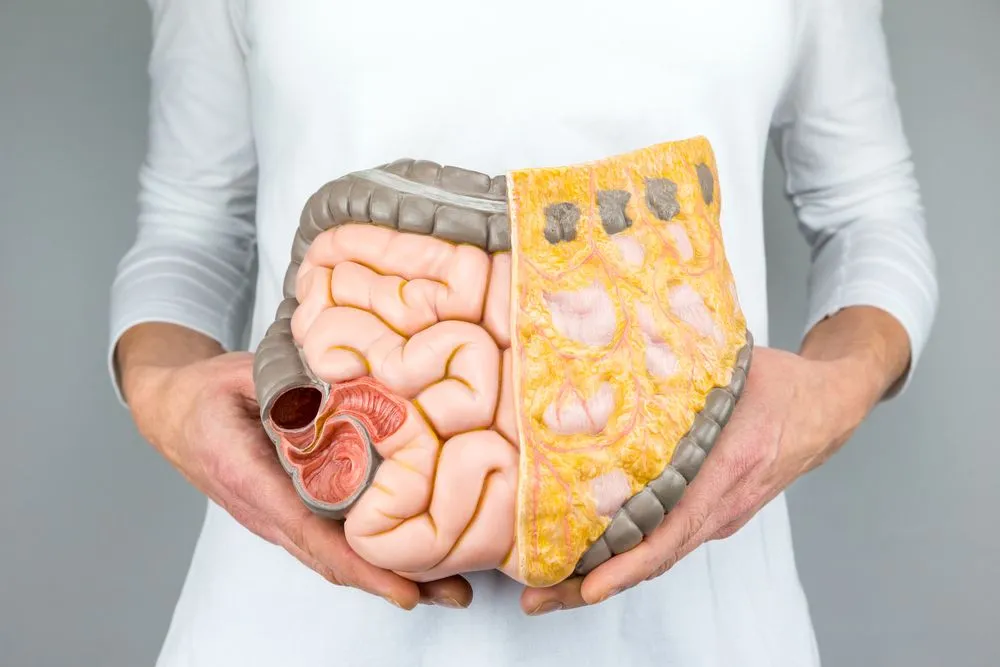
Adipose Tissue
Adipose tissue is a loose connective tissue made of adipocytes (fat cells). Adipose cells are the chief players when it comes to managing body fat. They are responsible for energy balance and fat storage. They originate from mesenchymal stem cells (MSCs) found in the stromal vascular fraction of adipose tissue, with bone marrow also contributing about 10% of new adipocytes. In larger individuals, the greater volume of adipose tissue provides more precursor cells, enabling the adipose tissues to store more fat.
Energy-rich fatty acids are incorporated into triglycerides of fat cells through the process of esterification. When there is an energy requirement, these fat reserves undergo ‘lipolysis.’ This process involves the breakdown of triglycerides by hydrolysis, releasing glycerol and free fatty acids that can then be utilized by the organs for energy.
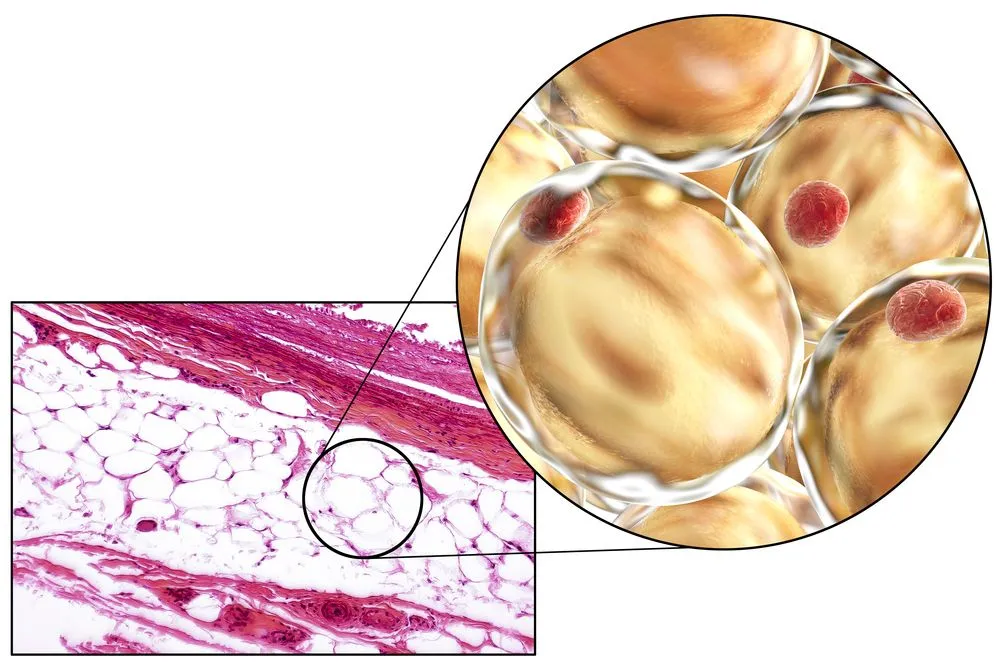
Alterations In The Adipose Cells
Adipose tissues have the ability to increase the number of adipose cells and/or increase the size of the cells themselves. An increase in weight and an increase in the production of adipocytes leads to the enlargement of adipose tissues. This, in turn, leads to the enlargement of an organ.
Research says that approximately 10% of all fat cells in the body are renewed each year. However, in obese individuals, the bone marrow’s contribution to the adipocyte pool is roughly doubled. Moreover, since obese individuals have more total adipocytes, the absolute number of new fat cells generated per year is significantly higher than in lean individuals.
Most adipocyte precursors reside in the stromal vascular fraction of adipose tissue itself, though bone marrow-derived cells serve as a reserve pool. There is a certain threshold, however, after which no more fat cells are produced. In such a case, the adipocytes only increase in size in order to store more fat.
Do Organs Shrink After Weight Loss?
When there is a loss in weight, organ size is altered. However, there is not a loss in functional cells from the organ. There is also no reduction in the number of fat cells. The only aspect acted upon by weight loss is the adipocyte cell size. There is a reduction in the size of the fat cells, so the overall effect is a decrease in the size of the organ.
The reason why it’s so easy to regain weight after weight loss is because the number of fat cells hasn’t reduced. The adipocytes have simply decreased in size, meaning that they still have the same capacity to enlarge, just like before, by storing more fat.
However, this can differ from person to person. The human body never fails to amaze because, despite being made of the same fundamental materials, we are still so very different: unique, dynamic and utterly human!
Do Taller People Have Bigger Organs?
This is the question most people actually have in mind, and the short answer is yes, but only a little, and it depends on the organ. When researchers measured how organ mass relates to body size in 330 healthy adults, they found that each organ scales differently to height and to weight. Bigger bodies do carry bigger organs, but no organ simply doubles in size when you get twice as tall.

Scientists describe this with allometric scaling, which is just a way of measuring how much one thing changes when another changes. The metabolically busy organs (the liver and kidneys) track body size fairly closely, scaling to fat-free mass with exponents of roughly 0.71 to 0.88. The brain and heart, on the other hand, scale very weakly with body weight, with the brain barely changing at all (its weight exponent is around 0.11). In plain terms, a tall person's liver and kidneys are noticeably larger than a short person's, but their brain is almost the same size.
Height by itself is actually a weaker predictor than weight. In studies of adult organ weights, body weight was positively correlated with the heart, liver, kidneys, brain and lungs in both sexes, while height correlated with far fewer organs. The heart, for instance, tracked body weight but showed no reliable link to height. So a taller person is not guaranteed bigger organs unless they also carry more body mass. This is also why a 1.9 m basketball player and a much shorter, heavier weightlifter can end up with similarly sized hearts.
Are Everyone's Organs The Same Size?
No, and the differences between two healthy people can be surprisingly wide. We all carry the same set of organs, but their exact size and weight vary from person to person depending on age, sex, height and weight. Think of it like shoe size: everyone has feet, yet the range of normal is broad.
Average figures give a sense of the scale. An adult heart is roughly the size of a clenched fist and weighs about 280 to 340 g in men and a little less in women. The liver is the heaviest internal organ at around 1.3 to 1.5 kg, the brain averages about 1.3 kg, and the two kidneys together come to roughly 250 g. These are averages, though, and the reference ranges used by pathologists span a wide band on either side. A perfectly healthy liver, for example, can fall anywhere from about 1 kg to nearly 1.9 kg.
Sex is one of the biggest drivers of this variation, mostly because men are larger on average. Male hearts, livers, kidneys and brains all tend to weigh more than female ones. So while it is true that organs are broadly proportional to body size, they are not strictly proportional. A person twice as heavy does not have organs twice as large, because much of that extra body mass is fat and muscle rather than enlarged internal organs. If you are curious about the parts that come in matched sets, we have a separate piece on why some organs come in pairs and some don't.
Do Your Organs Grow As You Grow?
They do, but not all at the same pace, and that uneven timing is part of why a baby looks so different from an adult. Most organs grow steadily alongside the body, with a fast spurt in the first year or two of life, slower growth through childhood, and another surge during the adolescent growth spurt as the torso, heart and lungs expand.

The brain is the great exception. It races ahead early, reaching about 25% of its adult size at birth, roughly 75% by age 1, and around 90% by age 7, long before the rest of the body catches up. That is why infants look so top-heavy: the head is already near adult proportions while the limbs are still tiny. The kidneys, meanwhile, are working at near-adult capacity by the end of the first year. Because organs do not grow in lockstep, body proportions shift continuously through childhood, with the head becoming proportionately smaller and the limbs proportionately longer as a child matures.
Once growth finishes (around age 18 in women and 20 to 21 in men) organ size becomes much more stable. After that, the changes are subtle and mostly tied to weight and aging rather than further "growing up". Curiously, the body can even shrink later in life, something we explore in our article on why human height decreases with age.
References (click to expand)
- Arner, P. (2018). Fat Tissue Growth and Development in Humans. Recent Research in Nutrition and Growth. S. Karger AG.
- Naeye, R. L., & Roode, P. (1970, August 1). The Sizes and Numbers of Cells in Visceral Organs in Human Obesity. American Journal of Clinical Pathology. Oxford University Press (OUP).
- Mubbunu, L., Bowa, K., Petrenko, V., & Silitongo, M. (2018, April 18). Correlation of Internal Organ Weights with Body Weight and Body Height in Normal Adult Zambians: A Case Study of Ndola Teaching Hospital. Anatomy Research International. Hindawi Limited.
- Eder, D., Aegerter, C., & Basler, K. (2017, April). Forces controlling organ growth and size. Mechanisms of Development. Elsevier BV.
- Müller, M. J., et al. (2011). Effect of Constitution on Mass of Individual Organs and Their Association with Metabolic Rate in Humans: A Detailed View on Allometric Scaling. PLOS ONE.
- A Preliminary Study of Organ Weight After Histological Exclusion of Abnormality During Autopsy in the Adult Population of Uttarakhand, India (2022). Cureus, 14(7).
- Physical Growth of Infants and Children. MSD Manual Consumer Version (Merck Manuals).
- Heart: Anatomy and Function. Cleveland Clinic Health Library.