Yes. On land, gravity and the square-cube law cap an animal at roughly 100 tonnes (around 110 short tons), near the size of the largest sauropod dinosaurs. Water lifts that ceiling, since buoyancy supports the weight, which is why the blue whale (about 30 m, or 98 ft, and up to 180 tonnes) is the largest animal that has ever lived.
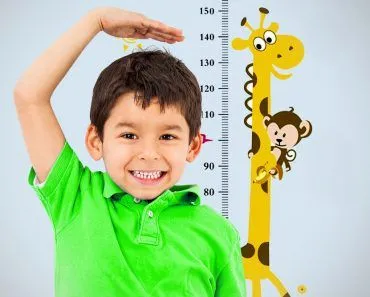
When we think about human beings across the planet, we come in many different shapes and sizes, but there aren’t any twenty-foot humans walking around out there in the world. There is a certain limit to the size of our species, and our skeletons tend to stop growing once we reach adulthood. At that point, the only direction we can go is smaller.
However, is that true of all animals? Or do some continue to grow throughout their lives? If the latter is true, then where are all the giant animals hiding?
The Natural Weight Of The World
There are a number of reasons why nature unfolds the way it does. Every evolutionary step is based on millions of small mutations that occur over tens of thousands of generations, each leading to the size, shape, color and biological characteristics that we see today.
When it comes to the size of animals, many people are quick to point to the size of dinosaurs, who were land animals of a much larger size than we see in land animals today. Why, people then ask, are animals of the present not nearly as large, and why do they seem to have a finite size? – a breaking point of scale, as it were.
The thing is, animals have a certain set of requirements, both in terms of food availability, nutritional value, temperature considerations, natural predators, metabolic demands and countless other factors that have urged them to evolve in a specific pattern.
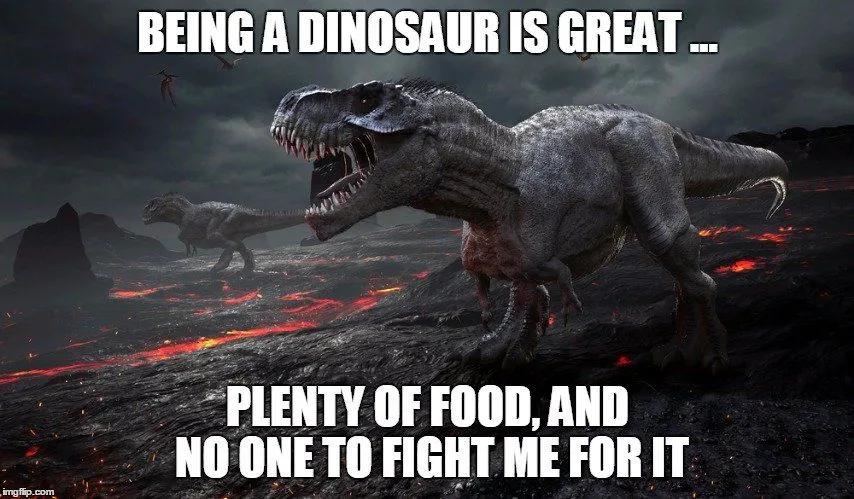
Millions of years ago, dinosaurs – most notably, sauropods such as Argentinosaurus, which are known as the largest terrestrial animals in the history of Earth, tipping the scales at perhaps 65 to 80 tonnes (70 to 90 short tons) – lived in a very different world than the one we know now. It is tempting to chalk their size up to a richer atmosphere, but the evidence doesn’t cooperate: oxygen levels across the age of dinosaurs swung up and down and, by some estimates, sat at or below today’s 21 percent. The sauropods’ real trick was anatomical. They had bird-like lungs fed by a network of air sacs that pulled oxygen from the air far more efficiently than our own, tiny heads on enormously long necks that let them browse vegetation across a huge area without hauling their bulk around, and a blistering growth rate from egg to giant. Add in very few natural predators, save for other carnivorous dinosaurs, and there was little to stop them from getting big.
Furthermore, large creatures tend to do well in the short term, but on an evolutionary time scale, most massive creatures face a number of unavoidable challenges. To live functionally, large animals need to be spread out across larger habitats to prevent competition for food, but this also makes them more susceptible to disease, and an inability to mate. While being large means few threats from predators, the other aspects of life can make it difficult to survive.
Basically, sprawling Mesozoic landscapes with abundant plant food and very little competition gave a handful of lineages room to balloon in size. When we think about the world now, with its millions of different species, much more complicated ecosystems and food chains, as well as the impact of humanity on ecosystems and the global environment, it is easy to understand why animals don’t have the same opportunity to grow to incredible sizes any longer. There is simply a higher chance that an animal will come in contact with a predator in increasingly limited wild spaces, or an animal will succumb to the effects of climate change or human infringement.
While this is a depressing realization, there are other factors. The evolutionary route that many species takes only provides organs of a certain size and functionality to support a given body size. There is a reason why most species types have a general range of size; they are in a constantly evolving state, and we are seeing only a snapshot of it. Natural limitations keep an upper limit on most species’ size today, but there are a few notable exceptions.
Why Gravity Caps The Size Of Land Animals
So if abundant food and elbow room are the green light, what is the brake? On land, the answer comes down to a stubborn piece of geometry that Galileo worked out back in the 1600s: the square-cube law. As an animal grows, its weight depends on its volume, which scales with the cube of its length. But the strength of its bones and muscles depends on their cross-sectional area, which only scales with the square of its length. Double an animal’s height while keeping the same shape and its mass goes up roughly eightfold, while the bones holding it up get only about four times stronger.
You can see where that leads. The bigger a land animal gets, the more its own weight threatens to snap its skeleton. Big animals partly cheat the math by growing disproportionately thick, pillar-like legs (think of an elephant’s legs next to a gazelle’s), but you can only thicken bones so far before the animal is all legs and no body. Most biomechanists put the practical ceiling for a land animal somewhere around 100 to 120 tonnes (roughly 110 to 130 short tons). That is right about where the heaviest sauropods topped out, which is probably no coincidence. Earth’s gravity, not a shortage of food, is what keeps a real-life Godzilla from ever standing up.
Could Giant Humans Ever Exist?
So if geometry caps a land animal near 100 tonnes, what does that mean for us? The same rule that flattens a hypothetical Godzilla also rules out the towering humans of myth and folklore. Galileo saw this coming almost four centuries ago. In his 1638 book Two New Sciences, he pointed out that you cannot simply scale a person up and expect the skeleton to cope: a body that grows taller gains weight with the cube of its height, while its bones gain strength only with the square. Scale a person up too far, Galileo warned, and if his height be increased inordinately he will fall and be crushed under his own weight. To carry a truly giant frame, the leg bones would have to grow so thick and stumpy that the giant would end up looking less like a person and more like an elephant standing upright.

Real medicine backs him up. The tallest human for whom there is solid evidence was Robert Wadlow of Illinois, who reached 2.72 m (8 ft 11 in) before his death in 1940. His height came from an overactive pituitary gland, and even at that scale his skeleton could barely keep pace: he needed leg braces to walk, and a poorly fitted brace caused the infection that killed him at just 22.
What about the giant skeletons that surface online, half-buried beside tiny archaeologists with shovels? Those are digital fakes. The most widely shared one began as an entry in a 2002 photo-editing contest on the website Worth1000, and National Geographic has repeatedly confirmed that it never unearthed any such remains. Real giants, it turns out, are ruled out by the same geometry that limits every other land animal.
Why The Biggest Animals Live In Water
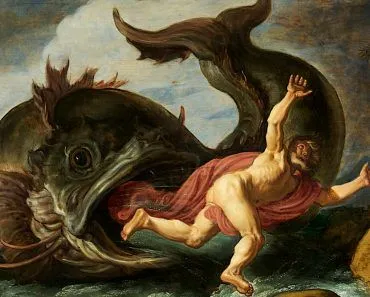
Here is the twist, though. The largest animal that has ever lived isn’t a dinosaur at all, and it’s alive right now. The blue whale stretches up to about 30 m (98 ft) and can weigh roughly 150 tonnes, with the heaviest individuals estimated near 180 tonnes (close to 200 short tons). That is heavier than any sauropod, and its heart alone weighs about 180 kg (400 lb), the size of a small piano.
How does it dodge the square-cube law that hems in land animals? Water. A body submerged in seawater is buoyed up by a force nearly equal to its own weight, so a whale effectively becomes weightless and never has to support its bulk on its skeleton. Its bones are spared the crushing loads an equally massive land animal would face, freeing it to grow far beyond the land-bound ceiling. Strand a whale on a beach, however, and the magic vanishes: out of the water, its own weight begins to crush its lungs and organs, which is one reason beached whales so often die. The ocean, in other words, isn’t just where the giants live, it’s the reason they can be giants at all.
How Big Could An Animal Theoretically Get?
We have a land ceiling of about 100 tonnes and a water-borne record holder in the blue whale. That raises the obvious follow-up: could anything ever grow bigger? Buoyancy cancels the weight problem, so what stops a whale from ballooning to the size of a cruise ship?

The answer is dinner. A blue whale does not sip krill politely. It lunges, throwing its mouth open to swallow an enormous gulp of krill-filled water, then squeezes the water back out through its baleen and swallows what is left behind. In 2019, a team led by biologist Jeremy Goldbogen tagged roughly 300 whales, from small porpoises up to blue whales, and measured how much energy each animal gained and spent while feeding. Bigger bodies hauled in far more food per lunge, which is exactly why filter feeding opened a road to gigantism that hunters chasing one fish at a time never had.
The same study, though, found the brake. For the largest filter feeders, it concluded that size is limited less by how much krill floats in the ocean and more by the animal’s own machinery: how much water it can engulf and filter in a single lunge, and how many lunges it can pack into the short seasons when krill gathers thickly enough to be worth chasing. Past a certain size, a whale would spend more effort feeding than the feeding gives back. That is why many biologists think the blue whale is not only the largest animal that has ever lived, but close to the largest an animal on Earth could ever be. (If you count every living thing, though, the biggest of all is a far stranger organism.)
Why Aren’t Insects The Size Of Dogs?
Size limits cut the other way too. If you have ever been grateful that a wasp is the size of a thumbnail rather than a Labrador, you have insect plumbing to thank. Insects don’t breathe with lungs. Instead, air seeps in through tiny holes along their bodies and travels to their tissues through a branching network of tubes called the tracheal system, relying largely on the slow process of diffusion. That works beautifully at small sizes, but the bigger an insect gets, the farther oxygen has to creep to reach its innermost cells, and at some point the supply simply can’t keep up.
This is the classic explanation for the monsters of the deep past. During the Carboniferous period, around 300 million years ago, atmospheric oxygen may have climbed as high as 30 to 35 percent (versus 21 percent today), and the fossil record from that time includes dragonfly relatives like Meganeura with wingspans approaching 70 cm (over 2 ft). Richer air, the thinking went, let oxygen diffuse deeper and supported bigger bugs. It is a neat story, and worth flagging that recent research has begun to poke holes in it, with some studies arguing that oxygen diffusion wasn’t the only bottleneck and that the lack of flying predators may have mattered just as much. Either way, the takeaway holds: a giant insect would struggle to breathe in today’s atmosphere, which is exactly why the bugs around you stay reassuringly small.
When Growing Up Never Ends…
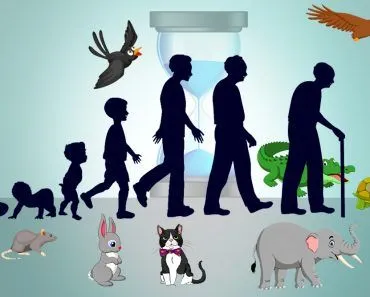
A number of animals may not grow to colossal sizes relative to dinosaurs, but they do continue to grow throughout their lives. Some of the most common examples of this phenomenon are sharks, alligators, kangaroos, snakes, crayfish, iguanas, many lizards, tortoises, lobsters and octopuses.
This type of never-ending growth is called indeterminate growth, meaning that there is no boundary except the limitations of the habitat – namely the availability of food and protection from predators (humans included).
In humans, puberty is a period of incredible growth and change, and the hormonal fluctuations in the body can be extreme. However, the estrogen produced by the body during this period (by both men and women) causes the growth plates of our bones to fuse together, so we tend to reach our adult size and stay there.
This doesn’t happen in indeterminate growers, and it looks like evolution is to blame. When we think about getting bigger and living longer, humans naturally think about “aging” – the gradual breakdown of organ systems and cellular mutations that cause oxidative stress, and generally make the body less efficient.
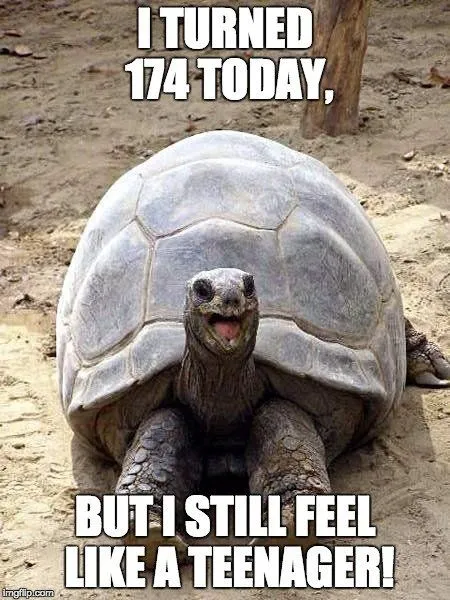
In many of these indeterminate growers, such as tortoises, researchers have found negligible senescence, meaning their odds of dying barely climb as the years pile up. A landmark 2022 study in Science tracked dozens of turtle and tortoise species and found that most of them age far more slowly than humans do, with several showing essentially no measurable decline at all. (To be clear, that doesn’t make them immortal, it just means old age doesn’t stack the deck against them the way it does for us.) The reason we don’t find sharks as big as school buses and octopi as big as a boat is that the rate of this ongoing growth is rather slow, like a tree adding a single tiny ring every year to its trunk.
Scientists haven’t been able to determine exactly why some species have this ability for unending growth and “agelessness”, but it continues to fascinate researchers, and possibly bringing humans one step closer to understanding immortality.
Until we figure that out, just make the most out of life, and keep your eyes peeled for giant kangaroos!
References (click to expand)
- Mumby, H. S., et al. (2015). Distinguishing between determinate and indeterminate growth in a long-lived mammal. BMC Evolutionary Biology.
- Sebens, K. P. (1987). The Ecology Of Indeterminate Growth In Animals. Annual Review of Ecology and Systematics.
- Square-Cube Law. Wikipedia.
- What Is The Largest Animal On Earth? Encyclopaedia Britannica.
- Why Were Dinosaurs So Big? Natural History Museum.
- da Silva, R., et al. (2022). Slow And Negligible Senescence Among Testudines. Science. PubMed.
- 388 Years Ago Galileo Worked Out Why Human Giants Can’t Exist. Scientific American.
- Tallest Man Ever (Robert Wadlow). Guinness World Records.
- Find Out How The Giant Skeleton Hoax Started. National Geographic.
- Goldbogen, J. A., et al. (2019). Why Whales Are Big But Not Bigger. Science. PubMed.