Table of Contents (click to expand)
Smartphones can make people lazy thinkers. This is because people tend to use their smartphones as a way to avoid thinking about things that are not vitally important. Additionally, smartphones can impact the way in which our brain processes information, which can lead to people making less intelligent decisions.
Smartphones are probably the most significant and groundbreaking invention of our generation. There is very little argument against that fact – just think about it. In the beginning, computers used to be as large as huge halls where people actually operated inside of them, but now, we have convenient, tiny things called smartphones that fit into our pockets. More importantly, they allow us to perform calculations and operations that we could never have even imagined doing with those gigantic machines of the past.
However, like anything, do smartphones also come with a dark side?
Heavy Usage Of Smartphones
In a widely cited 2015 study published in Computers in Human Behavior, researchers at the University of Waterloo ran three experiments with a total of 660 participants. They measured each person’s cognitive style with the Cognitive Reflection Test (a short set of problems that have an obvious but wrong intuitive answer and a correct answer that takes a moment of deliberation), along with verbal and numeracy ability and how often participants used their phone’s search engine. People who scored lower on this test, the more intuitive thinkers, reported leaning more heavily on Google and similar tools to look things up. The authors did not argue these people were less intelligent overall; they argued the phone had become a way to avoid thinking, what psychologists call cognitive miserliness.
Humans tend to conserve their energy, as that conservation is an evolutionary demand. And yes, thinking does take a lot of energy, so we try to conserve energy by thinking less and less about things that aren’t vitally important. This is essentially us offloading information from our brain. This is fine for a short time, but because our brain is moldable, it begins to adapt to this habit of non-thinking and avoiding situations where we have to think hard about… anything! This is why it becomes increasingly difficult to stay sharp as we age, which tends to make people less intelligent as they age.
This is essentially the cognitive miserliness Barr’s team described, dressed up as a productivity hack.
Affecting How We Think
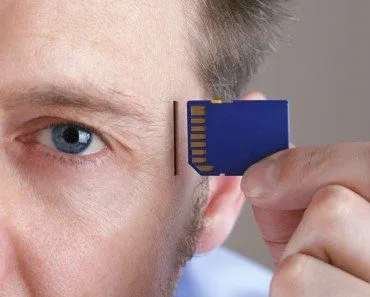
Psychologists call it cognitive offloading: when you know a fact is one tap away, your brain stops bothering to store it. In a review published in Frontiers in Psychology in 2017, Henry Wilmer and colleagues at Temple University found that people who expect to have device access to information remember the information itself poorly, but remember exactly which folder or app it is stored in. GPS apps show the same pattern. Regular turn-by-turn users build weaker mental maps of their cities than people who navigate from memory.
The phone may also tax your thinking even when you are not touching it. A 2017 set of experiments by Adrian Ward and colleagues at the University of Texas at Austin, published in the Journal of the Association for Consumer Research, asked nearly 800 people to perform working-memory tests with their phone in one of three places: on the desk, in a pocket or bag, or in another room. Those with phones in another room performed best; phones on the desk produced the worst scores, even when the device was silenced and face-down. The researchers argued that not thinking about the phone uses up some of the same limited cognitive resources you would otherwise spend on the task. A 2022 pre-registered replication failed to reproduce the effect, so this finding is best taken as suggestive rather than settled.
Intuitive And Analytical Thinkers
Psychologist Daniel Kahneman, who won the Nobel in economics in 2002, describes the mind as running two systems. System 1 is fast, automatic, and intuitive. It answers “10 cents” when you hear, “A bat and a ball cost $1.10 in total, and the bat costs $1 more than the ball; how much does the ball cost?” System 2 is slower and deliberate. It checks the math, notices the trap, and arrives at the correct 5 cents. Shane Frederick at Yale built a three-question Cognitive Reflection Test (CRT) around exactly this kind of trap, published in the Journal of Economic Perspectives in 2005.
Barr and Pennycook’s experiments found that people who scored lower on the CRT, the intuitive (System 1) thinkers, were also the heaviest users of their phone’s search function. People who scored higher and were more willing to do the analytical work themselves searched less often. The phone, in other words, becomes most appealing precisely to the thinkers who are already inclined to take cognitive shortcuts.
Why Is Excessive Smartphone Usage Bad?
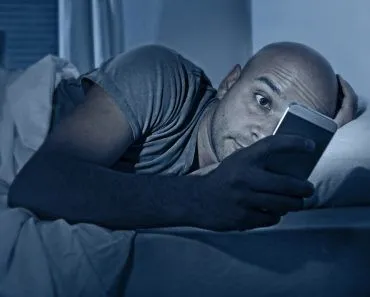
Whatever the data says about thinking, the case against excessive smartphone use is on firmer ground in three places. On sleep: a 2024 study in Brain Communications showed that 90 minutes of pre-bed phone reading without a blue-light filter suppressed melatonin in both adolescents and young adults, and adults still had reduced deep (N3) sleep in the early part of the night. On the road: the US National Highway Traffic Safety Administration links thousands of road deaths a year to distracted driving (3,308 fatalities in 2022 alone). Sending a single text takes a driver’s eyes off the road for about five seconds, which at 55 mph (89 km/h) is the length of a football field. On school and work: a 2024 meta-analysis in the Journal of Behavioral Addictions, pooling 44 studies, found a consistent negative relationship between problematic smartphone use and academic achievement.
The picture is murkier for teenage mental health. In The Anxious Generation (2024), social psychologist Jonathan Haidt argues that smartphones and social media are the main drivers of rising anxiety and depression in adolescents since 2012. Other researchers, notably Amy Orben and Andrew Przybylski at Oxford, ran the numbers across three large adolescent surveys totalling more than 300,000 teens and found that digital-technology use explained at most about 0.4 percent of the variation in their wellbeing. The honest summary is that there is a small real correlation, strongest for heavy social-media-using girls, but the broader claim that smartphones rewired a generation is still being debated.
If you want to keep your thinking sharp as you age, you do not need to throw the phone away. The Ward et al. study suggests one cheap fix: keep it out of sight (and out of the same room) while you are working on anything that needs concentration. Read a book, engage in a debate, create something artistic outside of a painting app. There is a far more fascinating world outside of your tiny screen.
References (click to expand)
- Barr, N., Pennycook, G., Stolz, J. A., & Fugelsang, J. A. (2015). The brain in your pocket: Evidence that smartphones are used to supplant thinking. Computers in Human Behavior, 48, 473–480.
- Wilmer, H. H., Sherman, L. E., & Chein, J. M. (2017). Smartphones and Cognition: A Review of Research Exploring the Links between Mobile Technology Habits and Cognitive Functioning. Frontiers in Psychology, 8, 605.
- Ward, A. F., Duke, K., Gneezy, A., & Bos, M. W. (2017). Brain Drain: The Mere Presence of One’s Own Smartphone Reduces Available Cognitive Capacity. Journal of the Association for Consumer Research, 2(2), 140–154.
- Frederick, S. (2005). Cognitive Reflection and Decision Making. Journal of Economic Perspectives, 19(4), 25–42.
- Höhn, C. et al. (2024). Smartphone-light exposure influences sleep and melatonin in adolescents and young adults. Brain Communications, 6(3), fcae173.
- Sunday, O. J. et al. (2024). The effects of problematic smartphone use on academic performance: a systematic review and meta-analysis. Journal of Behavioral Addictions, 13(2).
- Orben, A., & Przybylski, A. K. (2019). The association between adolescent well-being and digital technology use. Nature Human Behaviour / Psychological Science.
- Distracted Driving. US National Highway Traffic Safety Administration.