Garlic and onion breath is caused by organosulfur compounds, chiefly allyl methyl sulfide (AMS). AMS resists liver breakdown, so your blood carries it to your lungs and pores, where it leaks out for hours (and sometimes a day or two) after you eat. Parsley, raw apple, mint and milk are the most studied remedies for damping the smell.
People who relish eating onion-heavy dishes often have to deal with a nasty after-effect – smelly breath! However, this is not just true of onions; there are lots of vegetables (garlic, shallots, etc.) that cause bad breath after you consume them. Why do they do that? And perhaps more importantly, is there anything you can do to get rid of the foul smell?
Onions And Garlic: Members Of The Same Family
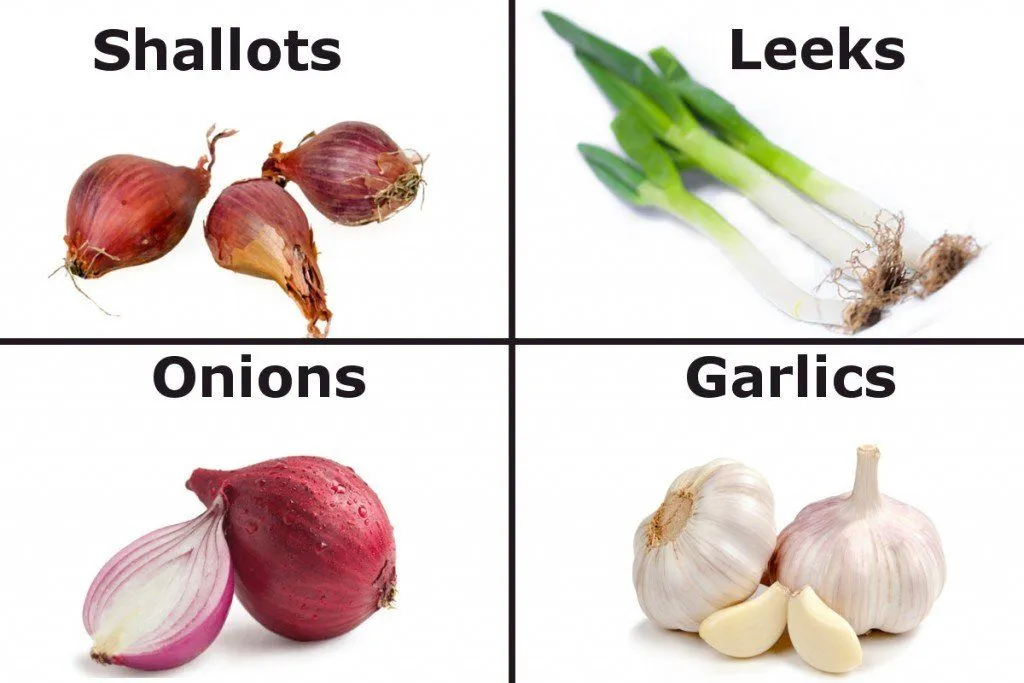
Some of you (especially those who have a thing for botany) may already know that both onions and garlic belong to the same family of flowering plants called Allium. It is a genus of monocotyledonous flowering plants that, in addition to the ones mentioned above, include shallots, scallions, leeks, chives and many other wild species. Therefore, consuming pretty much any of these vegetables will give you the same characteristic bad breath.
Why Do They Cause Bad Breath?
The unpleasant smell of a person’s breath (called ‘halitosis’ in medical terms) may be caused by different things, but the characteristic bad breath that one experiences after consuming garlic – often called ‘garlic breath’ – is mostly related to the contents of garlic, i.e. the sulfuric compounds present inside it. Moreover, garlic is also considered to be a promoter of certain microbes inside your mouth that are commonly held responsible for causing bad breath.
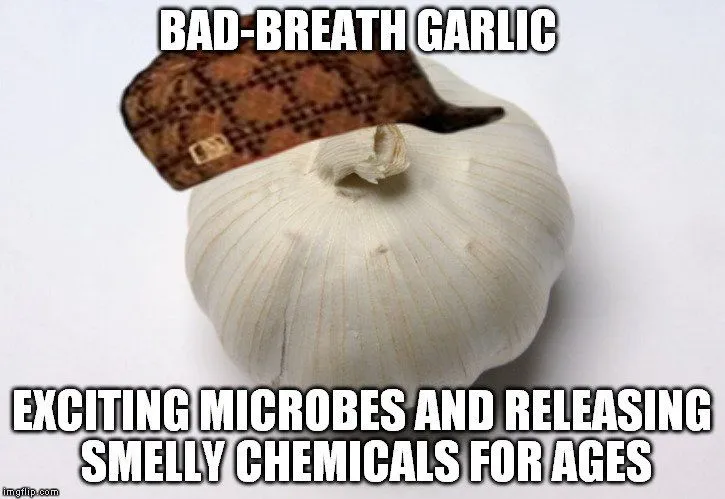
The chemistry here is a two-step affair. When you crush or chew a clove, an enzyme called alliinase converts a precursor (alliin) into allicin, the punchy organosulfur compound responsible for the sharp, fresh-garlic aroma. Allicin is unstable and quickly breaks down into a family of other sulfur compounds, including diallyl disulfide and, crucially, allyl methyl sulfide (AMS). AMS is the colorless, strong-smelling compound chiefly responsible for the lingering version of garlic breath, the kind that hangs around for hours rather than minutes.
To add to your woes, rinsing your mouth out or brushing your teeth won’t completely rid you of the smell, because the most stubborn culprit, AMS, isn’t sitting on your tongue at all. It gets absorbed into your bloodstream from the gut and, since the liver can’t break it down quickly, your blood ferries it to every part of your body. From there it leaks out through your lungs every time you exhale, and even out through your pores. This is why your entire body can sometimes seem to smell after a hefty dose of onion or garlic, and why AMS has been measured in human breath and on skin for many hours, in some studies for more than a day, after eating raw garlic. The bigger the dose, the longer the smell hangs around.
How Long Does Garlic Or Onion Breath Last?
Here is the honest answer: longer than you would like. The familiar sharp whiff right after a meal comes partly from compounds like diallyl disulfide, and that part fades within a couple of hours. The version that overstays its welcome is allyl methyl sulfide (AMS), and it lingers precisely because your liver is so slow to dismantle it.

Researchers can actually clock this. A 2020 study in Frontiers in Nutrition measured AMS in volunteers after they ate cooked and roasted garlic, and found it peaked within about half an hour to an hour, then kept turning up in samples collected as much as 24 hours later. A separate 2020 paper in Scientific Reports tracked the same compound as it seeped out through the skin and reported that AMS was still being emitted at least 8 hours after a garlic meal, right alongside diallyl disulfide.
So a rough rule of thumb: the immediate "garlic mouth" smell from a normal serving usually clears within a few hours, but a faint AMS trace on your breath and skin can hang on through the rest of the day, and a big raw dose can keep you fragrant well into the next one. How much you eat matters, and raw cloves are worse than thoroughly cooked ones, because heat deactivates the enzyme that builds these compounds in the first place. Onion breath follows the same clock, since onions belong to the same Allium family and run the same sulfur chemistry.
How Can You Get Rid Of The Smell?
Unfortunately, there’s almost nothing that can guarantee an absolutely ‘clean’ smell after eating garlic. However, there are some popular remedies that do help in suppressing the stench, to a certain extent.
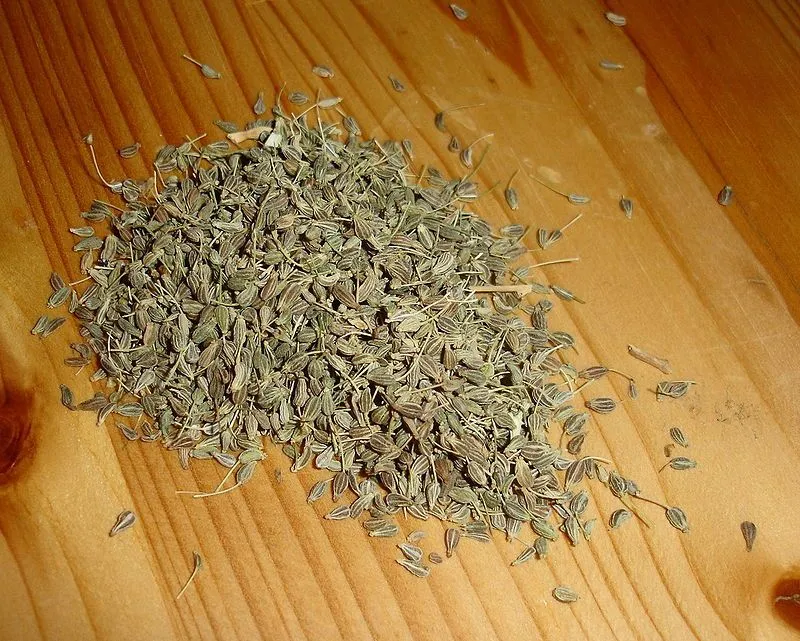
Flossing your teeth and scraping your tongue can help a bit by clearing the sulfur compounds still sitting in your mouth, but it does nothing for the AMS already in your bloodstream. For that, food chemistry comes to the rescue. A neat 2014 study in the Journal of Food Science tested a long list of remedies and found that raw apple, raw lettuce, mint leaves and, yes, parsley were the most effective at knocking down garlic breath volatiles. The likely mechanism is enzymatic: an enzyme called polyphenol oxidase, plus the phenolic compounds in these plants, chemically deodorizes the sulfur molecules. Drinking whole milk with the meal also helps, because its fat traps some of the sulfur compounds before they ever reach your bloodstream. Cardamom, cloves, fennel and anise seeds round out the usual list of post-meal palate cleansers.
Now, if you’re out having dinner with friends and want to avoid an embarrassing situation later on, either tote a small packet of cardamom or simply keep your eyes and hands off any dishes that are rich in onion and garlic.
Why Does My Breath Smell Like Garlic When I Haven't Eaten Any?
This is a surprisingly common worry, and most of the time it has nothing to do with onions or garlic at all. The mouth simply makes its own sulfur. The main driver of everyday bad breath is the same family of volatile sulfur compounds produced by bacteria sitting on your tongue and between your teeth. According to the Cleveland Clinic, poor oral hygiene is the leading cause, with dry mouth, gum disease, tonsil stones, and reflux (GERD) close behind. Any of these can leave a stale, sometimes oniony or sulfurous note on your breath even when your last meal was bland.

Less often, a genuinely garlicky smell can point further up the chain. A condition called fetor hepaticus produces a musty, garlic-and-sulfur breath because a struggling liver lets a compound called dimethyl sulfide build up in the blood and escape through the lungs. It usually arrives alongside other signs of serious liver disease, so it is not something a healthy person stumbles into. Toxicologists also recognize a distinct garlic odor as a warning sign of certain poisonings: a garlic-like smell can flag organophosphate pesticide exposure, and excess selenium intake is known to leave a garlic odor on the breath, which is one reason poison-control specialists are trained to notice it.
The practical takeaway is far less dramatic. If your breath smells faintly of onion or garlic without a matching meal, the odds overwhelmingly favor an ordinary oral cause, so a tongue scraper, better flossing, treating dry mouth, and a dental check usually sort it out. A garlicky smell that persists despite good oral care, or that comes with other symptoms, is worth raising with a doctor rather than chewing through another packet of mints.
References (click to expand)
- Munch, R., & Barringer, S. A. (2014). Deodorization of Garlic Breath Volatiles by Food and Food Components. Journal of Food Science. PubMed.
- Mirondo, R., & Barringer, S. (2016). Deodorization of Garlic Breath by Foods, and the Role of Polyphenol Oxidase and Phenolic Compounds. Journal of Food Science. PubMed.
- Measurement of diallyl disulfide and allyl methyl sulfide emanating from human skin surface and influence of ingestion of grilled garlic. Scientific Reports (2020). Nature.
- Halitosis - Harvard Health. Harvard University
- Tangerman, A. (2002, June). Halitosis in medicine: A review. International Dental Journal. Elsevier BV.
- Quantification of Allyl Methyl Sulfide... in Human Milk and Urine After Ingestion of Cooked and Roasted Garlic (2020). Frontiers in Nutrition.
- Halitosis (Bad Breath). Cleveland Clinic.
- Fetor Hepaticus. Cleveland Clinic.
- What causes garlic breath (besides garlic bread and arsenic)? Tennessee Poison Center, Vanderbilt University Medical Center.
- A Whiff of Garlic, a Turn of Fate: Recognizing Organophosphorus Poisoning. Case Report. PMC, NIH.