Table of Contents (click to expand)
Asparagus makes your pee smell because the body breaks down asparagusic acid, a sulfur-rich compound found almost only in asparagus, into volatile gases like methanethiol and dimethyl sulfide. These escape as you urinate, usually within 15 to 30 minutes of eating it. Roughly 60% of people carry a gene variant that makes them unable to smell it.
As a child, you probably didn’t like to eat asparagus, but as an adult, hopefully you’ve realized what a delicious and versatile vegetable it can be. If you’re a regular consumer of asparagus, you’ve probably also noticed the effect it can have on the aroma of your bathroom. This phenomenon has mystified people for centuries (Benjamin Franklin even griped about it in 1781), and asparagus invariably makes our urine smell… strange! Some people think it smells like rotten eggs or boiled cabbage, while others find it earthy and faintly sweet. And a sizeable share of the population can’t detect this pungent scent at all.
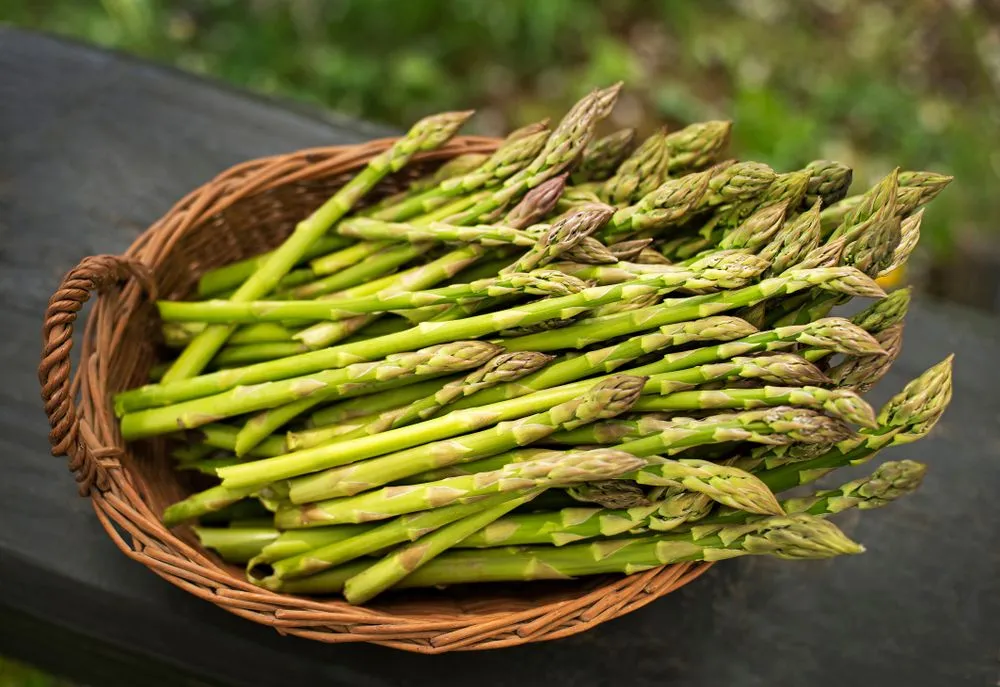
If this aromatic assault on your nostrils has ever mystified you in the past, by the end of this article, we’ll get to the bottom of this foul-smelling mystery.
What Causes The Strange Smell?
For those who have experienced this “bouquet” of weirdness after a heart helping of asparagus, don’t get too worried (or excited)… this phenomenon affects everyone who eats it! When we consume food, it enters our body as complex macromolecules, which must be broken down through digestion to be more usable and manageable by the body.
The process of digestion begins the moment food enters our mouth, and ends when we urinate or excrete. Between those two points, a long string of metabolic processes will occur.
During the process of breaking down food, complex molecules are broken down to simpler ones, and byproducts are created. In the case of asparagus, this vegetable contains a unique compound called asparagusic acid, a sulfur-bearing molecule found almost exclusively in Asparagus officinalis. When our bodies break down this substance, it creates a cocktail of volatile sulfur-containing compounds. For a compound to be considered “volatile”, it must have a boiling point that is low enough for it to exist as a gas at room temperature.
When asparagusic acid is broken down, it forms methanethiol, dimethyl sulfide, dimethyl disulfide, dimethyl sulfoxide and dimethyl sulfone. Methanethiol (the same chemical the body produces in small amounts after eating garlic, and a close cousin of the gas added to natural gas to make it smell) is the main culprit, with the other compounds adding boiled-cabbage and faintly sweet notes. They’re all volatile and potent, as are most aromatic compounds that contain sulfur (think rotten eggs). Within 15 to 30 minutes of eating asparagus, these metabolites pass into your urine. When you next go to the bathroom, the compounds evaporate from the warm liquid as it leaves the body and the pungent aroma drifts up to your nose.
Why Doesn’t Everyone Smell It?
This phenomenon might shock you (particularly the first time you ever eat this vegetable), but if you run into the other room and drag your friends in to witness the olfactory occurrence, some people may just look at you like you’re crazy. A 2016 genome-wide study of nearly 7,000 American adults, published in The BMJ, found that around 58% of men and 62% of women couldn’t detect the unique fragrance of these compounds once they’re released by the body. In other words, the majority of people are blissfully nose-blind to asparagus pee.
This may be hard to believe, but it’s important to remember that our senses often operate on a spectrum, and no two people observe the world in quite the same way. Our perception of color varies, as does our sensitivity to touch and the strength of our hearing at certain frequencies. It should therefore come as no surprise that our olfactory sense also has some variability.
Humans carry roughly 400 functional genes that code for odor receptors, and with the seemingly endless variability of genes, each person’s distinct olfactory perception of the world is a bit easier to understand. The same 2016 GWAS, along with an earlier 2010 study by Pelchat and colleagues, pinpointed a cluster of olfactory receptor genes on chromosome 1q44, with variations near a receptor called OR2M7 as the most likely culprit for the inability to smell asparagus metabolites. This selective dropout in a single odor channel is called specific anosmia.

It is believed that specific anosmia has developed (for a number of different smells) because humans evolved to depend primarily on their visual sense for survival. Unlike some other animals, whose olfactory sense is hundreds or even thousands of times more sensitive than ours, we have incredibly strong vision (comparatively).
Over thousands of generations, some genetic variation entered the gene pool related to our olfactory sense, but had little to no impact on survival, so it remains a common trait. Frankly, given the noxious fumes of asparagus pee, most people should be thankful they have specific anosmia for this particular scent!
Other Examples Of Anosmia
However, if you are feeling left out of the stinky circle, never fear… there are a number of other common foods that can make your urine smell anything but normal. When your body is dehydrated, your urine tends to have a higher concentration of waste products and aromatic compounds, so when you drink excessive amounts of alcohol or coffee, your urine may take on a rather potent smell.
Taking high-dose vitamin B-6 (pyridoxine) supplements can also lend urine an unmistakable “vitamin” odor; the surplus your body doesn’t use is flushed straight out through your kidneys. Beetroot is another famous example. It can not only affect the smell of your urine, but in some people it also stains the urine pink or red. Don’t be alarmed if your pee comes out a distinct shade of red after a beet-heavy meal. The harmless condition is called beeturia, and it shows up in roughly 10 to 14% of people.
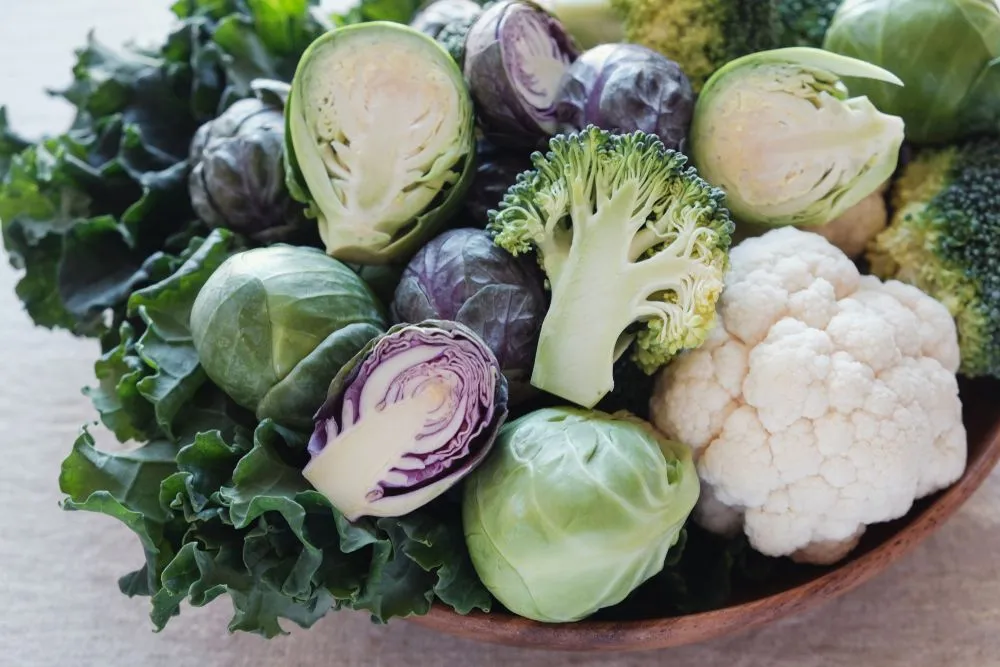
Cruciferous vegetables, such as Brussels sprouts, cabbage and broccoli, are loaded with their own sulfur compounds (glucosinolates) that can leave a faint whiff in your urine when they’re metabolized. The same goes for popular spices like fenugreek, coriander and cumin, which is why your urine may smell unusual following a healthy dose of curry or Tex-Mex.
One of the strangest, and most weirdly enjoyable, smells comes from sugary puffed-wheat cereals (Sugar Puffs in the UK, Honey Smacks and Golden Crisp in the US). Plenty of fans report the unmistakable scent of malt or honey wafting up from the toilet bowl an hour or two after breakfast. The effect hasn’t been formally pinned to a single molecule yet, but the leading suspect is residual cereal aroma compounds passing through the kidneys largely intact.
A Final Word
If you are one of those people who can smell the sulfur compounds in a post-asparagus pee, there is nothing to worry about, either with your nose or your bladder. The smell dissipates within a few hours, and the health benefits you can gain from this nutrient-dense vegetable (folate, vitamin K, fiber and a hefty dose of antioxidants) are well worth the somewhat strange bathroom experience.
References (click to expand)
- Pelchat, M. L., Bykowski, C., Duke, F. F., & Reed, D. R. (2010, September 27). Excretion and Perception of a Characteristic Odor in Urine after Asparagus Ingestion: a Psychophysical and Genetic Study. Chemical Senses. Oxford University Press (OUP).
- Mitchell, S. C. (2013). Asparagus, Urinary Odor, and 1,2-Dithiolane-4-Carboxylic Acid. Perspectives in Biology and Medicine. Project Muse.
- Asparapee or aspara-EP? - ProQuest - search.proquest.com
- Markt, S. C., et al. (2016). Sniffing out significant “Pee values”: genome wide association study of asparagus anosmia. BMJ, 355, i6071.
- Asparagusic acid. Wikipedia.
- Beeturia. StatPearls. NCBI Bookshelf.