Table of Contents (click to expand)
The body does not attack the normal gut flora because several systems keep the peace at once. A mucus layer physically separates most bacteria from the gut wall, secretory IgA antibodies coat them, and antimicrobial peptides keep them in check. The immune system also actively learns tolerance: molecules like PSA switch on regulatory T cells that call off any attack.
The short answer is that our body uses a few clever tricks at the same time. It physically keeps most of the bacteria at arm’s length, tags them with antibodies, and even trains its own immune cells to treat these microbes as friends rather than foes. We’ll unpack each of these in a moment, but first, let’s appreciate just how good our immune system usually is at its job.
The human body has a very efficient immune system, or defensive “army”. The soldiers are constantly circulating throughout our body and fighting off any invaders, and any foreign objects that enter the body. This helps us maintain a healthy body. To explain the efficiency, let’s use a simple example. The air we breathe is filled with microorganisms, but we’re not constantly sick, right? Our body fights off the germs entering our body.
The same goes for the food that we eat. Every bite we put in our mouths has potentially dangerous germs, but we don’t fall ill every time. This aptly displays the efficiency of our immune system. So now it begs the question, what about our normal flora, such as the gut? First, let’s understand what the normal flora of the gut is, and how the immune system normally works.
Immune System – A Brief Overview
Our immune system has many different types of cells that work together to protect us. The work has been delegated to them to simplify the functioning and to avoid any miscommunication. Right now, let’s briefly understand how the body deals with pathogens, a.k.a. harmful microbes.

When a pathogen enters the body, it is detected by the cells. It is then “presented” to a specific type of cell called T-cells. These perform 3 functions, based on their type. One type calls the other cells of the immune system to help in nullifying the threat. One type handles all the cells of our own body that have been infected. The third type differentiates between “self” and “non-self” to prevent our immune system from attacking our own cells, thus preventing autoimmune diseases. Our major concern is with this 3rd type, called the regulatory T cells or T-reg cells.
This is just a brief glance at our immune system, which is actually far more complex and intricately organized.
Gut Flora
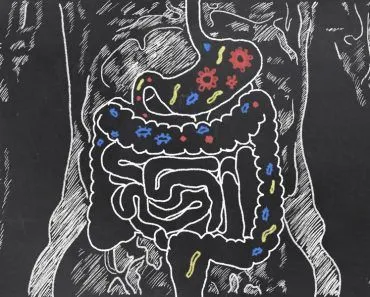
Our intestines are teeming with microbes like Enterococcus faecalis and various Lactobacilli (bacteria), along with the yeast Candida albicans, among many others. There are a staggering number of them: a typical adult carries roughly 38 trillion bacteria, which is about the same as the number of human cells in the body. (The popular claim that microbes outnumber our own cells ten to one was revised down to roughly one-to-one in 2016.) These organisms perform a plethora of functions that are very essential for us. To name a few, they produce enzymes that are capable of breaking down complex molecules into smaller ones that we can absorb, aid in easy digestion, produce nutrients like Vitamin B and K, and protect us from the invasion of harmful pathogens by secreting inhibitory substances. It’s like an alliance between our immune system and these organisms. After all, the enemy of my enemy is my friend, right?
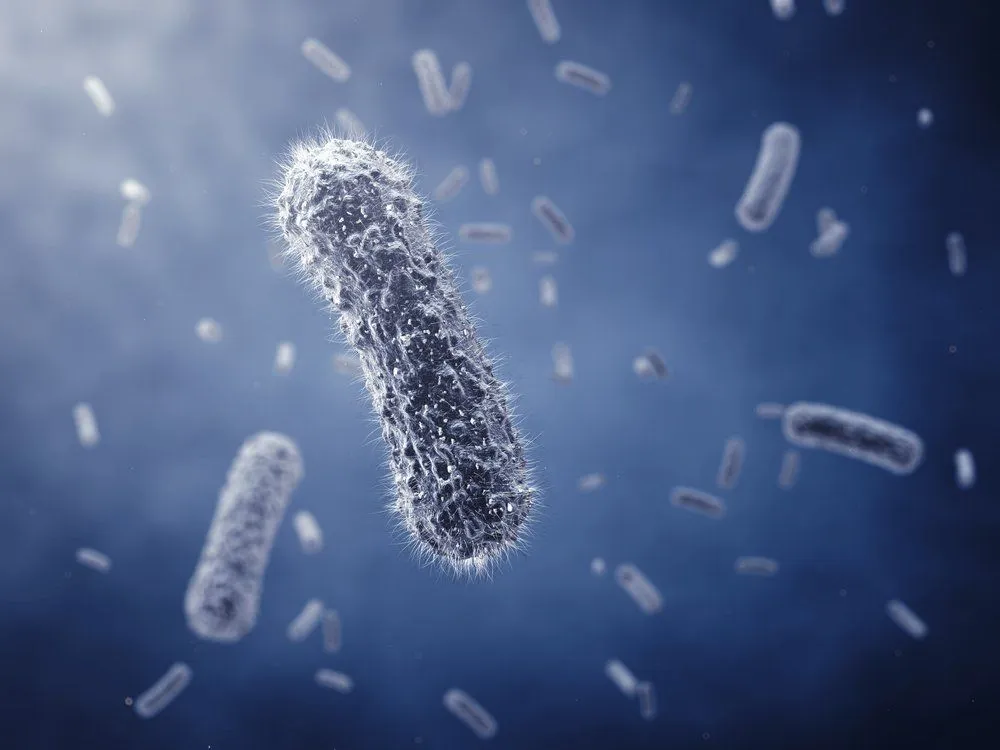
Disturbances in the normal flora cause a number of problems, including inflammation, digestive problems, constipation, diarrhea etc. Events like infections, the consumption of antibiotics and autoimmune diseases, among others, are the causes of these disturbances. However, at the end of the day, these helpful organisms are microorganisms too, foreign to our body. So why doesn’t the body’s efficient immune system attack them too?
How Is It Protected?
The body actually pulls off this balancing act in two ways at once. First, it keeps most of the bacteria at a polite distance so they rarely touch the gut wall in the first place. Second, where they do brush up against us, the immune system chooses to tolerate them rather than open fire. Let’s look at the “keep your distance” tricks first.
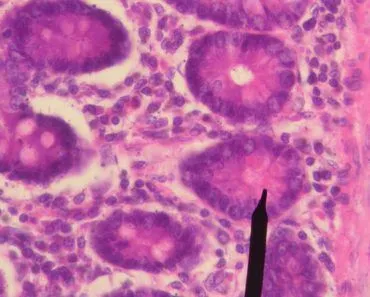
The gut wall is coated in a slippery layer of mucus, and in the colon this mucus actually comes in two layers. The dense inner layer sits right against the cells lining the intestine and is kept almost completely free of bacteria, while the looser outer layer is where the microbes are allowed to settle and feed. It’s a bit like a moat: the bugs get the outer bank, but the castle wall stays clear. On top of this, the gut lining is dotted with specialized Paneth cells that pump out antimicrobial peptides (tiny natural antibiotics like defensins and lysozyme), which keep bacteria from creeping too close to the epithelium.
Our body also tags the residents. Plasma cells in the gut churn out an antibody called secretory IgA, which coats the commensal bacteria. Rather than marking them for destruction, this coating pins them in the mucus and outer layers, helping to corral the microbes and keep the community balanced without triggering inflammation.
So much for keeping a distance. But the microbes aren’t entirely hidden, and our immune cells can still sense them. Here is where our T-reg cells come into the picture. As we’ve seen above, these cells differentiate self from non-self and call off immune reactions that would otherwise damage friendly tissue.
The microbes in our gut produce a complex molecule known as PSA (polysaccharide A). This molecule activates specific receptors on the T-reg cells. The result? The activated T-reg cells stop any immune response against the microbes and prevent any harm from befalling them. Smart, don’t you think?

When experiments were carried out in which the PSA molecules, the specific receptors on the T-reg cells, or the T-reg cells themselves were removed, the body attacked the same microbes that it earlier hadn’t. So in essence, the T-cells of our body are taught to not attack our gut’s normal flora, and instead consider it as a part of our own body.
Our immune system grows and learns every day. Among other things, it has learned to co-exist peacefully with the normal flora, not just in our gut, but in other places like the skin, genitourinary tract, eye, mouth, etc. because of their contribution to our overall health. There are times when the normal microbes found in one part can cause a disease if they reach other parts of the body. These are called opportunistic organisms. However, it wouldn’t be an understatement to say that these organisms are still essential for the smooth functioning of our body.
References (click to expand)
- Learning to Tolerate Our Microbial Self - California Institute of Technology (Caltech)
- Johnson, J. L., Jones, M. B., & Cobb, B. A. (2015). Polysaccharide A from the Capsule of Bacteroides fragilis Induces Clonal CD4+ T Cell Expansion. Journal of Biological Chemistry.
- Johansson, M. E. V., et al. (2008). The inner of the two Muc2 mucin-dependent mucus layers in colon is devoid of bacteria. Proceedings of the National Academy of Sciences (PNAS).
- Pietrzak, B., et al. (2020). Secretory IgA in Intestinal Mucosal Secretions as an Adaptive Barrier against Microbial Cells. International Journal of Molecular Sciences.
- Bevins, C. L., & Salzman, N. H. (2011). Paneth cells, antimicrobial peptides and maintenance of intestinal homeostasis. Nature Reviews Microbiology.
- Sender, R., Fuchs, S., & Milo, R. (2016). Revised Estimates for the Number of Human and Bacteria Cells in the Body. PLOS Biology.
- Willey, J. M., Sherwood, L., Prescott, L. M., & Woolverton, C. J. (2008). Prescott, Harley, and Klein's Microbiology. McGraw-Hill Higher Education.