Table of Contents (click to expand)
Happiness is partly linked to the gut. About 90% of the body's serotonin is made in the gut, and the bacteria living there shape your mood through the gut-brain axis. They don't ship serotonin to the brain (it can't cross the blood-brain barrier), but they steer tryptophan, the vagus nerve and other signals that do.
Imagine waking up one morning feeling fresh and energetic. You get out of your warm and cozy blanket, start making your cuppa joe and gaze peacefully at the morning sun. Today feels different. You’re having a great hair day, you’re able to correctly guess all the words of your crossword puzzle in a single go, the food tastes better and the sun feels nicer than usual as it shines on your skin. It’s one of those days where you’re just in an unusually good mood.
It turns out that this happy feeling could come from the gut… more specifically, the gut bacteria.
Gut Bacteria – Our Friendly Intestinal Tenants
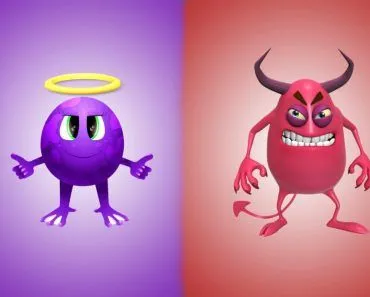
In school, perhaps you were taught that bacteria are nasty disease-causing germs. This is true. They do cause disease. However, not all bacteria make us sick, or indeed, are even harmful.
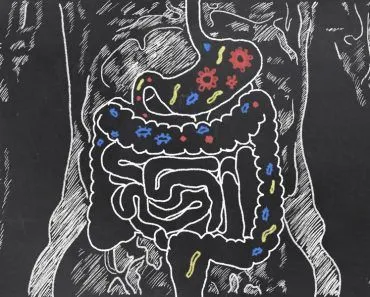
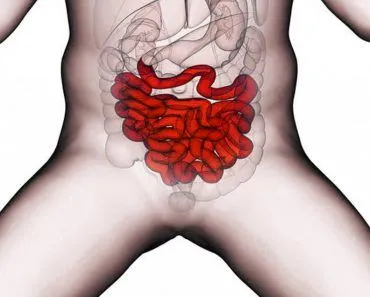
These microscopic beings are omnipresent. The food we eat, the air we breathe, the water we drink and the ground we walk on are teeming with thousands upon millions upon trillions of bacteria. They even live in and on our bodies. The bacteria inside us live in our intestinal tract and are called gut bacteria.
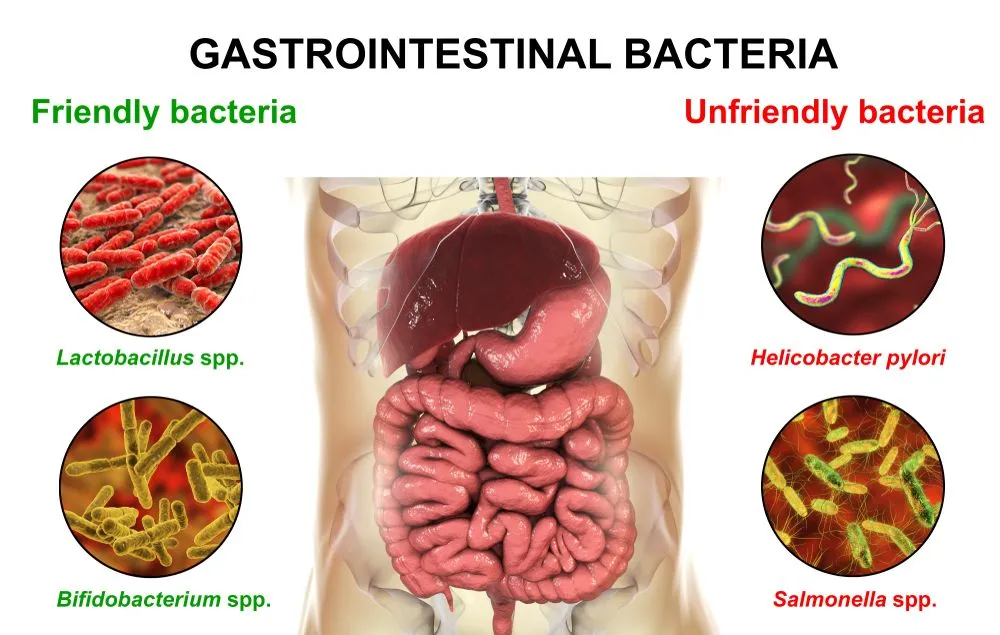
Gut bacteria are in us from the moment we are born until well after we die. They are an integral part of our lives because they affect our sleep, digestion and even our mood and behavior. Gut bacteria seem to pull so many physiological strings by altering our brain chemistry.
Now, you’re probably wondering how something in our GUT can affect our BRAIN. Sounds strange, right? However, the link actually lies in our digestive system.
The food we eat is also the food that our gut bacteria eat. They break down the tough to digest complex sugars that our body can’t break down independently. They also use our food as fuel for their metabolic processes. In doing all this, they make vitamins, signaling molecules and neurochemicals that affect our brain.
That’s how we get the microbiota-gut-brain axis.
What Is The Microbiota-gut-brain Axis?
The microbiota-gut-brain axis is the link between our brain and our gut. Microbiota is the scientific term for the entire bacterial population living in our gut. To simplify the definition even further, it’s the connection between our gut bacteria and the brain. It’s how gut bacteria can influence brain chemistry.
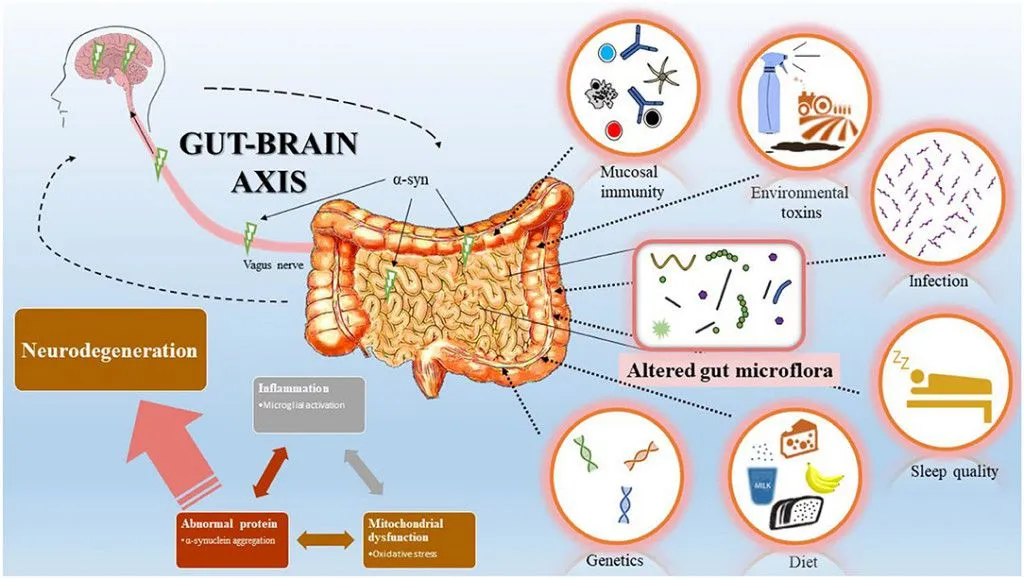
It’s a two-way, complicated communication system. Part of it is electrical. Your gut is wrapped in its own web of roughly 500 million nerve cells, the enteric nervous system, which scientists nicknamed the “second brain” because it can run digestion largely on its own. This second brain is wired to the first one mainly through the vagus nerve, a long cable that runs from the gut up to the brainstem. Interestingly, most of that traffic travels upward: an estimated 90% of the vagus nerve’s fibers carry signals from the gut to the brain, not the other way around.
The other part is chemical. The system also involves the hypothalamic-pituitary-adrenal (HPA) axis, the communication highway between the hypothalamus, pituitary gland and adrenal gland. This inner-brain mechanism regulates our hormonal pathways, including the ones behind stress.
To summarize, essentially, our gut environment sends a steady stream of nerve and chemical signals that nudge our hormonal systems and brain chemistry.
What Does This Have To Do With Happiness?
Remember when I mentioned that gut bacteria make vitamins, signaling molecules and neurochemicals that affect our brain?
Well, there is an amino acid – tryptophan – present in milk, meat, cheese and nuts, which is essential because it helps our body make certain hormones. Our gut bacteria lend a hand in turning this tryptophan into those hormones.
Here’s where it gets interesting. About 90% of the body’s serotonin is actually made in the gut, not the brain. The bulk of it is produced by specialized lining cells called enterochromaffin cells, which build serotonin from tryptophan. Gut bacteria don’t do all of this themselves, but they have a big say in it. When they ferment dietary fiber, the byproducts they make tell those enterochromaffin cells to crank up serotonin production. Some gut bacteria can even produce serotonin directly. So, our friendly tenants help set the dial on this so-called happy hormone.
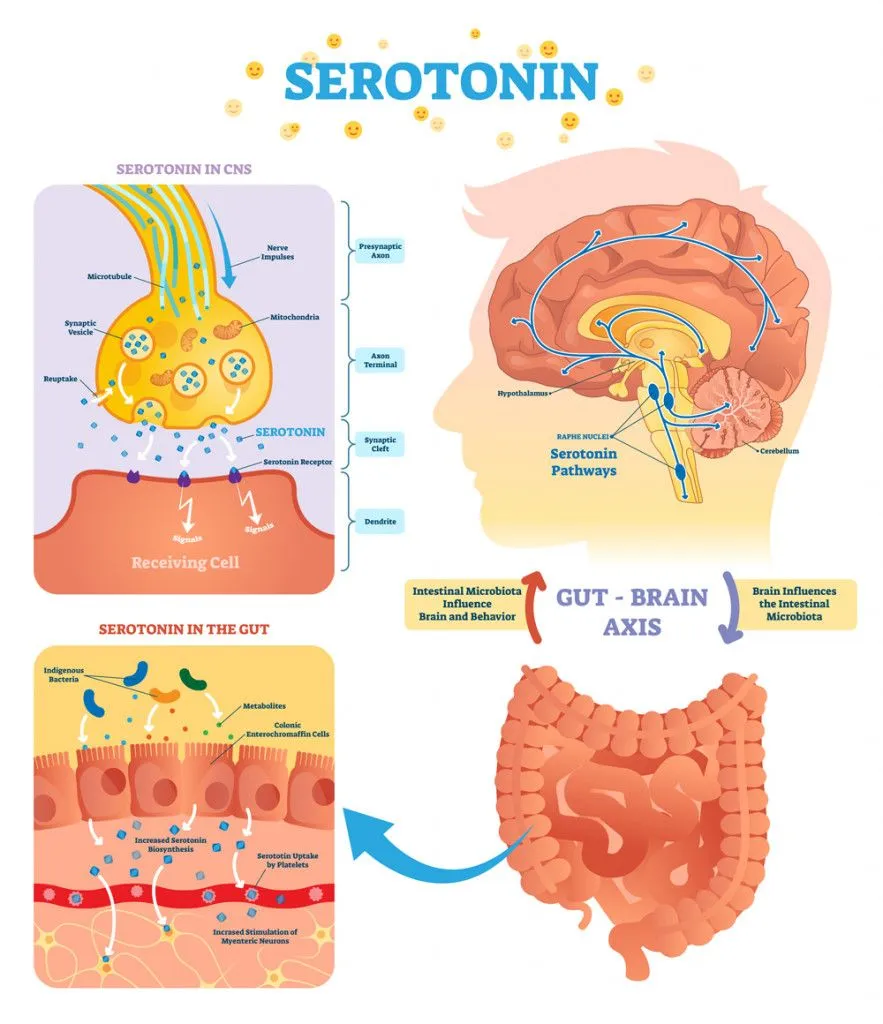
Now for a common myth worth clearing up. Gut serotonin doesn’t simply float up to the brain and make us happy. Serotonin can’t cross the blood-brain barrier, the tight security gate that controls what enters the brain. So the brain has to make its own serotonin, separate from the gut’s supply. What the gut bacteria can do is influence the brain indirectly. They help control how much tryptophan, the raw material the brain needs, gets shipped onward, since tryptophan (unlike serotonin) can cross into the brain. They also signal through the vagus nerve and the HPA axis. Serotonin made in the gut can stimulate this HPA axis, prompting the body to release stress hormones such as adrenocorticotropic hormone (ACTH) and corticotropin-releasing hormone. These hormones help regulate our stress response and our drive to take on challenges.
Serotonin also affects sleep and appetite. When we are hungry, serotonin levels drop. This could explain why we sometimes find ourselves in irritable moods when famished.
Happy Bacteria = Happy Moods
If your gut bacteria are functioning well, then your gut will be making its mood-boosting brain chemicals. So, for you to be happy, it’s important to keep your gut bacteria happy too! That’s why we should ensure that the food we eat is of the highest quality possible.
Research suggests that gut bacteria development in our early lives can shape our serotonin production throughout our adult lives. It’s a symbiotic relationship. Pleasing our gut bacteria will only help our mood and health, so be sure to eat food that’s good for the gut!
In fact, gut bacteria can even influence our food choices. Those random food cravings we get may not be so random after all.
When gut bacteria metabolize dietary fiber, they make short-chain fatty acids (SCFA), such as Butyrate. These chemicals also act as signaling molecules and affect gut-brain communication, causing mood changes. So, when we get those random pizza cravings, it could be our gut bacteria telling us that they need more fiber. They act as microscopic puppetmasters by controlling our food cravings.
However, we should fight back against our junk food cravings, as those only come when our gut bacteria are not balanced, resulting in a condition known as dysbiosis. This is when there are more bad gut bacteria than good ones or the good bacteria are not in large enough numbers to have a good effect on the body.
This is also where the idea of “psychobiotics” comes in, the notion that the right probiotics (helpful live bacteria) might ease stress and low mood. In one well-known mouse study, feeding the animals a Lactobacillus strain lowered stress hormones and anxious behavior, and the effect vanished when the vagus nerve was cut, neat proof of that gut-to-brain wiring at work. In people, the picture is more cautious. Reviews of human trials do find small reductions in anxiety and depression symptoms, but the effects are modest and researchers still don’t agree on which strains, doses or durations actually work. So probiotics are a promising lead for mood, not a proven cure, and the science is still catching up.
Conclusion
To answer the main question, a real part of happiness does trace back to the gut, even if it’s an indirect, behind-the-scenes role rather than bacteria piping joy straight into your brain. After reading this article, I hope you get a sense of the power that gut bacteria hold in our lives. The signaling molecules they make, and the nerve and hormone pathways they tap into, can influence many bodily processes, including mood.
New technologies and trends are trying to exploit this trait. One emerging trend is customizing a diet based on gut bacteria composition.
There are now laboratories that can give you detailed reports about your gut bacteria. All you have to do is provide them with a poop sample. Accordingly, custom diets can be made that are best suited to your particular gut bacteria.
Overall, gut bacteria do more than just put smiles on people’s faces, so remember to care for them!
References (click to expand)
- Cryan, J. F., & O’Mahony, S. M. (2011, February 8). The microbiome-gut-brain axis: from bowel to behavior. Neurogastroenterology & Motility. Wiley.
- Clarke, G., Grenham, S., Scully, P., Fitzgerald, P., Moloney, R. D., Shanahan, F., … Cryan, J. F. (2012, June 12). The microbiome-gut-brain axis during early life regulates the hippocampal serotonergic system in a sex-dependent manner. Molecular Psychiatry. Springer Science and Business Media LLC.
- Lima-Ojeda, J. M., Rupprecht, R., & Baghai, T. C. (2019, February 11). Happy Gut Bacteria, Happy Brain: The Microbiota-Gut-Brain Axis. Frontiers for Young Minds. Frontiers Media SA.
- Lima-Ojeda, J. M., Rupprecht, R., & Baghai, T. C. (2017, August 22). “I Am I and My Bacterial Circumstances”: Linking Gut Microbiome, Neurodevelopment, and Depression. Frontiers in Psychiatry. Frontiers Media SA.
- (2015) The gut-brain axis: interactions between enteric microbiota .... The National Center for Biotechnology Information
- Huo, R., Zeng, B., Zeng, L., Cheng, K., Li, B., Luo, Y., … Xie, P. (2017, November 30). Microbiota Modulate Anxiety-Like Behavior and Endocrine Abnormalities in Hypothalamic-Pituitary-Adrenal Axis. Frontiers in Cellular and Infection Microbiology. Frontiers Media SA.
- Höglund, E., Øverli, Ø., & Winberg, S. (2019, April 8). Tryptophan Metabolic Pathways and Brain Serotonergic Activity: A Comparative Review. Frontiers in Endocrinology. Frontiers Media SA.
- Alcock, J., Maley, C. C., & Aktipis, C. A. (2014, August 8). Is eating behavior manipulated by the gastrointestinal microbiota? Evolutionary pressures and potential mechanisms. BioEssays. Wiley.
- Silva, Y. P., Bernardi, A., & Frozza, R. L. (2020, January 31). The Role of Short-Chain Fatty Acids From Gut Microbiota in Gut-Brain Communication. Frontiers in Endocrinology. Frontiers Media SA.
- Enterochromaffin Cells-Gut Microbiota Crosstalk: Underpinning the Symptoms, Pathogenesis, and Pharmacotherapy in Disorders of Gut-Brain Interaction. PMC, NCBI.
- Bravo, J. A., et al. (2011). Ingestion of Lactobacillus strain regulates emotional behavior and central GABA receptor expression in a mouse via the vagus nerve. Proceedings of the National Academy of Sciences (PNAS). PubMed, NCBI.
- The efficacy of probiotics, prebiotics, and synbiotics on anxiety, depression, and sleep: a systematic review and meta-analysis of randomized controlled trials. BMC Psychiatry. Springer Nature.