Table of Contents (click to expand)
Cavities form when bacteria in dental plaque feed on sugar and starch and release acids. When the plaque pH drops below about 5.5, those acids dissolve the minerals in tooth enamel. If this demineralization repeatedly outpaces repair, the enamel breaks down and a cavity forms. Fluoride and saliva help reverse early damage by rebuilding the enamel.
There are some ailments that are known to be quite debilitating (like malaria), and there are others that are mostly just annoying (like the common cold), and don’t have a lasting impact on the overall health of an individual. However, there is a third category of ailments that are a combination of both, i.e. they are both excruciatingly painful and unbearably annoying. The list of such dreaded diseases is topped by tooth decay!
One of the surefire signs of tooth decay is the formation of cavities in a patient’s teeth. In this article, we will discuss how cavities are formed, how they affect dental health, and how they can be prevented.
Let’s start with the basics…
What Is Tooth Decay?
You might have seen posters at dental clinics or hospitals that depict tooth decay and the various steps involved in this breakdown. Here’s a picture showing the main stages of tooth decay:
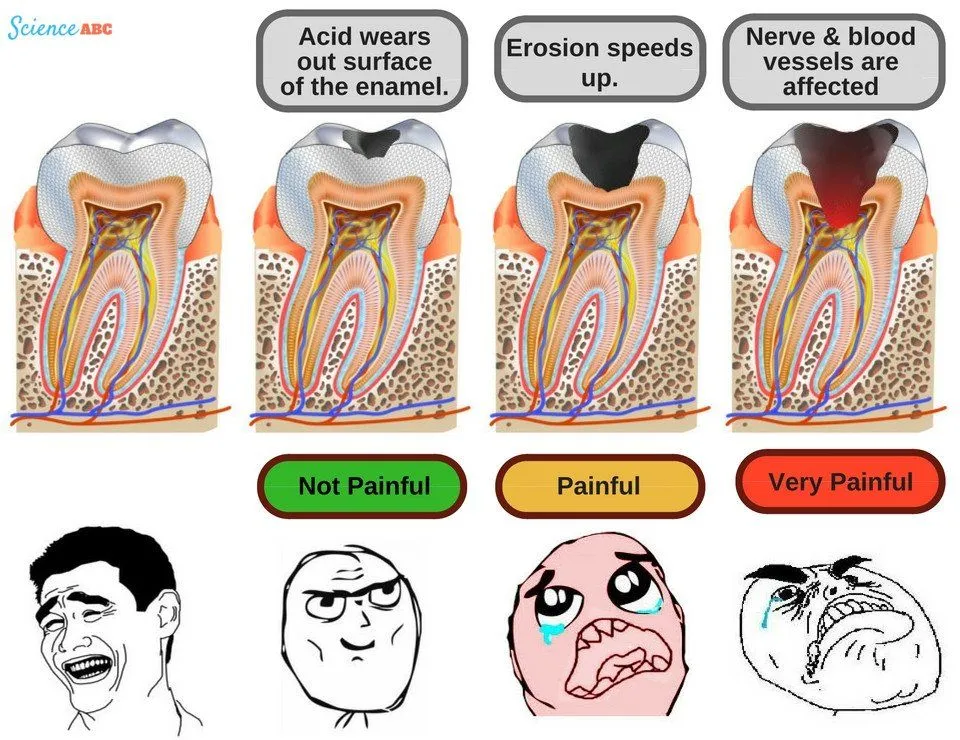
As the name aptly signifies, tooth decay is the gradual deterioration of your dental health. More specifically, tooth decay (biologically referred to as ‘dental caries’) is an umbrella term that characterizes a host of interrelated dental conditions, including the build-up of plaque, the demineralization of dental enamel, and ultimately the formation of cavities in your teeth. By that last step, it’s formally concluded that the individual’s tooth has ‘decayed’ and that it cannot be salvaged unless some external help is extended towards it. And in case you’re feeling singled out, take comfort in numbers: dental caries is one of the most common chronic conditions on the planet, with the vast majority of adults having had at least one cavity at some point in their lives.
What Causes Cavities In Teeth?
It all starts with food – the stuff you eat and drink on a daily basis.
You probably know this already, but our mouths play host to hundreds of bacteria, even if you take very good care of your teeth. These bacteria reside on the tongue, teeth, gums and other places inside the mouth. However, not all of these bacteria are harmful; some of them are beneficial and even essential for the efficient functioning of our immune system. (Source)
Unfortunately, there are other microbes that are solely responsible for the transmission of disease, making us fall ill and do damage to our teeth.
Whenever we consume anything sweet or sugary (e.g., a bar of chocolate, a stick of gum, a soft drink) or things that contain starch (like bread, cookies etc.), we’re also feeding the acid-producing bacteria in our mouths, the best-studied of which is Streptococcus mutans. These bacteria like sugar just as much as we do. They build and consolidate their ‘homes’ on our teeth, banding together with other microbes into a sticky film called dental plaque (a biofilm), using sugar as an energy source. As they go about doing their business (which is not in our best interests, by the way), they ferment those sugars and produce acids (e.g., lactic acid) as byproducts. These are the acids that do all the damage to our teeth from that point on.
Enamel is a white, protective layer (which also happens to be the hardest substance in our bodies) that covers and shields the teeth from damage. It’s roughly 96% mineral, mostly a crystal called hydroxyapatite built from calcium and phosphate. However, even enamel can withstand only so much punishment when it comes to acids. Every time the bacterial acids drive the pH in the plaque below about 5.5 (the so-called critical pH for enamel), those minerals start to dissolve out of the surface, a process dentists call demineralization.

Between meals, saliva washes away acid, restores a neutral pH, and feeds calcium and phosphate back into the enamel, a repair process called remineralization. Decay is really a tug-of-war between these two: as long as remineralization keeps pace, the tooth holds up, and the earliest sign of damage (a chalky white spot) can still heal. But as constant snacking tips the balance toward demineralization, the enamel grows weaker and weaker under the corrosive forces of these acids, until it finally gives way, allowing very small holes to form on the teeth, which marks the beginning of the elaborate process of tooth decay.
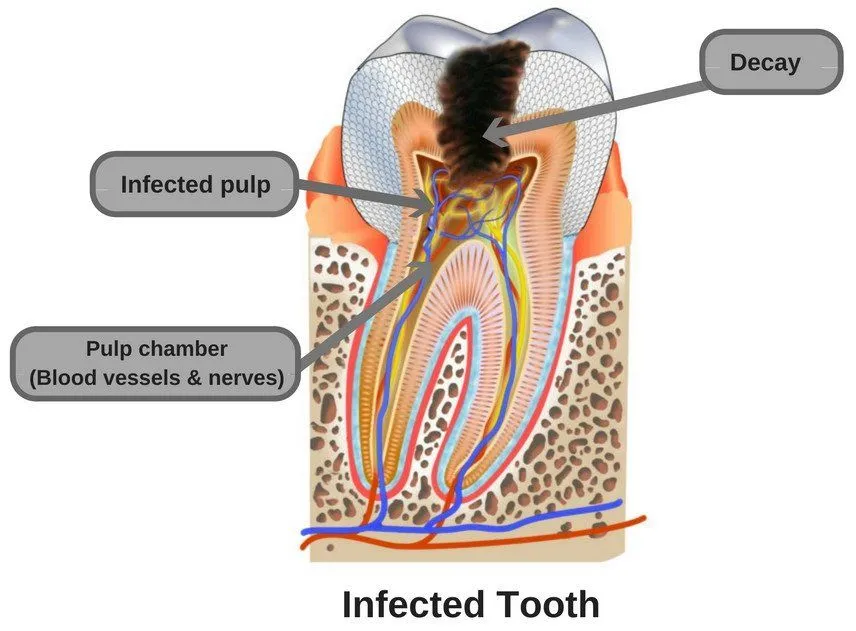
At first, you won’t feel any pain in your teeth, but as the imbalance between sugar consumption and enamel repair continues to grow, the decay breaks through into your dentin, the softer, second layer of the tooth. Dentin is laced with microscopic tubules that lead toward the nerve, so this is where sensitivity and pain start to kick in and you begin to realize that something’s wrong with your teeth. If proper care is not taken at this point, the decay reaches the pulp, the innermost chamber that houses the tooth’s nerves and blood vessels, and then the pain becomes truly excruciating (and an infection or abscess can set in).
This requires medical treatment (which may include the artificial filling of cavities or even the removal of the affected teeth) to get some reprieve from the unbearable pain of these decayed teeth.
Here’s a very interesting Ted-Ed video that visually explains the entire process of cavitation:
How Can Cavities Be Prevented?
Cavities are formed when microbes create chinks in the enamel, the hard protective layer of teeth. Therefore, one way to combat cavity-creation is to reinforce the enamel, i.e., make it strong enough to withstand the perpetual acids that are produced by oral bacteria.
Fluoride
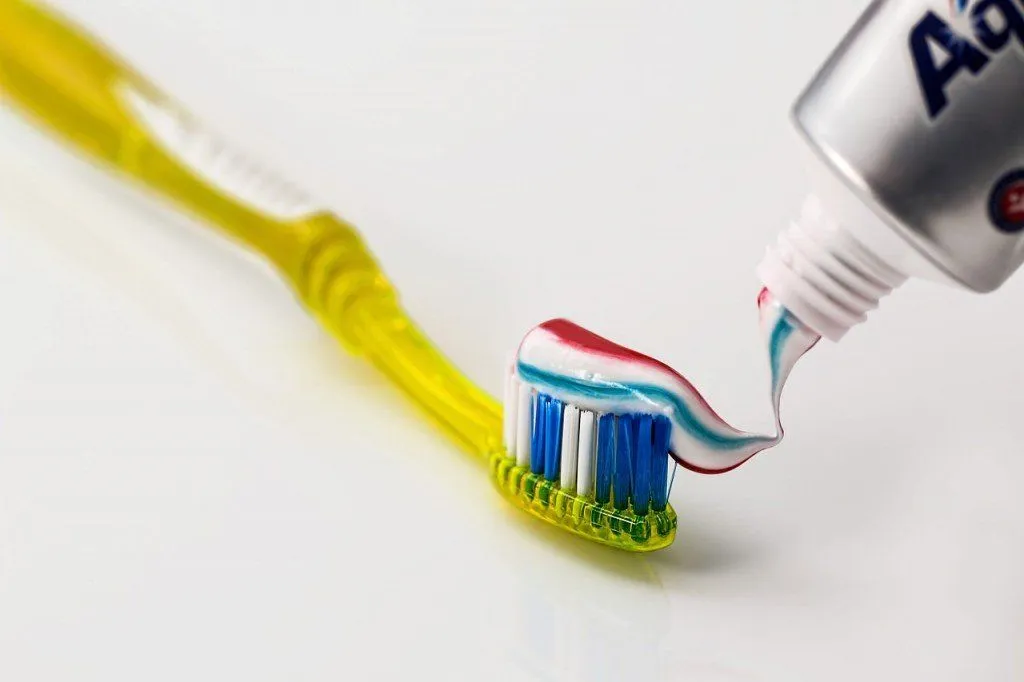
Fluoride is a mineral that can significantly assist in stopping the progression of cavities and reinforcing your enamel. It works on two fronts: when fluoride is present while the tooth remineralizes, it gets built into the enamel as fluorapatite, a tougher crystal that resists acid far better than ordinary hydroxyapatite, and it also reduces the ability of bacteria to produce acids inside the mouth (Source). Thankfully, most toothpastes on the market today contain fluoride as an ingredient. Many public water supplies are fluoridated too, and brushing twice a day with a fluoride toothpaste is one of the simplest, best-evidenced ways to keep cavities at bay.
Stay Away From Sweets!
This is probably the best corrective action you can take in this case, or in any case, actually… simply limit your sugar consumption. Since it’s the sugar and starch present in your diet that kickstarts the process of tooth decay, you can more easily prevent cavities by just saying no to sugary foods. And here’s the part most people miss: it’s not just how much sugar you eat, but how often. Every sip of soda or nibble of candy resets the acid clock and drops your mouth back below that critical pH, so constant snacking gives your enamel no time to recover between attacks. Three square meals are kinder to your teeth than a steady, all-day stream of sweets.
Avoiding sugar is easier said than done, but there exists a very simple exercise that can help you achieve that. First, move your head to the left, and then move it to the right. Here’s a helpful demonstration:
Keep repeating this process whenever you’re offered anything sweet to eat, and you’ll be in great shape! Tooth decay avoided!
References (click to expand)
- Tooth Decay. National Institute of Dental and Craniofacial Research (NIDCR), NIH.
- Rathee M, Sapra A. Dental Caries. StatPearls. NCBI Bookshelf.
- The Role of Fluoride on Caries Prevention. StatPearls. NCBI Bookshelf.
- Caries Risk Assessment and Management. American Dental Association (ADA).
- The Caries Process: Demineralization and Remineralization. dentalcare.com Continuing Education.
- Tooth decay. Wikipedia.