Table of Contents (click to expand)
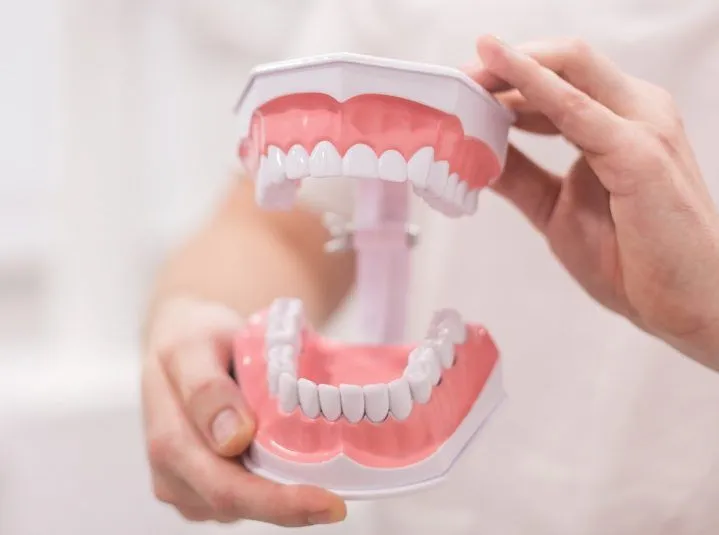
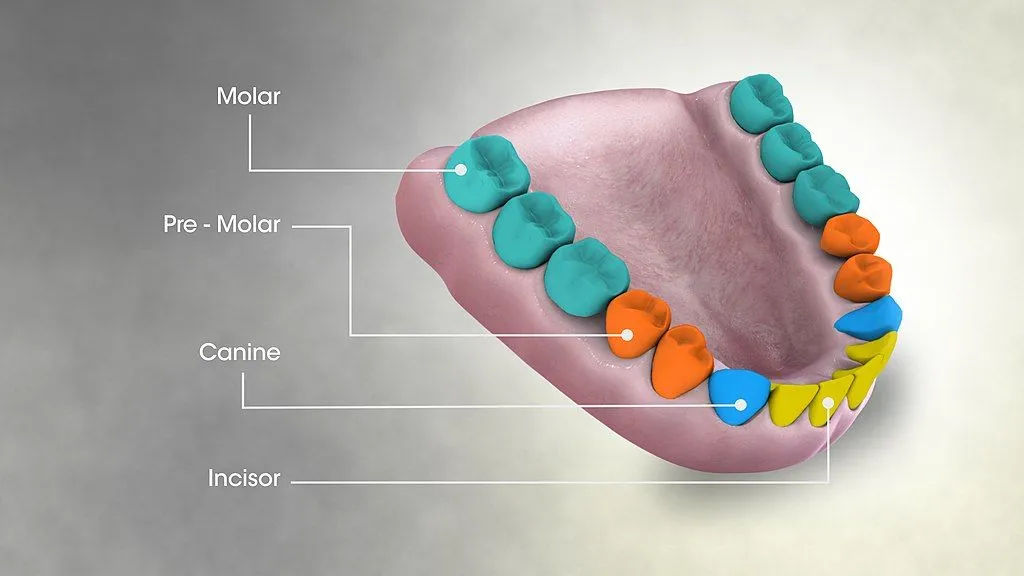
Adults have 32 teeth of four types: 8 incisors for cutting, 4 canines for tearing, 8 premolars for crushing, and 12 molars (including 4 wisdom teeth) for grinding. Each shape suits a different job, because humans are omnivores who eat both plants and meat.
Have you ever looked in the mirror and wondered why our teeth are different shapes and sizes?
Teeth help us to break down bits of food, pronounce words, and give structural shape to our face. The reason they come in such varied shapes is that humans are omnivores, eating both plants and animal foods, so we need a mix of cutting, tearing, and grinding tools in one mouth. A set of teeth with several different shapes is called heterodont dentition, and it is something we share with most other mammals. The different types of teeth in our mouth each have special roles, hence their variation. Let’s dive into the different types of teeth and the benefits of the two sets of teeth we have!
Types Of Teeth
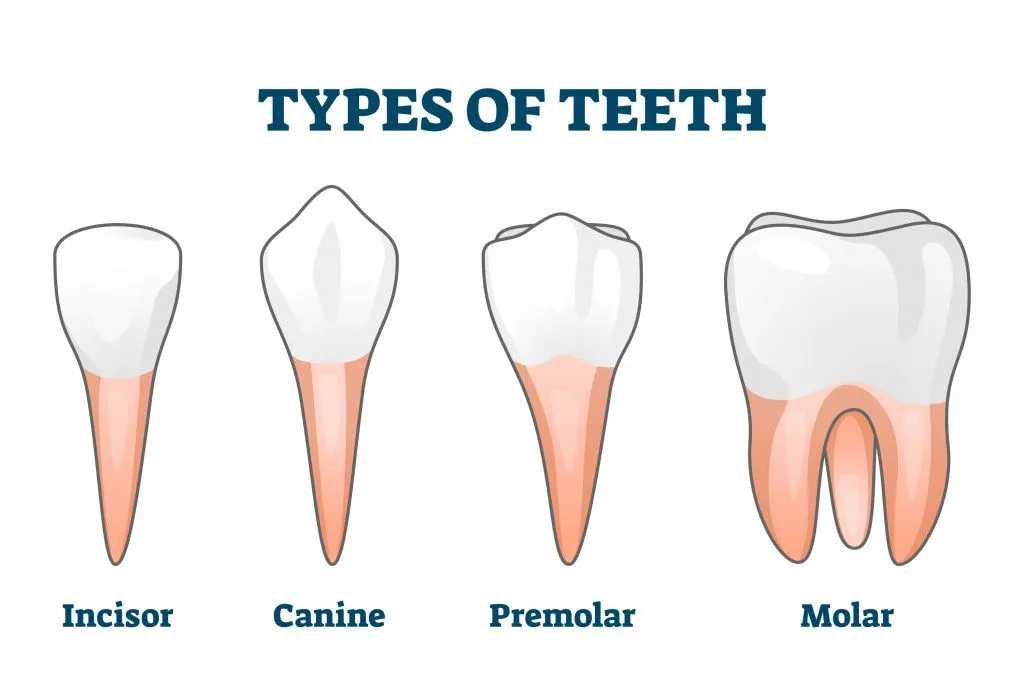
The shape of each tooth gives it a specialized function for chewing food.
8 Incisors
The front-most teeth in your mouth are called incisors. There are four of them in the upper and lower jaws, totaling eight in number. These teeth are flat and thin, shaped like chisels. Incisors help you cut and bite food into smaller pieces as you begin the chewing process. They also help you pronounce words and support your lips and facial structure.
4 Canines
Canines are the sharp, pointed teeth that sit beside the incisors. There are two each in the upper and lower jaws (four in total). They are long and pointed, and are essential for gripping and tearing food items, such as meat. This is why canines are better developed in carnivores, such as lions and tigers (and, in the fictional world, even vampires!).
8 Premolars
Premolars are larger, flatter teeth that extend towards the back of your mouth, located behind the canines. These teeth have a flat surface with ridges. Premolars help to chew and grind food, making it small enough to swallow. Fully grown adults usually have 8 premolars in their mouths. Four are located on the top and four are located on the bottom. Young children do not have premolar teeth. These first appear as permanent teeth when children are 10-12 years old.
12 Molars
Molars are the biggest of all our teeth, and they do the heavy lifting of chewing (roughly 90% of it happens here). They boast a large, flat surface with ridges that allow them to crush food and grind it up. Adults have 12 permanent molars, six on the top jaw and six on the bottom, while children have eight primary molars.
The last molars to erupt are wisdom teeth, or third molars, which usually come through between the ages of 17 and 25. These sit at the end of the row of teeth, in the far corners of the jaw. Some people do not have all four wisdom teeth, or the teeth may remain unerupted in the bone and never appear in the mouth.
Temporary Teeth Vs. Permanent Teeth
The number and types of teeth a person has changes as they age. Typically, people have two sets of teeth during their life: primary, or baby teeth, and permanent, or adult teeth.
At around six months of age, infants develop their first pair of deciduous teeth, also called milk teeth or baby teeth. New deciduous teeth continue to erupt every one to two months until the baby is around two years old and has a full set of deciduous teeth. These are temporary, hence, the name deciduous.
As the permanent teeth grow in the bone below the deciduous teeth throughout childhood, the roots of the deciduous teeth begin to be absorbed into the gums. This loosens them and allows them to fall out, making room for the permanent teeth to take their place. These permanent teeth are also called adult teeth. Children usually begin to lose their teeth starting around age six and the process finishes around age 12.
Our permanent teeth include the incisors, canines, premolars and molars. The set of temporary (baby) teeth do not have premolars. The teeth that replace the deciduous molars are called the first and second premolars. Since the jaw bones grow throughout puberty, extra space is made for the molars to occupy. The first permanent molars usually appear around age six, while the second permanent molars appear around age 12.
The third permanent molars, or wisdom teeth, usually don’t erupt until around the ages of 17 to 25, but sometimes they never erupt (remaining impacted in the jaw) or simply aren’t present at all. Altogether, that makes 32 permanent teeth!
While there are 20 deciduous teeth, there are 32 permanent teeth for the average adult.
A Final Word
The different types of teeth (incisors, canines, premolars and molars) all play unique and important roles in helping us properly chew our food and break it down for digestion. Their varied shapes are no accident: as omnivores, we need cutting, tearing, and grinding tools all in one mouth. Teeth also help in pronouncing words and giving shape to our face. We have two sets of teeth in a lifetime, a temporary set of 20 teeth and a permanent set of 32 teeth.
References (click to expand)
- Teeth: Anatomy, Types, Function & Care - Cleveland Clinic
- Teeth - Morphology of the Vertebrate Skeleton - University of California, Berkeley
- Child and Adult Dentition (Teeth) - TeachMeAnatomy
- Netter F. H. (2018). Atlas of Human Anatomy. Elsevier
- Tortora G. J.,& Derrickson B. H. (2018). Principles of Anatomy and Physiology. John Wiley & Sons