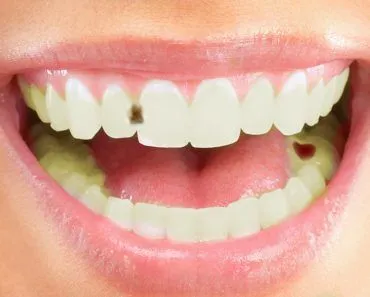
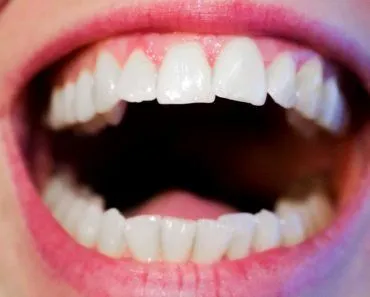
Adult teeth cannot fully heal because the outer enamel is laid down only once, by cells called ameloblasts, which die when a tooth first erupts and never return. Enamel is also 96% inorganic mineral, with almost no cells or proteins. The deeper dentin and pulp can patch small damage by laying down secondary or tertiary dentin, and fluoride can remineralise weak spots in enamel, but a chipped or cavitated tooth cannot regrow itself.
Skin is able to repair itself and bones can readily fix themselves; in fact, most body parts are able to repair themselves over some period of time, but teeth don’t do that. Why?
First of all, let me say that teeth actually can heal themselves… partially, at least.
Anatomy Of A Tooth
A tooth may seem like a single entity, but as with any other part of the body, it’s not as simple as it may seem on the surface. A tooth actually comprises a number of components, but we’ll stick to those that are specifically relevant to our discussion.
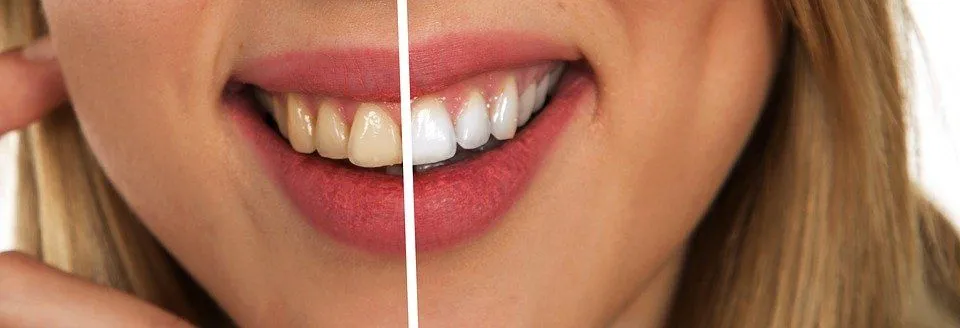
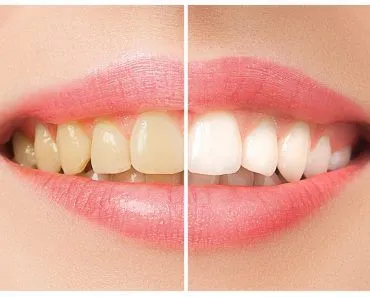
The top, white (or yellow… or even black, if you only brush your teeth once a year) part of the tooth, i.e., the only part that’s usually visible, is called the crown. The shape of the crown determines the kind of work that particular tooth does; for instance, if it’s sharp and chiseled (the front teeth), then the tooth is used for cutting, whereas other shapes of teeth are better for other functions.
When people say that teeth can’t repair themselves, they are almost always referring to the crown. As such, our discussion mostly revolves around the crown of a tooth.
Layers In The Crown Of A Tooth
There are three layers to the crown of a single tooth, namely enamel, dentin and pulp.
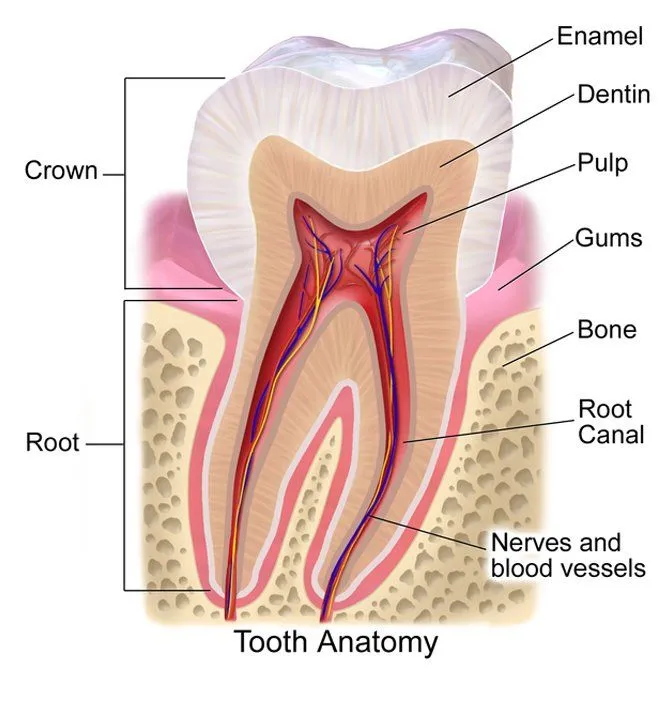
Enamel, the outermost layer of the crown, is formed by cells known as ameloblasts. These are present only during tooth development, and are responsible for depositing tooth enamel, which forms the surface of the crown. Since these ameloblasts die when teeth erupt and never ‘come back’, enamel cannot and does not repair itself.
However, the middle and the bottom levels, i.e., the dentin and the enamel pulp, are a different story.
The dentin is maintained by odontoblasts. An odontoblast is a cell of neural crest origin whose main biological purpose is to form dentin. These cells are present inside the pulp and permeate into the dentin through certain processes.
The Case Of ‘New’ Dentin
A very interesting thing to note is that odontoblasts can lay down secondary and tertiary dentin (secreted very slowly over a lifetime) in response to a ‘hostile’ event, such as a bacterial assault on the tooth (tooth decay). Thus, if the pulp manages to lay down enough ‘new’ dentin, it can, in essence, prevent the exposure of the pulp, which is great, because pulp exposure usually needs to be fixed by an elaborate medical procedure or an extraction of the affected tooth.
Thus, it’s unfair to say that teeth don’t repair themselves at all.
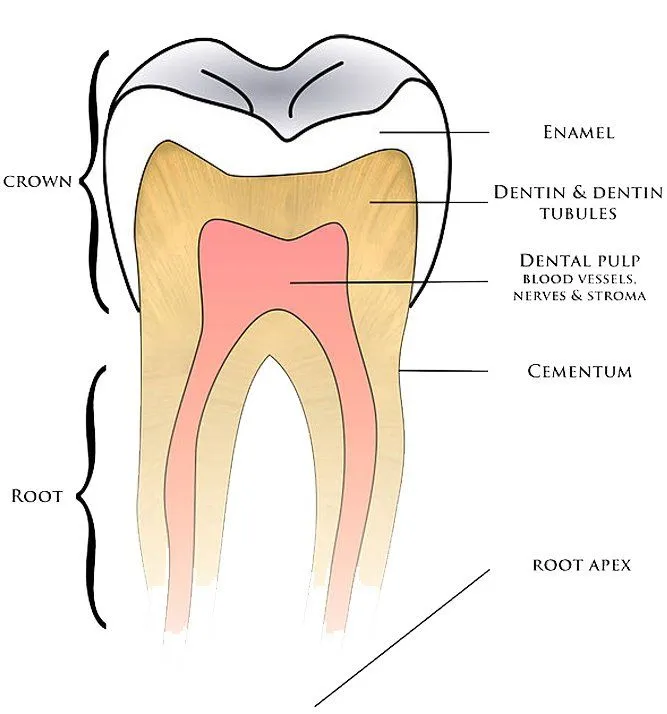
That being said, it should be noted that the aforementioned process does not really form ‘new’ dentin; it cannot grow a whole new area of dentin, but it can fill in small holes. It’s very similar to patching a small hole in a flat tire; you can close small holes in the tire using glue, but you obviously can’t form an entirely new tire using that glue.
So, there you go! Teeth don’t repair themselves like other body organs because teeth are made of enamel, which is the hardest substance in the entire human body. It also has a very high percentage of inorganic material within it. It doesn’t contain many proteins and cells, which are present in ample amounts in other parts of the body. That is why cells can provide some amount of repair work at the base of the roots of our teeth, but not fix major problems in the crowns of your teeth.
Fortunately, weak spots present in the enamel can be remineralized by fluoride, which is primarily why dentists recommend using a toothpaste that is rich in fluoride.
There is also some promising recent research that may eventually change the “teeth can’t regenerate” story. In September 2024, a team at Kyoto University Hospital, working with the Japanese biotech Toregem BioPharma, began the world’s first human clinical trial of a tooth-regrowth drug. The drug is an antibody that neutralises USAG-1, a protein that normally blocks the development of a third set of teeth. In mice and ferrets, this approach has produced complete new teeth without surgical implantation. The trial’s near-term goal is to treat children with congenital tooth deficiency, with broader use being considered later. Tooth regrowth in adults is still years away from the clinic, but it is no longer the stuff of pure science fiction.
All in all, your teeth don’t repair themselves like the other parts of the body, so you must take extra care of your pearly whites. Basically, brush your teeth twice a day and put that bag of Skittles back where you found it!
Are Teeth Actually Bones?
They certainly look the part. They're hard, they're white-ish, and they sit right there in your skull alongside the rest of your skeleton. So a fair question pops up a lot: are teeth just small bones? The short answer is no, and the reason is exactly why they don't heal.

Teeth and bone do share a building block: a calcium mineral called hydroxyapatite. But the recipe is wildly different. Bone is a living tissue, roughly 70% mineral and 30% collagen, water and living cells, threaded through with blood vessels. Your tooth's visible crown is mostly enamel, and enamel is about 96% mineral by weight, with almost no proteins, no cells and no blood supply at all. That extreme mineral content is what makes enamel the hardest substance the human body produces, harder even than bone.
And here's the kicker: enamel is built only once. The cells that lay it down, the ameloblasts, finish the job and die as the tooth erupts, so there's no living cell left in the enamel to rebuild it. Bone is the opposite, a tissue that is constantly torn down and rebuilt by living cells throughout your life. So while teeth and bone are cousins on the mineral family tree, calling a tooth a "bone" gets the biology backwards. A tooth is more like a beautifully engineered mineral cap than a living organ.
Why Can Bones Heal But Not Teeth?
If you've ever broken an arm, you know bone pulls off something teeth simply can't: it knits itself back together. Snap a bone and, given a few months, it can mend so completely that the old fracture line becomes hard to find. Chip a tooth, and it stays chipped forever. (Different tissues, it turns out, heal at very different rates.) Why the double standard?

The whole trick comes down to blood and living cells, and bone is rich in both. When a bone breaks, repair runs through four overlapping stages. First, torn blood vessels bleed and a clot, called a hematoma, fills the gap. Next, stem cells move in and build a soft, collagen-rich fibrocartilaginous callus that bridges the two ends. Bone-building cells, the osteoblasts, then mineralise that bridge into a hard bony callus. Finally, over months to years, the bone remodels back into its original mature shape. Every step depends on a working blood supply, which is exactly why a poor blood supply can leave a fracture slow to heal or not healing at all.
Now look at the part of the tooth that actually chips: the enamel crown. It has no blood vessels, no living cells, no stem cells waiting in reserve, nothing to set up that healing cascade. So while the deeper dentin and pulp can lay down a little secondary dentin to wall off trouble, the enamel itself can never form a callus and rebuild. Bone heals because it's alive; enamel can't, because the part you see is essentially a non-living mineral shell.
Are Teeth Really The Only Part Of The Body That Can't Heal Itself?
You may have seen the trivia-quiz claim that teeth are the only part of the body that can't repair themselves. It's a great line, and it's almost true. Tooth enamel is the textbook example of a tissue with essentially zero self-repair, because once it's damaged it cannot regenerate or be replaced. But "the only" is a stretch.

A couple of other tissues share the same fate, and for the same underlying reason: they have no blood supply to ferry in the cells that do repair work. The articular cartilage that cushions your joints is thought to have very limited regeneration potential, partly because it is avascular, which is a big reason knee cartilage damage tends to be permanent. The lens of the eye is in the same boat: it's a transparent, non-vascular tissue, and damaged or dead cells inside it can't be properly replaced. So the honest version of the trivia answer is that enamel is the classic non-healing tissue, not literally the only one. The common thread is always the same: no blood, no living cells, no healing.
This same toughness is also why teeth outlast almost everything else after death. Being the hardest and most chemically stable tissue in the body, teeth resist decomposition and high temperatures and are among the last structures to break down, which is exactly why forensic and archaeological investigators rely on them to identify remains long after the soft tissues, and even much of the surrounding bone, are gone.
References (click to expand)
- He, P., Zhang, Y., Kim, S. O., Radlanski, R. J., Butcher, K., Schneider, R. A., & DenBesten, P. K. (2010, June). Ameloblast differentiation in the human developing tooth: Effects of extracellular matrices. Matrix Biology. Elsevier BV.
- D Meadow. Oral trauma in children David Meadow, DMD, MPH ... - AAPD. aapd.org
- An Alzheimer's Drug Has Been Shown to Help Teeth Repair .... ScienceAlert
- Imbeni, V., Kruzic, J. J., Marshall, G. W., Marshall, S. J., & Ritchie, R. O. (2005, February 13). The dentin–enamel junction and the fracture of human teeth. Nature Materials. Springer Science and Business Media LLC.
- Histology, Tooth. StatPearls. NCBI Bookshelf.
- Fracture Healing Overview. StatPearls. NCBI Bookshelf.
- Dental Evidence in Forensic Identification – An Overview, Methodology and Present Status. The Open Dentistry Journal. NCBI PMC.
- Cartilage regeneration for treatment of osteoarthritis: a paradigm for nonsurgical intervention. Therapeutic Advances in Musculoskeletal Disease. NCBI PMC.
- Lens regeneration in humans: using regenerative potential for tissue repairing. Annals of Translational Medicine. NCBI PMC.