It's the current, not the voltage, that kills. As little as 100 mA (0.1 A) flowing through the body for 2 seconds can be fatal, and the "let-go" threshold is just 10–20 mA of AC. International safety standards (IEC 60364, derived from IEC 60479-1) treat anything above 50 V AC or 120 V DC as potentially dangerous, and electrocutions have been documented at household 110 V and occasionally as low as 42 V when the skin is wet or broken. Whether a given voltage is lethal depends on the body's resistance (≈100,000 Ω dry, ~1,000 Ω sweaty, ~150 Ω in water) and the path the current takes.
Electric shocks are often depicted in physical comedies, and the plot proceeds as usual: the comic protagonist accidentally gets to a wire without knowing the high current that flows through it. He receives a fatal shock that leads to a stereotypical shimmy, a charred face and hair that ends up like an umbrella turned inwards by the wind.
The question of why this fatal accident is perceived as humorous is disturbing… interesting, but disturbing. A plausible answer can be found here. However, this discourse is irrelevant at the moment. What worries us is why we are not at all insensitive to electricity and how much of it will actually kill us.
Electrical injuries cause roughly 150 workplace fatalities per year in the United States, according to the Electrical Safety Foundation International, with several hundred more deaths each year once household electrocutions and lightning strikes are added in. Understanding the science behind electric shock — and which factors determine its lethality — can be a matter of life and death.
Why Is High Voltage Considered Dangerous?
This is, of course, essential knowledge for safety purposes. On electrical circuit boards and generators, we find cautious messages with the common symbol of danger: a human skull hovering over two crossed bones.
This symbol is accompanied by the rating of this machine, which highlights the high voltage under which it operates and lets you know that you would probably be killed by contact with it. The use of voltage has set a psychological trend in us.
We now believe that 10,000 volts would be more lethal than 100 volts. However, this is only partially true.
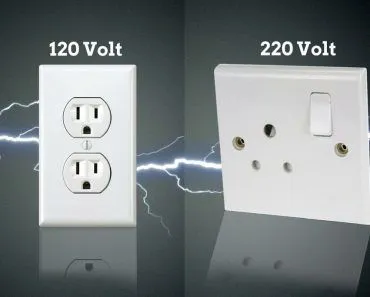
Electric shocks can often occur at household voltages of 110 volts or in some cases even at 42 volts!
Of course, more voltage draws more current — think of voltage as the water pressure in a pipe and current as the flow of water itself. It is the flow (current) that does the damage. Whatever the voltage, the true cause of death is the current that is pushed through the body.

However, we should not completely discard the voltage, because without voltage or potential difference there would be no current at all. Therefore, hanging on a wire would not electrocute you unless you touch the ground. Hanging from the wire forms an equipotential with the wire, whereas touching the ground immediately creates a potential difference, which draws a huge current through the victim.
So how much electricity is going to kill us?
Electric Shock: How Much Current Will Kill You?
A current of 10 mA or 0.01 A is a severe shock, but it would not be fatal. Research shows that ventricular fibrillation can begin at currents around 30–50 mA of AC (50–60 Hz) flowing through the chest for more than one to two seconds. As we approach 100 mA or 0.1 A, muscle contractions become severe. It is imperative to realize that current reaching the heart muscle is far more dangerous than current flowing through limbs — in clinical "microshock" scenarios, where current is delivered directly to the myocardium through a catheter or pacing wire, as little as 100 microamps (0.1 mA) can trigger ventricular fibrillation.
Under normal external contact, skin resistance limits how much of the applied current actually reaches the heart, which is why everyday brushes with mains electricity often hurt without being fatal. But if the skin barrier is bypassed — through wet skin, a wound, or a medical line going directly into the chest — even a tiny current at the heart can be lethal.

At currents as low as 10-20 mA of AC, muscle contractions can become strong enough that a person cannot voluntarily release the wire — this is known as the "let-go threshold." For an average adult male, the let-go current is approximately 15 mA for AC and 75 mA for DC, which is one reason AC is generally considered more dangerous at low currents. As the current rises above 100 mA, the contractions worsen significantly, and above 1000 mA (1A), muscular paralysis sets in completely.
At this point, the heart experiences ventricular fibrillation, an uncoordinated, intermittent twitching of the ventricles, which causes ineffective heartbeats that can lead to death unless immediate help is called.
A further increase in the current towards 2000 mA or 2A leads to burns and unconsciousness. Muscle contraction caused by the shock is now so strong that the heart falls into clamps. Exposure to such an amount of current can lead to terrible internal burns, and the clamps can lead to cardiac arrest. Death is possible.
The clamping mechanism, however, can be paradoxically beneficial, as it may protect the heart from ventricular fibrillation. Chances of survival are slim, but recoverable with immediate medical assistance. Defibrillators are medical devices used by doctors to save shock-stricken victims.
In practice, this is why ground-fault circuit interrupters (GFCIs), common in bathrooms and kitchens, are designed to cut power within milliseconds when they detect a current leakage of just 5-6 mA in the US or up to 30 mA in Europe and Asia — well below the threshold for ventricular fibrillation.
The effects can be summarized in tabular form as follows:
| Current | Probable effect |
|---|---|
| Less than 0.5 mA | Imperceptible. Below the threshold of human sensation. |
| 0.5 to 2 mA | Perception threshold. A faint tingle. |
| 2 to 10 mA | Painful shock, but voluntary muscle control is retained. The person can still release the conductor. |
| 10 to 20 mA | Let-go threshold passed (approximately 10 mA for an average woman, 16 mA for an average man, per Dalziel). Sustained muscle contraction prevents release of the conductor. Falls and secondary injuries become common. |
| 20 to 30 mA | Severe shock. Breathing becomes difficult; if the current path crosses the chest, respiratory paralysis can set in. |
| 30 to 50 mA | Ventricular fibrillation may begin if the current flows through the chest for more than one to two seconds. |
| 50 to 100 mA | Ventricular fibrillation is likely. Loss of consciousness follows within seconds. |
| 100 mA to 1 A | Fibrillation is almost certain. Death is likely without defibrillation within minutes. |
| Greater than 1 A | Severe internal and external burns. The heart may "clamp" in a sustained contraction rather than fibrillate, which can paradoxically be survivable with immediate medical care. |
| As low as 0.1 mA (100 µA) direct to the heart | Microshock. Skin resistance is bypassed through a catheter, pacing wire, or open wound. Enough to trigger ventricular fibrillation on its own. |
Why Are We Not Insensitive To The Current?
Although a certain voltage is required to allow current to flow, the amount of current flowing into our body depends on how conductive the body is or simply its resistance.
Resistance to current varies depending on the condition of the skin – whether it is dry or wet. It is estimated at 150 ohms for completely wet skin (in water), 1000 ohms for sweaty skin, and 100,000 ohms to over 1,000,000 ohms for dry skin.
The resistance also varies depending on the point of contact. Once the skin is bypassed, the body's internal resistance is much lower — typically in the range of 300–750 ohms depending on the current path (hand-to-hand, hand-to-foot, etc.), per the data in IEC 60479-1.
This is why the human body is not insensitive to current.
How Much Voltage May Kill You?
Now that we’ve established the fatal current levels and the varying resistance of the human body in different circumstances, let’s explore the potential harm associated with different voltages.
To evaluate this, we can use the Ohm’s Law, which states:
Current=Voltage/Resistance
Assuming a worst-case scenario with dry skin providing a resistance of 100,000 ohms, fatality becomes a possibility if the current exceeds 50 mA.
Therefore, the lethal voltage would be above 0.05 A (50 mA) × 100,000 = 5,000 Volts.
In hot and humid conditions with sweaty skin, the body’s resistance drops to about 1000 ohms. In such cases, the voltage that could be fatal would need to exceed 0.05 A (50 mA) × 1,000 = 50 Volts.
When submerged in water, such as during swimming, the body’s resistance decreases further to about 150 ohms. Consequently, a voltage exceeding 7.5 volts (50 mA × 150 ohms) poses a significant risk.
Another important factor is time. The extent of the ordeal depends on how long the body is exposed to a certain current. For example, a current of one tenth of an ampere can be fatal for just 2 seconds.
The Route Of Electrical Current Is Crucial
The outer layer of our body, the skin, serves as the initial barrier against electrical currents. It’s known that the resistance of the skin is greater than the resistance inside the body. Consequently, if electric current flows from the right hand to the right leg during an incident, it may cause pain but might not be lethal. On the other hand, if the current travels from the right hand to the left hand, passing through the heart, it has the potential to induce ventricular fibrillation, a condition that can be fatal.
AC Vs DC: Lethality Comparison
Both Alternating Current (AC) and Direct Current (DC) have the potential to be fatal.
AC at typical power frequencies (50-60 Hz) is particularly dangerous because it can cause sustained muscle contractions that prevent the victim from letting go of the conductor — this is often referred to as the "can’t let go" effect.
However, AC can induce intense muscle contractions, leading to increased sweating, which, in turn, lowers the skin’s resistance.
Consequently, AC is generally regarded as more hazardous than DC at household voltages.
However, DC poses its own dangers, particularly at high voltages found in electric vehicle batteries and solar panel arrays. DC arcs are harder to extinguish than AC arcs because the current does not pass through zero, making DC arc flash events potentially more severe.
References (click to expand)
- Electric Shock – It's the Current That Kills (Harvey Mudd College).
- Electric Current Needed to Kill a Human.
- Safe Levels of Current in the Human Body.
- Conduction of Electrical Current to and Through the Human Body: A Review (PubMed).
- 5.1 Electrical Safety – Building Maintenance & Construction.
- Electrical Injuries - StatPearls (NIH), updated July 2025.
- IEC 60479-1: Effects of current on human beings and livestock.
- Workplace Injury & Fatality Statistics - Electrical Safety Foundation International.
- Electrical injury - Wikipedia.