A small bird perched on a single power line is safe because both of its feet sit on the same wire, at the same voltage. With no voltage difference between its feet, no current flows through its body. The moment a bird (or any conductor) touches a second wire or the ground at the same time, the circuit closes and the current rushes through it. That is exactly why large raptors with long wingspans are sometimes electrocuted on poorly designed power poles.
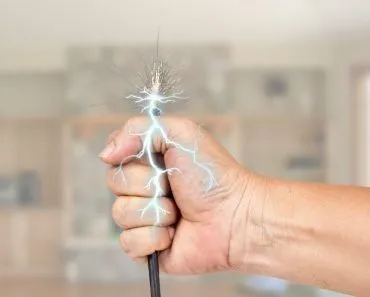
Characters in the movies often end up with a blackened face and frizzy hair after coming in contact with a live wire charged with electricity. As observers, we laugh our hearts out at these ridiculous moments, but in real life, a live wire won’t be so gentle. You’d end up with more than just frizzy hair, torn clothes, and a crooked face. The thousands of volts could kill you instantaneously – unless you’re a bird, that is.
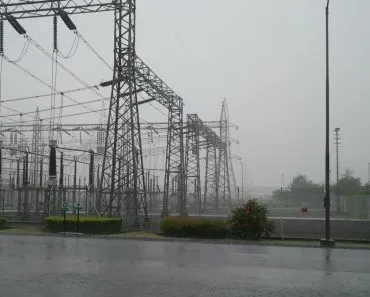
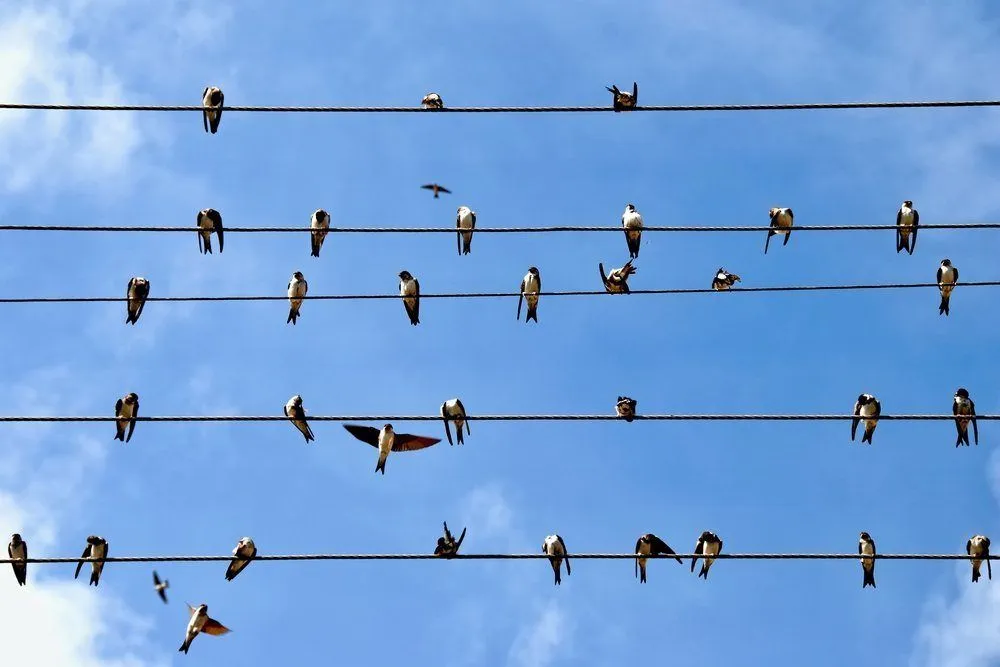
It’s a very common sight to see birds perched on top of electric wires, almost mocking us with their ability to relax at such heights. Birds have no problem sitting, undisturbed, on the high voltage wires lining the roads, but it has nothing to do with them being birds. As you’ve probably also seen, squirrels can run along wires unscathed too!
So What’s The Explanation?
This is all due to the connections that they’re making, or rather, not making.
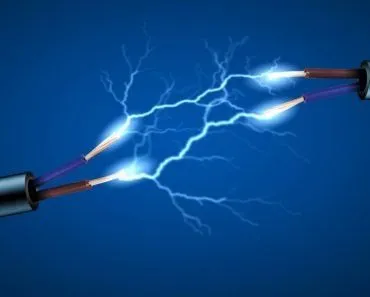
Electric current is simply the movement of electrons. For electrons to move from one point to another, they require an adequate potential difference between the two points.
Just like all types of energy, electricity pursues equilibrium (or balance). This means that electricity will flow from areas of high energy to low energy along the path of least resistance. For example, if the bird were to have one foot on the wire they’re standing on, and the other foot on the ground or a different wire with less voltage, the bird would be electrocuted. This is because the bird would be acting as a conducting medium that allows the electric current to pass from the high voltage substance (wire) to the low voltage substance (ground).
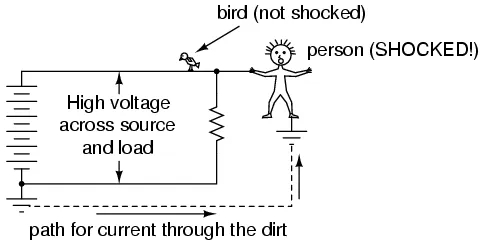
When a bird is sitting happily on top of a wire:
(1) The circuit is incomplete, so the flow of electrons required to conduct electricity is hindered.
(2) The potential difference between all points on the wire is zero
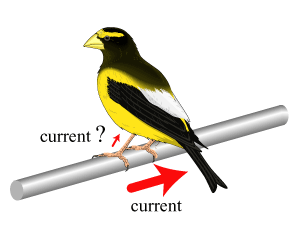
Similarly, if a person were balanced entirely on a single energized line, they would also remain unaffected, because both their hands and feet would be at the same potential. This is not just hypothetical: trained linemen routinely work on energized high-voltage transmission lines using the “barehand” method, after first equalizing themselves to the wire’s voltage with a bonding wand. A person standing on the ground, however, completes the circuit, so anyone in contact with a live wire from the ground is electrocuted instantly.
But Why Do Birds Choose To Sit On Wires At All?
Knowing that a wire won't hurt them is only half the story. The wire doesn't grow seeds or hatch eggs, so why is it such a popular hangout? It turns out birds aren't being random; an overhead line ticks several boxes at once.

The first draw is the view. A wire is an open, elevated perch with nothing blocking the sightlines, which makes it an excellent lookout. Birds of prey lean on this hardest: a study of Bonelli's eagles found that these power-line structures are valued precisely because they are "safe and vantage perching points," elevated above the surrounding landscape and largely free from human disturbance, letting a hunting bird scan a wide patch of ground for the next meal.
The second draw is safety in numbers. Up on a wire, a small bird is out of reach of ground predators such as cats and foxes, and being one of dozens means more eyes watching for hawks. This is why you so often see swallows, starlings, and pigeons lined up shoulder to shoulder rather than alone. Many of these species are also building toward a communal roost, and the wire is the staging area where they gather, call to one another, and synchronize before flying off together to sleep. In European starlings, researchers have found that these pre-roost gatherings are driven mainly by anti-predator benefits (a "safer together" effect of dilution, extra detection, and confusing a predator) rather than simply pooling body heat.
Warmth still plays a supporting role on cold days. A bird fluffs its feathers to trap insulating air and often tucks one foot up into its belly plumage, which roughly halves the heat lost through its bare legs. A sunny, exposed wire is a fine spot to do this. The wire, in short, is a safe, warm, well-lit grandstand, and birds are simply smart enough to use it. Much like how migrating flocks organize into a V formation to save energy, perching together on a wire is a behavior that quietly pays off.
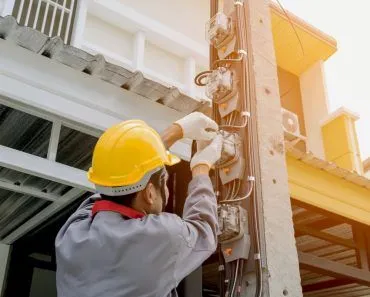
If The Wires Are So Dangerous, How Do Workers Carry Out Maintenance Work?
Workers on power lines use strong insulating materials in their clothing, equipment, and bucket trucks. Insulating materials such as rubber, fiberglass, and high-voltage-rated polymers are materials through which electricity struggles to flow. Therefore, instead of passing through the worker, the electrons stay on the other side of his rubber gloves or rubber-handled tools.
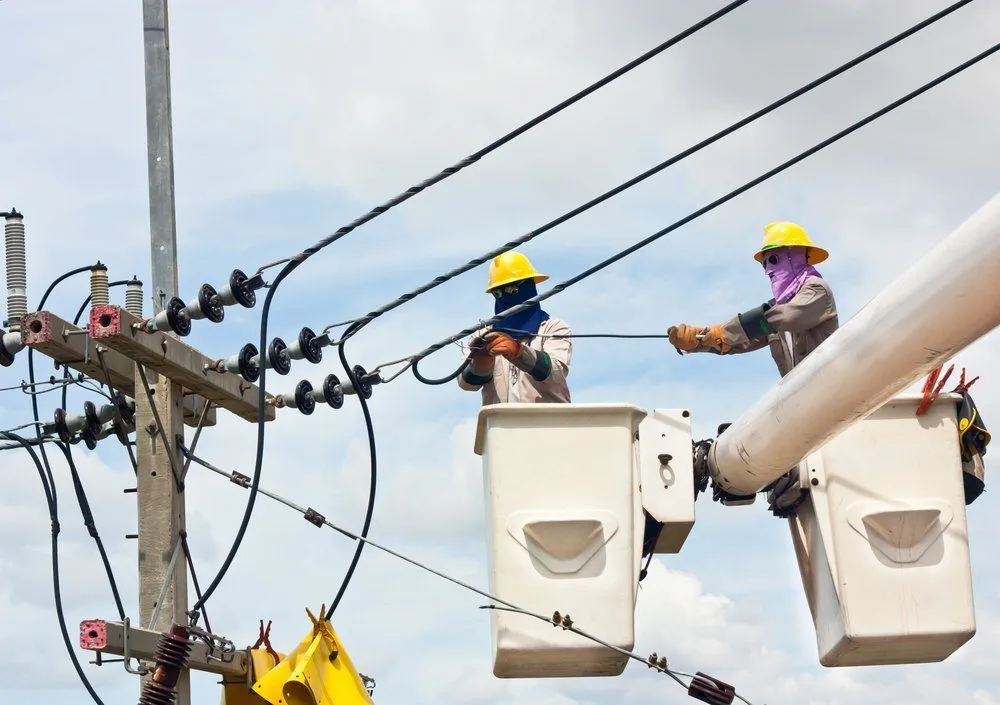
Another technique when working on power lines is to hang beneath a helicopter. Since neither the worker nor the helicopter is connected to the ground (like those birds), the worker just has to make sure that he only touches one wire at a time.
When Birds Do Get Electrocuted
Worth noting that the “birds are safe on wires” rule has a real and tragic exception: raptors. Large birds such as eagles, hawks, vultures, and owls have wingspans wide enough to touch two energized phases (or one phase and a grounded crossarm) at the same time as they take off, land, or perch. When that happens, the bird becomes the bridge between the two conductors, the circuit completes, and the bird is killed instantly. The Avian Power Line Interaction Committee (APLIC), a partnership of U.S. utilities and conservation groups, estimates hundreds of thousands of raptor electrocutions per year in North America alone. The fix is engineering: utilities now insulate or “raptor-proof” the crossarms and increase spacing between conductors on high-risk poles. So small birds really are safe; their bigger cousins, less so.
Despite taking such precautions, electrical maintenance is one of the most dangerous jobs out there. Therefore, it’s probably a wise choice to just stay away from electrical wires unless you’re a trained professional… or a bird.
References (click to expand)
- How do birds sit on high-voltage power lines without .... The MIT School of Engineering
- Birds on High Voltage Lines | Physics Van | UIUC. The University of Illinois Urbana-Champaign
- Individual variability in space use near power lines by a long-lived territorial raptor. Ecology and Evolution (PMC)
- Birds of a feather flock together: starling murmuration behaviour. PLoS One (PMC)
- How Birds Survive the Cold: Feathers + Food = Warmth. All About Birds, Cornell Lab of Ornithology