Table of Contents (click to expand)
Yes, people who are allergic to house cats are also typically allergic to lions, tigers, and most other big cats. The shared culprit is Fel d 1, the major cat allergen, which is a small secretoglobin produced in the salivary and sebaceous glands of nearly every member of the Felidae family. The lone exception found in early studies was the caracal (a desert lynx).
Despite their callous and narcissistic nature, people still find cats irresistible. Okay, well, not everyone finds them irresistible. Some readers may disagree because they can’t stand their arrogance and may prefer a more affable creature, such as a dog, or perhaps some readers are allergic to them. Reader, I agree, it is cruel and highly unfair that you cannot gratify the irrepressible urge to caress an adorable cat without plunging into breathlessness and unending sneezing.

However, what if one of these allergy-wracked readers decides to caress a different, slightly larger type of cat, like a…lion? If your neighbor’s cat is just a domesticated lion, would the lion, for they share most of their DNA, also trigger your allergies? The answer, sadly, is a resounding yes.
What Triggers An Allergy?
The immune system is a large biological network of cells, tissues and organs that strives to protect us from infections. It is immediately activated after a foreign substance invades our body. To eliminate these unwanted substances, the immune system devises antibodies: proteins that locate, hound and vanquish the disease-carrying bodies that we call pathogens.

Ideally, our immune system should react exclusively to disease-causing substances, but some people are endowed with immune systems that are hypersensitive and tend to overreact to proteins that a normal immune system would find completely harmless. Contrary to popular belief, pet allergies aren’t triggered by fur, but dander: dead skin cells the pet sheds that usually find themselves stuck in their fur or lingering in one’s urine or saliva.
Fel D I
When a kitty is patted and groomed, or when she licks herself, the dander is freed and allowed to become airborne. The dander can now be inhaled by everyone in her vicinity, but will only wreak havoc on those unfortunate folks who own a hypersensitive immune system. With house cats, a single small glycoprotein called Fel d 1 is responsible for the allergy. Although the allergen catches a ride on dander, it is actually produced in the cat’s salivary glands, sebaceous (oil) glands, and anal sacs, then smeared all over her fur during grooming. All cats, whether domesticated or undomesticated, shed dander, and the problem is that the dander of even wild cats contains Fel d 1.
In a study published in 1990 in the Journal of Allergy and Clinical Immunology, researchers tested the dander of eight feline species: ocelots, pumas, servals, Siberian tigers, lions, jaguars, snow leopards, and caracals (also called desert lynx). They then exposed the dander of these wild cats to 11 people who are allergic to tamed cats.
The study’s results were quite interesting. Yes, people who were allergic to tamed cats also tended to be allergic to wild cats. Every one of the 11 patients had cross-reacting IgE antibodies to seven of the eight species tested. The caracal was the lone exception, suggesting its Fel d 1 has drifted just enough during evolution to no longer light up the same antibodies. The propensity was obvious from the increase in their levels of histamine, the chemical compound responsible for the symptoms of an allergy, such as sneezing and coughing.
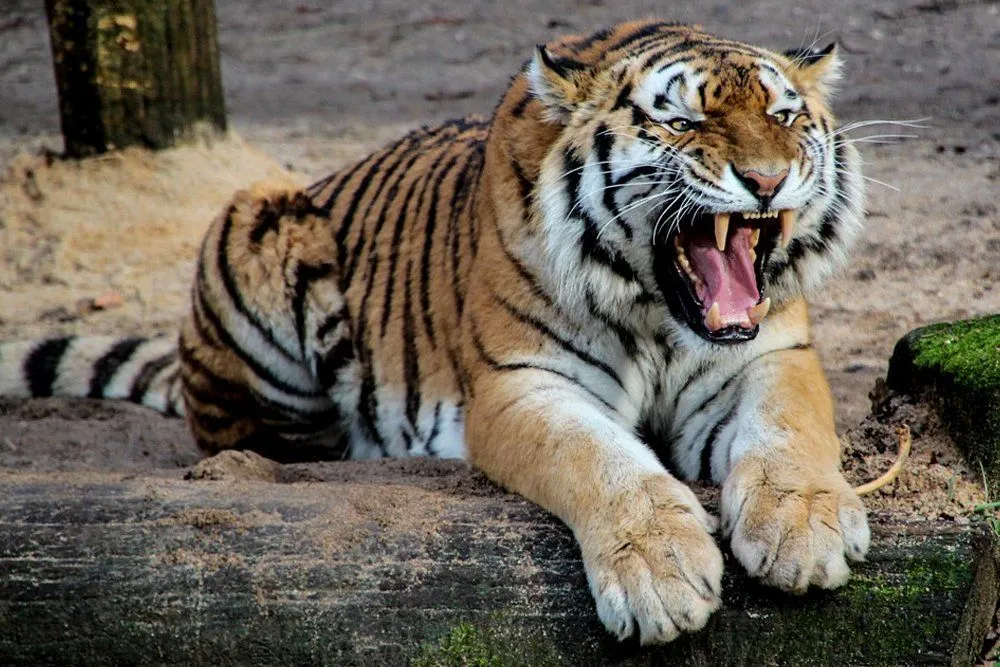
Although the allergic response wasn’t very strong in the 1990 study and, due to the poverty of data, the original finding isn’t exactly conclusive, more recent case reports corroborate it. In a 2014 case report from Warsaw, Poland (published in Allergologia et Immunopathologia by Feleszko, Zalewski, and Kulus), an 8-year-old boy had to be rushed from a circus to the nearest hospital after he broke out in a generalised hive-like rash, conjunctivitis, and a runny nose. The boy, doctors discovered, was already known to be allergic to cats (with a sky-high IgE titer to Fel d 1). According to his parents, the symptoms emerged a few minutes after the animals appeared on the stage, and were exacerbated when the lion-taming began.
Modern research has even turned this allergy story on its head, looking for ways to disarm Fel d 1 at the source. Purina’s Pro Plan LiveClear cat food, launched in 2020, coats kibble with egg-derived IgY antibodies that bind to Fel d 1 in the cat’s saliva and neutralize it before it can ever reach the dander; in Purina’s own studies, roughly 47% of cats fed the food showed measurably lower active Fel d 1 on their hair within three weeks. And a 2024 genetic survey of more than 270 domestic and exotic cats turned up naturally occurring mutations in the Fel d 1 gene, hinting that truly hypoallergenic cats may not be science fiction for much longer.
How Does A Lion's Immune System Differ From A Human's?
An allergy is really just an immune system that has lost its sense of proportion, so it is fair to ask how the immune system of a lion stacks up against your own. The architecture is broadly the same: lions, tigers and humans all rely on the same toolkit of white blood cells, antibodies and signaling molecules. The dial settings, however, are turned quite differently. A zoo-data analysis of 26 cat species (Naidenko and Alshinetskiy, published in Animals in 2020) found that the largest cats circulate roughly 38% more white blood cells than the smallest ones, and that their neutrophil-to-lymphocyte ratio runs about twice as high, near 5.3 in big cats versus 2.4 in small ones. In plain terms, a lion's blood is weighted toward neutrophils, the fast-acting frontline cells that handle bacteria and wounds, which fits an animal that routinely fights, scavenges and feeds on carcasses.

The most striking difference shows up with a virus. Lions carry their own lentivirus, the feline immunodeficiency virus (FIV; the lion strain is called FIV-Ple), which is a close evolutionary cousin of HIV. In domestic cats, the Merck Veterinary Manual notes, FIV has even been nicknamed "feline AIDS" because it slowly degrades immune function, much as HIV does in people. Wild lions, though, seem to have made a kind of peace with it. In a 2009 study in the journal Virology, Roelke and colleagues reported that seroprevalence approaches 100% in several African populations, including the Serengeti and Chobe, and that the virus has likely circulated in lions for thousands of years. Yet biopsies from infected lions still showed lymphoid depletion and CD4 T-cell loss, the same hallmark damage seen in untreated HIV. So a lion's immune system is not simply tougher than ours; it is tuned for a different life, and it lives alongside a deadly relative of HIV that the human immune system never has to face, since FIV does not infect people at all.
References (click to expand)
- Groot, H. de, Swieten, P. van, & Aalberse, R. C. (1990). Evidence for a Fel d I-like molecule in the “big cats” (Felidae species). Journal of Allergy and Clinical Immunology.
- Feleszko, W., Zalewski, B. M., & Kulus, M. (2014). Unexpected cross-reactivity in a cat-allergy patient. An allergic reaction at the circus. Allergologia et Immunopathologia.
- Bonnet, B. et al. (2018). An update on molecular cat allergens: Fel d 1 and what else? Allergy, Asthma & Clinical Immunology. NCBI/PMC.
- Fel d 1. Wikipedia
- Naidenko, S. V., & Alshinetskiy, M. V. (2020). Size Matters: Zoo Data Analysis Shows that the White Blood Cell Ratio Differs between Large and Small Felids. Animals (Basel). NCBI/PMC.
- Roelke, M. E. et al. (2009). Pathological manifestations of feline immunodeficiency virus (FIV) infection in wild African lions. Virology. NCBI/PMC.
- Feline Immunodeficiency Virus (FIV). Merck Veterinary Manual, Cat Owners.