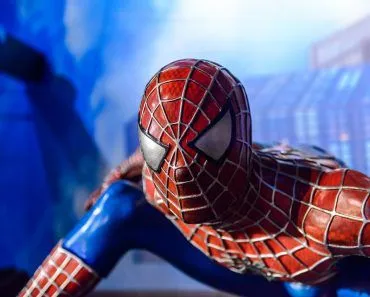
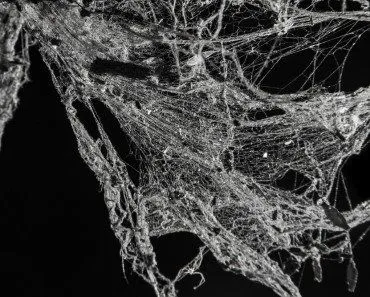
Yes, in theory. Spider silk has a tensile strength of roughly 1 to 1.7 GPa and, pound for pound, is about five times stronger than steel. Leicester physics students calculated that real silk this tough (around 500 MJ/m³, like a Darwin’s bark spider’s) could absorb the roughly 300,000 N needed to halt a runaway train.
When it comes to superhero flicks, very little remains beyond the realm of possibility. While most superheroes are gifted with superhuman capabilities, others use their scientific minds to save the day. However, as much as we want them to be real, most of these miraculous moments are only possible with computer graphics.
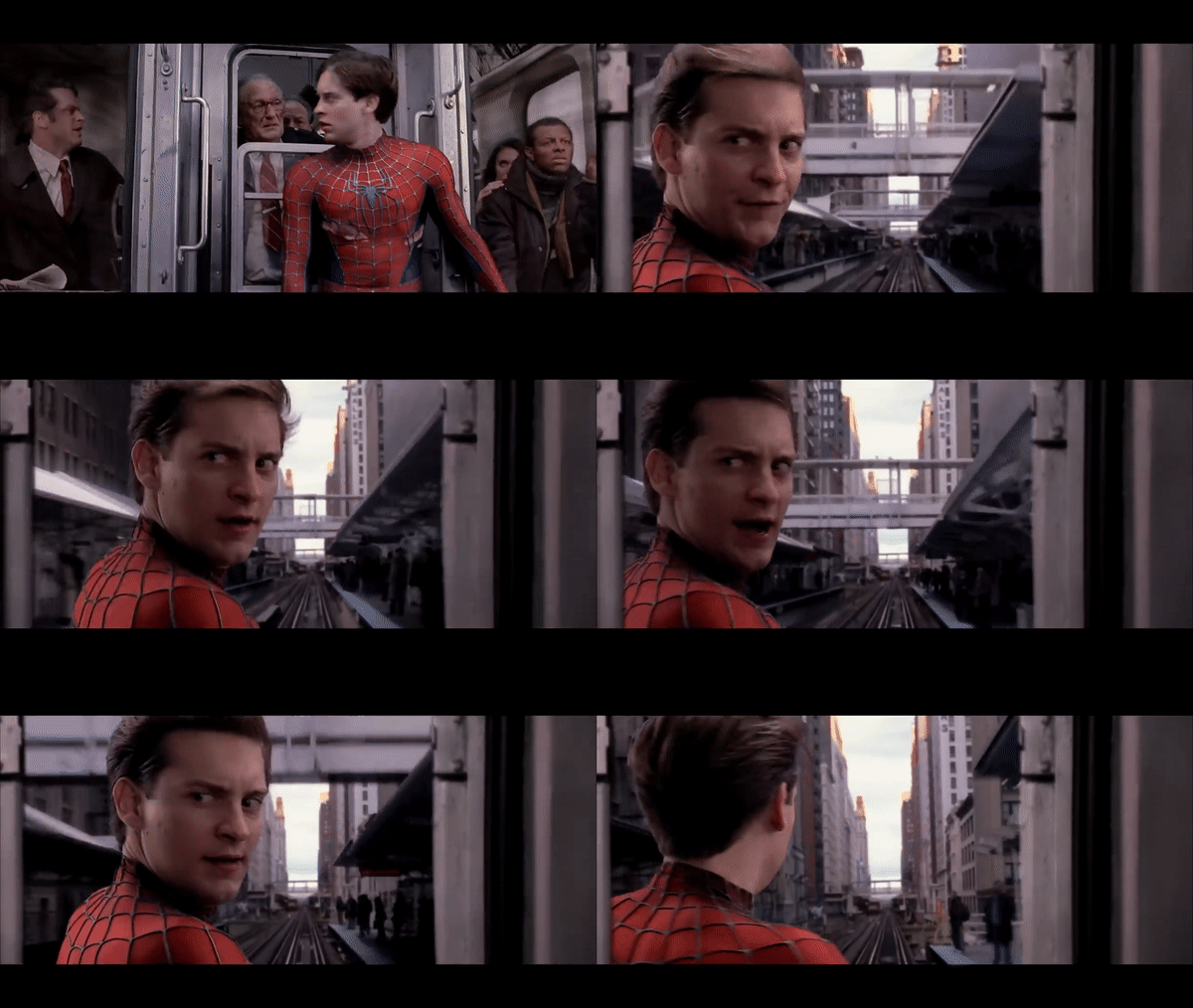
For example, take the case of Spiderman stopping an out-of-control train with his web alone! Surely he couldn’t do that in real life, right?
Could Spiderman Really Stop A Falling Train?
The short answer to this is… yes! At first, such a proposition might surprise you. Aren’t spider webs easily dismantled by the sweep of a broom on cleaning day?
The secret to this fascinating fact lies in the spiderweb’s material, the spider silk. Pound for pound, this silk is roughly five times stronger than steel, at least in theory. The catch is that "strength" is measured across several parameters, and spider silk does not trump steel on all of them. By weight it wins easily, but a thread of silk and a rod of steel of the same thickness tell a different story, since the steel is far denser and stiffer.
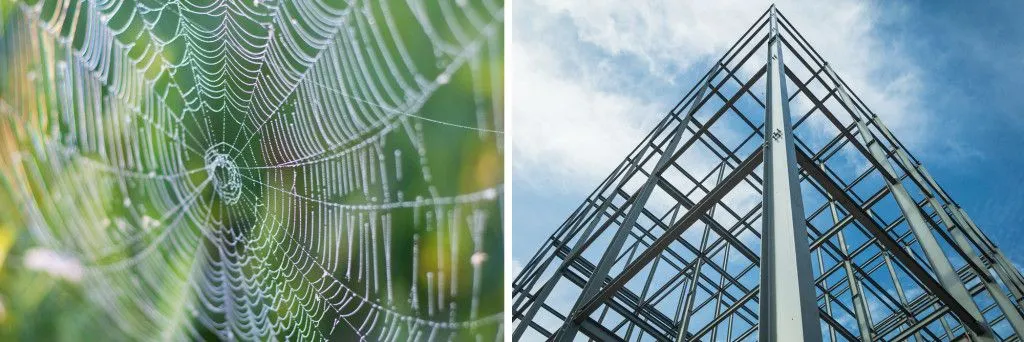
Orb-weaving spiders draw on as many as 7 different types of silk gland, each spinning silk with its own properties and purpose. No single spider has all 7, but a female orb weaver can carry up to six, with the extra one reserved for wrapping her egg sac. Amongst the strongest threads are those woven by the golden silk orb weaver and Darwin’s bark spider. The former weaves dragline silk that beats steel pound for pound, while the latter produces the toughest biological material ever measured, absorbing over ten times more energy before it snaps than the bulletproofing material Kevlar.
Mechanical Properties Of Spider Silk
Every ‘visible’ strand of a spider web is composed of several fibers running parallel to each other, much like an electric cable. A single dragline fiber is only about 3 to 8 micrometers across, roughly a tenth the width of a human hair (which is around 70 micrometers). Bundle a few of these together and the strand you can actually see is still thinner than the hair on your head.
Despite having such microscopic dimensions, spider silk exhibits superior mechanical properties. To begin with, spider silk has high tensile strength, meaning that it can withstand a heavy load before it breaks. Dragline silk usually measures around 1 to 1.7 GPa, comparable to the ultimate tensile strength of stainless steel (roughly 505 MPa for ordinary grade 304, though high-strength steel alloys can reach 1 to 2 GPa). Where silk pulls ahead is weight: it is about six times less dense than steel, so for the same mass it is roughly five times stronger.
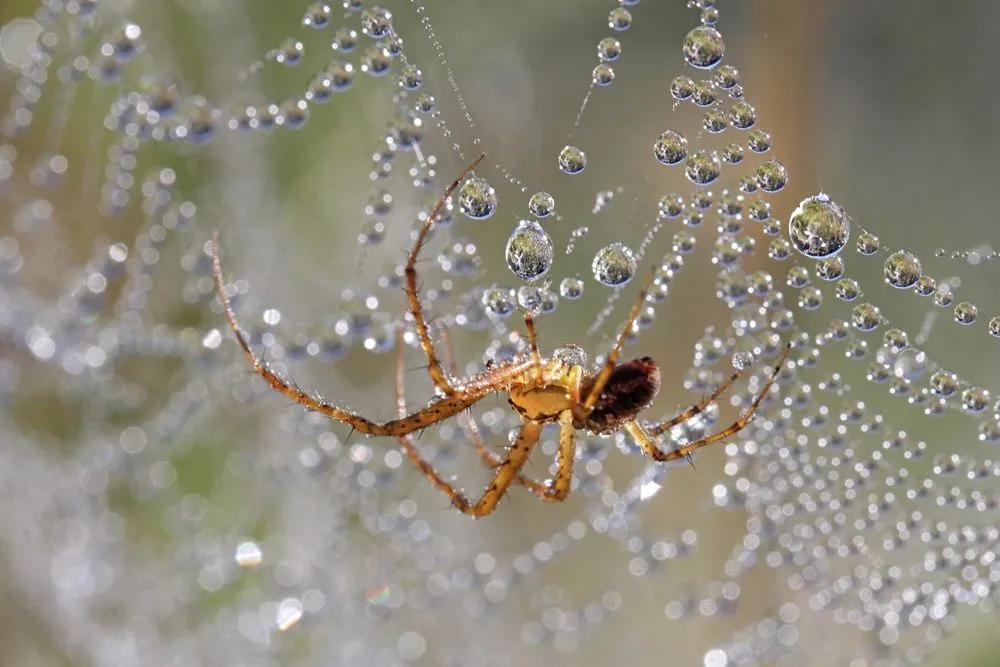
At the same time, spider silk is extremely elastic, meaning that it can be stretched to several times its own length before it deforms or breaks permanently. This can be attributed to its parallel drawn cable-like structure.
Spider silk has very low density, due to its protein chain construction, making it very light in weight. The high tensile strength gives it a very high strength to weight ratio, meaning that a spider’s web can withstand several times its own weight without any damage. Other properties of spider silk include self-cleaning, adhesive properties, and resistance to water.
Can Spider Silk Really Stop Trains?
The high tensile strength of spider silk makes it capable of absorbing a lot of kinetic energy, assuming the strands are proportionate in size. In 2012, three physics students at the University of Leicester actually ran the numbers on the famous Spider-Man 2 scene. They modeled four fully loaded R160 New York subway cars hurtling along at top speed and found that bringing them to a stop would take about 300,000 newtons of force, which translates to a web toughness of roughly 500 MJ/m³. That figure is right in the ballpark of real Darwin’s bark spider silk, so the movie, surprisingly, gets the physics about right.
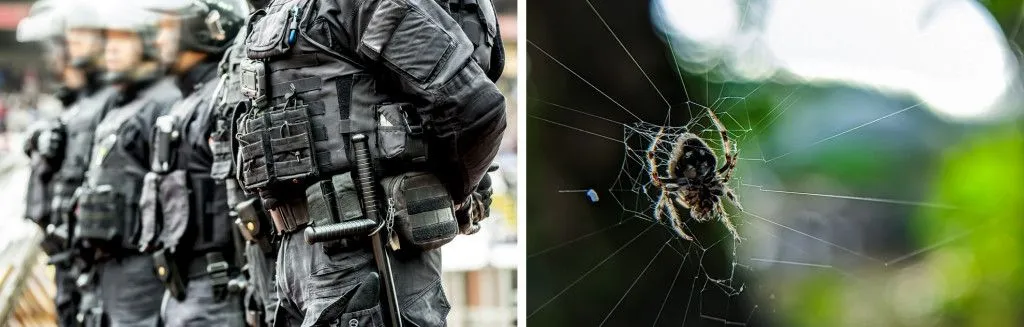
Other back-of-the-envelope calculations point to a pencil-thick strand of spider silk being capable of catching a Boeing 747 and bringing it to a complete rest. However, such a feat needs no less than 30 km (about 19 mi) of silk line, with the plane flying at a landing speed of roughly 80 m/s (290 km/h, or 180 mph). Not to mention, spinning a thread that thick and that long would take millions of spiders working in concert!
Thus, spider silk is a very promising material, in theory, owing to its high tensile strength and elasticity. However, the sheer impracticality of scale makes it impossible to be put to any significant use, other than in laboratories.
Potential Applications
The extremely high strength-to-weight ratio of spider silk makes it conducive for inclusion in lightweight, high-strength design applications, such as bulletproof vests, parachutes, ropes, boat sails, and similar uses.

The protein-based formulation of spider silk is also biocompatible with human beings. This makes it a potential contender for medical applications, such as sutures, surgical bandages and even artificial ligaments.
A Final Word
While it may be easy to break a small spider web due to its near negligible dimensions, they are theoretically insurmountable if scaled to human proportions. The only downside to spider silk is its lack of availability in commercial quantities!
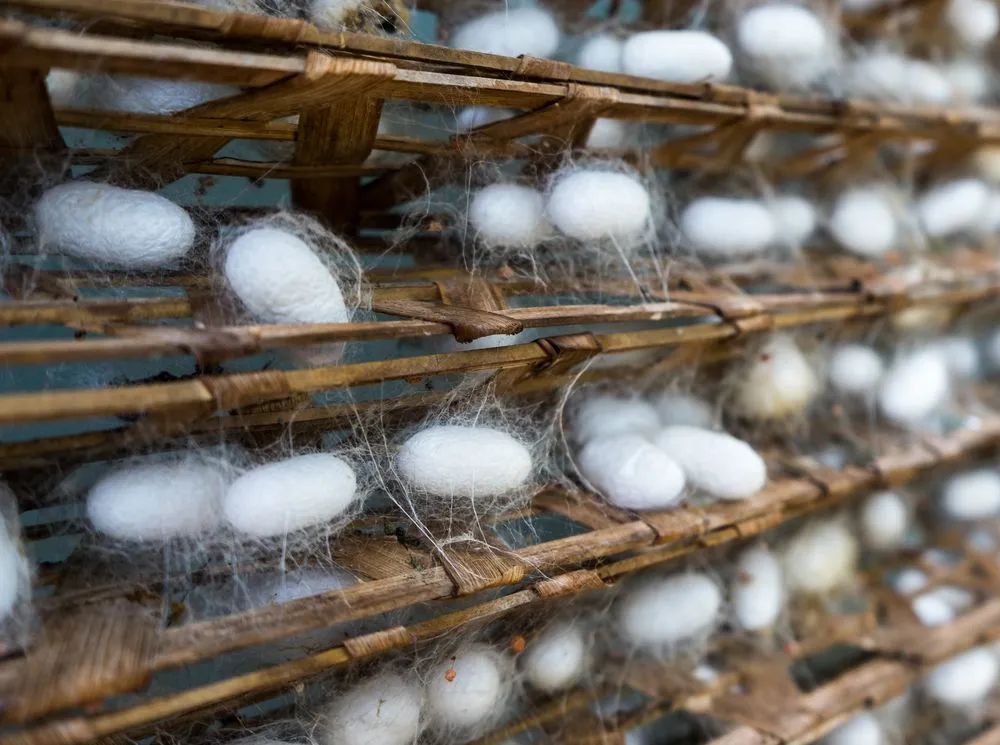
Unlike other creatures, such as cattle and silkworms, which can coexist with other members of their species in harmony, spiders are cannibalistic in nature. This further prevents the harvesting of spider silk in large quantities. Even though scientists are trying to replicate this formulation by gene transplanting, they’ve only achieved moderate success thus far. Until we figure that out, determining whether Spiderman would actually be able to save a train from falling is a problem that only time (and the existence of a worthy super villain) will tell!
References (click to expand)
- Forster, J., Bryan, M., & Stone, A. (2012). A2_4 Doing Whatever a Spider Can. Journal of Physics Special Topics, University of Leicester.
- Spider silk is five times stronger than steel - now, scientists know why. Science (AAAS).
- Gu, Y., Yu, L., Mou, J., Wu, D., Zhou, P., & Xu, M. (2020, January 1). Mechanical properties and application analysis of spider silk bionic material. e-Polymers. Walter de Gruyter GmbH.
- Römer, L., & Scheibel, T. (2008, October). The elaborate structure of spider silk. Prion. Informa UK Limited.
- Applications of Spider Silk. chm.bris.ac.uk