No. The hypnosis performed by Merritt McKinney in Now You See Me (2013) is exaggerated for the screen. Real hypnosis takes time and a calm setting, only about 10–15% of people are highly susceptible to it, and there’s no evidence anyone can be “speed-hypnotized” in seconds, mass-hypnotized in front of a crowd, or made to perform actions they never consented to.
The closer you look, the less you see
– Now You See Me
“Now You See Me” is a 2013 Hollywood film that centers around a group of street magicians who band together and, through brazenly lavish magic shows, funnel money from corrupt rich people, and give it to those in need. One of the characters, Merritt McKinney, is famous for his ability to hypnotize people. Let’s look at a few instances where he uses this impressive power.
In his introduction in the film, McKinney hypnotizes a woman, and then her adulterous husband, a fact he uses to extort money from the husband’s pockets.
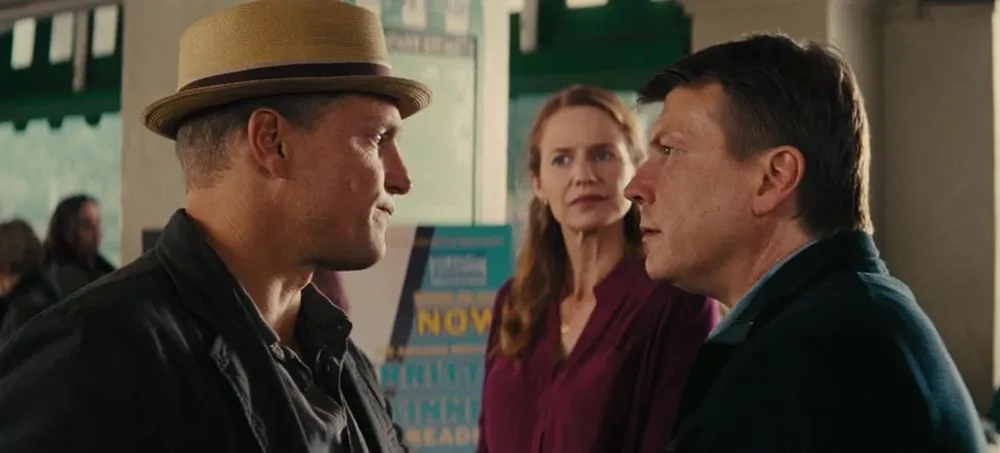
He also does a number of other performative hypnotic sessions. He hypnotizes someone on stage, surrounded by hundreds of people, just by whispering into his ear. He “mass hypnotizes” 12 people on stage, again in front of a large audience. They are instructed to act like football players and tackle the person who says the word “freeze”. He hypnotizes someone to start playing a violin (without the instrument, just the action), when he hears the word “bullshit”.
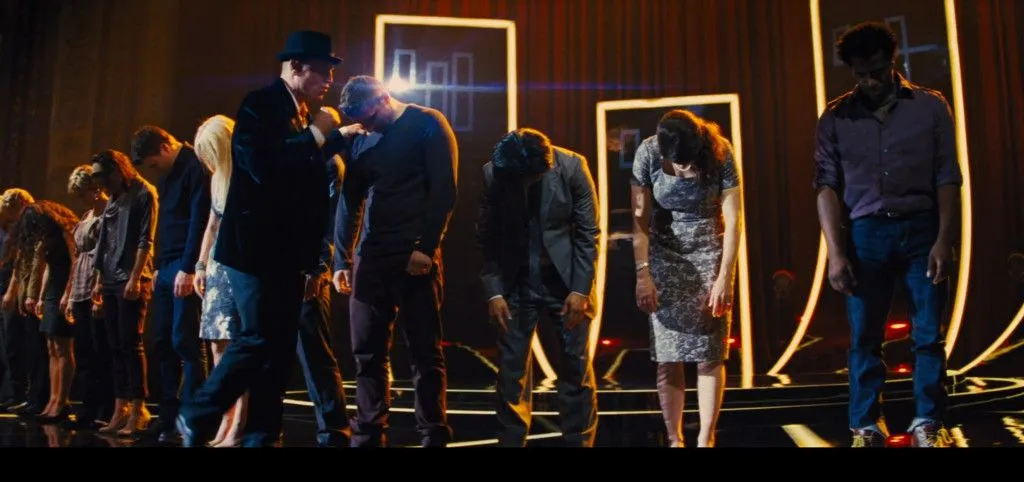
This is a typical portrayal of hypnosis in movies, but is it even possible to do some of the things he did? Can you put someone to sleep instantly, or can hypnosis influence a person to do pretty much anything the hypnotist wants? And can hypnosis be effective on everyone equally?
While hypnosis does carry some element of magic in movies, in real life, hypnosis is different. It is defined by the American Psychological Association (APA) as a state where a person’s perception, insight, and actions are influenced. A person might be more open to certain behaviors or actions under this influence.
Some of what McKinney appears to do resembles hypnosis, if the above sentences were your only reference, but how much of it actually holds up to real hypnosis?
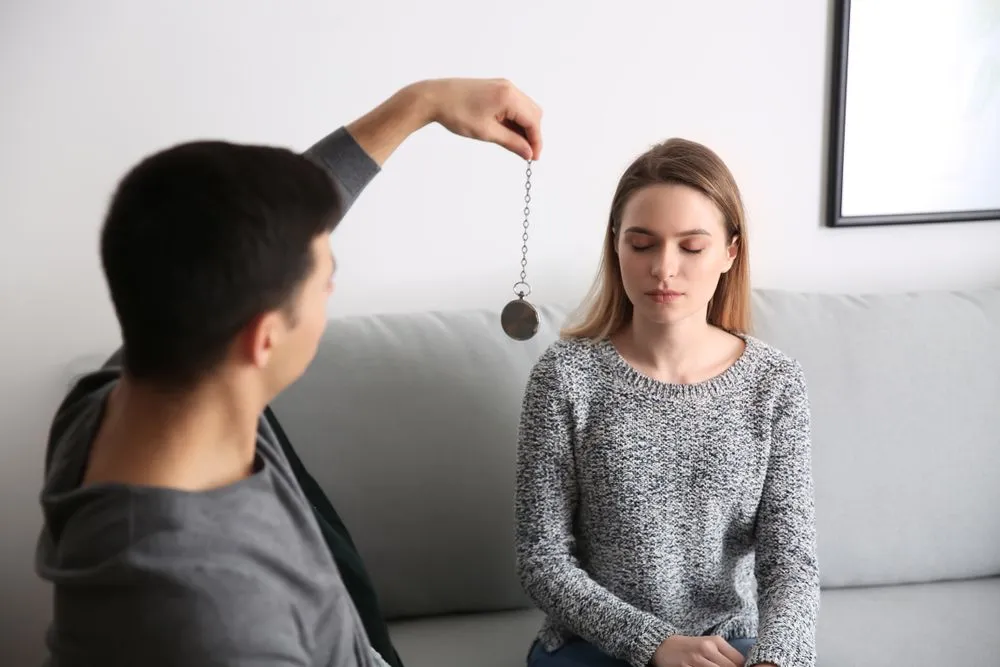
Hypnosis In Psychology
While hypnosis isn’t seen as a standalone treatment in psychology, it is sometimes used as a tool to aid other therapies. Rather than a controlling tool, it is used as a meditative tool, a way for the patient to access unconscious thoughts they are not aware of and cannot control.
Unlike movies and shows, where hypnotism is manipulative, mysterious and malicious, hypnotism in therapy is a much more relaxing experience, with the therapist giving verbal suggestions to the patient, often building up imagery in their mind to aid with the process of relaxation. This has been proven to help people with anxiety, emotional distress and even pain, to some extent.
Hypnosis isn’t just limited to emotionally distressing feelings like anxiety; it has also been used to treat chronic pain and routine habits. In fact, in one of Deirdre Barrett’s therapy sessions, she was able to nudge her client towards quitting smoking through hypnosis. It has also been studied in terms of pain related to cancer or surgery, and was shown to reduce that pain.
Can You Actually Hypnotize Someone?
So if the movie gets it wrong, what does real hypnosis actually look like? The short answer is that yes, hypnosis is real, but it works nothing like McKinney’s snap-of-the-fingers routine. Clinicians describe it as a handful of unhurried stages rather than a single magic word. First comes the induction, where the person settles into relaxation and narrows their attention onto a single focal point, such as a candle flame, a spot on the ceiling, or the hypnotist’s voice. That is followed by deepening, usually through calming imagery, then the actual suggestions, and finally a gentle emergence back to ordinary awareness.

A few myths are worth clearing up, because they are exactly what the film leans on. Hypnosis is not sleep, and it is not mind control or brainwashing. According to the Cleveland Clinic, you stay in control of your own mind and thoughts the whole time, most people remember the session afterward, and you cannot be made to do anything that genuinely clashes with your values. That alone rules out McKinney bending a total stranger to his will in a few seconds.
It also does not work equally well on everyone. Hypnotic susceptibility varies from person to person and roughly follows a bell curve, with only around 10% of people being highly responsive. And no, the hypnotist does not need to be physically present and locking eyes with you. Self-hypnosis and remotely delivered sessions can work too. In one clinical trial, self-hypnosis delivered through a virtual-reality headset noticeably lowered patients’ anxiety during a medical procedure. What it still needs is your willing cooperation and a calm, focused setting, not a single whispered word in a roaring theater.
Now You See Me’s Stage Hypnosis
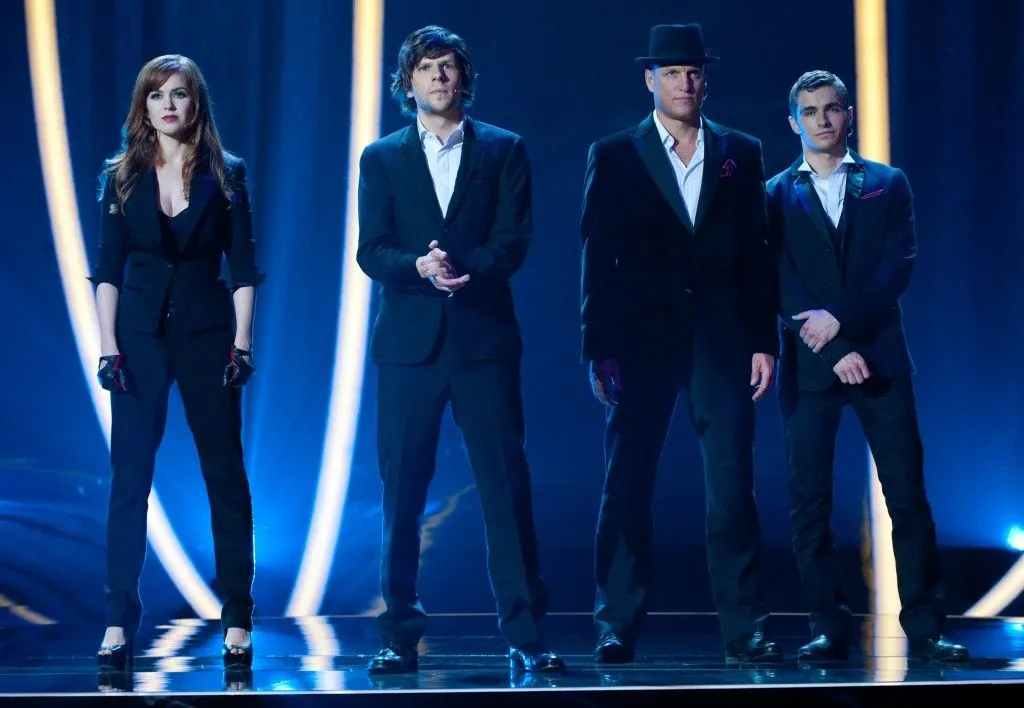
In the movie, the hypnosis mainly focuses on the magic performances. A major part of hypnosis in this movie, and most portrayals of hypnosis, is the “cue”. The cue is usually a word (but can also be a sound), that triggers the hypnotized person to perform whatever act they had been hypnotized to do. Let’s see why this type of hypnotism isn’t realistic.
First of all, the “trance” that the volunteers are put into while being hypnotized cannot be achieved instantly; you cannot just tell someone to close their eyes and enter a trance. This trance can only be entered in a relaxed, calming and gradual manner, not in a rushed, noisy environment.
Also, “cue” words don’t work like they’re portrayed here. Attaching a behavior or action to a word cannot trigger that action instantly. Also, since real hypnotism is rooted in neuroscience, not everyone can be hypnotized with ease. In fact, only 10% of people are assumed to be heavily susceptible to hypnosis.
Hypnotism is more about focused attention and reflection, rather than being able to perform any action on a cue. It uses a visual or auditory focal point, like a point on the ceiling, or a piece of calming music. It uses meditative techniques to put the patient in a trance.
While Now You See Me did get the part about the visual or audio focus, their examples of hypnosis were always carried out in a disruptive environment, which is not ideal for putting someone in a meditative trance. As mentioned before, it’s also not an instantaneous process.
Who Is Merritt McKinney?
Merritt McKinney is the character behind all this on-screen hypnosis, and he is played by Woody Harrelson. Within the Four Horsemen, the team of magicians at the heart of Now You See Me, McKinney is the mentalist and hypnotist, and he is the oldest of the group. He bills himself as a mind reader and psychic, blending hypnosis with classic mentalism, including cold reading, where a performer makes confident-sounding guesses about a person based on their appearance, reactions, and a few leading questions.

The films give him a backstory that explains the chip on his shoulder. He was a bigger name in his younger days, with television specials to his name, until his own brother, who was also his manager, ran off with his money and left him scrambling to rebuild his career. By the time the Horsemen come together, he is a faded showman hunting for a second act, and he returns as a central member of the team across the sequels.
His act is built for spectacle, which is exactly why it stretches the science. The instant trances, the cue words that supposedly compel people to tackle one another, and the mass hypnosis of an entire crowd are theatrical flourishes that make for a thrilling heist film but would never hold up in a real therapist’s office or a working magician’s act.
Conclusion. Did They Need To Do It Right?
The only thing the movie got right about hypnosis was the focal point. At its core, hypnosis requires a great deal of focus, patience and consent. One cannot hypnotize someone in mere seconds, nor can you make them do something to which they never consented. However, the question arises… did the movie need to portray hypnosis correctly?
The objective of hypnosis in the movie was to add to the subtle magic realism of the film’s plot.
In real life, hypnosis is used as a tool to delve into unconscious thoughts and reflect on maladaptive behaviors. The purpose of hypnosis is completely different in both these scenarios.
If the movie had focused on hypnosis as a therapeutic tool, then it could be held to the same standards as real hypnosis… but it didn’t. Not only the purpose, but the way it played out was also different. It was used in the movie for quick, instant actions to help the protagonists. When used as a tool, it’s less about actions and more about the unconscious mind of the patient and their thoughts.
So no, Now You See Me did not give an accurate portrayal of hypnosis, but for the purpose of their movie, they weren’t aiming for that. Not to mention, most media (visual or written) tends to exaggerate concepts for the sake of their stories, which isn’t necessarily a bad thing. Some things are simply too complicated to fit into a 2-hour movie!
References (click to expand)
- (PDF) Hypnosis and Clinical Hypnotherapy in the Treatment of .... ResearchGate
- (PDF) What We Can Do with Hypnosis: A Brief Note. ResearchGate
- (PDF) The Power of Hypnosis - ResearchGate. ResearchGate
- (PDF) What is hypnosis and how might it work? - ResearchGate. ResearchGate
- hypnosis - APA Dictionary of Psychology. The American Psychological Association
- Hypnosis. Cleveland Clinic
- What is hypnosis and how might it work? PMC, National Library of Medicine
- Virtually Augmented Self-Hypnosis in Peripheral Vascular Intervention: A Randomized Controlled Trial. PMC, National Library of Medicine
- Now You See Me (film). Wikipedia