Table of Contents (click to expand)
- Briefly Revisiting Shutter Island
- What’s Wrong With Teddy In Shutter Island?
- What Kind Of Therapy Was Used On Teddy?
- Psychology In The 1950s: Old School Vs. New School
- Dr. Cawley Turning Over A New Leaf In Shutter Island
- What About The Movies Over-the-Top Portrayals?
- Who Is Dr. John Cawley In Shutter Island?
- How Accurate Is The Electroconvulsive Therapy (ECT) Scene?
- So, Was Teddy Really Crazy? The Ending Explained
- Was Ashecliffe Hospital A Real Place?
- A Final Word
Shutter Island is a gripping psychological thriller depicting the struggles and possible recovery of a person suffering from severe mental illness. Some scenes are clearly exaggerated with horror-mixed theatrical noir elements, but it also has some accurate scenarios of the treatments and approaches to mental health disorders as used in the 1950s.
With a dark, eerie atmosphere and mind-bending twists around every corner, Martin Scorsese-directed Shutter Island is a movie that never gets old, no matter how many times you watch it. It tells the tragic tale of mental illness, violence, love, loss and grief.
And while there is plenty of mystery, the movie also throws light on the psychological treatments, psychiatrists and mental institutions of the mid-20th century. And yes, that includes grim references to electric shocks, brain surgery and rampant patient abuse.
The question is… how scientifically accurate is the treatment that Teddy received on the island? Is it even a real depiction of where psychology was at this time? Let’s find out!
This goes without saying, but there are spoilers ahead.
Briefly Revisiting Shutter Island
The two US Marshals, Teddy (Leonardo DiCaprio) and his new partner Chuck (Mark Ruffalo) enter Shutter Island, a psychiatric facility for the criminally insane. Their job is to find a patient named Rachel Solando who has mysteriously disappeared. One thing leads to another, and in a shocking discovery, we find that Teddy is not a real person. Instead, he is actually a patient at the same asylum. Unable to cope with the memories of his dark past, he lives in a false world he has created for himself.
To find out if the experimental therapy shown in the movie actually worked on Teddy, we have to understand what he was really suffering from.
What’s Wrong With Teddy In Shutter Island?
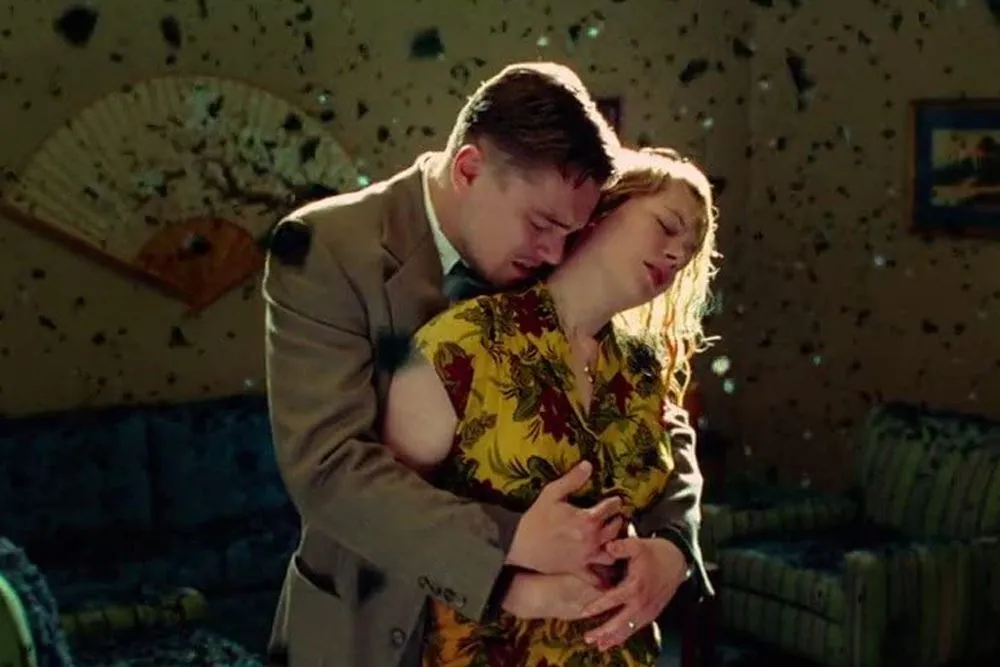
Teddy is actually Andrew Laeddis, a veteran soldier who had served in WWII. He witnessed the extreme brutality that took place in Dachau, the Nazi Concentration Camp in Germany. He then comes back to America to find that his wife Dolores has drowned their three children. In a fit of rage, he murders her. These terrifying events cause Andrew to break down and create an alternate reality in which he is a U.S. Marshal named Edward Teddy Daniels.
Andrew is a curious case. He seems to be intelligent, social, assertive and confident. He does not show signs of chronic depression or anxiety. There are no visible negative effects of substance abuse or medication.
Nor does he have schizophrenia. Instead, he is highly functional, organized, and free from any unusual movements or speech problems. There’s no presence of any bizarre-type delusions (i.e., “aliens abducted me”).
At the same time, he lives in a world of fantasies, a complete illusion.
In a nutshell, he appears to have Delusional Disorder (meeting the DSM-5 diagnostic criteria). This is a type of psychiatric condition where a person suffers from delusional thoughts without being able to recognize reality.
What Kind Of Therapy Was Used On Teddy?
The island in the film is used for confinement and the treatment of persons who have committed some kind of heinous crime.
In the final revelation in the lighthouse, Teddy learns that Dr. Cawley and Chuck/Dr. Sheehan have created a new treatment, an elaborate role play experiment for him. They have allowed him to fully live out his fictitious narrative in order to help him force a way through to reality. If this approach failed, he would have to undergo a surgical procedure known as lobotomy treatment. Teddy comes to terms with reality and accepts that he killed his wife and only served as a US Marshal in the past.
At the end, he recovers, but fakes his insanity in order to be lobotomized. This is clear in his final question to Dr. Sheehan: “Which would be worse, to live as a monster, or to die as a good man?”.
He would rather die as a good man (oblivious to the crime he has committed) than live as a monster (with the unbearable guilt and mental anguish of living with what he did).
Psychology In The 1950s: Old School Vs. New School
The fifties were a decade of turbulence in psychiatry and psychology. On the one hand, archaic and controversial treatments like lobotomy were still being conducted. Doctors used this bizarre surgery to turn unruly patients into “calm” and “manageable” ones. The Portuguese neurologist Egas Moniz developed the original operation, the frontal leucotomy, in 1935, cutting the white-matter connections between the frontal lobes and the rest of the brain, and he was awarded the Nobel Prize for it in 1949. The quicker, cruder “ice pick” version most people picture (the transorbital lobotomy, in which an ice-pick-like instrument is hammered through the bone above the eye socket) was popularized later in the United States by Walter Freeman.
In another method called electroconvulsive therapy (ECT) or shock therapy, high-electric current was run through patients’ brains. Although its modern version is considered mild and safe, it is still frowned upon by many, perhaps due to its brutal and unregulated origins.
On the other hand, a new wave of thinking emerged in treatment with the creation of psychiatric medications (chlorpromazine) in the 1950s. In one scene, Dr Cawley explains why Andrew was having migraines and hallucinations. Those were simply withdrawal symptoms, because he had been taken off his regular antipsychotic medication, chlorpromazine, which had given him some relief.
In this psychiatric revolution, then, there was an ongoing “war” as represented by the hospital’s two senior doctors and their opposing views.
Dr. Cawley Turning Over A New Leaf In Shutter Island
So, what kind of therapeutic approach does Dr. Cawley implement with his patients? This scene clearly tells us:
[Teddy Daniels is looking at artwork depicting mental illnesses on Cawley’s office wall…]
Dr. John Cawley: Those paintings are quite accurate. It used to be the kind of patients we deal with here were shackled and left in their own filth. They were beaten, as if whipping them bloody would drive the psychosis out. We drove screws into their brains, we submerged them in icy water until they lost consciousness, or even drowned.
Chuck Aule: And now?
Dr. Cawley: We treat them, try to heal, try to cure. And if that fails, at least we provide them with a measure of comfort in their lives, calm.
Dr. Cawley is an advocate for safe, modern treatment approaches (like talking therapy), instead of invasive practices like lobotomies or electric shock. On another occasion, he says:
I have this radical idea that if you treat a patient with respect and listen to what he’s trying to tell you, you just might reach him.
Similar developments were taking place during the 1950s. The foundation for modern psychotherapy had been made by the end of the 19th century. Psychoanalysis, dubbed as the “talking cure“, was introduced by Sigmund Freud, claiming its efficacy on the basis of an “exchange of words”.
In 1955, Dr. Albert Ellis developed rational emotive behavior therapy (REBT). After a few years, Aaron T. Beck introduced cognitive behavioral therapy (CBT). Thanks to these great minds, when we visit a therapist or counselor today, we talk and listen in order to solve or manage our problems.
What About The Movies Over-the-Top Portrayals?
Some scenes in Shutter Island are too melodramatic and the story veers too far from the truth. For example, there is the cave scene where Teddy meets a doctor who escaped, and then think that the psychiatric facility is probably being used for ‘mind control’.
Similarly, in Ward C, when Teddy discovers George Noyce and listens to his paranoid rant, it amplifies Andrew’s conspiracy theory. Ward C has an atmosphere of a chamber of horrors, where ‘dangerous’ and ‘unpredictable’ patients seem to run amok. All the while they are living under conditions of mistreatment and filth.
Some mentally ill characters like Dolores (Andrew’s wife, the manic-depressive suicidal child-murderess), George Noyce, and other schizophrenic patients in Ward C will evoke horror and disgust, rather than sympathy, in viewers.
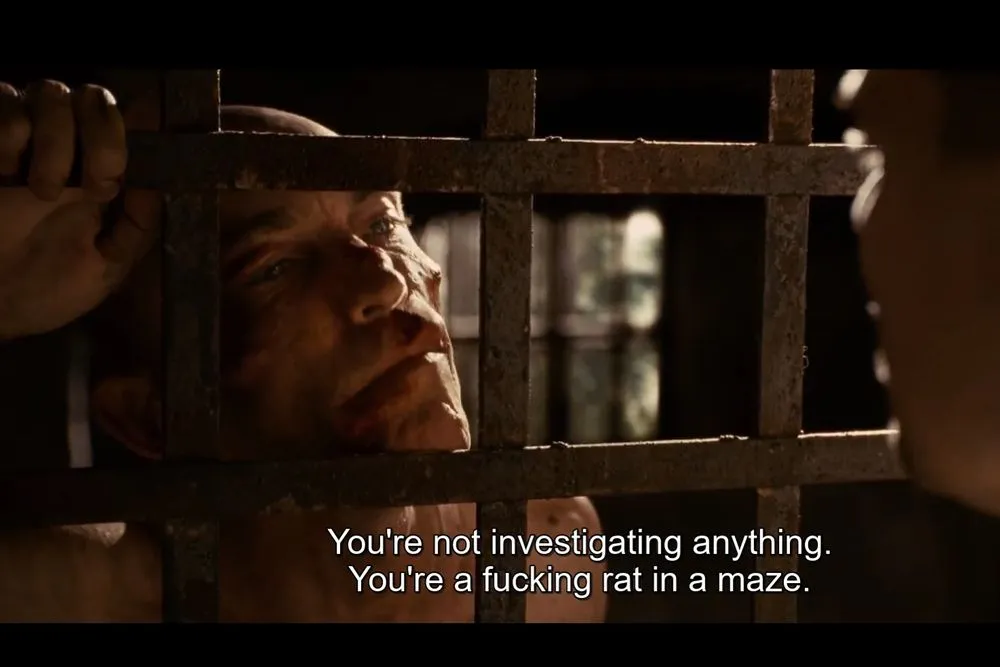
Dr. Jeremiah Naehring gives off more of a Nazi vibe, lacking any humanistic or compassionate attitudes towards his patients. In addition, the warden gives a particularly heartless monologue to Teddy, basically pointing out that “God loves violence”, and arguing that we have “war to wage in his honor.”
As a result, these chilling images will more than likely leave a negative impression on the mind of the audience, rather than build any respect for modern psychiatry or mental healthcare.
Who Is Dr. John Cawley In Shutter Island?
If you walked away from the film fixated on the calm man in the suit running the asylum, you are not alone. Dr. John Cawley is the senior psychiatrist who oversees Ashecliffe Hospital, and he is played by the British actor Ben Kingsley. He is the architect of everything that happens to Teddy: the missing-patient case, the interviews and the freedom to roam the grounds are all part of a treatment plan he designed.

What makes Cawley interesting is that he is not the villain the genre keeps hinting at. He sits squarely on the “new school” side of the 1950s argument we described above. Cawley holds his profession’s rush to medicate or operate on patients in contempt, and instead wants to reach them by listening, talking and engaging in elaborate role-play. His foil is Dr. Jeremiah Naehring, the colder, more clinical colleague who would happily reach for sedatives and the surgical knife. In other words, the two doctors are walking, talking stand-ins for the real tug-of-war that defined mid-century psychiatry: heal the person, or simply subdue the patient. That tension is the whole point of the character, and it is why the role play exists at all rather than an immediate lobotomy.
How Accurate Is The Electroconvulsive Therapy (ECT) Scene?
The flickering, restrained-patient imagery the film attaches to electroconvulsive therapy (ECT) is one of its most searched-for moments, and it is rooted in something real. In its early decades, ECT was genuinely performed unmodified, meaning the patient received the electrical current while fully awake, with no anesthetic and no muscle relaxant. The induced seizure caused violent, whole-body convulsions, and nurses were instructed to physically hold the patient down. Musculoskeletal injuries, and even fractures, were not uncommon.

That is exactly the version of ECT that haunts the popular imagination, and it is what the film leans on for its horror. The crucial point the movie skips, though, is timing. By the 1950s, the decade in which Shutter Island is set, ECT was already being transformed. The introduction of general anesthesia together with the muscle relaxant succinylcholine produced modified ECT, which suppressed the outward convulsion and largely eliminated those injuries. Providing general anesthesia for ECT has been standard since the 1950s, and that is how it is still delivered today: under anesthesia, with muscle relaxants and careful monitoring. So the brutal, conscious-patient ECT the film gestures toward was on its way out precisely when the story takes place. As a treatment for severe depression, ECT never actually disappeared, and a far gentler, evidence-based version remains in use in hospitals around the world.
So, Was Teddy Really Crazy? The Ending Explained
This is the question viewers carry out of the cinema, so let us be clear about what the film actually establishes. The man calling himself U.S. Marshal Edward “Teddy” Daniels is a delusional patient named Andrew Laeddis. After his wife drowned their three children, he killed her, and his mind shattered. To survive the guilt, he built an elaborate alternate identity, casting himself as the heroic investigator and turning the people around him into characters in his story. So yes, on the central question, the film is unambiguous: Andrew is genuinely, severely ill.
Where the film is deliberately ambiguous is the final scene. Andrew’s last line, “Which would be worse, to live as a monster, or to die as a good man?”, hangs the whole ending on a single doubt. Has Andrew relapsed back into his Teddy delusion, which would justify the lobotomy that follows? Or has he had a quiet flash of sanity and chosen oblivion on purpose, preferring to be lobotomized rather than live with what he did? The line is an addition to Dennis Lehane’s novel, which ends more conclusively. Lehane himself reads it as a momentary flash of awareness, suggesting that for half a second Andrew remembers exactly who he is, and then lets it go. Neither Scorsese nor DiCaprio has ever spelled it out, and that refusal to resolve it is the entire point. The horror is not whether he is crazy, but that a sane man might choose to be erased.
Was Ashecliffe Hospital A Real Place?
Ashecliffe Hospital is fictional, but the unsettling idea behind it, an island where society’s “undesirable” and sick were warehoused out of sight, is not. According to the U.S. National Park Service, Lehane drew on the long, grim history of the Boston Harbor Islands. Rainsford Island operated for over 150 years as “Hospital Island,” hosting quarantine stations, almshouses and a hospital, with a reputation for severe overcrowding. Nearby Long Island served in turn as an almshouse, hospital, home for unwed mothers, homeless shelter and addiction treatment center until it closed in 2015. These were places, in the Park Service’s words, that isolated people from mainstream society.

The film added a second layer of real geography. The rocky coastline and the brooding main buildings of “Ashecliffe” were shot on Peddocks Island in Boston Harbor and at the disused Medfield State Hospital in Massachusetts. Peddocks is also home to the abandoned Fort Andrews, which lent the production its air of decayed institutional menace for free. So while no real Ashecliffe ever held a patient, Teddy’s island is stitched together from genuine American sites whose own histories are quite a bit darker than fiction.
A Final Word
While there are some accurate depictions of changing methodologies in mental disorder treatment of the time, Shutter Island doesn’t exactly paint psychology or psychiatry in a good light for a mainstream audience.
References (click to expand)
- Delusional Disorder DSM-5 297.1 (F22). Therapedia
- Shutter Island: Separating Fact from Fiction | Psychology Today. Psychology Today
- A One Way Ticket To Shutter Island. New York University
- Ban T. A. (2007). Fifty years chlorpromazine: a historical perspective. Neuropsychiatric disease and treatment, 3(4), 495–500.
- Faria, M. (2013). Violence, mental illness, and the brain - A brief history of psychosurgery: Part 1 - From trephination to lobotomy. Surgical Neurology International.
- Shutter Island (film). Wikipedia
- Shutter Island Ending: The Question That Haunts 10 Years Later. IndieWire
- Anesthetic Considerations in Electroconvulsive Therapy. StatPearls. NCBI Bookshelf
- Island Histories that Inspired “Shutter Island.” U.S. National Park Service