Table of Contents (click to expand)
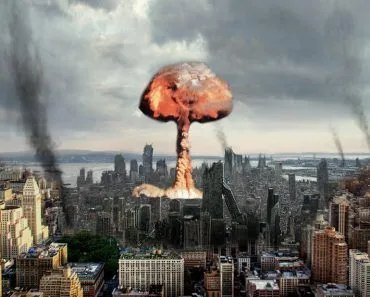
Godzilla was created in 1954 by Japanese producer Tomoyuki Tanaka at Toho studios. The monster was born directly out of World War II: the atomic bombings of Hiroshima and Nagasaki, and the Castle Bravo hydrogen bomb test that irradiated a Japanese fishing crew. Awakened by nuclear testing in the film, Godzilla symbolizes the destructive power of nuclear weapons.
Being an avid follower of Godzilla since childhood, I have always been fascinated by this massive monster and its wide range of abilities.
Recently, I was going through its general anatomy: how it’s a product of radiation, how it feeds and emits radiation, and how it has powers like ‘atomic breath’.
Godzilla, as a character, is centered around nuclear radiation. I was aware that Godzilla was created by Tomoyuki Tanaka in Japan, in the year 1954.
But at some point, the historic dates of the atomic bombing of Hiroshima and Nagasaki (1945) struck me and a question presented itself: was Godzilla a cultural tool in the representation of the Japanese experience of nuclear radiation and its after effects?
Who Is Godzilla?
Godzilla is a fictional monster, part of the Japanese Kaiju universe. Kaiju is the Japanese word for ‘strange beast’, and this universe encompasses many other fictional monsters.
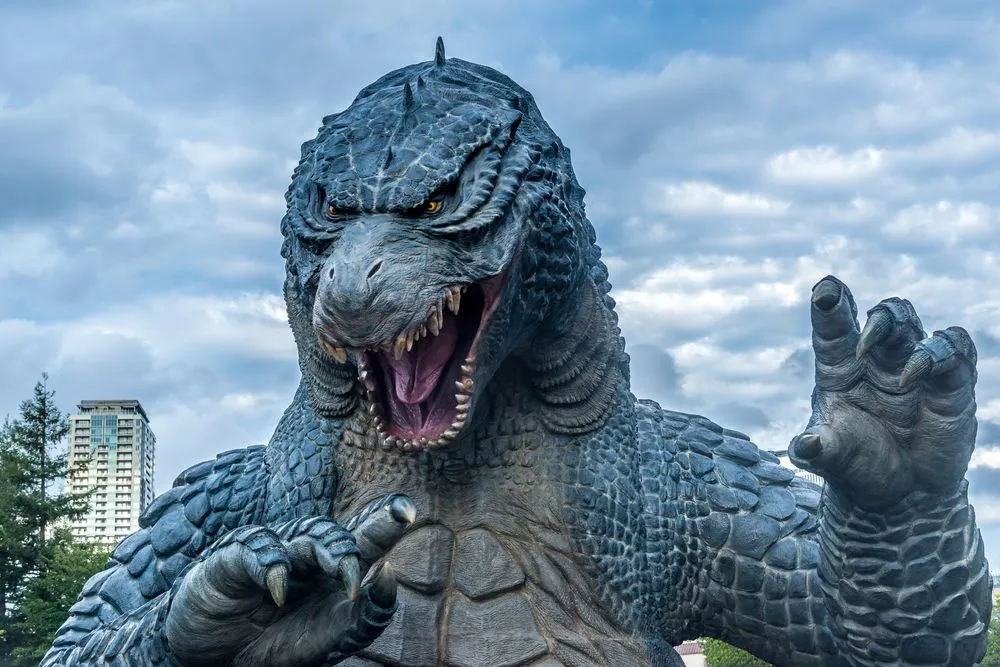
Godzilla is the anglicized version of the Japanese word Gojira, which is made up of two words; Gorira (Gorilla), and Kujira (Whale).
Although Godzilla’s exact origins haven’t been disclosed, it is known to be an ancient, dinosaur-like creature that has undergone an extensive amount of mutation. We have a crisp video to understand what exactly is mutation:
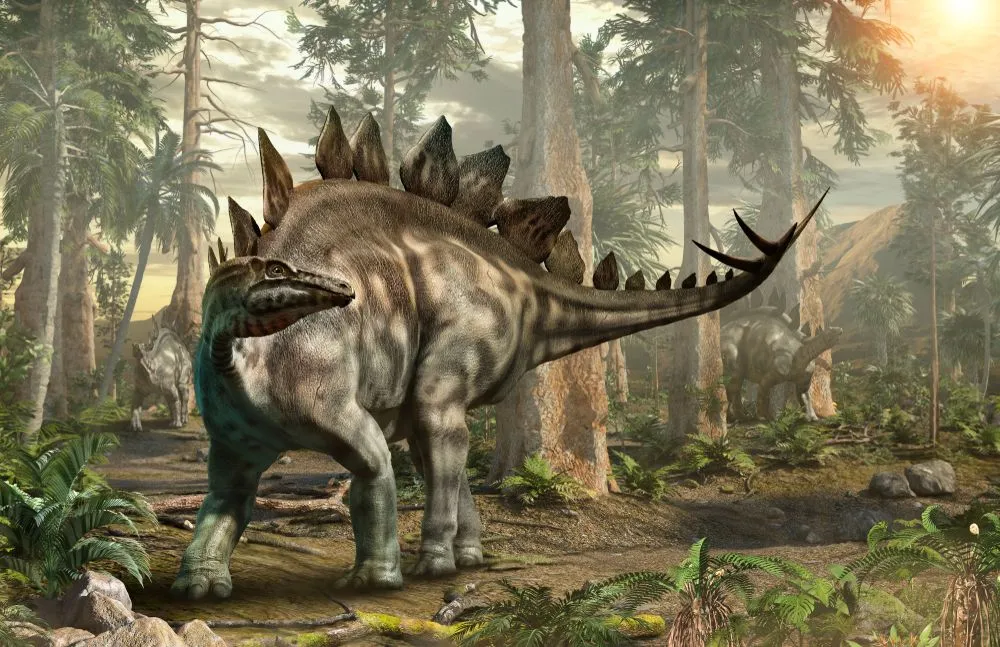
A quick look into its anatomy reveals multiple features that resemble dinosaurs, from the scales on its body and its short hands, to the scales on its back that can be equated to those of a Stegosaurus.
The Atomic Bombings Of Hiroshima And Nagasaki
On August 6, 1945, the atomic bomb ‘Little boy’ was detonated over the Japanese city of Hiroshima, and on August 9, 1945, ‘Fat Man’ was detonated over Nagasaki. The detonation of the world’s first two combat-ready atomic bombs was carried out by the Harry Truman-led American government, in an effort to end World War II.
The Japanese Imperial army, prior to the bombings, had vowed to fight relentlessly without displaying any signs of a willingness to surrender. Despite the thousands of casualties that the bombs led to within seconds of their detonation, the aftermath led to radiation sickness, poisoning, genetic changes in progeny and an extensive amount of change brought about by nuclear radiation in general.
However, the wake of these detonations, although horrifying for Japanese culture, was not the ultimate motivator for the creation of Godzilla.
Lucky Dragon Number 5
After the end of the second world war, the arms race began. The two superpowers (the United States and the USSR) had locked horns to stockpile nuclear weapons and were desperate to emerge as the dominant power. An aspect of this stockpiling was testing the nuclear weapons after they were made.
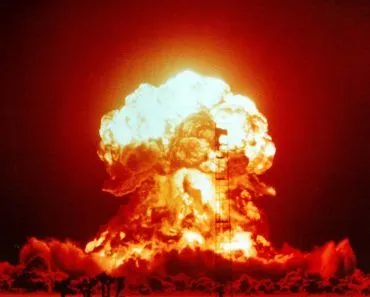
On March 1, 1954, for example, the United States detonated the thermonuclear bomb ‘Castle Bravo‘ at Bikini Atoll, in the Marshall Islands. It remains the most powerful nuclear weapon the United States has ever tested. Its designers expected a yield of about 6 megatons, but the device delivered 15 megatons (roughly 1,000 times the force of the Hiroshima bomb), and shifting winds carried the radioactive fallout well beyond the danger zone the United States had declared in advance.
A Japanese tuna fishing boat by the name of Daigo Fukuryū Maru (Lucky Dragon No. 5) was about 80 miles (130 km) east of Bikini Atoll, just outside the zone the United States had warned ships to avoid.
The crew had no warning of the test and were fishing in waters they believed to be safe, near the thermonuclear test site.
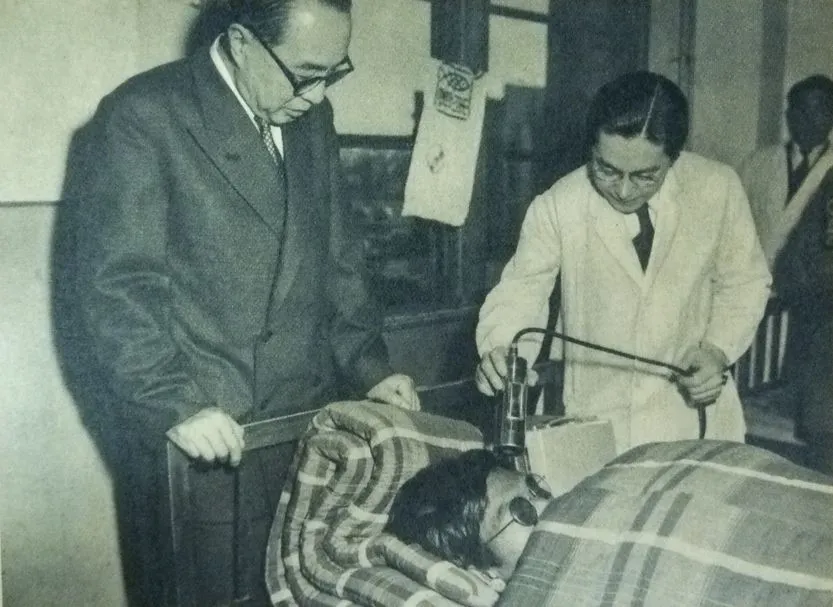
The boat, although not damaged, was caked in a white ash that rained down on it for hours (this ash was pulverized coral from the atoll, vaporized by the heat of the blast and then falling back to earth as radioactive fallout). Upon the boat’s return to the coast of Japan, all 23 crew members were suffering from radiation sickness.
Eventually, the boat’s chief radio operator, Aikichi Kuboyama, died of radiation sickness on September 23, 1954, often described as the first victim of the hydrogen bomb. The case of this fishing boat served as the last nail in the coffin of the Japanese experience with nuclear weapons.
This event, being a harsh reminder of the drastic effects of nuclear testing, also stirred up anti-nuclear sentiment worldwide.
The Cultural Birth Of Godzilla
So how does all of this lead to Godzilla? In 1954, producer Tomoyuki Tanaka, the man credited with creating Godzilla, was returning to Japan by air after a separate film project had fallen through. Drawing on the recent Lucky Dragon No. 5 incident, the re-release of King Kong, and the American film The Beast from 20,000 Fathoms, he sketched out a story about a giant creature roused from the depths of the ocean. He brought the project to Toho, which assigned director Ishiro Honda and special effects pioneer Eiji Tsuburaya to bring the monster to life.
And so, in 1954, the movie Gojira was released, in which the monster Godzilla is awakened from its slumber by the hydrogen bomb tests being carried out. Once awakened, Godzilla is unstoppable and lays waste to Tokyo and many surrounding regions with its huge stature and atomic breath.
The 1954 movie opens with the shot of a boat, somewhere in the Pacific. The water around the boat suddenly turns white and starts to boil, the boat is destroyed in a white flash.
Throughout the movie, the symbolic references are very noticeable. The opening scene of the boat is a reference to the Lucky Dragon, while the boat getting destroyed in a white flash is a reference to the coral sleet that came with Castle Bravo detonation.
Perhaps the most important reference of all is in the creation of Godzilla itself. Godzilla is said to represent a myriad of things. Some attribute it to the United States, some to Japan itself, but the most common interpretation of Godzilla that remains consistent, is of the monster representing nuclear weapons, and the enormous burden they bring upon the world.
The bomb testing that awakens Godzilla symbolizes the world’s awakening to the power and usage of nuclear weapons, but at the same time, the destruction that Godzilla leaves behind on small Islands and in Tokyo symbolizes the sheer amount of damage the use of nuclear weapons can cause.
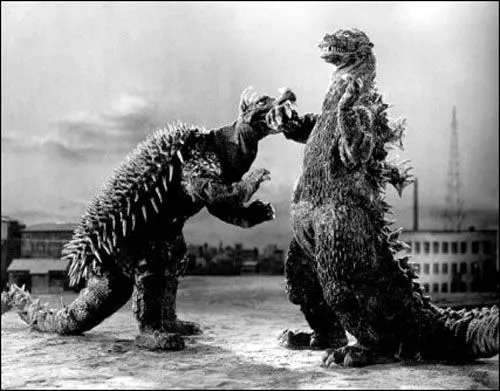
What is even more interesting is how the character of Godzilla has developed in Japanese culture. On many occasions, in future sequels, when another monster lands upon Earth, or perhaps caused when a scientist/nuclear terrorist is adamant about creating havoc, Godzilla is depicted as battling these threats to restore balance.
These versions fit with Godzilla’s representation as nuclear weapons. They propose the alternative point that, although nuclear weapons bring unimaginable amounts of destruction and suffering, against an extremely resilient enemy they can also serve as effective weapons and deterrents.
Conclusion
The Godzilla franchise has taken a sharp turn since its inception. Many of the films that followed leaned into themes like Godzilla battling other monsters and being cast as an ‘anti-hero’. The title ‘King of the Monsters’ itself comes from the 1956 American re-edit, Godzilla, King of the Monsters!, which spliced in new scenes with actor Raymond Burr and introduced the creature to audiences outside Japan. In 2024, the franchise came full circle when Godzilla Minus One, a Japanese Toho production set in the aftermath of World War II, won the Academy Award for Best Visual Effects, the first Oscar in Godzilla’s seven-decade history.
Characters like Godzilla give an extremely subtle nod towards how a society deals with a traumatic event through cultural tools. A psychoanalytic review of the arrival of Godzilla’s character points towards the concept of ‘repression’.
Following the bombings of Hiroshima and Nagasaki, while dealing with the aftermath of the radiation, Japanese society wrestled with feelings of helplessness and resentment. These buried experiences resurfacing in the form of characters like Godzilla can be read as a kind of ‘projection’.
When all those experiences were given a physical, symbolic form, they became a larger part of Japanese history and culture.
I still hold an appreciation for the character and universe of Godzilla, but I maintain that respect by honoring the multiple Japanese experiences and by being aware of the deep history in which that character is rooted.
References (click to expand)
- Godzilla | Movies, Franchise, Series, & Facts. Encyclopaedia Britannica.
- Godzilla (1954 film) | History, Movie, & Facts. Encyclopaedia Britannica.
- Castle Bravo. Atomic Heritage Foundation, National Museum of Nuclear Science & History.
- How the unlucky Lucky Dragon birthed an era of nuclear fear. Bulletin of the Atomic Scientists.
- The amateur's guide to Godzilla. Vox.
- Daigo Fukuryū Maru. Wikipedia.