Table of Contents (click to expand)
No. Transferring a person’s consciousness into another body, the way Avatar shows, is not currently possible. Real brain-computer interfaces (BCIs) can already read brain activity well enough that paralysed patients can control cursors, robotic limbs, and (since Neuralink’s January 2024 implant in Noland Arbaugh) even play chess from a brain chip. But every working system reads or stimulates the brain; none copies or moves a mind. We still don’t know what consciousness physically is, so we cannot yet transfer it.
Avatar: The Way of the Water, sequel to the 2009 sci-fi adventure Avatar, has become one of the highest grossing films of all time.
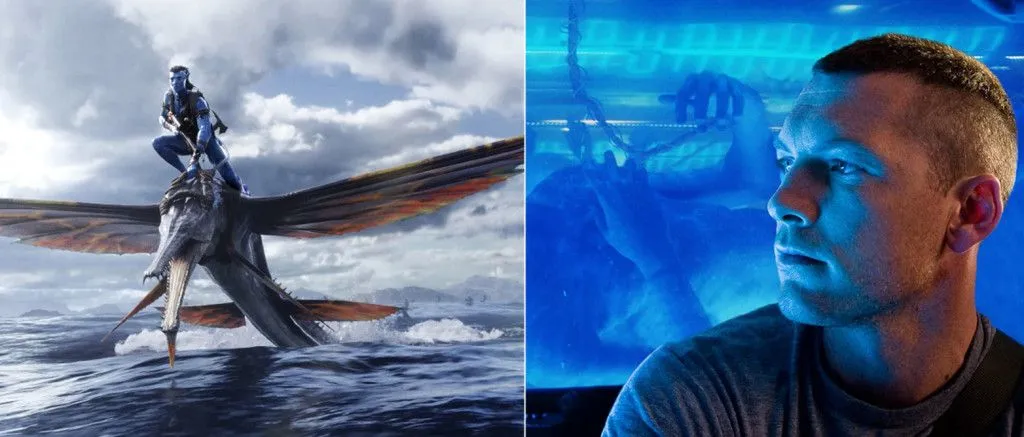
One of the key features that both movies rely on and that wowed audiences was the concept of mind transfer technology. Thanks to this awesome innovation, a war-paralyzed, wheelchair-bound ex-marine was able to turn into a 10-foot blue-skinned human-alien hybrid ‘avatar’. He was able to tame dragon-like alien beasts and lead a full-scale aerial battle.
While both movies are stunning works of fiction, the question remains… how grounded in reality are they? How close are we to achieving a technology that can transfer the mind/consciousness from one body to another, the way we transfer data between two devices? Wouldn’t that be a way to let our minds live forever?
Considering how neck-deep we are in computers here on Earth, it’s hard not to wonder if it’s real, or if it will be anytime soon.
Let’s find out!
How Does The Mind Transfer Work In Avatar?
In the movie, humans seeks to explore the moon of Pandora (located in the real star system of Alpha Centauri) to get unobtainium, a very rare mineral that is only available in this fictional world. However, the air on this planet is toxic for humans and deadly predators lurk in every corner. That’s how the need arose for porting human consciousness into a Na’vi (indigenous people of Pandora) body.
In reality, we have seen astronauts sending and remote-controlling landers and rovers to explore Mars and other destinations. In the movie Avatar, humans launch similar remote control operations. Instead of robots, however, they have their avatars.
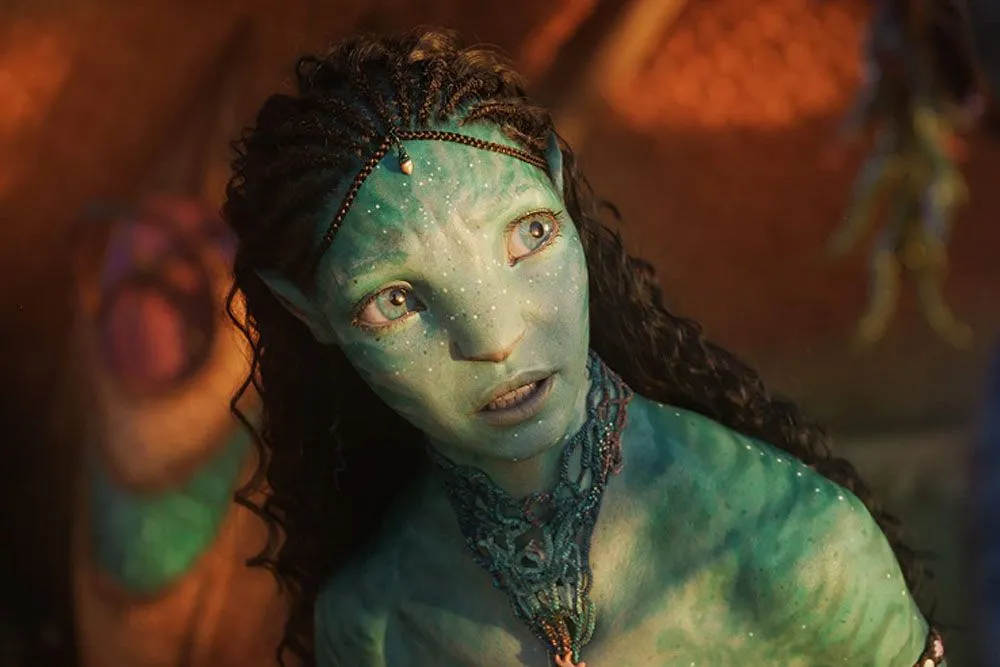
First, these avatars are created by mixing human DNA and the genetic material of Na’vi aliens. Humans (the “controllers”) are then mind-linked to their fully mature avatar bodies. At that point, they can control their avatars wirelessly using only their thoughts. The whole process happens through a super-high-tech brain-computer interface (BCI) that works on neural signals. In the first movie, we also saw the Na’vi performing a ritual to permanently transfer Jake’s consciousness into his avatar body.
So, how much science is there in this concept?
Brain-Computer Interfaces Are Already In Development
It is already possible to connect human brains to a machine and allow the machine to measure the activity of the brain and interact with it. Electroencephalography (EEG) is used to detect changes in brain activity. MRI or fMRI can also help us look at the structure and functions of the brain.
Brain-computer interface (BCI) is a real scientific invention that has allowed people to control devices or machines using only their thoughts. Research shows that it could help people with paralysis (like Jake Sully) walk again.
For example, a user would just have to imagine moving their limbs. This would drive a robot limb (attached to his or her body) to move in the desired way. Scientists have also used this technology to convert mental handwriting into actual text on screen.
Furthermore, doctors are performing telepresence surgeries from remote locations. While operating, they would still feel as if their hands were actually inside the patient’s body.
The big leap since this article was first written is that BCIs have moved out of the lab and into living human patients. In January 2024, Neuralink implanted its N1 chip - 1,024 electrodes on 64 flexible threads - into a paralysed man named Noland Arbaugh, who within weeks was playing online chess and operating a laptop with his thoughts alone. By mid-2025 the company had nine people enrolled in its PRIME trial across four countries; competing groups like Synchron and BrainGate continue to expand their own implant studies. None of this comes close to transferring a mind (it is still strictly reading brain signals), but the bandwidth and reliability of the brain-machine link have improved dramatically.
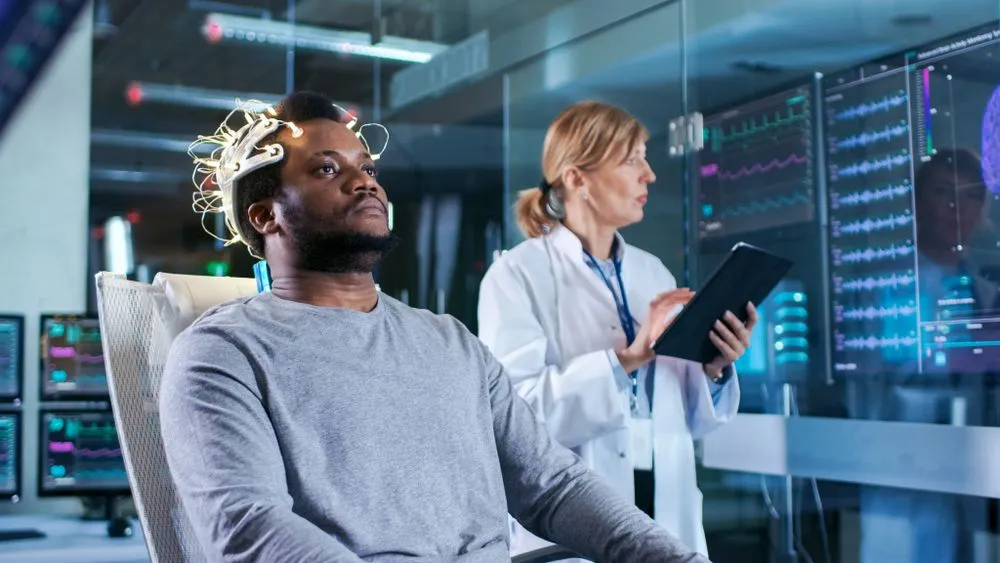
Now, reading electrical signals and biochemical changes in the brain is one thing, but transferring the whole thing to a different place is quite another.
Mind-upload Technologies On The Horizon?
Research on brains and consciousness shows that it is theoretically possible to transfer ‘consciousness’ to a machine. There are no laws of physics that clash with this vision.
Then again, human consciousness itself is a matter that remains hard to pin down. The human brain, being an active biological organ, doesn’t operate like digital computers. Unlike machines, it’s alive.
Our brain does not passively follow instructions by accepting binary data (in zeroes and ones) as inputs and then processing it, as computers do. Our consciousness (the ability to think, sense, feel, reflect on our existence) is what makes us different from a machine.
Consciousness cannot be reduced to a process in the brain or a neural activity, at least not one that anyone has identified. We are conscious because we have unique thoughts, memories, feelings, emotions and a personality. All our rich and complex subjective experiences combine into an infinite amount of data.
The real hurdle is that scientists can’t figure out what consciousness truly is. It is impossible to transfer something when we don’t even know what it is.
Can You Transfer Your Consciousness Into Another Person’s Body?
Avatar’s premise isn’t really about uploading a mind to a computer. It’s about moving a consciousness into another living body, the way Jake ends up inside his Na’vi avatar. The closest thing real surgery has attempted is a head transplant, and its history shows just how far that is from “transferring” a mind.

In 1970, neurosurgeon Robert White grafted the head of one rhesus monkey onto the body of another. The transplanted head recovered its senses (it could smell, taste, hear and move its facial muscles) and stayed alive for several days before immune rejection set in. But the animal was completely paralyzed below the neck, because the severed spinal cord could not be reconnected.
The idea resurfaced in 2017, when surgeons Sergio Canavero and Xiaoping Ren rehearsed a human head transplant on cadavers in an 18-hour operation. No living human head transplant has ever been carried out, and the central obstacle (fusing a cut spinal cord so the new body can actually be controlled) is still unsolved. Bioethicists have sharply criticized the project as premature and unproven.
Here’s the catch that matters for Avatar: a head transplant doesn’t move a mind at all. It physically relocates the whole brain, with its neurons, memories and personality intact, onto a new body. Your consciousness never leaves your own brain tissue; it just gets a new chassis. That’s the opposite of the Na’vi ritual, in which Jake’s mind supposedly leaves his human brain entirely.
Even If You Could Copy a Mind, Would the Copy Still Be You?
Suppose future technology could scan every neuron and synapse in your brain (its full connectome) and rebuild that wiring in a fresh body or a computer. Even then, philosophers point to a problem that no amount of engineering solves: the difference between copying a mind and moving one.

The philosopher Derek Parfit framed the puzzle with a now-famous thought experiment in his 1984 book Reasons and Persons. Imagine a teleporter that scans you in perfect detail, destroys the original, and assembles an exact replica somewhere else. The replica has all your memories and feels like the same person waking up. But is it really you, or just a flawless copy that is convinced it is you?
The puzzle gets sharper if the original is not destroyed. Now two beings exist, each one psychologically continuous with the earlier you. They cannot both be you, because a single identity can’t split in two. As the Stanford Encyclopedia of Philosophy notes, transplant each half of a person’s brain into a different body and both recipients would seem equally entitled to claim they are the original, which is logically impossible.
That is why “uploading your mind” may never deliver the immortality people picture. The upload could be a faithful copy that lives on while the original still dies. Whether that copy counts as you stays an open question about personal identity, not just a matter of better hardware.
A Final Word
Uploading or preserving your consciousness, then, isn’t something that is easy to achieve, by any means. Scientists have not found a way to transfer human minds into machines, let alone another biological brain.
Sorry, folks… as of now, getting your mind transferred into a Na’vi body is simply impossible!
References (click to expand)
- The Big Questions | The Search For Life – Exoplanet Exploration. Tration
- Astronauts Remotely Control Rover From Space - NASA. Tration
- Electroencephalogram (EEG) - NHS. National Health Service
- Drew, L. (2022, April 20). The brain-reading devices helping paralysed people to move, talk and touch. Nature. Springer Science and Business Media LLC.
- Software turns 'mental handwriting' into on-screen words .... Stanford University School of Medicine
- Telepresence - an overview | ScienceDirect Topics. ScienceDirect
- First Human Head Transplantation: Surgically Challenging, Ethically Controversial and Historically Tempting. PMC. NCBI.
- Suskin, Z. D., & Giordano, J. J. (2018). Body-to-head transplant; a ‘caputal’ crime? Examining the corpus of ethical and legal issues. Philosophy, Ethics, and Humanities in Medicine.
- Personal Identity. Stanford Encyclopedia of Philosophy.