Table of Contents (click to expand)
We romanticize pirates because, from Blackbeard to Jack Sparrow, they embody freedom, adventure and rebellion against authority, an aesthetic kept alive by Treasure Island, Pirates of the Caribbean and the Jolly Roger.
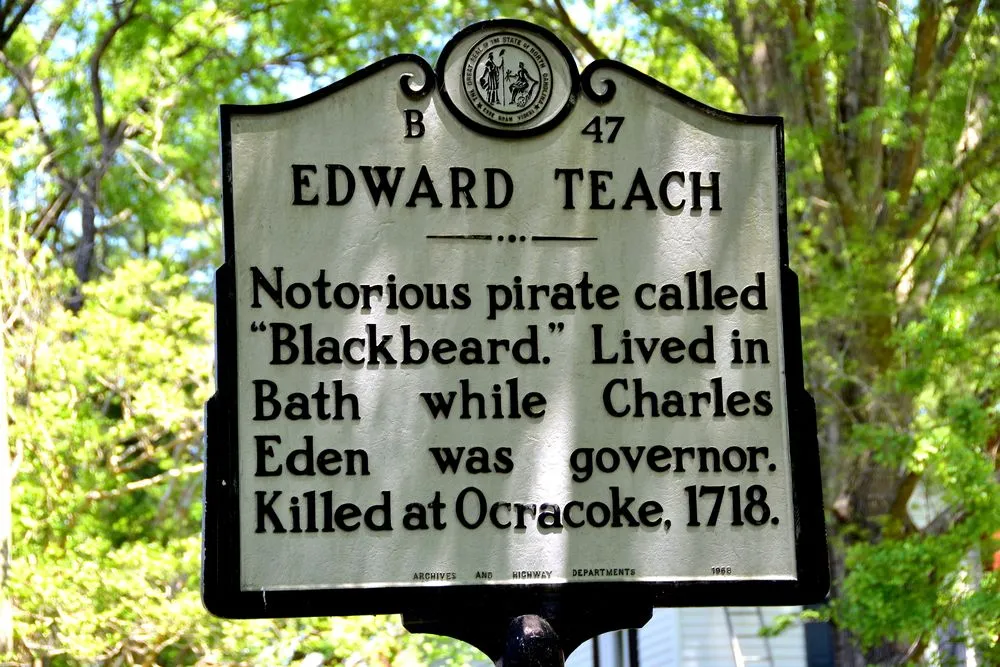
Amidst the vast Caribbean waters in 1717, Blackbeard’s Queen Anne’s Revenge clashed with Charles Vane’s Revenge. Cannonballs thundered through the air as cutlasses clashed under the scorching sun. Amidst the chaos, Blackbeard’s smoldering beard added to his fearsome aura. In the end, Blackbeard emerged victorious, etching his name into the timeless annals of piracy. His life, shrouded in adventure, mystery and rebellion, has been immortalized in literature, film, and folklore.
He is just one of the many, often nameless outlaws of the high seas. Yet why do we continue to romanticize these often brutal and lawless individuals, ignoring the stark realities of their existence?
The Golden Age Of Piracy: Shaping The Romantic Image
The romanticized image of pirates we hold today can be traced back to the Golden Age of Piracy in the late 17th and early 18th centuries. This era, characterized by daring sea raids, hidden treasures, and iconic figures like Blackbeard and Calico Jack, laid the foundation for our enduring fascination with pirates.
During this period, pirates roamed the seas, defying authority and plundering ships with audacious flair. Their exploits, though marred by violence and crime, took on an air of legend. Stories of their escapades and treasure hunts captured the public’s imagination, establishing the template for the swashbuckling pirate archetype we cherish today.
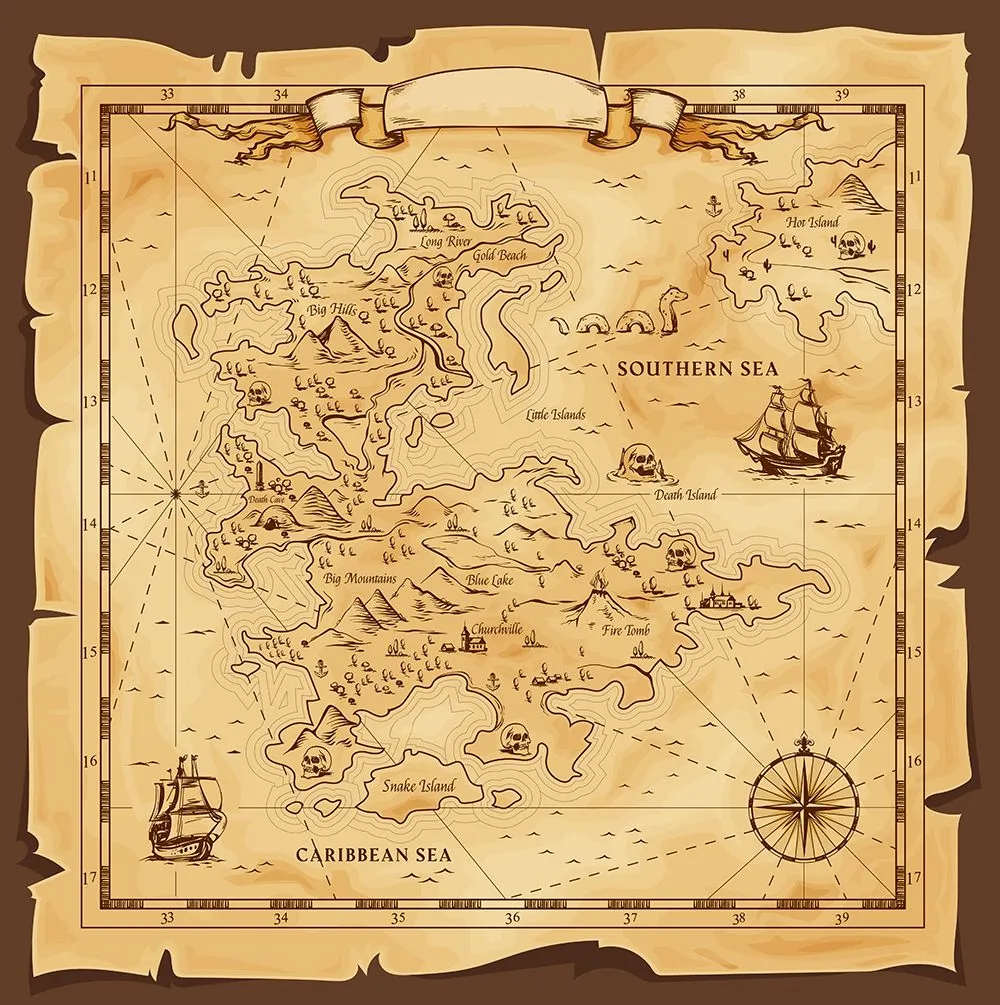
Piracy, both literal and allegorical, was deeply intertwined with English commercial institutions and served as a critique of licensed commerce. Authors in the 18th century started using the figure of the pirate as an anti-hero, misunderstood by a society in which he did not fit, and an economic system outrightly pitted against his kind.
The pirate, instead of a gruesome villain, became the object of fascination and a metaphor for harsh and cruel economic realities, emphasizing the role of outlaw forces in challenging dominant power structures. Both Daniel Defoe’s Robinson Crusoe and Robert Louis Stevenson’s Treasure Island used pirates to show a sense of economic and social rebellion, as well as fearless individuality.
A Sense Of Freedom And Adventure
One of the primary reasons behind our romanticization of pirates is the sense of freedom and adventure they represent. Pirates symbolize a rebellion against societal norms and constraints, offering an enticing escape from the mundanity of everyday life. Their lives were a stark departure from the expected, filled with unpredictability and excitement.
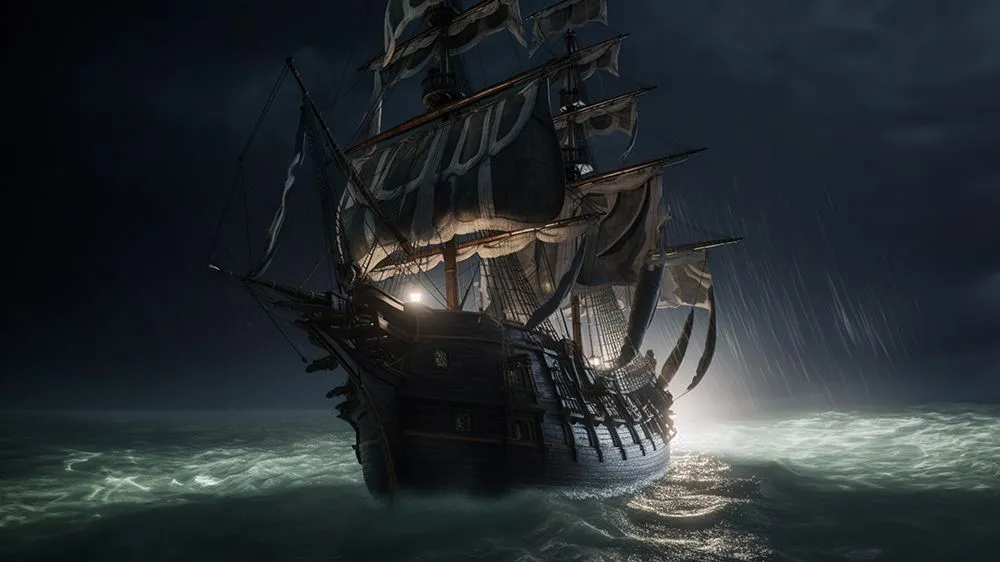
The allure of a pirate’s life lies in the promise of boundless horizons and the thrill of the unknown. They are portrayed as individuals who cast off the shackles of convention, embracing the open sea as their domain. This perception resonates with those who yearn for an existence free from the constraints of society, where every day brings the possibility of a new and daring adventure.
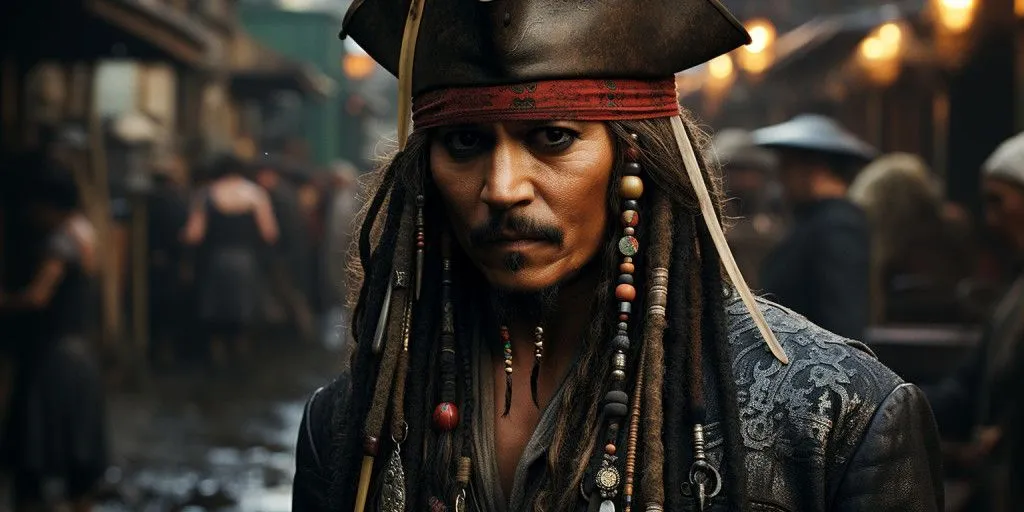
In our romanticized version of pirate life, we tend to focus on the fantastical elements, conveniently overlooking the harsh and brutal realities they faced. The media has played a significant role in perpetuating this fantasy. Iconic characters like Jack Sparrow from the “Pirates of the Caribbean” franchise and Long John Silver from “Treasure Island” epitomize the charming and witty pirate who defies authority.
These fictional pirates are larger than life, characterized by their quick wit, roguish charm, and unyielding spirit. They are adventurers who seem to revel in the chaos and unpredictability of their own lives. While they engage in acts of piracy, they are often portrayed as having a code of honor that sets them apart from common criminals.
Embodying Individualism And Non-Conformity
Pirates are often depicted as individuals who operate by their own rules, challenging established power structures and living on the fringes of society. This spirit of individualism and non-conformity resonates with those who value personal freedom and autonomy. Pirates, in their fictionalized form, become symbols of defying authority.
The appeal of pirates lies in their rejection of societal norms and their willingness to chart their own course, regardless of the consequences. They are seen as renegades who answer to no one but themselves, embodying a spirit of rebellion that captivates our imagination.
Iconic Imagery And Symbolism
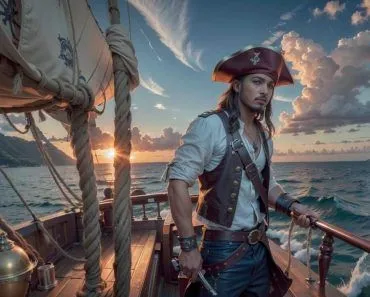
The visual aesthetics associated with pirates, such as the Jolly Roger flag, pirate ships, and their distinctive attire, have become iconic symbols in popular culture. These symbols, coupled with the promise of adventure, contribute to our collective and enduring fascination with pirate life. The mere sight of a skull and crossbones invokes a sense of excitement and rebellion (and perhaps a hidden treasure, enough so you’d never have to work again!).
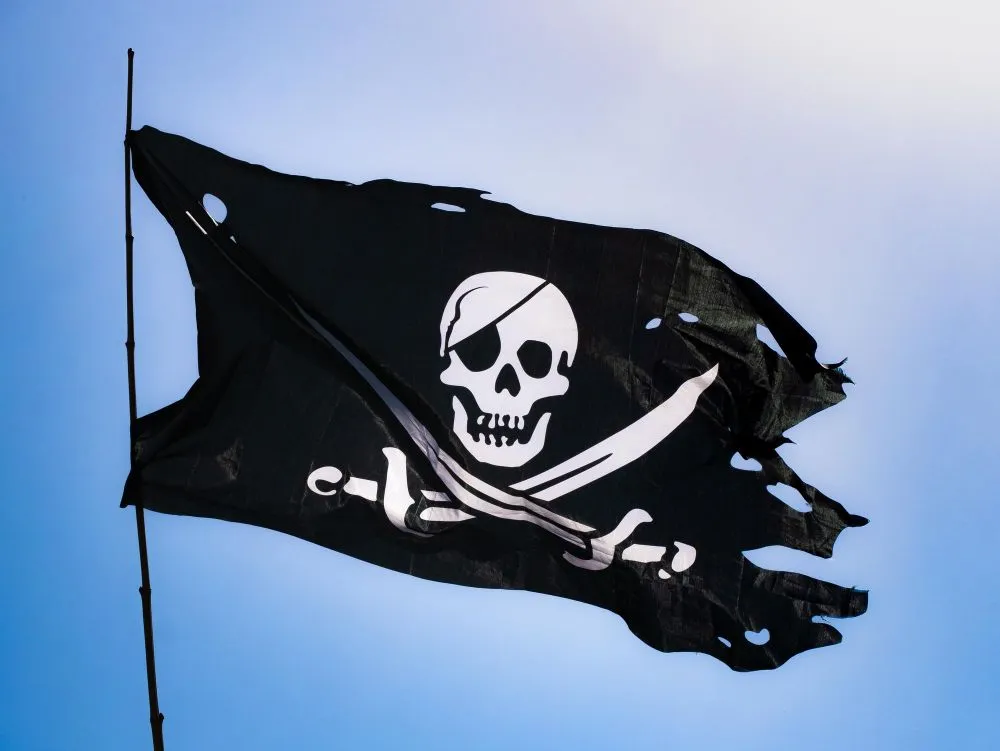
The Jolly Roger, with its stark black flag adorned with white skull and crossbones, is emblematic of piracy. It represents a warning to those who encounter it, a symbol of danger and defiance. Pirate ships, with their billowing sails and menacing cannons, are vessels of both terror and adventure. The attire of pirates, complete with tricorn hats and eye patches, adds to their distinctive and memorable image.
Through common symbols like these, pirate stories blend mythologized historical memory with fictionalized tales, creating a potent cocktail of adventure and romance. These theatrical depictions often aggrandize the sea thieves, portraying them as charismatic heroes of the high seas. Pirate stories offer an escape from the gray drudgery of daily office life. The legends of pirates are often intertwined with real historical events and figures, which further blurs the line between fact and fiction. Stories of buried treasure, treacherous sea battles, and daring rescues fuel our fascination with pirates.
Where Did The Classic Pirate Look Come From?
Close your eyes and picture a pirate: the eye patch, the wooden leg, the parrot on the shoulder, the growled “Arrr, me hearties.” Almost none of it comes from the historical record. According to the National Maritime Museum in Greenwich, this familiar costume owes far more to novelists, illustrators and filmmakers than to anything found in a ship’s log.

Take the eye patch. Sailors in a dangerous trade certainly lost eyes, so some pirates surely wore one, but there is no evidence it was standard issue. The popular claim that pirates kept one eye covered to preserve their night vision below deck has no historical backing either. A 2007 episode of MythBusters did show that a pre-covered eye adapts to darkness much faster, yet that is a modern experiment, not proof that any pirate ever used the trick. The peg leg and the pet parrot, meanwhile, were popularized by Robert Louis Stevenson’s Long John Silver, who in the original Treasure Island does not even wear a patch.
The rest of the kit is just as theatrical. Pirates probably did carry parrots, but more likely as exotic goods to sell than as loyal companions. The thick, rolling pirate accent traces to actor Robert Newton’s West Country burr in Disney’s 1950 film of Treasure Island. And walking the plank, that staple of every pirate cartoon, was largely an invention of fiction (most famously J.M. Barrie’s Peter Pan); real pirates simply threw captives overboard or marooned them on a deserted island. Even the flag was not standardized: crews flew an assortment of black and sometimes red banners decorated with skulls, skeletons and hourglasses, all blunt symbols of death meant to terrify a target into surrendering without a fight.
Why Are The Pirates Of The Caribbean Films So Iconic?
If one franchise fixed the modern pirate in our imagination, it is Pirates of the Caribbean. Curiously, the films began as a theme-park ride. The Pirates of the Caribbean attraction opened at Disneyland on 18 March 1967 and was the last ride Walt Disney personally helped design; he died roughly three months before it welcomed its first guests.

In an unusual reversal of the usual movie-to-merchandise pipeline, the ride inspired the film. Pirates of the Caribbean: The Curse of the Black Pearl, directed by Gore Verbinski, reached cinemas in 2003. Its breakout was Johnny Depp’s Captain Jack Sparrow, a swaying, slurring, kohl-eyed rogue whom Depp modeled in part on Rolling Stones guitarist Keith Richards. The performance earned Depp his first Academy Award nomination and gave the world a pirate who was charming rather than menacing.
That is precisely the romantic figure this article keeps circling back to: the witty outlaw with a loose code of honor, more trickster than killer. Audiences embraced him. The five films became one of the highest-grossing franchises in cinema history, taking in more than US$4.5 billion worldwide. For a great many people today, that swaggering, sympathetic anti-hero, far more than any historical account, is simply what the word “pirate” looks like.
What Were Real Pirates Actually Like?
So how does the legend square with the people? The Golden Age of Piracy lasted less than half a century, roughly from the 1680s to the 1720s. For most who joined, piracy was less a swashbuckling dream than a hard economic choice: a way to earn a living when other doors were shut, and an escape from the savage discipline of the Royal Navy and the meager pay of merchant ships.

One genuinely surprising truth survives the romance: many crews ran on something close to democracy. Before setting sail, pirates signed articles of agreement that gave every man a vote on matters of importance and allowed a majority to depose a captain judged cowardly or cruel, a sharp contrast to the iron, top-down command of legitimate ships. The famous articles of Bartholomew Roberts, preserved in the 1724 A General History of the Pyrates, split plunder into shares (the captain and quartermaster drew the largest portions and ordinary crew a single share each) and even promised eight hundred dollars to any man who lost a limb in service, an early form of injury compensation. This blend of voting and shared spoils helps answer what motivated pirates beyond violence and gold, and it is the same impulse explored in our piece on why lawless pirates were bound by codes of conduct.
That said, the romance has firm limits. Real pirates were often genuinely brutal, and the modern habit of casting them as freedom-loving liberators is overstated. The National Maritime Museum notes that pirates rarely freed enslaved people; they frequently treated them as harshly as anyone else and sold them for profit on reaching land. The age finally closed in the 1720s, when navies hunted the pirates down and royal pardons coaxed the rest ashore.
Conclusion
While we acknowledge the disparity between the romanticized pirate portrayal and their harsh reality, we willingly suspend our disbelief. Historical pirates weren’t the gallant adventurers with slightly skewed morals depicted in tales. Their deeds encompassed brutal violence, including shootings, stabbings, and torture. Acts of rape, pillaging, and murder, both on land and sea, were commonplace in the realm of real-life pirates.
This disparity between our fascinating fantasy and the grim truth raises intriguing questions about storytelling’s enduring impact and our yearning for escapism. Pirates, as we envision them, persistently sail the tumultuous seas of our cultural imagination, forever instilling a sense of awe and rebellion, despite the historical reality of the “pirate life.”
References (click to expand)
- Browse - kb.osu.edu
- E Mackie. (2005) Welcome the Outlaw: Pirates, Maroons, and Caribbean ....
- B Fox. (2018) A Pirate, A Cowboy, and A Bank Robber Walk into a Barâ.
- Pirate myths debunked. National Maritime Museum, Royal Museums Greenwich.
- History of pirates: the ‘Golden Age of Piracy’. Royal Museums Greenwich.
- Bartholomew Roberts. Encyclopaedia Britannica.
- Pirate code. Wikipedia.
- Pirates of the Caribbean: The Curse of the Black Pearl. Encyclopaedia Britannica.
- Pirates of the Caribbean (attraction). Wikipedia.
- Pirates of the Caribbean (film series). Wikipedia.
- You Probably Believe The Myth About Why Pirates Wore Eye Patches. IFLScience.