We love castaway stories like Robinson Crusoe, Cast Away, and Life of Pi because they strip a person down to raw human resourcefulness. Stranded and alone, the castaway becomes a test of resilience and ingenuity, dramatizing the constant tension between our craving for independence and our deep need for other people.
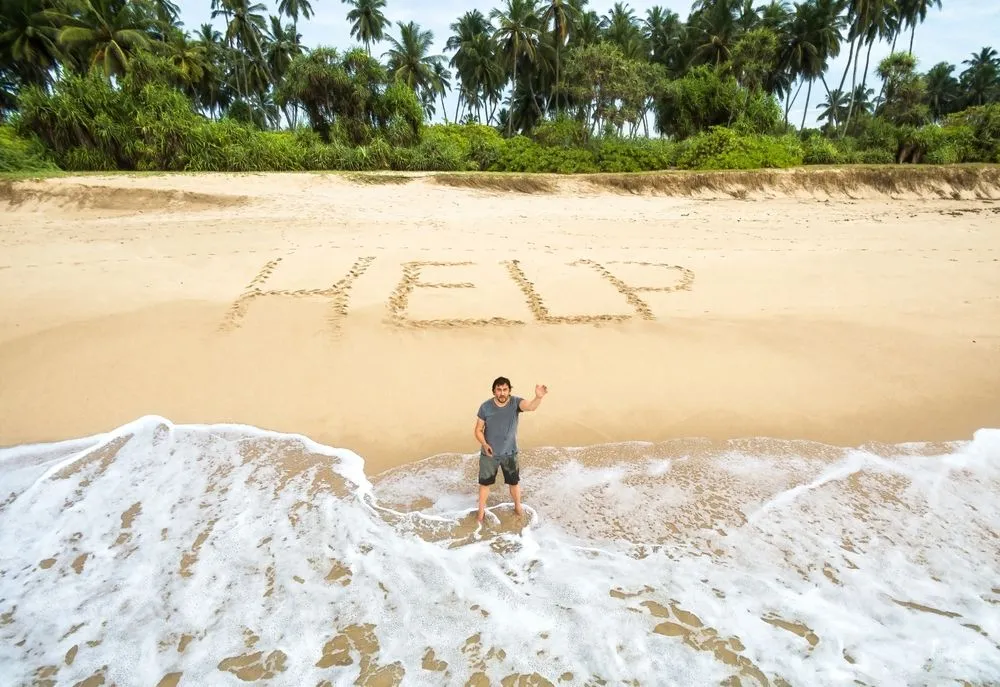
Marooned on an azure ocean’s whimsy, a man awoke on white sands, the wreckage of his lifeboat strewn amidst palm shadows. Days merged into one constant battle for survival: spearfishing, fruit gathering, making fire from flint. Nights were constellation tales filled with the undying hope of seeing sails on the horizon. A tattered journal kept his sanity, filled with scribbles of storms weathered and loneliness embraced. The island, his unchosen home, taught him nature’s indifferent beauty. A message in a bottle is his only silent cry. Years wore on, the man blending with the wilderness. Until one sunset, a distant horn pierced the silence, and whether it meant rescue or was just a dream, he walked into the waves.
A Pull Towards The Adventure Of Life
Humans are naturally drawn to stories of survival, endurance, and self-sufficiency, and the castaway narrative is a potent distillation of these themes. It speaks to a deep-seated curiosity about our capacity to cope in the face of complete isolation and to reinvent ourselves when stripped of societal norms and constructs.
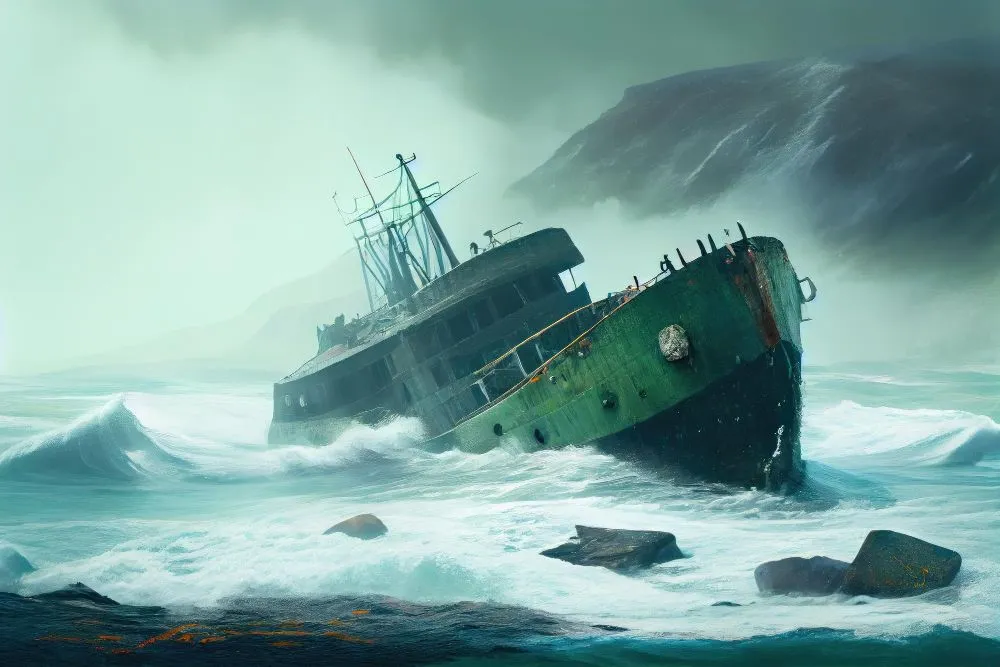
The castaway story, exemplified by Daniel Defoe’s Robinson Crusoe (1719) and Yann Martel’s Life of Pi (2001), captures the imagination because it represents the ultimate test of human resourcefulness. The same pull explains why audiences flocked to Robert Zemeckis’ film Cast Away (2000), in which Tom Hanks’ marooned FedEx employee befriends a volleyball to hold on to his sanity, and to Ridley Scott’s The Martian (2015), adapted from Andy Weir’s 2011 novel, in which an astronaut is stranded on an entire planet rather than an island. The starkness of a deserted island serves as a canvas upon which themes of autonomy, collectivism, power dynamics, and survival are vividly painted. Crusoe’s tale, more than a mere adventure, probes the core of what it means to be human: the constant negotiation between our individuality and our social nature.
The Individual Versus Society
The castaway narrative captivates us by delving deep into the complexities of an individual’s ties to the societal fabric. It highlights a duality within human aspiration: the yearning for self-reliance and independence juxtaposed against the necessity of collective existence. This genre celebrates the human spirit’s capacity for ingenuity and survival in solitude, showcasing the impressive feats that one can achieve when stripped of societal support.
However, it simultaneously prompts introspection about our interdependence, questioning whether a person can truly flourish when severed from the web of social connections that define us.

In the starkness of isolation, these stories lay bare the paradoxes at the core of our being. The protagonist is portrayed as a beacon of self-sufficiency, demonstrating that humans are equipped with the ingenuity to overcome formidable challenges alone. However, these tales also underscore our intrinsic need for others; it is in the context of community that our actions gain meaning and our identities take shape. Without others’ acknowledgement and cooperation, these stories suggest, our very humanity stands at risk of erosion.
The castaway story thus serves as a mirror, reflecting our internal conflicts and the push-pull dynamic between independence and interdependence. It raises fundamental questions about the essence of human nature: Are we islands unto ourselves, or are we, by necessity, anchored to something greater than ourselves? Through this lens, the castaway tale is not just a story of survival against steep odds, but a philosophical inquiry into what it means to be human in a world that oscillates between the valorization of the individual and the inescapable truth of our communal existence.
The Desert Island As A Philosophical Idea
The castaway’s desert island serves as a metaphor for natural state, an experimental setting to explore the essence of human interactions removed from the structures and institutions of society. This abstraction allows for the contemplation of fundamental human conditions. Are we inherently cooperative or competitive? Do we naturally incline towards the formation of hierarchies?
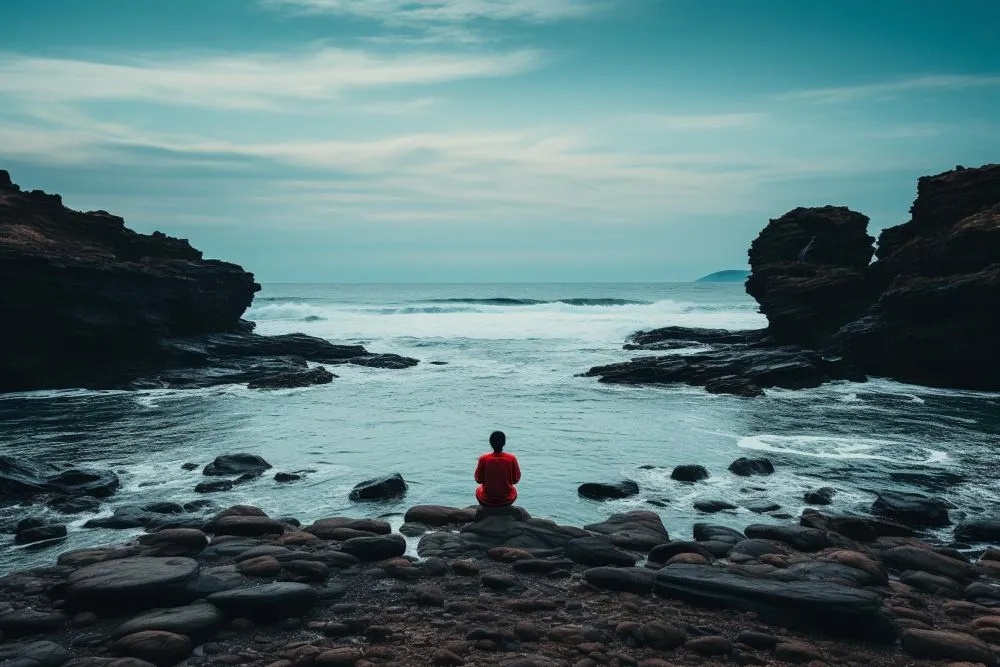
The island, isolated and unstructured, becomes a microcosm for the world at large, but without its established order. It is akin to a blank slate or what may have been our initial state of nature. In this state, without the familiar systems of governance and social interaction, the individual is confronted with fundamental questions of survival and ethics. William Golding pushed this thought experiment to its darkest conclusion in Lord of the Flies (1954), stranding a group of schoolboys without adults and watching their improvised order curdle into hierarchy and violence. Where Crusoe rebuilds civilization in miniature, Golding suggests it can just as easily unravel, and that ambiguity is part of why the island setting keeps drawing storytellers back.
Reflections And Psychological Resilience
In contemporary stories, the resilience of castaways reflects the enduring relevance of the castaway narrative in our collective consciousness. The psychological ordeal of survival (the need to establish control, create routine, and maintain hope) mirrors the broader human experience of facing life’s unexpected challenges.
When facing adversity, whether it be a shipwreck or a pandemic, the strategies adopted by survivors speak to a universal human capacity to find strength in adversity, to reconstruct a semblance of order out of chaos, and to ultimately adapt and overcome.
Conclusion
Our enduring fascination with castaway stories is not merely due to their portrayal of human ingenuity or the triumph of the human spirit against all odds. These narratives compel us because they serve as a lens through which we can examine deeper philosophical and sociopolitical questions about our existence. They challenge us to consider the balance between individual freedom and social interdependence, as well as the nature of human society itself.
Ultimately, castaway stories like Robinson Crusoe continue to resonate because they are more than just tales of survival; they are reflections on the human condition. They provoke us to think critically about the nature of our society and the collective actions needed to forge a world that recognizes and values the freedom of all. Just as Crusoe could not remain on his island forever, so too must we confront the reality that our individual fates are tied to the collective, that true freedom is not about being cast away into isolation, but about coming together as something greater.
References (click to expand)
- Janes, D. The Limits of the Story: Reading the Castaway Narrative in A Strange Manuscript Found in a Copper Cylinder and Life of Pi. Mosaic: An Interdisciplinary Critical Journal.
- Ingram, D. H. (2001, December). Of Time, Narrative, andCast Away. Journal of the American Academy of Psychoanalysis. Guilford Publications.
- Defying Defoe: Rewriting the Castaway Hero. Thesis, University of Tasmania.