Table of Contents (click to expand)
Neanderthals share 1-2% of their DNA with modern non-African humans, proving that interbreeding occurred. Whether Neanderthals are a separate species (Homo neanderthalensis) or a subspecies of Homo sapiens (Homo sapiens neanderthalensis) remains debated, partly because the term ‘species’ has no universally accepted definition.
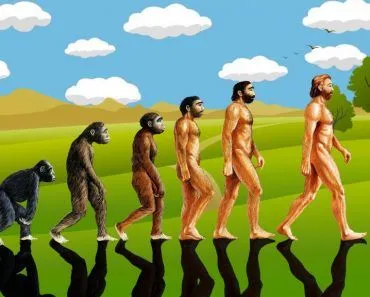
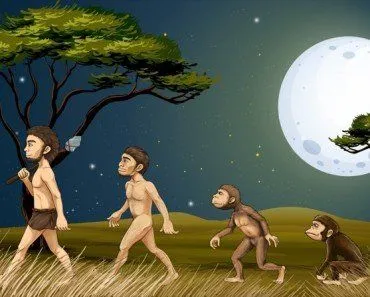
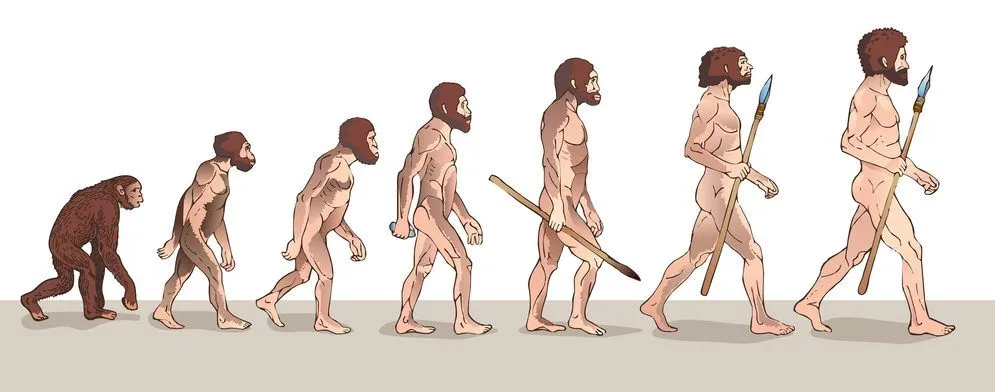
Most people believe that Homo sapiens are the only humans to have ever walked the face of the Earth. However, this isn’t true. We just happen to be the only human species left. The ever-so-familiar portrait of an ape evolving into a Homo sapiens conveys evolution as a linear phenomenon. Still, the truth is, Earth was once called home by more than one human species, and we evolved alongside these humans, not directly from them. You can check out one of our other articles on the same topic to get a clearer picture: Timeline Of Human Evolution
Homo habilis, Homo rudolfensis, Homo erectus, and Homo neanderthalensis are some of the human species that lived on our beloved Earth before and contemporaneously with our ancestors before modern humans came along.
Now, the question is: are these now-extinct human species really just our archaic brothers and sisters, or something closer to distant cousins? If so, why are they all acknowledged as entirely different human species, rather than just Homo sapiens? Neanderthals are our closest relatives and can easily fool you into thinking they’re the same as you (though a bit less groomed), but they’re still mostly considered to be a separate species. Are they really a different species? Or should they be considered subspecies?
What Is A Neanderthal, And Where Does The Name Come From?
Before we pit the two against each other, let’s clear up what a Neanderthal actually was. A Neanderthal was an archaic human, an extinct member of our own genus, Homo, whose formal scientific name is Homo neanderthalensis. They lived across Europe and southwestern to central Asia from roughly 400,000 years ago until about 40,000 years ago, when the last of them vanished from small pockets of western Europe and the Near East. So when you picture a “caveman,” odds are you’re picturing a Neanderthal.

The name itself is wonderfully literal. The first widely recognized fossil was unearthed in 1856 in a limestone cave in the Neander Valley near Düsseldorf, Germany. In German, tal (an older spelling is thal) simply means “valley,” so “Neanderthal” literally means “from the Neander Valley.” That spelling quirk is also why you’ll see both “Neanderthal” and “Neandertal” in print; both are correct, and both are usually pronounced with a hard “t.”
The species got its scientific name in 1864, when the Irish geologist William King proposed Homo neanderthalensis for the Neander Valley remains. It was the first time anyone had named a brand-new species of extinct human based purely on fossil evidence, which makes the Neanderthal a genuine milestone in the story of how we came to understand our own family tree.
How Are Living Organisms Classified?
Biologists use a rather complicated system to classify living organisms. That being said, given the incredible diversity we have on our planet, using such a system becomes imperative. Each organism is known by two terms: its genus and species. The terms work in the same way as our modern-day names and surnames. The genus is the taxonomic equivalent to surnames (family name), whereas the term species is unique for each group of living organisms, much like our names!
A species is often formally defined as a group of living organisms capable of interbreeding and giving birth to fertile offspring. However, this definition of species doesn’t always hold.
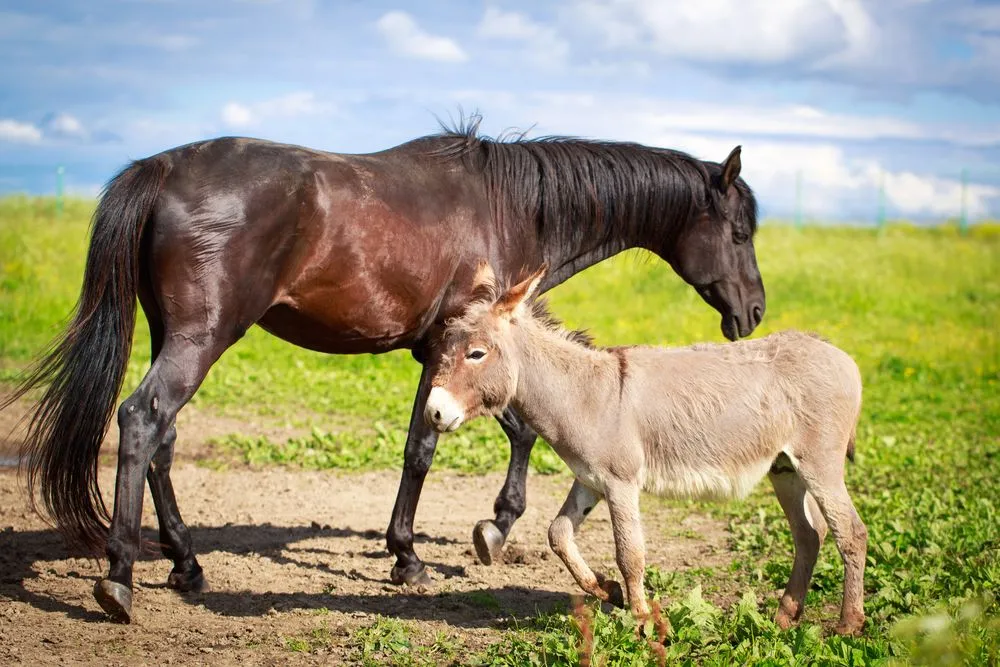
The definition works fine when trying to classify organisms like a horse and a donkey. The two share a common ancestor and have similar physical characteristics. However, a horse and a donkey exhibit no natural sexual inclination towards one another. When forced to interbreed, their offspring/hybrid is a mule, which is sterile. Therefore, a horse and a donkey are classified as being different species.
The definition of species falls short when trying to classify organisms that reproduce asexually, such as bacteria and fungi, hybrids (e.g., mules), and extinct organisms. Examining reproduction is essentially impossible.
How does one define species, then? Well… we don’t, at least not well.
“No term is more difficult to define than “species,” and on no point are zoologists more divided than as to what should be understood by this word.” – Henry Alleyne Nicholson
Due to the lack of one common and universally accepted definition, the taxonomic term “species” currently has more than 20 different notions linked to it. Moreover, the classification of living organisms into separate species isn’t binary; if anything, it’s fuzzy. It isn’t only defined by whether two organisms mate and produce fertile offspring. There are some grey areas as well.
Taxonomists base their judgments and final classification decisions on various factors, interbreeding being one of them. Other determinants include structural features, social behavior, ecological adaptations, ancestry, DNA sequence, etc.
On the other hand, subspecies are isolated populations within a species that differ in their geographical location and therefore have certain structural differences. Examples include the many varieties of the tiger we find scattered across the planet. These include the Bengal tiger, Siberian tiger, Sumatran tiger, etc. Subspecies are capable of interbreeding and producing offspring but do not due to geographical isolation.
Homo Sapiens Vs Homo Neanderthalensis
About 2.4 million years ago, human life first bloomed in East Africa. Then, approximately 2 million years ago, the travel bug in archaic humans kicked in, and they traveled across Eurasia. Some ventured north, towards the continent we now know as Europe, while others traveled east, to what is now called Asia. Depending on the environmental conditions they faced, these humans evolved differently.
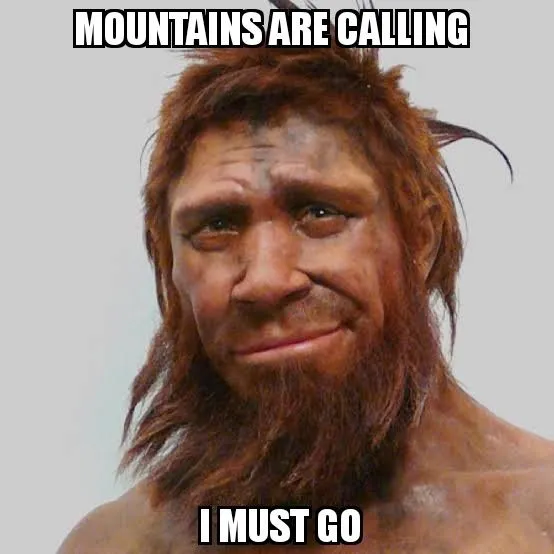
For example, the humans who traveled to East Asia developed a more upright posture (Homo erectus). The ones stuck on the island of Flores (Homo floresiensis) underwent dwarfing to adapt to the environmental conditions found there. Neanderthals, the closest of our human cousins and the residents of the Neander Valley, also adapted to survive in the cold conditions of Europe.
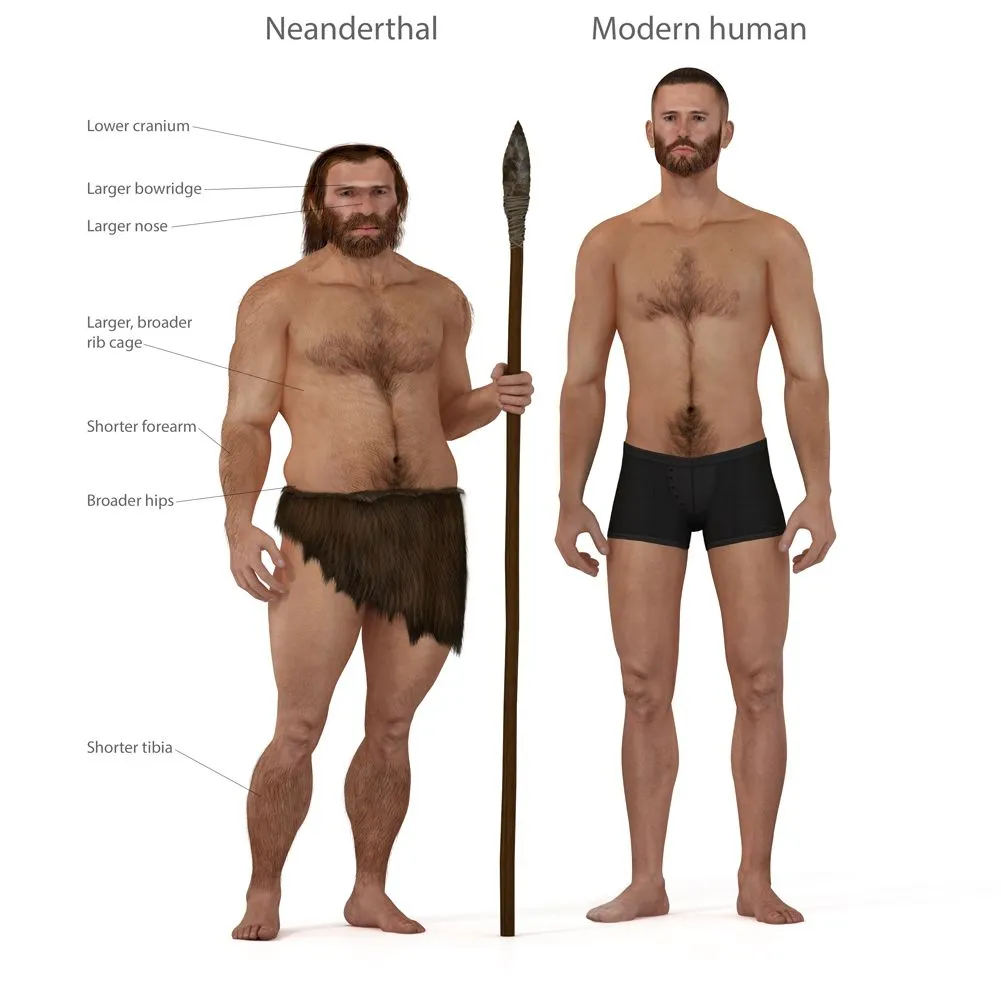
Neanderthals developed a more robust build with shorter limbs, as compared to Sapiens. These features are believed to have helped them conserve body heat in the cold conditions of Europe. They also had a slightly bigger forehead. The chin and forehead sloped steeply, with the nose protruding much farther than it does in modern humans. Neanderthals also enjoyed a larger brain than Sapiens.
While human life spread across the globe, humans also continued to evolve in their birthplace of East Africa. East Africa was once home to Homo rudolfensis, Homo ergaster, and eventually us, Homo sapiens. We didn’t stay there for long, though. Starting as early as 210,000 years ago, Homo sapiens began migrating out of Africa in multiple waves. The major migration that gave rise to most present-day non-African populations occurred roughly 50,000–70,000 years ago, as archaic Homo sapiens traveled to other parts of Eurasia, which were already occupied by other human species. What followed was the total takeover by Homo sapiens and the extinction of other human species.
How Did Neanderthals Differ From Us Physically?
If a Neanderthal walked past you in a coat, you might do a double take rather than scream. Up close, though, the differences are real, and most of them trace back to one thing: Neanderthals were built for the cold. They had a shorter, stockier, more muscular frame than ours. Smithsonian figures put Neanderthal males at an average of about 164 cm (5 ft 5 in) and 65 kg (143 lb), with females around 155 cm (5 ft 1 in) and 54 kg (119 lb). That compact, barrel-chested body with shorter limbs held onto body heat far better than our taller, leaner build, which is exactly what you want during an Ice Age in Europe.

The skull is where the contrast really jumps out. A Neanderthal skull is long and low, with a heavy, continuous brow ridge over the eyes, a large mid-face, angled cheekbones, and a famously big nose, thought to help warm and humidify cold, dry air before it reached the lungs. Our skull, by comparison, is high, rounded, and almost globular, with a near-vertical forehead, much smaller brow ridges, smaller teeth, and a feature no other human species has: a proper, jutting chin.
Here is the part that surprises people. Neanderthals were not the dim-witted brutes of cartoons. Their brains were as big as ours, often bigger, with late Neanderthal braincases ranging from roughly 1,200 to 1,750 cm3, against a modern human average near 1,300 cm3. The brain was simply shaped a little differently, longer front to back rather than tall and rounded. They were skilled toolmakers and capable hunters, so “different,” not “inferior,” is the honest way to read the comparison.
Species Or Subspecies?
Honestly, no one knows the answer to this question. The world appears to be split. For the longest time, we considered Neanderthals as an entirely different species from Homo sapiens. This was due to the lack of credible evidence indicating mating tendencies between the two human groups and also because someone simply preferred to classify them as separate. Remember, the term species doesn’t really have a universally accepted definition.
However, one can try to answer this question with the aid of two theories that attempt to explain the extinction of other human species. The first theory, ‘The Interbreeding Theory‘, suggests that Homo sapiens bred with other human species on their wanderlust journey across Eurasia, and eventually, the various human species merged.
The second theory, ‘Replacement Theory‘, argues that Homo sapiens and other human species must have had little to no sexual interest in each other, owing to their different physical anatomy and habits. Other human species simply fell prey to natural selection and couldn’t survive, or Sapiens, being the cultural masters, drove them to extinction.
Both theories contain a few debatable points. If the interbreeding theory is indeed true, it will imply that the current Eurasian population is not pure Sapiens but a combination of Sapiens and Neanderthal. This also signifies that the two species were capable of having fertile offspring. Moreover, genetic differences might exist between the different Eurasian populations, opening them up to racial differences. On the other hand, the replacement theory implies that the current population is pure Sapiens.
Based on archaeological evidence and political significance, the replacement theory was widely accepted for decades, and Neanderthals were classified as separate species.
Who Were The Denisovans?
Neanderthals get all the press, but they were not our only cousins. Meet the Denisovans, a third group of archaic humans, and arguably the strangest discovery in this whole story. In 2008, researchers digging in Denisova Cave in the Altai Mountains of Siberia pulled out a single fragment of a girl’s finger bone. It looked unremarkable. But when the DNA was sequenced and published in 2010, it matched neither modern humans nor Neanderthals. An entire population of humans had just been identified, for the first time ever, almost entirely from its genome rather than from a recognizable skeleton.

So how do Denisovans fit on the family tree? They are best understood as a sister group to the Neanderthals. Both descended from a common ancestor they shared with us, likely Homo heidelbergensis, and the two lineages then split, with Neanderthals settling across Europe and western Asia while Denisovans spread through eastern and southern Asia. They lived from roughly 500,000 years ago until perhaps 30,000 years ago. Physical remains are still painfully rare, just a handful of finger bones, teeth, and a jaw, which is why the genome remains our best window into who they were.
The most jaw-dropping find came from the same cave. A bone fragment nicknamed “Denny” turned out to be a first-generation hybrid: her father was Denisovan and her mother was Neanderthal. In other words, these groups did not just coexist; they met, mixed, and had children, which is precisely the kind of evidence that keeps blurring the neat lines between “species.”
Where Do Homo Erectus And The Other Humans Fit In?
By now you can see the pattern: the human family was a crowded, branching bush, not a tidy ladder. The longest-lived branch of all was Homo erectus, who lived between about 1.89 million and 110,000 years ago. Homo erectus was the great pioneer, generally regarded as the first human species to walk out of Africa, eventually reaching the Republic of Georgia, China, and Indonesia. They stood up to 185 cm (6 ft 1 in) tall with modern-style body proportions, longer legs and shorter arms, and they were almost certainly among the first humans to make controlled use of fire.

So how do these names stack up? Think of it roughly as a sequence with plenty of overlap. Homo erectus came first and lasted an astonishingly long time. Neanderthals and Denisovans branched off later from a shared ancestor and split between west and east. We, Homo sapiens, evolved in Africa around 300,000 years ago, with a lighter build, a rounded skull, and that distinctive chin. For a while, several of these humans were alive at the same time. What makes us unusual is not that we were the only humans, but that we are the only ones still here, and even then we carry traces of the others in our DNA. If you want the full sweep, our Timeline Of Human Evolution lays the branches out side by side.
Final Words
Recent scientific research has put Neanderthals’ taxonomic status up for debate yet again. A 4-year effort to reconstruct Neanderthal DNA concluded in 2010 and uncovered several hidden secrets. The study revealed approximately 1-2% of the DNA of non-African populations is of Neanderthal origin, with East Asian populations carrying slightly more than Europeans. A couple of months later, another study showed that roughly 4-6% of the DNA of native Australian and Melanesian populations is Denisovan DNA. Homo denisova is one of the other human species that existed around the same time as Neanderthals but arose in a different location.
Genetic evidence now conclusively shows that this DNA was passed on through interbreeding between different human species. A 2024 study established that Neanderthal-Sapiens interbreeding began approximately 50,500 years ago and continued for about 7,000 years. This strongly suggests that Neanderthals may well be a subspecies of us, not an entirely different species. The taxonomic status of Homo neanderthalensis and Homo denisova are still up in the air. Some have already begun to refer to them as Homo sapiens neanderthalensis and Homo sapiens denisova, respectively.
Different species or subspecies? This question remains a mystery and continues to make scientists scratch their heads like great apes, but I guess some habits never change!
References (click to expand)
- (2002) Species - Stanford Encyclopedia of Philosophy. Stanford University
- Homo neanderthalensis - Smithsonian's Human Origins. The Smithsonian Institution
- Ko, K. H. (2016, July 16). Hominin interbreeding and the evolution of human variation. Journal of Biological Research-Thessaloniki. Springer Science and Business Media LLC.
- Homo erectus - Smithsonian's Human Origins. The Smithsonian Institution
- Homo sapiens - Smithsonian's Human Origins. The Smithsonian Institution
- Ancient DNA and Neanderthals - Smithsonian's Human Origins. The Smithsonian Institution
- The Denisovans. The Australian Museum