Table of Contents (click to expand)
Yes, humans are still evolving. Since we began farming roughly 10,000 years ago, natural selection has given some populations the ability to digest milk as adults, dive deep on a single breath, resist malaria, and thrive at high altitude. Most of this recent change is microevolution: small genetic shifts within populations rather than the dramatic ape-to-human transformations we usually picture.
When we think of evolution, we think of primitive life forms evolving into more advanced ones. Take, for example, the famous (and meme-able) portrait of the Devonian fish finally squirming onto land, ready to colonize a new niche.
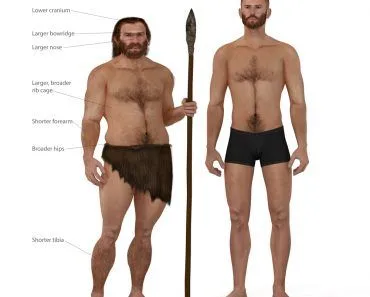
Very rarely, however, do we think of humans as a species in the midst of the evolutionary process. Even if we do think of humans, we tend to think of the primates from which we diverged or the Neanderthals that died out so many thousands of years ago. We rarely think of present-day humans, more specifically, Homo sapiens.
Can We Evolve More?
Short answer… yes.
Evolution doesn’t just go away, even if you’re already a pretty evolved species (e.g., present-day humans). Living organisms will always remain susceptible to the changing forces of nature. It’s also important to distinguish what type of evolution we are talking about. Even more importantly, it’s imperative to note what evolution is specifically not.
When we talk about evolution in this article, we’re talking about heritable changes. Usually, these changes may contribute to the advancement of species or may contribute to biological complexity.
However, evolution does not always need to be progressive in nature. It can also be a neutral or random process. For example, let’s consider human height.
In general, there has been a pattern of growth (most prominent in Europe) that seems to indicate that modern-day humans, the “latest” generation of humans, have been successively taller than the last. However, this isn’t really an evolutionary change. This just comes down to better living standards. The fact that Europeans today have better nourishment and health standards than European cavemen isn’t the result of evolution.
Now that we’ve got that out of the way, we’re going to distinguish between the different types of evolution, namely microevolution and macroevolution.
Macroevolution Vs. Microevolution
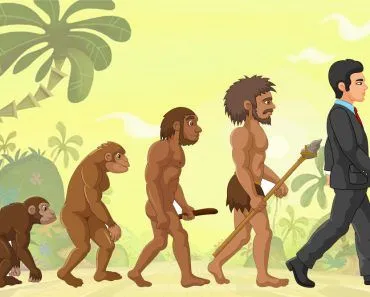
In the traditional sense of how evolution is commonly presented, you would have mostly encountered ideas of macroevolution. In macroevolution, we deal with grand scales of time, such as the whole ape-to-man transition.
Microevolution is on a much, much smaller scale of time. Microevolution deals with generational changes or changes in populations, as opposed to changes in an entire species. This is an important distinction to make. To explain this a bit better, we’ll investigate the Bajau people, an interesting case of microevolution.
The Bajau people live in Southeast Asia. If you want to know which country, you won’t get an answer, as the Bajau are nomadic. They live on houseboats and travel all over the waters of Southeast Asia. They basically depend on the sea for their livelihood.

The Bajau are an incredible testament to microevolution. Think about how large a football field is. Now, flip that football field upright and drop it into the sea… that’s roughly how far down the Bajau can dive, around 70 meters (230 feet), sometimes holding a single breath for as long as 13 minutes!
Now, even with scuba gear, 70 meters (230 feet) is pretty far down. In fact, the standard recreational diving limit is just 40 meters (130 feet); going any deeper means switching to technical diving with specialized gas mixes and decompression stops. The Bajau reach those depths on nothing but a lungful of air.
This is what makes the Bajau so incredible. Beyond a weight belt and a homemade diving mask, they don’t use any professional diving equipment!
How Do The Bajau Dive So Deep?
The Bajau can do this because of a genetic advantage. Compared to other human populations, the Bajau people have more of the PDE10A gene. This gene is what lets them grow a bigger spleen.
What Does The Spleen Have To Do With Human Evolution?
When we hold our breath underwater, our spleens contract and release any extra red blood cells back into the circulatory system. Essentially, by having a larger spleen, the Bajau can increase how much oxygen they can carry or hold in a single breath.
Did The Bajau Just Get Lucky? Why Don’t Other Populations Have This Gene?
The Bajau didn’t hit some type of genetic lottery. Rather, this might just be a matter of natural selection! In scientific terms, the Bajau’s “habit and habitat” enabled them to grow larger spleens.
In fact, natural selection is so evident in the population that even non-diving individuals in the population have a larger spleen, similar to diving individuals. While the Bajau are intriguing, they aren’t the only human population in the world to have undergone relatively recent evolution. There are many cases of microevolution in specific human populations based on either their way of life or where they stay.
Similar to the Bajau people, ethnic Tibetans have a genetic advantage that lets them thrive in the thin air more than 4,000 meters (13,000 feet) up on the Tibetan Plateau. The Tibetans owe their literal “high praise” to a particular gene: EPAS1. Here’s the counterintuitive part. When lowlanders move to high altitude, their bodies overcompensate by churning out extra red blood cells, which thickens the blood and can trigger chronic mountain sickness. The Tibetan version of EPAS1 actually dampens that response, so Tibetans get by on lower hemoglobin levels and dodge the dangerously sludgy blood that altitude usually causes. Even more remarkable, this helpful variant didn’t arise from scratch: Tibetans inherited it from the Denisovans, an archaic human cousin our ancestors interbred with tens of thousands of years ago.
Also, if we look back in time, populations that took up dairy farming, across Europe, parts of Africa, and the Middle East, evolved the ability to digest milk sugar (lactose) even into adulthood, since milk was a valuable source of nutrition. The remarkable part is that this trait, called lactase persistence, didn’t evolve just once. Several different mutations cropped up independently in different herding populations within the last 10,000 years, all of them keeping the lactase enzyme switched on past infancy. It’s a textbook case of culture (keeping livestock) driving genetic change, and it’s why most adults of East Asian descent, whose ancestors didn’t herd dairy animals, remain lactose intolerant today.
One of the most famous examples shows just how powerful a selection pressure can be. Consider the sickle cell gene. Carrying a single copy of it (a condition called sickle cell trait) gives partial protection against malaria, so in regions where the disease is rampant, evolution has strongly favored the gene and continues to select for it even today. The catch is that inheriting two copies causes sickle cell anemia, a serious and painful blood disorder. So where malaria is common, the trade-off pays off, but where malaria is rare or absent, the same gene is all downside. This is a striking example of an adaptation that is a lifesaver under one set of pressures and a burden once those pressures disappear.
How Does Climate Change Play Into Human Evolution?
The drastic isolation of human populations or major environmental instability might be the future driving forces of major macroevolutionary mechanisms.
Climate change will literally have an effect on everything. From agriculture and migration to health and environmental factors, nothing will be spared. Recent studies conducted during and after COVID-19 do indicate that even pandemics might become more common in the future, unless certain climate-related risks are mitigated.
If the climate continues to change at the current pace, so will the environments around us. This is big news for natural selection, as it doesn’t currently play as big a role in the evolution of our species as it used to. However, in the future, we can expect the full force of this evolutionary mechanism to be unleashed as climate change enables large-scale environmental shifts.
Conclusion
It is incredibly hard to picture the “future” of human evolution. There are so many questions we have to answer, such as what do future humans look like, and how can we expect natural selection to work in the unnatural environments in which we now live?
However, what we can say with full certainty is that humans are definitely still evolving. For as long as a species satisfies the criteria of producing heritable changes and is subject to competition between individuals (for reproduction), there will be evolution!
What we can also say with certainty is that our planetary climate will definitely be one of the driving forces of ongoing evolutionary change. Whether that is through direct effects, such as population migrations based on diminishing habitats, or through indirect effects, such as pandemics caused by increased contact between animal and human populations, micro- and macroevolutionary changes in humanity’s future are practically inevitable.
References (click to expand)
- Bajau people 'evolved bigger spleens' for free-diving - BBC. BBC Online
- The mysteries of Tibet - Understanding Evolution. University of California, Berkeley
- Climate Effects on Human Evolution. Smithsonian Institution
- Sickle Cell Trait. StatPearls. NCBI Bookshelf (National Library of Medicine)
- Simonson, T. S., Yang, Y., Huff, C. D., Yun, H., Qin, G., Witherspoon, D. J., … Ge, R. (2010, July 2). Genetic Evidence for High-Altitude Adaptation in Tibet. Science. American Association for the Advancement of Science (AAAS).
- Ilardo, M. A., Moltke, I., Korneliussen, T. S., Cheng, J., Stern, A. J., Racimo, F., … Willerslev, E. (2018, April). Physiological and Genetic Adaptations to Diving in Sea Nomads. Cell. Elsevier BV.
- Elguero, E., Délicat-Loembet, L. M., Rougeron, V., Arnathau, C., Roche, B., Becquart, P., … Prugnolle, F. (2015, May 4). Malaria continues to select for sickle cell trait in Central Africa. Proceedings of the National Academy of Sciences. Proceedings of the National Academy of Sciences.
- Huerta-Sánchez, E., et al. (2014). Altitude adaptation in Tibetans caused by introgression of Denisovan-like DNA. Nature.
- Dairying and the evolution and consequences of lactase persistence in humans. PMC, National Library of Medicine.