Table of Contents (click to expand)
A joint (or articulation) is where two or more bones meet. The adult body has roughly 300 joints, sorted into three structural types: immovable fibrous joints (like skull sutures), slightly movable cartilaginous joints (like the spine), and freely movable synovial joints. Synovial joints, the most common, come in six varieties.
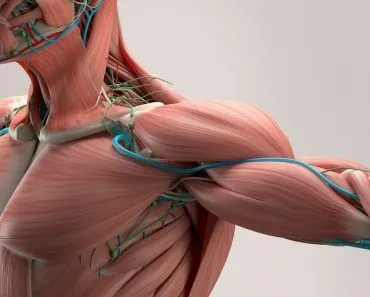
You can rotate your entire arm at the shoulder in a full circle, but you can only move your elbow back and forth. Watch a baseball pitcher wind up and you mostly see the shoulder in action, while raising a coffee cup to your lips relies on the elbow. Likewise, other parts of the body show a variety of movements. Your back can only bend to a certain extent, whereas your wrist can freely move in all directions.
This variety of movements is a function of the different types of joints in the body, of which there are many!
Let’s start with the basics.
What Is A Joint?
A joint is a junction between two or more bones and cartilage. The technical term for a joint is an articulation, so the two words mean the same thing. Estimates vary depending on how you count, but the adult body has somewhere around 300 joints (some sources put the range at 250 to 350).
We broadly divide joints into three main categories: immovable joints, slightly (or semi-) movable joints, and freely movable joints. This classification is based on their structure and how they move.
Types Of Joints
Immovable Joints
Immovable joints are fibrous joints. Here, the bones are linked to one another by dense fibrous connective tissue. They are also known as ‘fixed joints’ or ‘synarthroses’ in Greek.
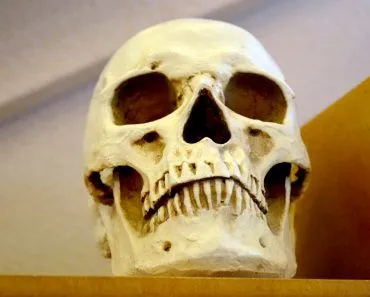
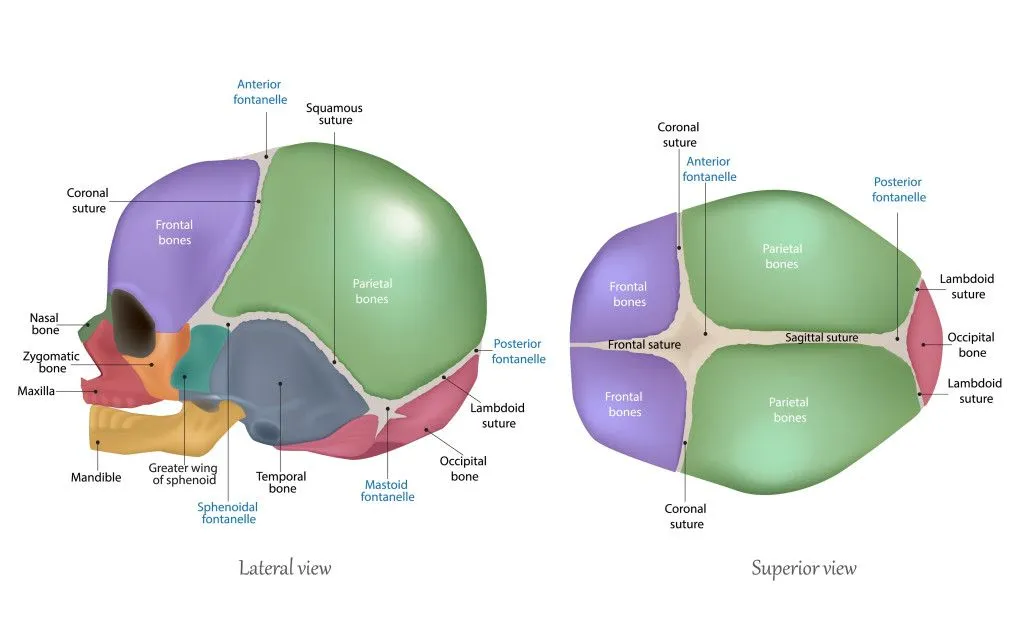
Examples of fibrous joints are sutures of the skull and gomphosis, i.e., the joint between the jaw bone and the roots of a tooth.
In adults, the sutures of the skull are rigid and fixed, but they are widely spaced in babies to allow for growth of the brain. The soft spots (fontanelles) between the sutures close over the first couple of years, with the largest one (the anterior fontanelle) usually sealing by about 18 to 24 months. The sutures themselves stay functional far longer and do not fully fuse into solid bone until adulthood.
Semi-movable Joints
These are called cartilaginous joints, as the bones are joined by cartilage (either hyaline cartilage or the tougher fibrocartilage) that flexes just enough to allow a small degree of movement. The Greek word for these joints is ‘amphiarthroses’.
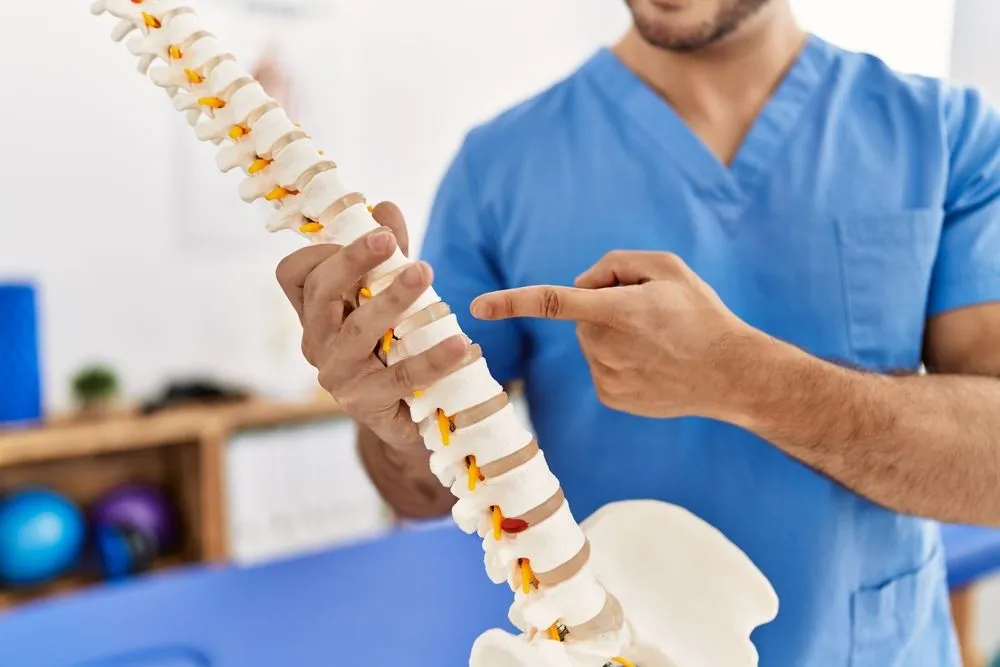
The best example of this type of joint is your back. Your spine is made of a series of bones called the vertebrae, which are connected by fibrocartilage discs. The spine is primarily designed for weight-bearing; it can move forward, backward and even sideways, but only to a certain extent.
Another example is your ribcage. The ribs connect to the sternum in front of the chest through bars of hyaline cartilage (the costal cartilages). This springy cartilage lets your chest expand and recoil with every breath.
Freely Movable Joints
Freely movable joints are known as synovial joints. They are the most common type of joint in the body. Synovial joints come in different types and allow a wide variety of movements. The Greek word for them is ‘diarthroses’.
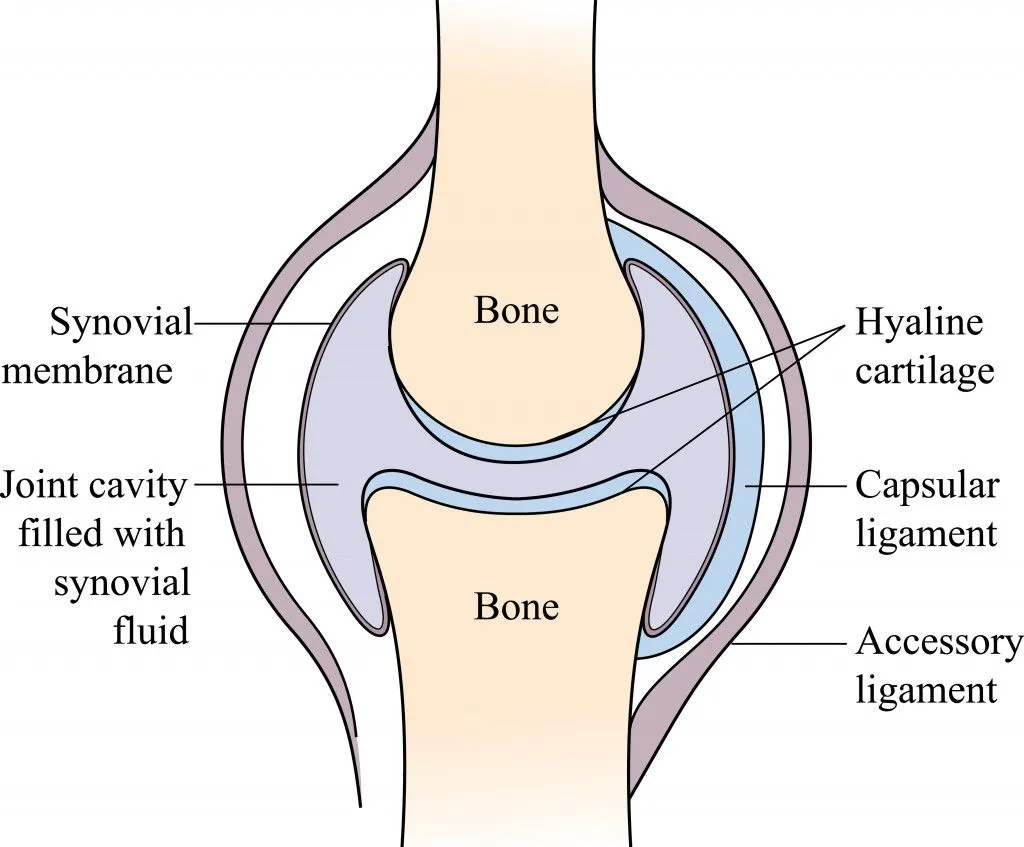
A synovial joint is typically made of a joint capsule with an outer fibrous capsule, which is tough, as well as an inner synovial membrane. The inner membrane contains blood vessels that supply the cells of the joint with oxygen and nutrients. The joint capsule contains synovial fluid, which lubricates the joint and acts as a mechanical shock absorber.
Different Types Of Synovial Joints And Their Movements
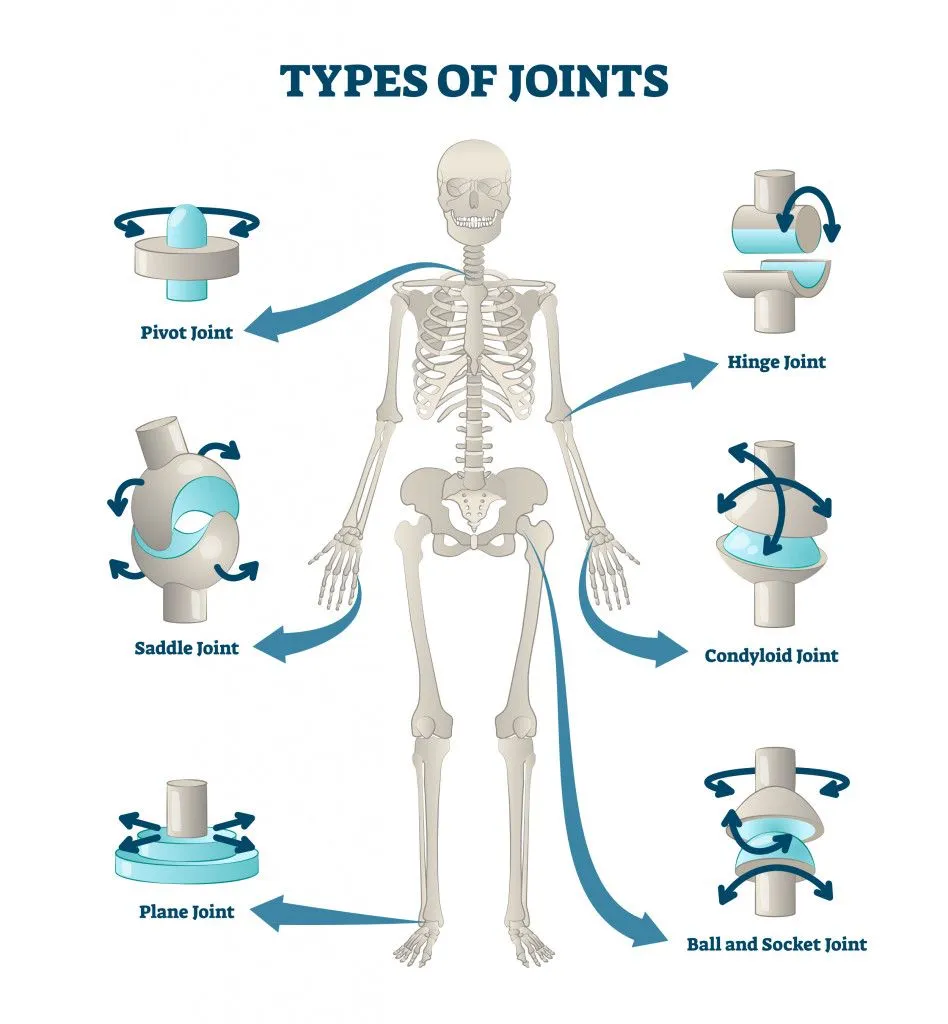
There are six types of synovial joints based on their anatomical structure and the movement they produce.
Synovial joints allow abduction, such as when you move your limbs away from the midline of your body, and adduction, when you bring them closer to the midline. They permit flexion and extension of body parts. They also permit rotation around an axis, like when you turn your head.
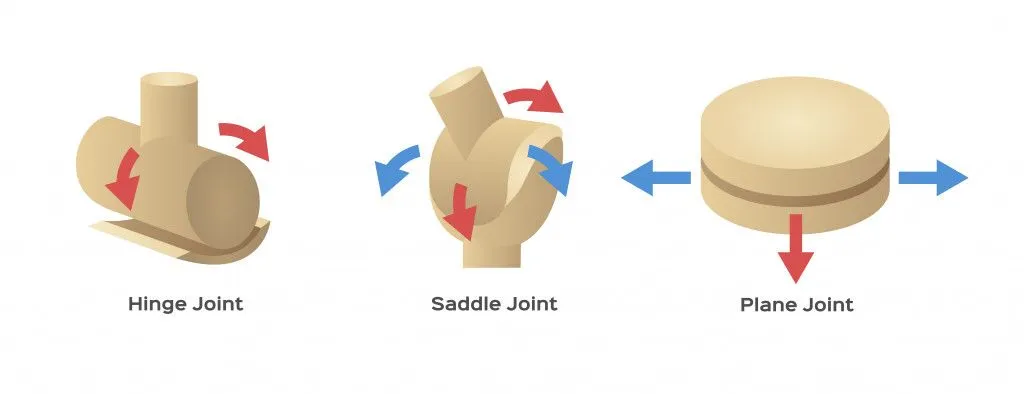
The Hinge, Plane And Saddle Joints
Firstly, we have the hinge joint. As the name suggests, it is akin to the hinge of a door, allowing only back and forth movement. For example, your elbows and knees utilize this type of joint. They can move forward and backward only in one plane, allowing you to flex and extend your arms and legs. Other hinge joints include the joints between the bones within your fingers and toes (the ones that let you curl them).
Next, we have the plane or gliding joint. These consist of flat or slightly curved bone surfaces that slide over each other in any direction along the plane. The small bones inside your wrist (the carpals) form gliding joints with one another, and so do the tarsal bones in the ankle. They each move only a little, but together they add up to the smooth, supple motion of the wrist and foot. The joints between the vertebrae of your spine and the joint at the top of your shoulder (the acromioclavicular joint) are gliding joints too.
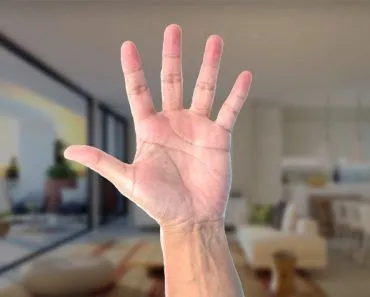
Thirdly, we have a saddle joint. These allow for back and forth and sideways movements. They also allow some degree of rotation. For example, the thumb allows this type of movement. The saddle joint might be the least common type of joint, but it is perhaps the most used one, considering how many hours we spend tapping away on our phones!
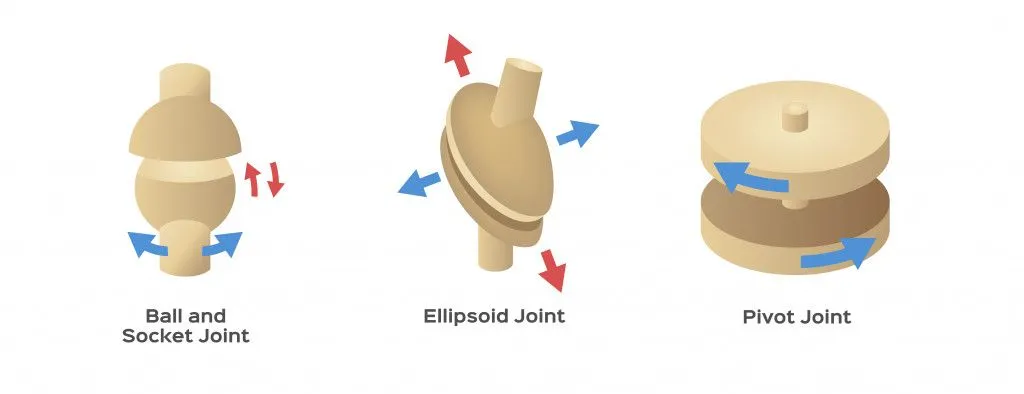
Ball And Socket, Ellipsoid And Pivot Joints
Another interesting type of joint is the ball and socket variety. As the name suggests, the end of one bone is round like a ball and fits into a hollow socket or a cavity on the other bone. This type of joint allows the widest range of movement: rotation, extension, flexion, adduction and abduction. Examples of this joint include the shoulder and hip joints.
A modification of the ball and socket joint is the ellipsoid or condyloid joint. Here, one bone has a rounded protuberance and fits into a hollow, ellipsoid space on the other bone. The knuckle joints at the base of our fingers and toes are condyloid, and so is the main wrist joint, where the forearm bone (the radius) meets the carpal bones. This is what lets you bend your wrist up and down and side to side. Unlike ball and socket joints, these don’t allow rotation.
Finally, we have the pivot joint. This joint allows rotatory movement around a fixed point. A perfect example of this joint is the atlanto-axial joint, i.e., the joint between the first and second cervical vertebrae (atlas and axis) in the neck. This pivot joint allows you to shake your head when you want to say ‘no’!
A Final Word
There are three broad categories of joints in our body. First, we have immovable or fibrous joints, such as sutures of the skull and teeth. Then we have semi-movable or cartilaginous joints, like our spine and ribcage, which allow for some degree of movement. Lastly, there are freely movable, i.e., synovial joints, which are the most common type of joint in the body. They come in several types, such as ball and socket, hinge, saddle, condyloid, plane and pivot joints. These joints allow a wide variety of flexibility and movement based on their individual structures.
References (click to expand)
- Garg K. (2019). BD Chaurasia's Handbook of General Anatomy. CBS Publishers & Distributors
- Anatomy of a Joint - Health Encyclopedia - URMC. The University of Rochester Medical Center
- (2022) Anatomy, Joints - PubMed. The United States National Library of Medicine
- Anatomy of a Joint | Children's Hospital of Philadelphia. chop.edu
- Juneja P, Munjal A, Hubbard JB. Anatomy, Joints. StatPearls. NCBI Bookshelf
- Joints in the Human Body: Anatomy, Types & Function. Cleveland Clinic