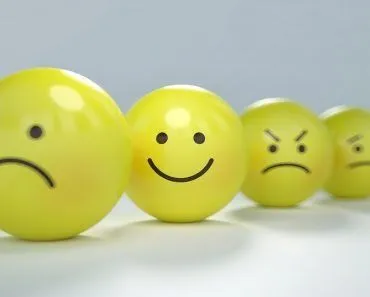
Boredom is an unpleasant brain state, an aversive signal that we want stimulation but can’t find it. Evolutionarily, that nudge pays off: an animal that gets easily bored is more likely to wander into new niches, try new foods, and pick up new behaviors than one that’s comfortably stuck. A 2014 University of Virginia study famously found that many participants would rather shock themselves than sit alone with their thoughts.
Boredom is a curse.
Imagine you’re sitting in a lecture. You actively despise the topic and can’t engage with the course content at all. Unfortunately, it’s a compulsory module for your course. You have no choice but to just sit through it.
Fast-forward five minutes into the lecture, and you’re already bored, no surprise there. As you try your absolute hardest not to nod off and succumb to the boredom stirring inside you, you wonder to yourself, is there even a reason humans (and animals, in general) evolved to experience boredom? What purpose does this (boredom) serve?
Let’s find out!
What Is Boredom?
Boredom, simply put, is a state of the brain. John Eastwood, a psychologist who specializes in boredom (he wrote this book on it) aptly summarized boredom in the following manner:
“The aversive experience of wanting, but being unable, to engage in satisfying activity.”
For a seemingly harmless and common brain state, that’s quite a heavy and damning definition. However, Eastwood has a pretty good reason for using the words he does. It all comes down to the “want” he refers to, and this want comes down to stimulation, attention, and purpose (or meaning).
Philosophy has a lot to say about human boredom, but it would serve no purpose here (except as a lengthy but passionate tangent). What we can do is define purpose in terms of neurological stimulation.
When we’re hit with boredom, it is the most mundane of states, so we have to counter it with a satisfying activity. This activity, whatever it is (reading a book or going for a run) needs to engage us just the right amount; under- or overstimulation or engagement can also lead to boredom. More importantly, it needs to hold our attention.
When we find an activity that satisfies these criteria, it triggers the brain to release dopamine (a neurotransmitter). Dopamine is also known as the reward molecule of the brain. A rush of dopamine gives us a feeling of immense pleasure, coupled with a sense of purpose.
Do Other Animals Get Bored?
Almost all animals get bored at one time or another. For example, think of a dog relaxing at the feet of his human as he waits for him to finish up work. The dog, unstimulated and bored, might just decide to doze off while waiting.

Even wild animals get bored. There isn’t always prey to hunt or predators to run away from. In the in-betweens of survival, wild animals also have time during which they idle away.
While a short amount of time without purpose or a task is alright, and in some cases, welcomed, a lot of boredom is dangerous. Boredom, as a brain state, can be conceived as a neurological indicator akin to disgust. It is a deeply aggravating state to find yourself in for long periods of time.
How Do We Know Animals Actually Get Bored?
It is one thing to say that a snoozing dog looks bored, but how would you actually prove it? You can't exactly hand a mink a questionnaire. The cleverest attempt to date came from Rebecca Meagher and Georgia Mason at the University of Guelph, in a 2012 study published in the journal PLOS ONE.

They housed 29 farmed mink in two ways. Sixteen lived in plain wire cages (75 x 60 x 45 cm) with nothing but a nest box, while thirteen got an "enriched" setup with water to wade in, shelves, and toys swapped out every month. The team then offered each mink ten different stimuli, ranging from pleasant (a moving brush, scents from a female) to neutral (lit candles, novel objects) to downright unpleasant (puffs of air, and the odor and silhouette of a predator).
Here's the telling part. The mink in the barren cages did not sit around looking listless or depressed. Instead, they pounced on everything faster and lingered longer, even investigating the frightening predator cues that the enriched mink sensibly kept their distance from. When you have absolutely nothing to do, it seems, even a scare beats more of the same nothing. The researchers read this craving for any stimulation, good or bad, as a signature of boredom, and adding enrichment to the cages made the signs fade.
This fits a wider pattern seen in captive animals. Monotonous, stimulus-poor housing tends to encourage repetitive "stereotypic" behaviors such as pacing, route-tracing, and bar-biting, while richer surroundings reliably dial them down. We can't crawl inside an animal's head to confirm that it feels boredom exactly the way we do, but behavioral scientist Rebecca Meagher argues the evidence is now strong enough that boredom should be treated as a real welfare concern rather than a trivial one.
Why Do We Hate Being Bored?
Think of it… how many times have you found yourself almost repulsed or nauseous when you’re bored?
In fact, even Seneca, the ancient Roman philosopher, compared boredom to nausea. Similarly, the French coined the phrase ennui (that can be roughly translated to boredom) to denote a state of immense dissatisfaction and even sadness.
Current studies back this notion of boredom as a form of nausea. A 2014 study, conducted at the University of Virginia, aimed to see if people could handle 6-15 minutes of “alone time”. The primary idea was that participants would be left alone in a room for a small period of time with no external or applied stimuli to engage with. The participants were intentionally given a bland environment (empty walls, a single table, and a chair) that would force them to engage with their own thoughts. Sounds easy, right?
Turns out, not so much. In fact, the results may even be a bit disturbing.
Half the participants in the study chose, voluntarily, to give themselves a mild electric shock, rather than be left alone with their own thoughts. Following each trial of experimentation, the participants were asked to rate their time spent in the room. They were asked to rate the experience on a nine-point scale for satisfaction or enjoyability.

Most of the participants alluded to lower levels (five or lower) of satisfaction, so the general consensus was a solid, “No, this was not a fun experience for us.” Most participants even commented that they desperately craved some form of external stimuli. Some even to the extent that they were willing to shock themselves.
However, it is important to note that the study’s methods have been criticized for both the level or intensity of the electric shock supplied and also for an over-indulgence or prioritization of the electric shock in the results.
So, if boredom is deeply dissatisfying and causes us anguish, why do we need the emotion at all?
What Is The Evolutionary Purpose Of Boredom?
In terms of evolution, boredom might actually be very helpful.
There’s no denying that boredom is a deeply repulsive brain state. We all know that we’d do almost anything to get out of it. This jump or call to action is precisely the value of boredom. Animals that get easily bored are favored by evolutionary selection processes to colonize new niches or create new things. This is because complacency is a dangerous evolutionary strategy.
An animal that is satisfied with specializing in a single niche is tied to that same niche for its survival. An animal that seeks out new niches and can survive in a variety of environments has a better chance of surviving overall.
When we’re bored, we look for any source of stimulation. In fact, we actively seek it out. Even the simplest of tasks can give us a bit of purpose. In a roundabout way, it motivates us to find new activities that satisfy us, even just a little.
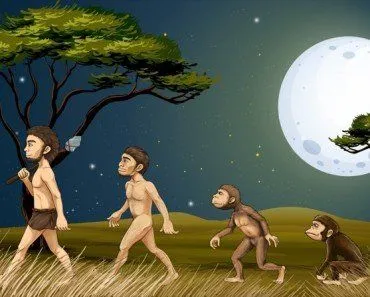
Boredom, in a way, has aided in the expansion of animal ability. Think about it in terms of human advancement and evolution. Satisfied animals never seek anything new, precisely because they are satisfied. Humans explored new niches and advanced to greater civilizations, we explored new lands, tried new forms of food, and even sought out new mates. Much of this can probably be attributed to boredom.
Boredom works to trigger our curiosity and provide us with a motivation to explore novel experiences. At the end of the day, boredom is a negative experience that drives animals to seek purpose through new experiences or beyond tried and tested actions.
References (click to expand)
- (2022) On boredom: A note on experience without qualities | Ephemeral .... ephemera journal
- Wilson, T. D., Reinhard, D. A., Westgate, E. C., Gilbert, D. T., Ellerbeck, N., Hahn, C., … Shaked, A. (2014, July 4). Just think: The challenges of the disengaged mind. Science. American Association for the Advancement of Science (AAAS).
- Westgate, E. C. (2019, November 8). Why Boredom Is Interesting. Current Directions in Psychological Science. SAGE Publications.
- Aziz, I. A. S. B., & Yong, J. C. (2019). Boredom as an Adaptation. Encyclopedia of Evolutionary Psychological Science. Springer International Publishing.
- Meagher, R. K., & Mason, G. J. (2012). Environmental Enrichment Reduces Signs of Boredom in Caged Mink. PLOS ONE.
- Meagher, R. K. (2019). Is boredom an animal welfare concern? Animal Welfare, 28(1), 21-32. Universities Federation for Animal Welfare.