Table of Contents (click to expand)
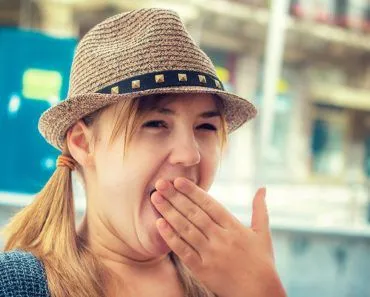
No, we don't only yawn when we're sleepy. Yawning is an involuntary reflex tied to changes in our level of alertness, and the leading hypothesis is that it helps cool the brain. We also yawn when stressed, bored, hungry, or simply because we saw someone else do it. There is no single confirmed cause.
Imagine that you’re sitting in class, actively listening and taking notes. You’re engaging with the material, but for some reason, right as the professor turns to look in your direction, you yawn.
You’re not sleepy, nor are you bored, yet you can’t seem to control your actions. The harder you try to control or resist the urge to yawn, the worse it gets. In fact, I implore you to try and make it through this article without yawning. I promise you… it’s nearly impossible.
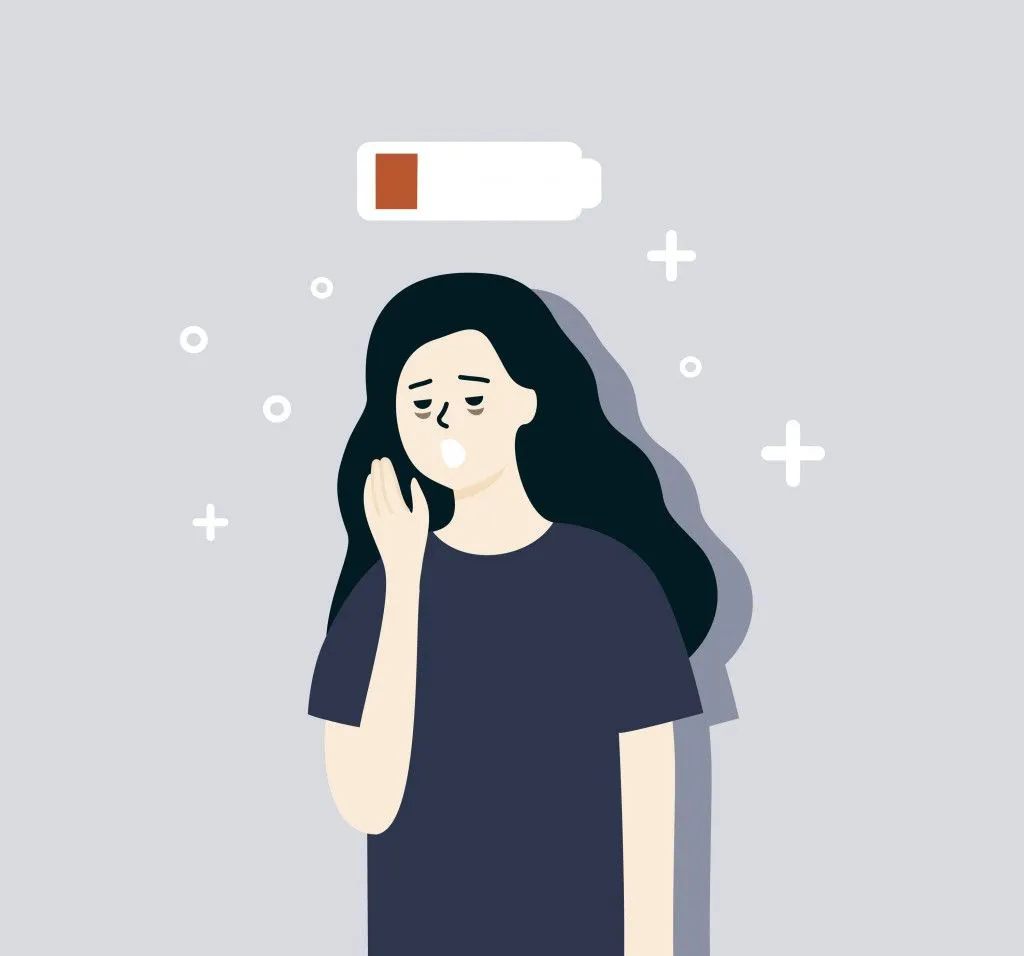
Everyone yawns. Literally… everyone. It is so contagious that you don’t even have to watch a person yawn to develop the urge to want to do it; even just reading the word “yawn” can trigger you into yawning. Truly, I’ve probably yawned close to 10 times just trying to write this.
In this article, we’ll try to explore the physiological aspects of yawns. Can we control our yawns? Do we only yawn when we’re tired or preparing for sleep? How can yawning actually serve a purpose, if it can be triggered so easily?
We’ll try answering all these questions, but first, there’s another question we need to start with.
What Is A Yawn?
Think of a yawn as a biological process. In fact, what we call a yawn is actually a series of steps. First, we open our mouths wide and inhale deeply. If you place a hand on your abdomen at this point, you can feel your diaphragm move downwards as your chest expands to pull in air. Then, we exhale slowly.
Yawns are also typically accompanied by excessively dramatic stretches. Think about the way we starfish our body before we get out of bed, or when we raise our hands over our heads at our desks.
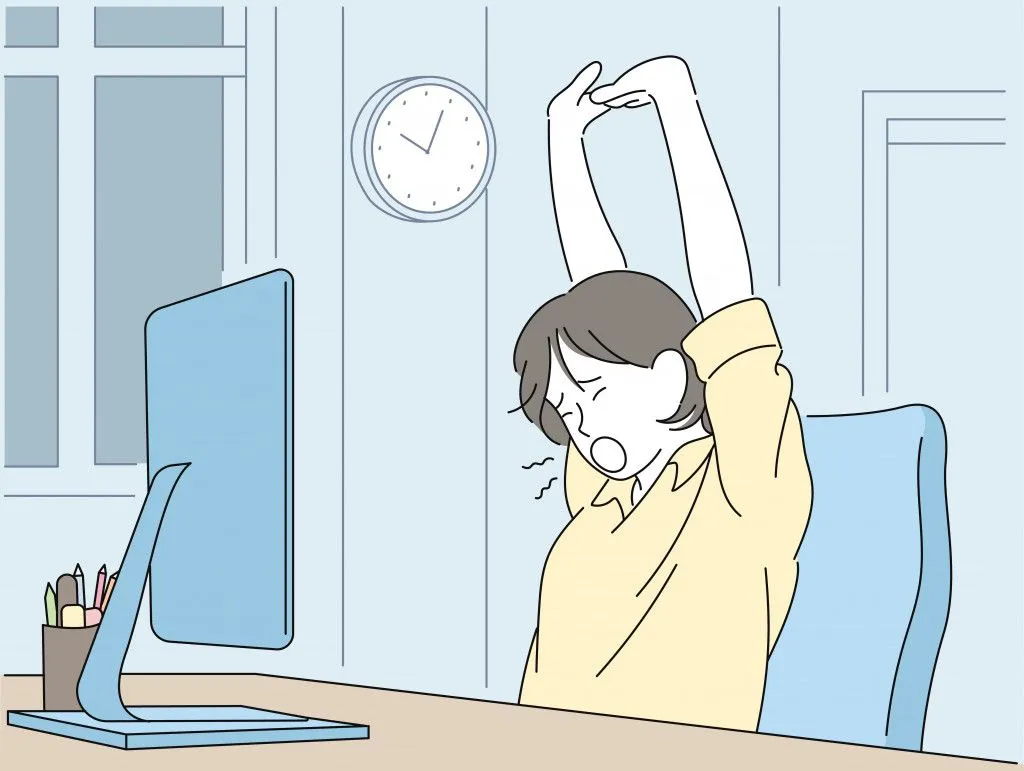
Yawning is an involuntary biological process. It is difficult to control because it is not meant to be controlled; it is a physiological process that the body performs when it is deemed necessary. So, what are these needs? Let’s find out!
Why Do We Yawn?
Although research on yawning can be traced back to ancient Greece (Hippocrates thought that yawning was a way to remove “bad” air from the lungs), these ideas have always been poorly circulated.
That old breathing-based idea hung around for a surprisingly long time. The modern version held that we yawn to take in extra oxygen and dump excess carbon dioxide when our blood gets stale. It sounds reasonable, but it doesn’t hold up. In a now-classic 1987 experiment, psychologist Robert Provine had volunteers breathe air enriched with carbon dioxide or pure oxygen. Neither one changed how much they yawned. So whatever a yawn is doing, it isn’t topping up your blood oxygen.
Pop culture would lead us to believe that yawning is simply a matter of boredom or drowsiness. However, this isn’t always the case.
The current front-runner is that yawning helps cool down the brain. In a 2011 paper in the journal Medical Hypotheses, Gary Hack of the University of Maryland and Andrew Gallup, then at Princeton University, proposed that the thin walls of our sinuses flex like a bellows during a yawn, ventilating the sinus cavities and helping draw heat away from the brain. As Gallup has put it, brains, much like computers, run best when they stay cool. The deep inhale of a yawn pulls in cooler air, and the accompanying stretch and increased blood flow can help carry warm blood away from the head.
Some neat experiments back this up. People yawn less when a cool pack is held to their forehead, and contagious yawning all but disappears when volunteers are told to breathe through the nose instead of the mouth, since both of those already help keep the head cool. It is worth stressing, though, that this is a leading hypothesis, not a settled fact. Yawning remains one of the more stubborn puzzles in physiology, and brain cooling is unlikely to be the whole story.
There are, after all, many other reasons we yawn.
For one, yawning seems to be tied to shifts in our level of arousal: the transitions between sleep and wakefulness, rest and activity, calm and alertness. If you’ve ever caught the Olympics on TV, or been to an athletics meet, you’ll often catch runners yawning while warming up. Before you ask, no, they’re not bored of running in circles. A yawn there appears to be the body priming itself for action, nudging the brain toward a more alert state right before the gun goes off. Some experts have even suggested that yawning briefly sharpens concentration by stimulating certain regions in the brain.
Then there’s the most familiar quirk of all: yawns are catching. You don’t even have to see one. Reading or hearing about a yawn can set you off, which is probably happening to a few of you right now. For years, the popular explanation was that contagious yawning is a marker of empathy, a way of unconsciously syncing up with the people around us. It’s a lovely idea, but the evidence has not held up well. A 2020 study and several reviews found no reliable link between how susceptible a person is to contagious yawning and how empathetic they are, so for now this one stays firmly in the “unexplained” column.
And it isn’t just a human habit. Yawning shows up across the animal kingdom, in dogs, cats, snakes, fish, and birds, which suggests it is a deeply rooted, ancient reflex rather than a uniquely human one. Intriguingly, a 2021 study of more than 1,250 yawns from over 100 species found that animals with bigger brains and more neurons tend to yawn for longer, a pattern that fits neatly with the brain-cooling idea.
It is common for people to associate yawning with being sleepy, tired, or uninterested. However, research has shown that yawning can be triggered by a variety of factors, such as stress. In fact, sometimes, we yawn just to express or vocalize our emotions. According to Walter Smitson, a professor of psychiatry at the University of Cincinnati, we yawn when we’re literally at a loss for words. When approached by LiveScience for a quote on the same, he had the following to say:
“People are not comfortable verbalizing anger, boredom, disagreement or rejection. Thus, the yawn states for them, ‘I’m rejecting you. I’m not interested in what you have to say. I’m not interested in you as a person.’ It can serve as a passive-aggressive means to express hostility, anger or rejection when an individual isn’t able to articulate those verbally.”
Conclusion
Finally, yawning may even be tied to hunger. Newborns, for instance, tend to yawn more before a feed than after one, hinting that yawning and the body’s energy balance are loosely linked, though the connection is far from fully understood.
While it is true that yawning can be a sign of sleepiness or tiredness, it is also important to recognize that yawning is a complex behavior and can be triggered by a variety of factors. That said, it is also an understudied facet of human physiology and more concrete research into the matter is required.
References (click to expand)
- Here's Why You Yawn | Live Science. Live Science
- Thompson, S. B. N. (2014, October). Yawning, fatigue, and cortisol: Expanding the Thompson Cortisol Hypothesis. Medical Hypotheses. Elsevier BV.
- Thompson, S. B., & Bishop, P. (2012). Born to Yawn? Understanding Yawning as a Warning of the Rise in Cortisol Levels: Randomized Trial. Interactive Journal of Medical Research. PMC, NCBI.
- Provine, R. R., Tate, B. C., & Geldmacher, L. L. (1987). Yawning: no effect of 3-5% CO2, 100% O2, and exercise. Behavioral and Neural Biology. PubMed, NCBI.
- Gallup, A. C., & Hack, G. D. (2011). Human paranasal sinuses and selective brain cooling: A ventilation system activated by yawning? Medical Hypotheses. Elsevier BV.
- Neilands, P., et al. (2020). Contagious yawning is not a signal of empathy: no evidence of familiarity, gender or prosociality biases in dogs. Proceedings of the Royal Society B. PMC, NCBI.
- Massen, J. J. M., et al. (2021). Brain size and neuron numbers drive differences in yawn duration across mammals and birds. Communications Biology. Nature.
- Menin, D., et al. (2022). Factors affecting yawning frequencies in preterm neonates. PLOS ONE. PMC, NCBI.