Table of Contents (click to expand)
The main reason rats are used in experiments is because they are similar to humans in many ways. They share a staggering 90% of genes with humans and their bodily systems function similarly to humans. Additionally, rats can be changed genetically which helps researchers study how certain genes can cause specific diseases in humans.
As humans evolved, we also evolved various ways to solve problems, especially those that pertained to human body health. We began performing scientific experiments to find answers to questions that had baffled us for centuries. However, for these biological experiments, we needed living creatures. Since experiments did not always end with the desired/expected result, we had to choose a creature that could perform the role of the ‘subject’ in these experiments. It was hard to convince humans to risk their lives for science, but what creature did we choose instead?
Yes, you guessed it… rats!

Have you ever thought about why rats (and their even more popular cousins, lab mice) are the preferred creatures for experimental testing?
Logistical Reasons
First of all, rats are small creatures. They are easy to handle, transport, and conduct experiments on, unlike larger or less predictable animals. Imagine pricking a giraffe or an elephant with a needle; it probably wouldn’t be as easy as it is with a tiny rat!
Also, rats are comparatively harmless. During the course of an experiment, the animals are forced to undergo a variety of conditions, some of which can be very annoying or provocative. Therefore, if you manage to irritate a rat, the most it can do is nip at your fingers. On the other hand, try nudging a lion with a sharp instrument, and you can expect to have a very bad day as a researcher.
Terrific Breeders

The factors that we discussed above pertained more to the logistical aspects of experimentation. Now, let’s look at the biological benefits of using rats as experimental subjects.
Rats are formidable breeders; they breed quite fast as compared to other animals. A female lab rat has a gestation of about 21–23 days, drops a litter of 6–12 pups, and is ready to mate again within a day or two of giving birth, easily producing 5–10 litters a year. This means that by spending a smaller amount, you can end up with many rats for experimentation. Rats also have a very short lifespan (about 2–3 years), which means that they die after a short time, thus giving way to the newer generation. This facilitates the study of different generations of rats in a short span of years.
Similarity With Humans
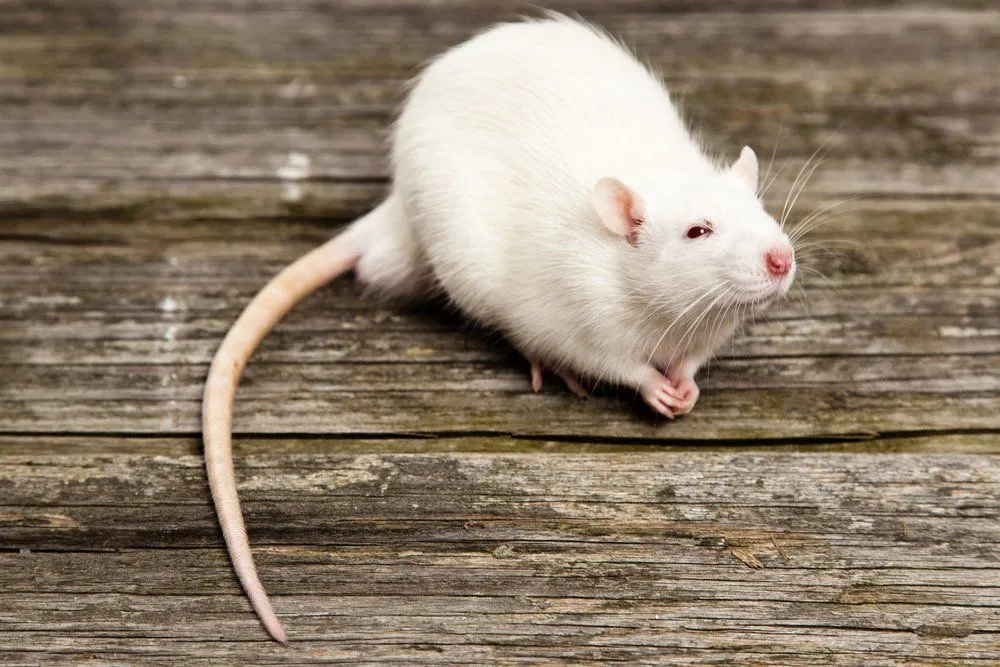
Rats are preferred for experimentation because they are remarkably similar to humans. According to Koshland Science Museum, rats share a staggering 90% of genes with humans. This is why they represent the best way to test the nature of different gene interactions in humans. Also, many bodily systems of rats perform very much like human beings, which makes it even more convenient to study the effect of all sorts of drugs and medications on the human body.
Another great thing about rats is the fact that they can be changed genetically. You can ‘turn on’ or ‘turn off’ specific genes in rats to observe how these changes affect the rats. These types of rats with altered genes are called ‘knockout rats’ (first successfully created in 2009 using zinc-finger nucleases, by Geurts and colleagues) and are tremendously helpful in determining how certain genes can cause specific diseases. There is one more type of rat, called transgenic rat, which is bred by introducing foreign DNA into the genome. These types of rats help in mapping models of certain diseases that afflict humans.
Why Are Lab Rats Almost Always White?
Picture a lab rat and you almost certainly imagine a white one with pink eyes. That is not a coincidence. The rat used in most experiments is not some exotic species but the domesticated brown rat (Rattus norvegicus), the same wild rodent that scurries through city sewers. The pale, pink-eyed version is an albino, an animal whose genes prevent it from making the dark pigment melanin in its fur or eyes.

So why did albinos become the laboratory standard? The story starts in the 1800s, when brown rats were bred in England, France and North America for the grim sport of rat-baiting, in which terriers were set loose on rats trapped in a pit. According to a review in Animal Frontiers, the rare white individuals that turned up were pulled out of the fighting stock and kept aside for show and selective breeding. Those tame albinos proved calmer and easier to handle than their wild cousins, and by the early 1900s they had become the animal of choice for the first dedicated research colonies.
The white coat also brings genuine practical advantages. With no pigment in the way, researchers can spot skin reactions, rashes and changes in color at a glance, and the veins under the pale skin are easy to find when a blood sample or injection is needed. Albino rats are also notably docile, which means an animal can be handled and sampled without a stressful struggle that might otherwise skew the results. In short, the humble white rat is part accident of history and part real scientific convenience.
Which Types Of Rats Are Used In Research?

Not all lab rats are the same. Over the past century, scientists have bred dozens of standardized strains, each a carefully maintained line with predictable biology, so that a result from one laboratory can be reproduced in another. A handful of names dominate the field.
The granddaddy of them all is the Wistar rat, an outbred albino developed at the Wistar Institute in Philadelphia in 1906. It was the first rat bred specifically to serve as a research model, and it proved so useful that, by some estimates, more than half of all laboratory rat strains alive today descend from that original colony. From the Wistar line came two other workhorses: the Sprague Dawley rat, an easy-going albino first produced on a Wisconsin farm in 1925 and now a staple of drug-safety and toxicology testing, and the hooded Long-Evans rat, created in 1915 by crossing Wistar females with a wild gray male and favored for behavioral and neuroscience studies.
Strains also differ in how their genes are managed. Outbred stocks such as Sprague Dawley keep plenty of genetic variety, which mirrors the diversity of a human population, while inbred strains are nearly genetically identical, ideal when an experiment needs every animal to be as similar as possible. Layered on top are the genetically engineered knockout and transgenic rats we met above. Picking the right strain is one of the first and most important decisions a researcher makes.
Given how much rats contribute to human welfare, we should take a moment to thank these little creatures who, without even realizing it, are hugely important for human beings around the world.
References (click to expand)
- Animal testing on rodents - Wikipedia. Wikipedia
- Iannaccone, P. M., & Jacob, H. J. (2009, April 30). Rats!. Disease Models & Mechanisms. The Company of Biologists.
- Why Do Medical Researchers Use Mice? - Live Science. Live Science
- Hulme-Beaman, A., Orton, D., & Cucchi, T. (2021). The origins of the domesticate brown rat (Rattus norvegicus) and its pathways to domestication. Animal Frontiers. Oxford University Press.
- Laboratory rat - Wikipedia. Wikipedia