Most men who can't grow a beard have perfectly normal testosterone. Whether facial hair fills in depends on how sensitive your follicles are to DHT (a hormone made from testosterone), and that sensitivity is set by your genes and ethnicity. So a patchy beard rarely means low testosterone, it usually means you can blame your parents.
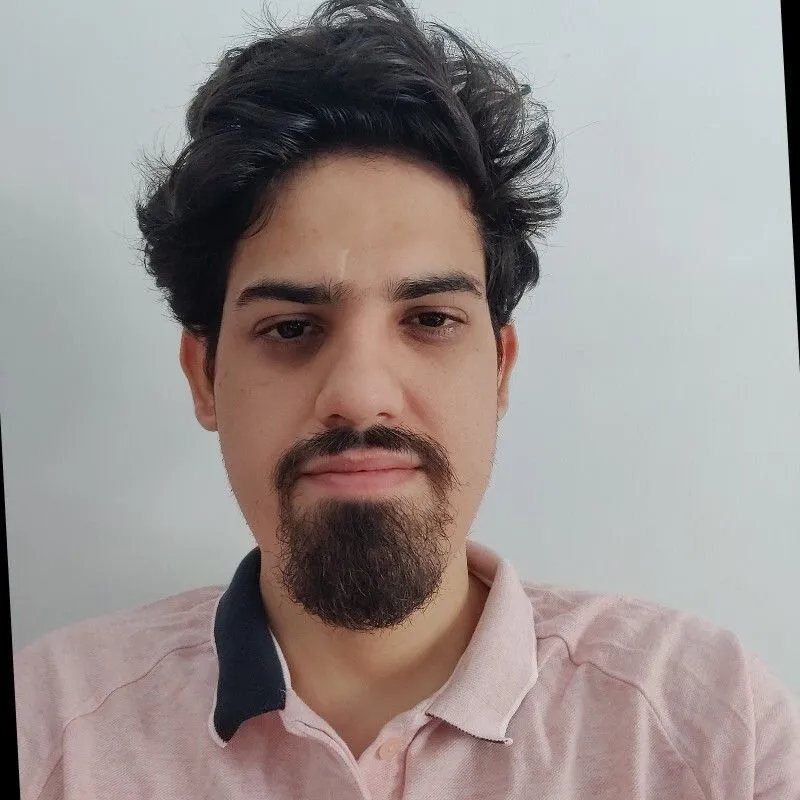
While a few of you might be genuinely curious, the majority of people, like me, have shaken Google’s shoulders, asking indignantly: Why me? We, the baby-faced adults, the ‘man-dolescents’, some in their early twenties and a few, even worse, in their late twenties, have been perennially teased both online and offline for our inability to grow a dense bush of facial hair, which is apparently the foremost indicator of virility and masculinity.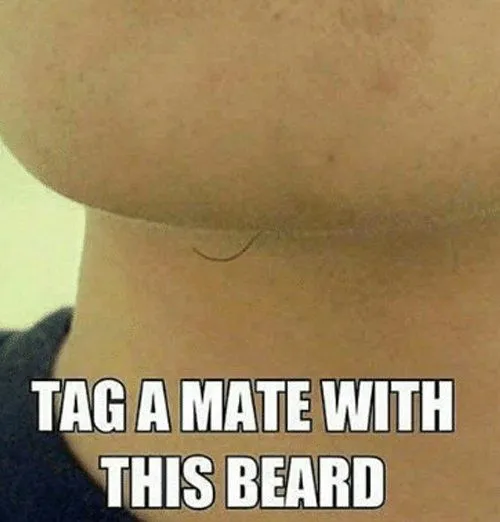 I have been tagged in this meme a dozen times now. If it helps, let me ensure you that it’s not your fault. Blame, well… your parents. While there are experimental solutions, one can find some respite in the serendipitous benefit of this inability, which we will address shortly. First, however, we need to understand why masculinity and beards are mutually exclusive.
Not Testosterone, But The Response To It
If there is one lesson I learned from high school biology, it’s that I suck at it. Still, I’m sure everyone crudely remembers that testosterone and estrogen drive and regulate the sexual characteristics of men and women, respectively. In men, those characteristics include the growth of facial hair and sexual virility. Surely, beardless men, which a Viking or Roman would have snidely called debole and unwise, lack the testosterone that their strong, bearded brothers possess?

Not really. All men are created equal, well… almost. Except for an unfortunate few, the majority of men carry roughly the same levels of testosterone. The ones who genuinely run low will struggle with problems such as diminished libido, chronic fatigue or the development of truly feminine traits, such as breast tissue. But here is the catch: if you sailed through puberty and grew hair elsewhere on your body, your testosterone is almost certainly normal, so a sparse beard is rarely the low-T smoking gun the internet makes it out to be. What actually differentiates the bearded crowd from the gleaming, clean-chinned ones is how their genes tell their follicles to react to that testosterone. It is largely genetic.
Hair, whether facial or on your scalp, grows when dihydrotestosterone (DHT), a more potent molecule that your body synthesizes from testosterone, binds to androgen receptors in the hair follicle. (DHT clings to those receptors several times more tightly than testosterone does, which is why it does the heavy lifting for facial hair.) Beard growth is not determined by how much testosterone you have, but by how strongly these follicle receptors respond to it. Two men with identical hormone levels can end up with wildly different beards purely because one set of follicles is more sensitive than the other. That sensitivity is written into your genes, so if you must blame someone, it is, like I said, your parents. Genetics is also why ethnicity matters so much: men of Mediterranean, Middle Eastern and South Asian descent tend to grow the fullest beards, while many East Asian men grow far less, even at the same testosterone levels. That being said, it also comes down to chance. Inherited traits get shuffled in unpredictable ways, so while the son of a beardless man may be predisposed to be beardless, that is not a guarantee. Age plays a part too: facial hair often keeps filling in through your late twenties and even early thirties, so plenty of "man-dolescents" simply have not finished growing their beard yet.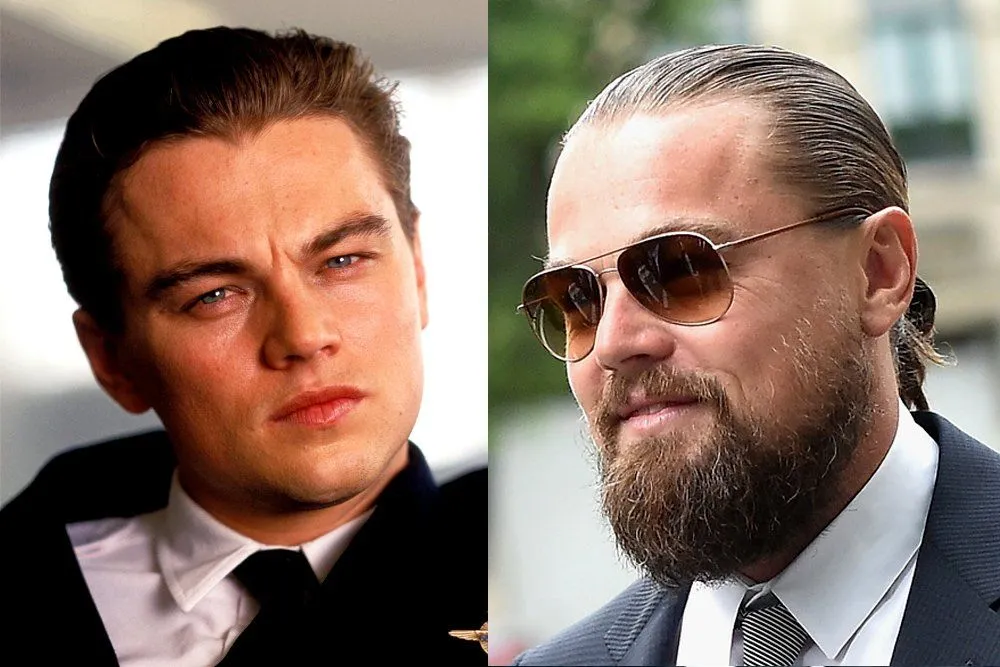
Why Do Men Grow Beards At All, But Women Don't?
Step back from the patchy-chin panic for a moment and ask the bigger question: why do men sprout beards in the first place? It all kicks off at puberty. A surge of androgens reprograms certain follicles, taking the soft, pale, barely-there "vellus" hairs dusted across the face (the peach fuzz you had as a kid) and converting them into the long, dark, pigmented "terminal" hairs we call a beard. It is the same DHT machinery from earlier: testosterone is converted into the more potent DHT right inside the follicle, and that is the molecule that flips the switch.
Women run the very same machinery, just turned way down. They produce only a small fraction of the testosterone men do, and the follicles on a woman's face are far less primed to convert what little there is into coarse terminal hair, so the fuzz mostly stays vellus. The proof is in the exception: women with conditions that raise androgen levels, most commonly polycystic ovary syndrome (PCOS), often do start growing noticeably coarse facial hair. A beard, in other words, is not a piece of male-only anatomy; it is what any face does when it is bathed in enough androgens and the follicles are tuned to answer them.
But this raises the genuinely curious question: why did evolution bother handing men a beard at all? Charles Darwin had a guess (and a magnificent beard to match). In The Descent of Man, he proposed that beards evolved through sexual selection, the result of ancestral women preferring bearded mates.

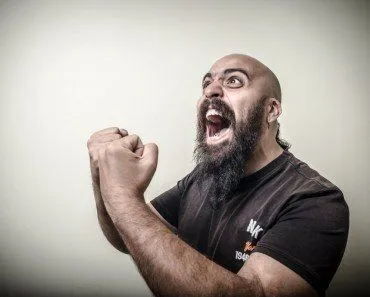
Modern research, however, is decidedly cooler on the female-choice idea. The evidence leans toward the beard being a signal aimed less at women and more at other men. Bearded faces are reliably rated as older, more masculine, more socially dominant and more aggressive than clean-shaven ones. One 2020 study even tested the so-called "pugilism hypothesis", the notion that a beard cushions the jaw in a fight: using fiber-and-bone stand-ins for a hairy versus a shaved jaw, the researchers found the furred samples absorbed roughly 37% more energy and faced about 16% lower peak force when struck. So a beard may be less about wooing a partner and more about looking, and being, a little harder to knock out. Either way, it is a flag of sexual maturity, not a scorecard of your worth.
Why Does Ethnicity Make Such A Big Difference?
We brushed past ethnicity earlier, but it is worth asking what is actually different under the skin, because it is not the hormones. Men across populations carry broadly similar testosterone; what differs is the follicles and the genes that build them. In 2016, a genome-wide study of more than 6,000 people, published in Nature Communications, went hunting for the DNA behind facial hair and tied beard thickness most strongly to a gene called EDAR, which helps shape hair follicles while you are still an embryo.
A particular variant of EDAR is common in East Asian and Native American populations, and it is linked to thinner, sparser facial hair. Intriguingly, EDAR is the same gene famous for giving many East Asians their characteristically thick, straight scalp hair (through a separate signal within the gene); the follicle is simply reading a different genetic blueprint. This is why two men with near-identical testosterone, one of, say, Middle Eastern descent and one of East Asian descent, can grow wildly different beards. The hormone is the same; the wiring is not.
It also means there is no honest single answer to "what percentage of men can't grow a full beard". It depends heavily on ancestry, and a sparse beard that is unremarkable in one population can be the genetic norm rather than any kind of deficiency. So if your beard refuses to fill in, the most likely culprit is not your hormones or your habits, but the particular hand of genes you were dealt.
What Can I Do?
First, if your beard is coming in everywhere except for one or two oddly bald patches, make sure you don’t have alopecia barbae. This is the beard-specific version of alopecia areata, and rather than thinning your beard all over, it carves out small, smooth, circular bald spots. What’s more heartbreaking is that it is a case of friendly fire: the immune system mistakenly attacks the hair follicles, the tiny pockets in your skin where each hair is anchored and grown. The good news is that the follicles usually aren’t destroyed, so the hair can grow back, often on its own or with treatments such as topical or injected corticosteroids. The reason it is worth getting diagnosed is that what a dermatologist prescribes for an autoimmune patch like this is completely different from anything you would use to coax along a naturally sparse beard.
Beyond an autoimmune patch, general health can nudge things too. A nutritional shortfall (an iron deficiency or anemia, for instance) won’t turn a genetically full beard into stubble, but it can leave hair thinner and slower to grow, and both are easily corrected once a doctor spots them. The usual advice about a balanced, protein-friendly diet, decent sleep and not torching yourself with stress isn’t magic beard fertilizer, but it does give whatever follicles you have their best shot.
Lastly, researchers have found that the more sensitive a body is to DHT, the more susceptible it is to go bald. There exists a huge trade-off at play here. Men who sport a beard as soon as they enter high school have a very high chance of cultivating crop circles on their head or going completely bald as they get older. On the other hand, men who are late bloomers with thinner shrubs or patches of beard will likely retain their precious hair.
So, even though you might look way more masculine while you smoke or imbibe in a beard like Al Pacino’s or look deep and pensive with a beard like Jesus, or perhaps look way cool brewing your own beer like a Silicon Valley hipster, it comes at the cost of growing prematurely bald and looking pitifully uncool later. Unless, of course, you’re Jack Nicholson.
References (click to expand)
- Can't Grow a Full Beard? There's an Explanation for That. Cleveland Clinic Health Essentials
- Testosterone: What It Does And Doesn't Do. Harvard Health Publishing, Harvard Medical School
- Alopecia Areata Barbae in a Nutshell. Cureus / PubMed Central (PMC), NIH
- Physiology, Hair. StatPearls, NCBI Bookshelf, NIH
- Hormonal Effects on Hair Follicles. International Journal of Molecular Sciences / PubMed Central (PMC), NIH
- A Genome-Wide Association Scan in Admixed Latin Americans Identifies Loci Influencing Facial and Scalp Hair Features. Nature Communications / PubMed Central (PMC), NIH
- Impact Protection Potential of Mammalian Hair: Testing the Pugilism Hypothesis for the Evolution of Human Facial Hair. Integrative Organismal Biology / PubMed Central (PMC), NIH