Table of Contents (click to expand)
Animals grow beards for different reasons, and most “beards” are not true facial hair like ours. In goats and (loosely) lions, the beard or mane is a display that signals health, status, and breeding fitness. In bison and markhors, it adds insulation. Many other “beards” are actually feathers, whiskers, or spiny throat scales used for sensing or signaling, not hair at all.
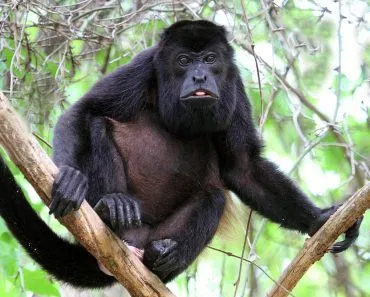
If you’ve looked around in the past few years, you may have noticed a peculiar trend among men: beards. They have stormed back with a vengeance after many decades of being relegated to mountain men and those not looking for high-level employment. This comeback tour for beards has brought them back into the spotlight for humans around the world, but people often forget that we’re not the only species that boasts impressive facial hair. Animals like orangutans, goats, lions, bison and even certain species of pigs can grow impressive amounts of facial hair.
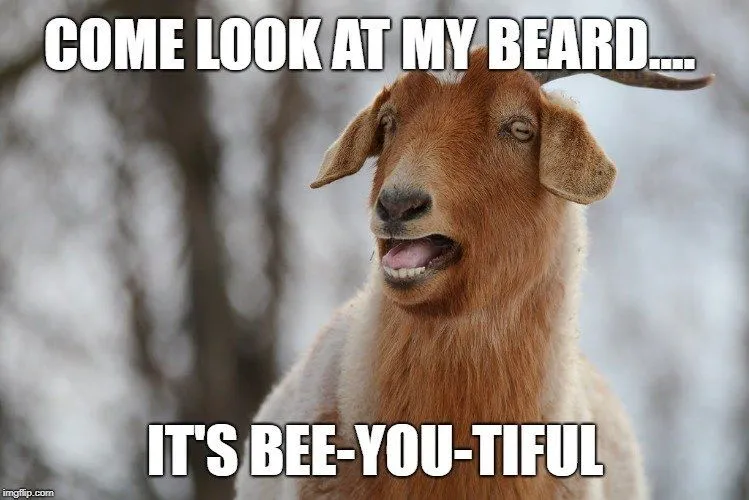 To understand the purpose behind these bearded beasts, it may be helpful to look at the changing relationship that humans have had with hair throughout history.
Humans And Body Hair
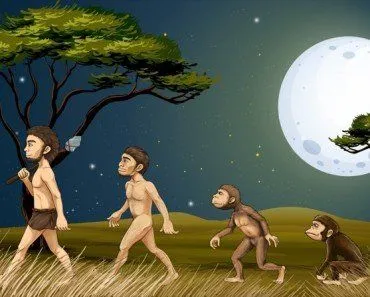
As most of you hopefully know, humans evolved from great apes in a long string of different species that has led up to Homo sapiens. One of the first differences you notice when you look at a great ape (e.g., bonobos and chimpanzees) and a human is the lack of body hair on a human. Yes, we do have hair on most surfaces of our body, but it is much finer and more spread out than the hair on a great ape, exposing much more of our skin. As apes came down from the trees and began to evolve, their excess of body hair actually became a disadvantage.
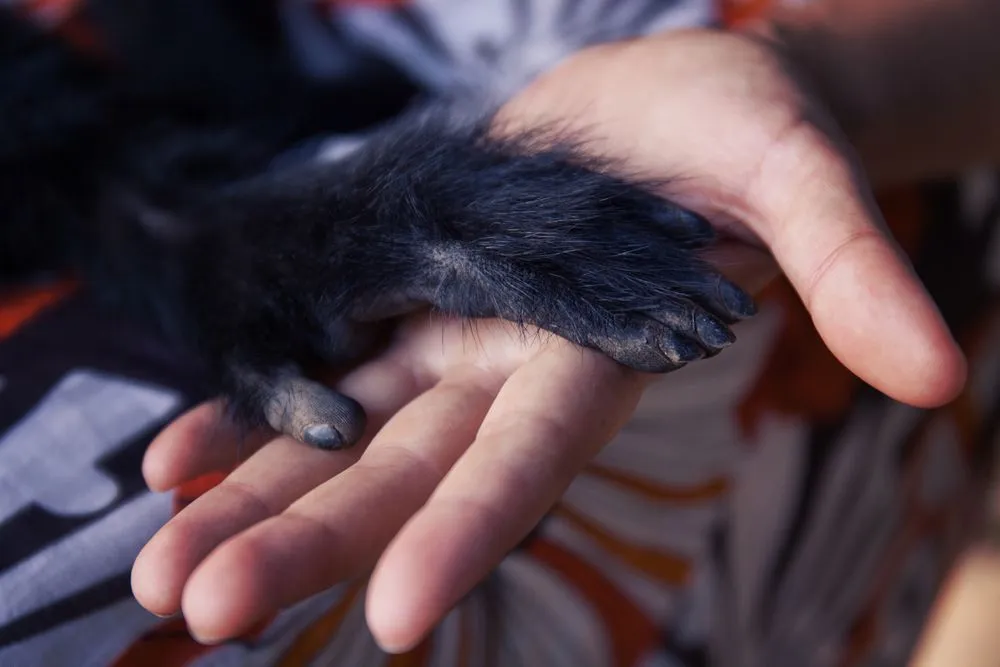
While hunting down other animals, the animals were unable to cool themselves down in the hot savannas, largely due to their layers of fur. Humans, however, as they began to shed their thick layer of body hair, were able to sweat and keep their bodies cool, increasing their level of stamina and improving their prowess as a hunter and provider. Those who were better able to survive (e.g., had less body hair) and provide were better able to reproduce, thus passing those genes along. Other scholars claim that the loss of fur was in response to the danger posed by ticks and other parasites who were able to decrease an animal’s fitness. Evolution’s solution to this for early humans was simply eliminating the fur entirely!
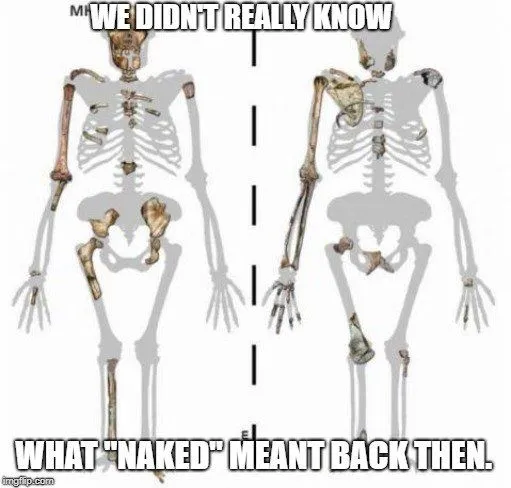 However, while facial hair was similarly diminished in early humans as they moved further from their great ape cousins, it did not disappear entirely, perhaps because it became linked with a man’s step into adulthood (and the ability to bear children). When puberty strikes and facial hair begins to grow, it signals females that this is a potentially valuable mate. That being said, while many humans create a simple link between testosterone and a man’s ability to grow a beard, the connection isn’t that direct, and there are actually many factors (genetic, environmental, hormonal, etc.) that can affect the length and thickness of your beard. Even so, certain females are still drawn to beards, which suggest a manly, strong survivor. Their old instincts kick in and the sight of a beard is equated with sexual virility and a good potential mate (in some cases).
Hundreds of thousands of years ago, growing a long beard would be akin to the elaborate mating dance of a male bird; as a signal for potential mates. Other theories propose that maintaining facial hair would have been a natural form of camouflage, making men more effective hunters if more of their face was covered, thus increasing their fitness and ability to reproduce.
Animals With Beards
Some animal beards do echo the reasons humans grow facial hair, but the resemblance only goes so far, since the jobs these beards do vary wildly from one species to the next. Remember that almost anything you see on an animal has developed in that particular way for a specific reason. Evolution rarely makes mistakes, although vestigial organs do pop up from time to time, and there is such a thing as runaway selection, in which a certain trait is continually selected for, long after its initial purpose has been fulfilled (e.g., peacock feathers). Generally speaking, however, everything has a purpose, and the beards on certain animals is no exception.
Take male lions, who often sport an impressive mane. Strictly speaking, a mane isn’t a beard, and it isn’t even facial hair, it’s a ruff of long hair framing the whole head and neck. Even so, it works much like the showiest beards do. Long-term research in the Serengeti by Peyton West and Craig Packer found that a darker, fuller mane advertises good nutrition and high testosterone: dark-maned males are more attractive to females and tend to win out in fights with other males. Males who never grow much of a mane are usually lower-ranked, regularly bullied, and rarely get the chance to breed. There’s a catch, though, that all that dark hair traps heat. In hotter seasons and habitats, the same study found that males run hotter and grow lighter, shorter manes, which is a neat reminder that even a winning trait comes with a cost.
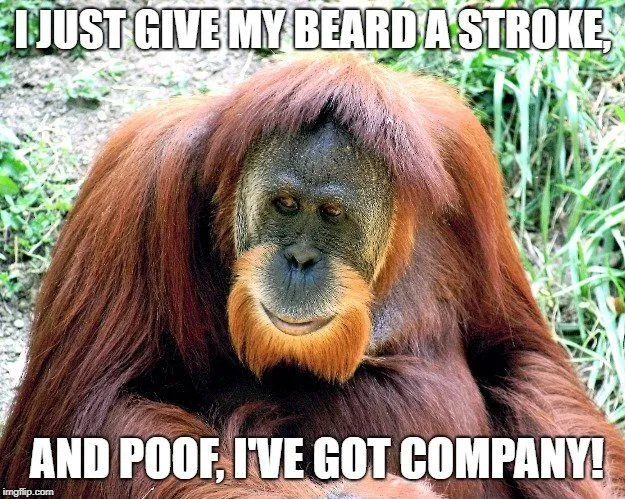
Orangutans tell a similar story, with a twist. The broad face most people picture comes from cheek pads, called flanges, rather than from the beard itself. These flanges aren’t simply a sign that a male has reached sexual maturity, since researchers have found that flanged and unflanged males can both father offspring. Instead, the flanges (along with a male’s long, wispy beard) act as a badge of dominance and high testosterone, making a male look bigger and helping his booming “long call” carry through the forest. Goats lean on smell as much as looks. During the breeding season, a buck will rub and urinate on his own beard, soaking it in pheromones so that the soggy, pungent tuft broadcasts his readiness to every doe downwind. It’s not exactly fresh, but to a female goat, it’s irresistible.
 Other animals, such as the American bison or the markhor (a wild goat with a magnificent shaggy ruff), sport beards mainly to stay warm. A bull bison grows a black beard roughly a foot (30 cm) long, and its shaggy head is the most heavily insulated part of its body, built to face into prairie blizzards. You may have heard that most of your body heat escapes through your head, but that’s a myth, as heat loss tracks the surface area you leave exposed, and the head is only about 7% of it. Still, an extra mat of fur over the throat and chest is real insulation, and for an animal standing nose-first into a winter gale, it can help tip the balance between misery and survival until spring.
In every case, as is true across so many of nature’s phenomena, the beard earns its keep. Some additional benefit is gained or enjoyed by the presence of this fuzz, whether it boosts the animal’s odds of surviving the winter or of winning a mate. So, next time you decide to shave your beard off and start fresh, think about what message you might be sending out into the world!
Why Do Goats Have Beards?
Goats deserve a closer look, because they are the animal most people picture when they think of a beard, and both sexes wear one. In wild goats (Capra aegagrus), the ancestor of the farmyard goat, males and females alike grow a dark chin tuft, though the buck’s is the longer and shaggier of the two. So if you have ever wondered whether a female goat can have a beard, the answer is yes, and it is not unusual at all.

What sets the buck apart is what he does with his. During the autumn rut, a male goat performs a startling ritual called self-enurination, curling forward to spray his own urine over his face, beard and forelegs. The beard soaks it up and holds it, turning the tuft into a scent-soaked mat that carries his signature downwind. That signature is chemical: a team led by Ken Murata at the University of Tokyo identified a compound called 4-ethyloctanal in male goat odor, which in air oxidizes into 4-ethyloctanoic acid, the sour note behind the classic “goaty” smell.
The payoff is more than a bad smell. That odor is a genuine primer pheromone. In sheep and goats, exposure to a male’s scent can nudge a seasonally non-cycling female back into breeding condition, a phenomenon biologists call the “male effect”. Murata’s team showed that 4-ethyloctanal switches on the GnRH pulse generator, the brain’s master clock for reproduction, and separate research has traced how buck odor lifts luteinizing-hormone pulses and can help trigger ovulation in does within a few days. In other words, the buck’s pungent beard is not just an advertisement, it can actually help set the female’s cycle in motion.
Beards That Aren’t Really Hair
Here’s the curveball, though. A lot of famous animal “beards” aren’t facial hair at all, and they don’t do the same job a goat’s or a lion’s does. The label is really just us looking at nature and seeing something that reminds us of a human chin. Once you start poking at these examples, you find feathers, whiskers and even scales doing the work.
The bearded vulture (or lammergeier, Gypaetus barbatus) wears a dark tuft of bristly feathers drooping below its beak. Unlike most vultures, which are bald-headed for plunging into carcasses, this bone-eating specialist keeps a feathered face, and the “beard” is simply part of that plumage. The bearded tit, a small reed-bed bird, is named the same way, for a drooping black “moustache” of feathers on the male, not for any hair.
The bearded dragon takes it even further. Its “beard” is a pouch of spiny scales under the throat that the lizard puffs out and darkens to near-black when it’s threatened or courting. Both males and females have one, and it’s a signaling tool, with no hair involved whatsoever. Out in the Arctic, the bearded seal (Erignathus barbatus) sports a luxuriant set of whiskers, but those aren’t decoration either, as they’re sensitive vibrissae the seal sweeps along the seafloor to feel out clams and other buried prey in the dark.
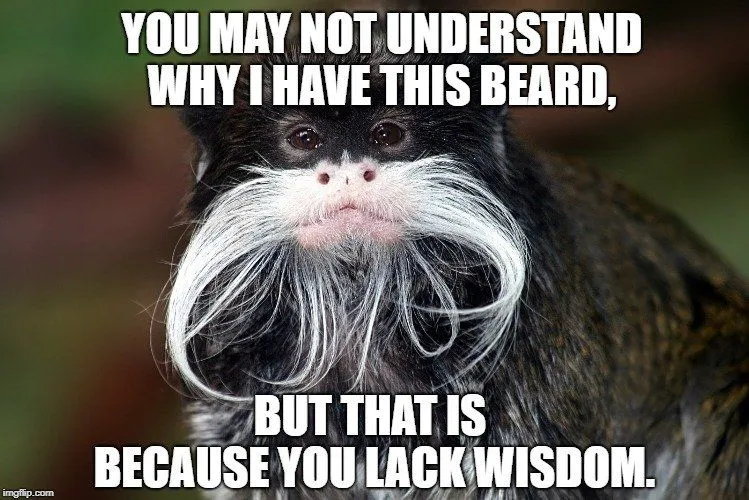
Then there are beards that probably are about recognition rather than romance. The emperor tamarin, a tiny monkey jokingly named after the handlebar-moustachioed Kaiser Wilhelm II, grows a sweeping white moustache that males and females share alike, which suggests it helps these monkeys identify their own species rather than woo a mate. The shaggy “beard” of the wildebeest is likewise more a field mark than a flag for the opposite sex. The lesson is that a beard, biologically speaking, isn’t one thing, as nature has reinvented the look again and again out of whatever material was handy.
References (click to expand)
- Redmond, L. C., & Higgins, C. A. (2026). Not quite naked: the bare necessities of human body hair evolution. British Journal of Dermatology.
- West, P. M., & Packer, C. (2002). Sexual selection, temperature, and the lion's mane. Science. PubMed (NIH).
- Why male orangutans have such weird faces - BBC Earth.
- Dixson, B. J. W., Sulikowski, D., Gouda-Vossos, A., Rantala, M. J., & Brooks, R. C. (2016). The masculinity paradox: facial masculinity and beardedness interact to determine women's ratings of men's facial attractiveness. Journal of Evolutionary Biology. Wiley.
- Gypaetus barbatus (bearded vulture). Animal Diversity Web, University of Michigan Museum of Zoology.
- Pogona vitticeps (central bearded dragon). Animal Diversity Web, University of Michigan Museum of Zoology.
- Bearded Seal (Erignathus barbatus). NOAA Fisheries.
- Bearded Emperor Tamarin. Smithsonian’s National Zoo and Conservation Biology Institute.
- American Bison. Smithsonian’s National Zoo and Conservation Biology Institute.
- Do You Really Lose Most of Your Body’s Heat Through Your Head? Cleveland Clinic.
- Murata, K., et al. (2014). Identification of an Olfactory Signal Molecule that Activates the Central Regulator of Reproduction in Goats. Current Biology. PubMed (NIH).
- Importance of the signals provided by the buck for the success of the male effect in goats (2006). Reproduction Nutrition Development.
- Capra hircus (domestic goat). Animal Diversity Web, University of Michigan Museum of Zoology.