Table of Contents (click to expand)
You can’t remember your dreams mainly because the sleeping brain barely records new memories: norepinephrine, the chemical that locks memories in, drops to almost zero while you dream. People who do recall dreams wake more often during the night, have a more active temporo-parietal junction, and tend to surface during REM sleep, catching the dream before it fades.
Martin Luther King Jr. had a wonderful vision to fulfill his dreams when he gave his famous “I Have a Dream” speech. I would also love to chase my dreams, but in my case, the speech would be “I Had a Dream”. No, it’s not like I’ve given up on following my dreams after becoming dejected. No, the problem with me is that I can’t seem to remember my dreams after I wake up in the morning. Even if I do remember some part of them, they’re very vague.

In my dream today, I was leading an army of soldiers somewhere; but where was I leading them, against whom was I revolting, and, most importantly, what the whole point of it was is a complete mystery to me. It feels like one of those Christopher Nolan movies (Memento or Inception). Why on earth am I unable to remember my dreams?
Why are some people able to recall their dreams after sleep, while others are not able to recall them at all?
High Dream Recallers Vs. Low Dream Recallers
Why we dream is still essentially a mystery to scientists, but it is known that every human being dreams. Furthermore, it is well known that some people are able to remember their dreams more than others. People who are able to remember their dreams more often are called high dream recallers, whereas people who are not able to remember their dreams are called low dream recallers.
Research led by Perrine Ruby at the Lyon Neuroscience Research Center, published in the journal Neuropsychopharmacology in 2014, scanned the brains of 41 people: 21 high recallers (who remembered around 5 dreams a week) and 20 low recallers (only about 2 a month). The high dream recallers had more activity in their brains’ temporo-parietal junction and medial prefrontal cortex than the activity found in low dream recallers, both while asleep and while awake.
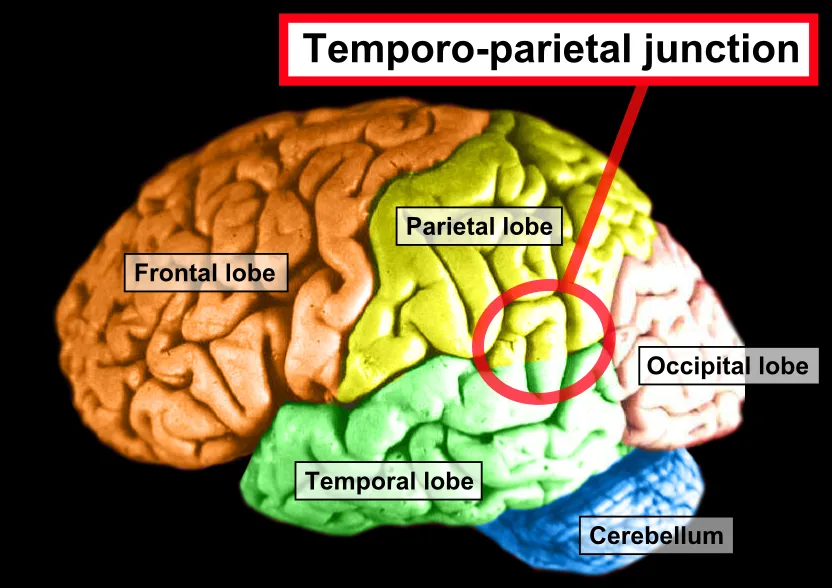
The temporo-parietal junction is responsible for processing information from both external stimuli and from within the body. Due to increased activity in this region, high dream recallers awaken twice as many times throughout their sleep at night as compared to low dream recallers.
Given that high dream recallers have more periods of wakefulness in their sleep, they are able to memorize their dreams in the short period of time when they are awake. A sleeping brain is not able to memorize new information; it needs to be awake to remember it. This is the reason why low dream recallers are not able to remember their dreams, as they have fewer periods of wakefulness throughout their sleep cycle.
The temporo-parietal junction region of high dream recallers has higher activity, even when they are awake, as compared to that of low dream recallers. This is the reason why high dream recallers respond more strongly when hearing their names, as compared to low dream recallers.
Dream Chasing
A person is likely able to remember their dreams the best if awakened during REM sleep, much more than compared to recollection during other modes of sleep. Part of the reason is chemical. While you dream, levels of norepinephrine, the brain chemical that helps cement new memories, fall to almost nothing, and the hippocampus, the brain’s memory hub, is barely engaged. So a dream is being written to a notepad with no ink. There may even be active forgetting at work: in a 2019 study in Science, researchers found that a group of neurons in the hypothalamus (the so-called MCH neurons) fire during REM sleep and switch the hippocampus down, which seems to wipe dream memories on purpose. Wake up mid-REM and you snatch the dream before that erasing finishes; sleep through it and it is gone.
It is said that 50% of any dream is forgotten within 5 minutes of the dream and about 90% of the dream is forgotten within 10 minutes. So, if you want to remember your dreams after waking up, try to concentrate only on remembering the dream and not think about anything else. Having a piece of paper next to your bed also helps!

Dreams are important parts of our lives. They contain our unfulfilled fantasies, our aims in life, escape routes from realities and many more wondrous things. I’m sure you can agree that it would be a remarkable feeling to remember all those dreams (while forgetting all the nightmares, obviously).
Does Everyone Actually Dream?
If you wake up morning after morning with nothing, it is tempting to conclude that you simply don’t dream. The science says otherwise. Sleep researchers agree that dreaming is essentially universal: when people who swear they “never dream” are brought into a sleep laboratory and woken up at the right moment, they almost always report a dream. The problem is recall, not production. A long line of laboratory studies has found that roughly 74% to 80% of awakenings from REM sleep yield a vivid dream report, compared with only about 7% to 9% of awakenings from non-REM sleep. In other words, the dreams are there; most of them just never get saved.

This is also why you cycle in and out of dreaming all night without realizing it. REM sleep arrives in bursts roughly every 90 minutes, and each burst gets longer toward morning, so most of us spend close to two hours a night dreaming. Whether any of it survives to breakfast comes down to when, and how abruptly, we surface. There is no medical name for being a healthy person who rarely recalls dreams; you are just a low recaller. Genuine, total loss of dreaming is a different and much rarer thing, called Charcot-Wilbrand syndrome, and it follows actual brain damage (often a stroke) in the region where the temporal, parietal and occipital lobes meet, the same neighborhood that lights up in vivid dreamers. Even then the dreams usually come back within months. So if you are otherwise healthy and just can’t recall yours, your brain is almost certainly still dreaming. You are simply not catching them.
How Can You Remember Your Dreams Better?
Because the obstacle is fragile memory rather than a missing dream, a few low-effort habits genuinely move the needle. The single most effective one is writing the dream down the instant you wake, before you move, check your phone or even open your eyes fully. Keep a notebook (a dream journal) within arm’s reach and capture whatever fragment you have, even a single image or feeling, since 50% of a dream can fade within five minutes of waking and around 90% within ten.
Two more tricks lean on the biology above. First, set the intention as you fall asleep: simply telling yourself you want to remember tonight’s dreams primes you to notice them on waking, and it is the same mental rehearsal that lucid dreamers use to take control of their dreams. Second, wake up gently. A blaring alarm yanks you straight past the fragile dream memory, whereas drifting awake naturally (or letting a soft alarm catch the end of a REM cycle) leaves the dream intact long enough to record. You may also have read that vitamin B6 boosts recall; a 2018 randomized trial did find more dream content after 240 mg of B6 at bedtime, but that dose is well above the 100 mg/day upper limit set by the US National Institutes of Health, and high B6 intake can cause nerve damage, so this is one to leave to researchers rather than try at home. Stick to the journal and the gentle wake-up, and most low recallers start catching far more of their dreams within a week or two.
References (click to expand)
- Remembering Dreams - Harvard Medical School. Harvard Medical School
- FAQ - The Quantitative Study of Dreams. The University of California, Santa Cruz
- Why Some People Remember Their Dreams, and Others Don’t. Live Science
- Resting Brain Activity Varies with Dream Recall Frequency Between Subjects. Neuropsychopharmacology (PMC, NCBI)
- REM sleep-active MCH neurons are involved in forgetting hippocampus-dependent memories. Science (PubMed, NCBI)
- Dreaming and the brain: from phenomenology to neurophysiology. Trends in Cognitive Sciences (PMC, NCBI)
- Total dream loss: a distinct neuropsychological dysfunction after bilateral PCA stroke. Annals of Neurology (PubMed, NCBI)
- Dreams: Why They Happen and What They Mean. Sleep Foundation
- Effects of Vitamin B6 (Pyridoxine) and a B Complex Preparation on Dreaming and Sleep. Perceptual and Motor Skills
- Vitamin B6 - Health Professional Fact Sheet. NIH Office of Dietary Supplements