The Vikings stopped sending expeditions to North America because the settlements were not sustainable: the Greenland colony that supplied them was tiny, relations with indigenous peoples (Skælings) turned hostile, the Little Ice Age made the Atlantic route harder, and the conversion of Scandinavia to Christianity refocused energies on European politics. Recent (2021) radiocarbon work pins the L’Anse aux Meadows settlement to exactly 1021 CE.
The Vikings, legendary for their seafaring prowess and exploration, stand out in history for their expansion across Europe and their surprising ventures into North America. Centuries before Columbus, they established settlements in what they termed Vinland. However, their North American dream was short-lived, and the settlements, like the one at L’Anse aux Meadows, were abandoned. The reasons behind this withdrawal are still debated among historians, but several factors likely contributed.
Why Did The Vikings Begin Their Overseas Expansion?
To understand why the Vikings eventually gave up on North America, it helps to remember why they set out in the first place. Historians usually date the start of the Viking Age to 8 June 793 CE, when Norse raiders fell on the wealthy Christian monastery at Lindisfarne, an island off the northeast coast of England. The attack horrified contemporary Europe and announced that undefended coastal monasteries, rich in silver and easy to reach by sea, were now fair game.

No single cause explains the outburst. One major factor was political. As Scandinavian kings such as Harald Fairhair consolidated their realms, the centralization of power pushed many independent chieftains off lands the crown was steadily absorbing, and some of them looked overseas for new bases and fortunes. A second factor was technology. Norse shipwrights had perfected the longship, a fast, shallow-draft vessel that could cross open ocean and then run straight up a river or onto a beach, letting raiders strike suddenly and slip away before any defense could gather.
Older accounts often blamed sheer overpopulation and a shortage of farmland, and better iron tools did raise Scandinavian harvests enough to support a growing population. Historians now treat that explanation with caution, since the evidence for a genuine land crisis is thin. What is clear is that the pull of wealth mattered at least as much as any pressure at home. The booming trading towns and monasteries of western Europe offered silver, slaves, and status to anyone bold enough to seize them, and those same restless, seaborne instincts eventually carried Norse sailors past Iceland and Greenland to the shores of Vinland.
Distance And Logistics
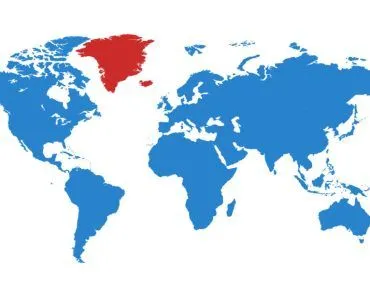
The Norse colonies in Greenland were marginal at best. The distance from Greenland to Vinland alone was over 2,500 kilometers, making it a daunting journey even for these seasoned sailors.
The logistical challenges of maintaining a settlement so far from their base in Greenland, let alone their original homes in Scandinavia—were immense. Long supply lines and the difficulty of supporting a remote outpost played a significant role in the Vikings’ decision to abandon their North American settlements.
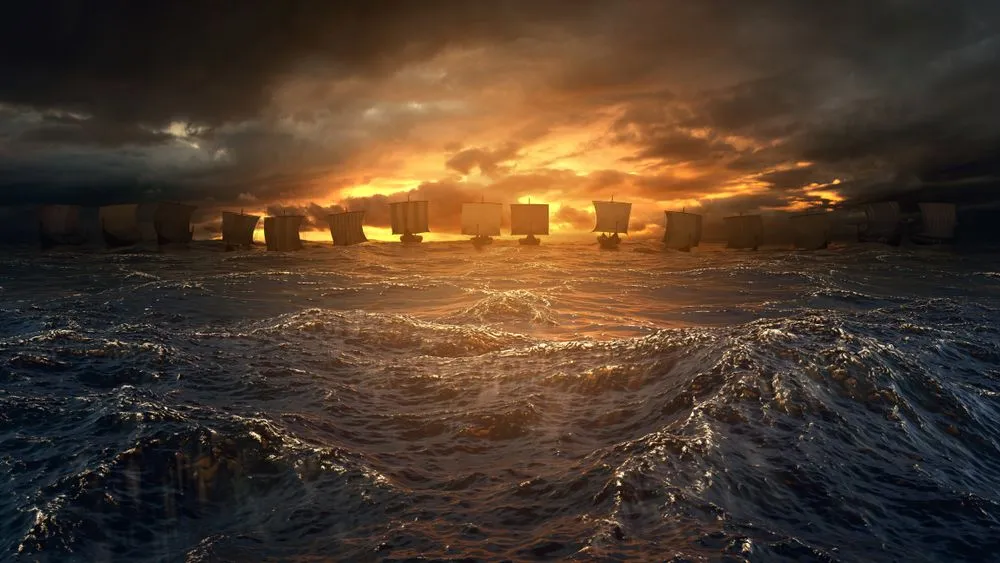
The effort required to extract and transport trade goods over such long distances may not have been worth the benefit, given the resources available closer to home in Norway or the British Isles, which were also under Norse influence.
The limited manpower of the Greenland colony was another issue. With a very small estimated population, there simply weren’t enough people to support an additional colony so far away. The population needed for hunting, building, and maintaining a settlement would have put a strain on their already limited resources.
Hostile Encounters
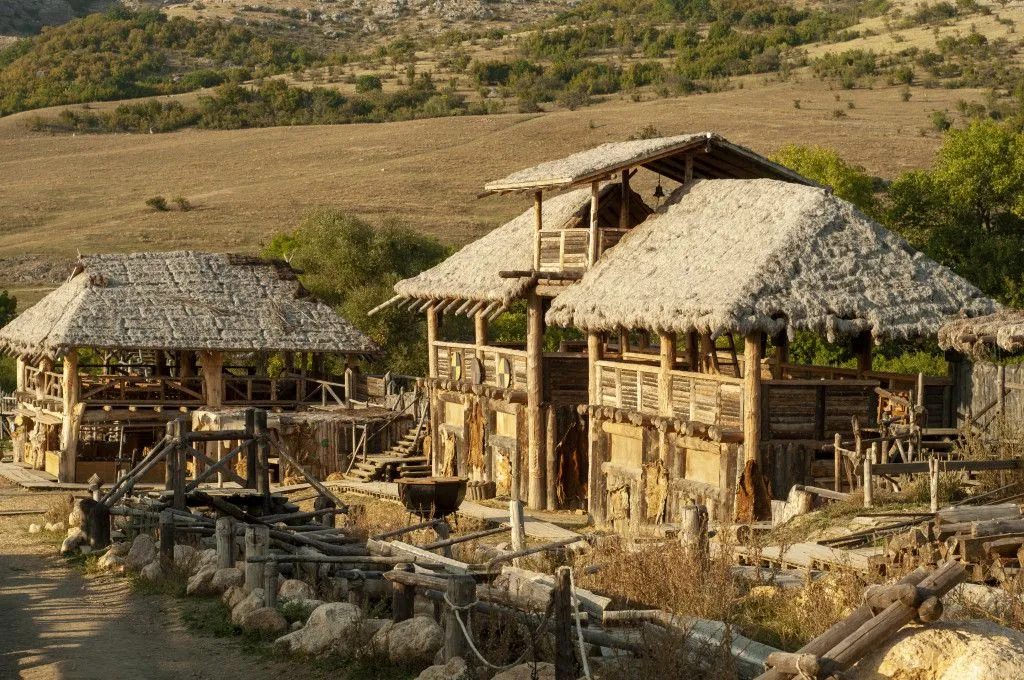
Encounters with the indigenous populations, whom the Norse called Skræling, were initially peaceful. However, the relationship soon deteriorated, leading to hostility. As reported in the sagas, a clash ensued when Vikings killed several natives who were found under their canoes, and this unfortunate encounter set the tone for future relations. The Norse were outnumbered and possibly outmaneuvered by populations that had adapted to the land for thousands of years.
Trade attempts failed to establish a stable relationship, and the Norse likely felt menaced by the larger native populations.
Climate Change
The climate posed another formidable challenge. The Vinland voyages around 1000 CE actually happened during the relatively warm Medieval Warm Period, which is part of how the Norse got to North America in the first place. By the late 1200s and 1300s, however, that warm window closed and the Little Ice Age set in. Greenland’s colonies, already fighting to survive in a harsh environment, struggled badly as temperatures dropped, sea ice expanded along sailing routes, and growing seasons shortened. The colder climate made any new push west towards Vinland more perilous and reduced the viability of even the Greenland settlements, which were eventually abandoned by the mid-1400s.
Cultural Dynamics
Another transformative force at play was the gradual spread of Christianity throughout Scandinavia. The old Norse religion, with its pantheon of gods like Odin, Thor, and Freyja, had been a driving force in Viking culture, influencing everything from social norms to motivations for raiding. The sagas and poetry of the time are replete with references to Valhalla and the glorious fate that awaited warriors in the afterlife. However, as Christianity began to spread, the ideological impetus that drove Viking expansion began to wane.
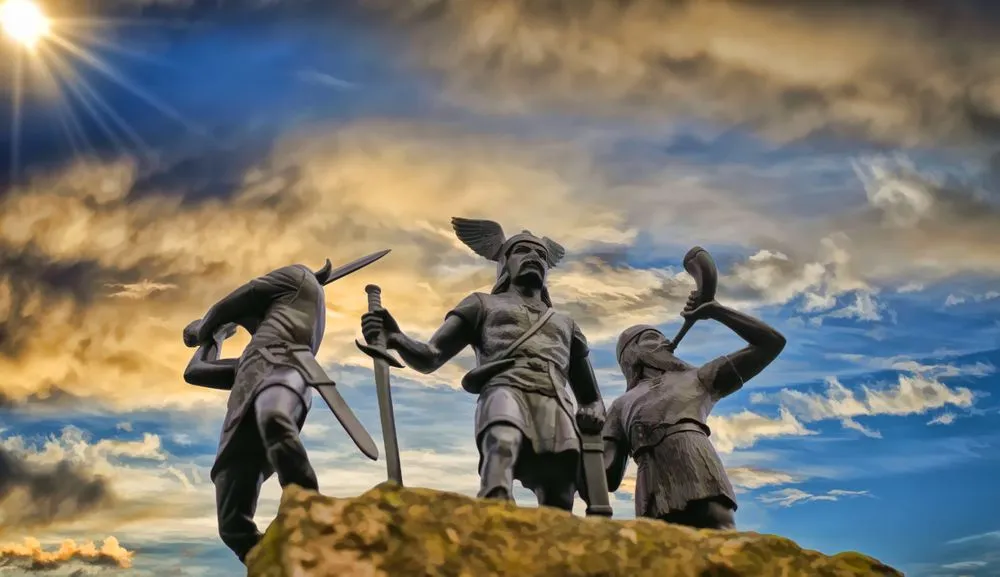
Christianization often brought with it the establishment of centralized monarchical or princely powers. Leaders who embraced Christianity sought to consolidate their control over Norse populations, pushing for more stability and structured governance. This shift in power dynamics meant that energies were redirected from raiding and exploration to the construction of a new societal order based on Christian ethics and European feudalistic structures.
The conversion to Christianity, often both a political and religious choice, helped Scandinavian kings integrate their realms into the broader European cultural and political landscapes, which in turn offered new opportunities and alliances.
The process of conversion was slow and uneven, but by the 11th century, it had made considerable inroads. Kings and chieftains who converted to Christianity would often establish churches and promote a more settled and agrarian way of life, in line with the Christian ethos of the time. The traditional Viking lifestyle of raiding and long-distance exploration was incompatible with this Christian ideal of a settled, God-fearing farmer or townsman. As the old gods receded, so did the old justifications for raiding distant shores.
We Now Know The Exact Year: 1021 CE
For decades the best estimate for when the Norse reached North America was "around the year 1000," based on the sagas and on rough radiocarbon dates from L’Anse aux Meadows. In 2021, a team led by Margot Kuitems and Michael Dee at the University of Groningen pinned the date down to the exact year: 1021 CE. Their Nature paper used wood samples from three trees at the site that had all been cut with metal tools (which the indigenous populations of the region did not have). The wood contained a sharp spike in radiocarbon caused by a major solar storm in 993 CE, which acts like a barcode in tree rings. By counting outward from that spike to the bark, the team could fix the cutting date precisely. It is now the first scientifically dated proof of Europeans in the Americas a full 471 years before Columbus.
When And Why Did The Viking Age End?
The retreat from Vinland was one small piece of a much larger unwinding. By convention, historians mark the end of the Viking Age at the Battle of Stamford Bridge on 25 September 1066, when King Harold II of England destroyed an invading Norwegian army led by King Harald Hardrada. Hardrada was killed, and of the 250 to 300 longships that had carried the invaders across the North Sea, only 24 were needed to take the survivors home. It was the last serious attempt by a Scandinavian king to conquer England, and the defeat has come to stand for the close of the raiding era, even though smaller Norse campaigns rumbled on for decades afterwards.

Several long-running trends brought the raids to a halt. The Christianization of Scandinavia, described above, gradually stripped away the cultural and religious rationale for plunder. At the same time, the kingdoms the Vikings had once caught off guard grew stronger and better organized, raising fortifications, standing defenses, and fleets of their own that made easy raiding far riskier. In several regions the Norse simply put down roots. The treaty that granted the Viking leader Rollo territory in what became Normandy in 911 CE turned raiders into landholders, and similar settlement across the British Isles folded Scandinavian newcomers into local society. As Scandinavia's own rulers built settled Christian states plugged into European trade and politics, the footloose life of the raider, and the scattered outposts it had thrown up in places like Greenland and North America, no longer had a world to sustain it.
Legacy And Memory
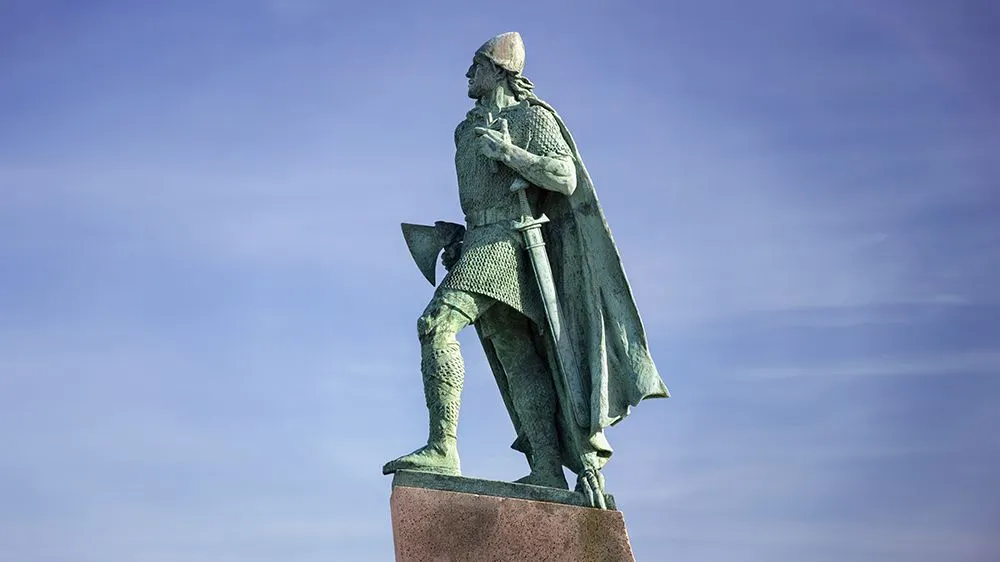
The historical record of the Vikings’ North American adventures faded into legendary sagas, a mixture of history and myth. While it was Leif Erikson and his contemporaries who set foot in North America first, it was Columbus who opened up the Americas for European powers that were poised for expansion. His voyages led to the sustained contact between the Old World and the New World, whereas the Viking attempt did not.
The archeological evidence at L’Anse aux Meadows is a testament to the Vikings’ North American ventures, but the sagas alone could not compete with the subsequent European conquests and their historical narratives. Thus, Columbus and not Erikson is often credited with ‘discovering’ America, a reflection of the historical impact, rather than the chronology of events.
Conclusion
The end of Viking expeditions and settlements in North America was not due to a single factor, but a combination of logistical, environmental, and sociopolitical challenges. Their story is a captivating episode in the larger narrative of human migration and exploration, serving as a reminder of the complexity of establishing human societies in new frontiers, a theme as relevant today as it was over a thousand years ago.
References (click to expand)
- Kuitems M, Wallace BL, Lindsay C, et al. Evidence for European presence in the Americas in AD 1021. Nature, 2021.
- Kelly, M., & Ó Gráda, C. (2013, November). The Waning of the Little Ice Age: Climate Change in Early Modern Europe. The Journal of Interdisciplinary History. MIT Press - Journals.
- McGhee, R. (1984, January). Contact between Native North Americans and the Medieval Norse: A Review of the Evidence. American Antiquity. Cambridge University Press (CUP).
- The Last Vikings - I.B. Tauris.
- Pedersen A.,& Sindbæk S. M. (2020). Viking encounters: Proceedings of the Eighteenth Viking Congress. Aarhus Universitetsforlag
- Viking Raids in Britain. World History Encyclopedia.
- Battle of Stamford Bridge. World History Encyclopedia.