Table of Contents (click to expand)
Industrialization and colonialism reinforced each other: colonies supplied raw materials like cotton and provided markets for factory goods, while industrial technology (steam power, railways and the telegraph) helped a handful of European powers build and hold empires. Historians still debate how central the colonies were, but the relationship clearly ran both ways.
Industrialization, as a phenomenon, emerged and encouraged great scientific and technological improvements, transforming the nature of, markets, consumption, and social and economic relations across the world. One side effect of industrialization was increased colonization of the ‘New World’… or was it perhaps colonialism that furthered the aims of industrialization?
The most workable explanation seems to be that it was a symbiotic relationship, where each fed off the other. Industrial growth increased the trade and resources at hand, which in turn helped a few European states extend and hold onto colonies that might otherwise have broken free.
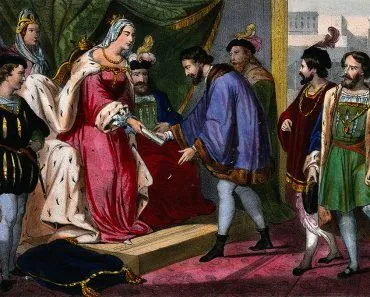
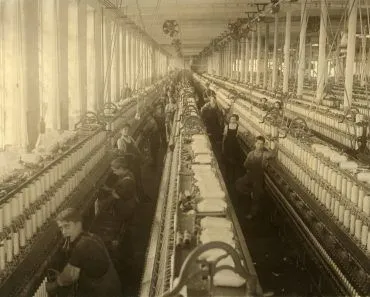
The 18th century saw a renewed push in Europe to colonize more and more land. It was also around this time that the first factories appeared in England, where Richard Arkwright opened the world’s first successful water-powered cotton mill at Cromford in 1771. Alongside this came a stronger pull of the colonizers’ economic goals into overseas markets for goods, investment and labor.
Chartered companies and monopolies, like Britain’s East India Company, channeled raw materials and profits back to the home country, often through coercion and one-sided trade terms. In the older “dependency” reading of this history, colonization was essentially a tool to industrialize the home country at the colony’s expense. Many economic historians now treat that as only part of the story (more on the debate below), but the flow of cotton, sugar and other commodities from colony to factory was real.
The Home-State’s Markets
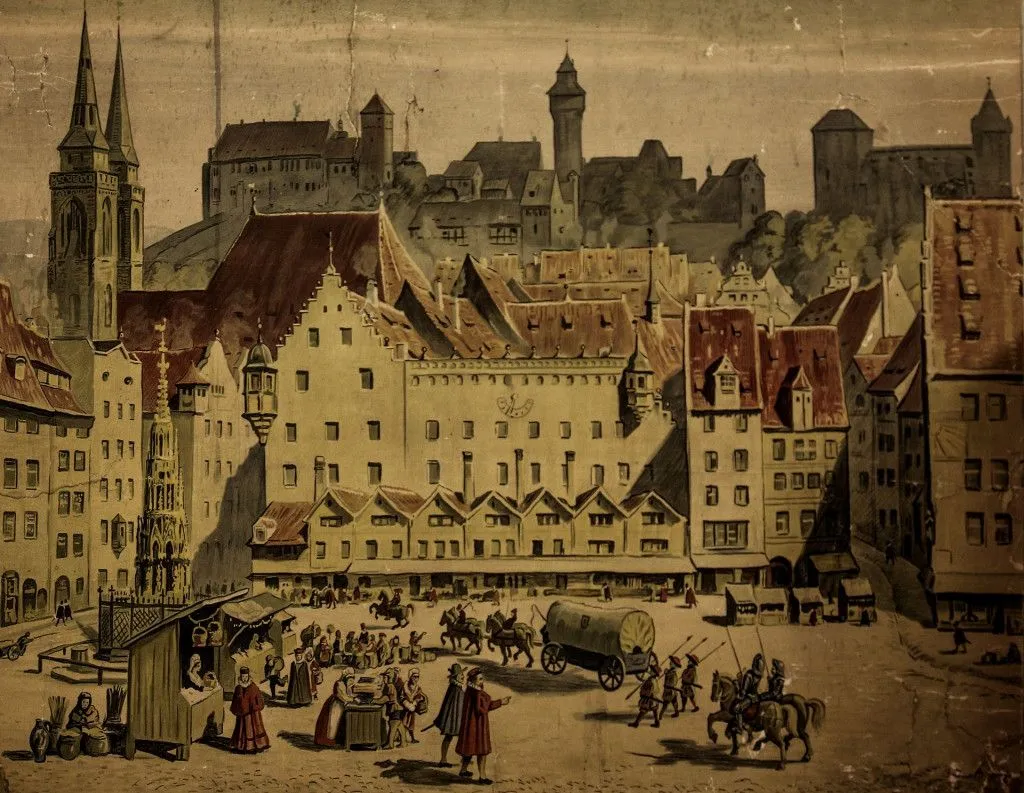
The success of the industrialization experiment depended not just on innovation, but also on inputs, which is where colonization kicked in. European countries, especially those with a weak agrarian base, looked for territories that would fill in the gaps of their supply chains.
The fertile lands of Egypt, India and elsewhere provided the perfect opportunity. Decades later, the Lancashire Cotton Famine of 1861 to 1865 made the point sharply: when the Union blockade of the American South during the U.S. Civil War cut off cotton imports, Britain’s cotton supply from the United States collapsed from about 70% of the total in 1860 to under 5% by 1862. That shock pushed Britain to lean harder on alternatives in India, Egypt and Brazil.
Even from the earliest days, a cotton mill like Arkwright’s needed a steady supply of raw cotton to keep running profitably, and almost none of it could be grown at home. Though technological change came slowly, the industries adopting it rarely stood still.
This was because the adoption of such inventions at a large scale required both the perfection of the invention and a popular, or general, will to set it up in multiple factories. However, there was resistance to technological advancements, which is how we got the term ‘luddite’ in our vocabularies.

The Local Markets
Once the supply constraints had been addressed by exploiting the untapped natural potential of the colonies, another problem was manifestly solved by furthering colonization.
Upon harvesting the raw materials from the colonies and shipping them to the home-state to be processed in factories, the final products, which were far better than their pre-industrial counterparts, needed to be sold somewhere. As is the foundational principle of capitalism, goods once manufactured must be sold, and the greater the market, the better the profit.
Colonies, therefore, became extended markets of the home-state (promoting industrialization when the demand for the goods was high), where surplus manufactured goods were often dumped in huge quantities at cheap prices. The cost of mass-manufactured factory goods was obviously significantly lower than that of the local, mostly labor-intensive cottage industries, leading to the popularity of the former and the steep decline of the latter.
India’s handloom and textile sector is the textbook example: its vast cottage industries and regional artisan trades struggled to compete with cheap, factory-made British cloth, and India shifted over the 19th century from a leading exporter of finished textiles to an exporter of raw cotton. (This “deindustrialization” is itself debated in its scale and causes, but the broad direction of travel is well documented.)
The pattern of exporting primary agricultural goods and importing finished factory-made goods in the colonies boosted not only the home-state’s economies, but also the culture of their industrialized workplaces, even though the colonies would not experience the full force of industrialization until after they stopped being colonies. Any pockets of industrialized towns and cities in the colonies were usually developed to feed the colonial network of demand and supply, and further facilitate the effective exploitation of the natural resources and the markets of the colonies.
Furthering Access To Colonies
The invention of the steam engine allowed for the colonial home-state’s influence and power to reach the very hinterlands of the colonies (the steam engine, along with the rifle, was a deadly combination indeed!). The economic and military edge of the colonizers is partly why less-industrialized regions, often armed with older weapons and tactics, struggled to repel a colonizing force that could move troops by steamship and outgun defenders with mass-produced firearms.
Had it not been for the railways in terms of transport, and the telegraph in terms of communication, colonial masters would have found it very difficult to maintain their control over the entirety of the colonies. The only effective access they would have had to the colonies would have been through ports (on shore and inland).
A Final Word
The rise of a handful of relatively small countries into economic giants would have seemed unlikely when set against the thriving populations and civilizations of Asia. As late as 1750, scholars like Kenneth Pomeranz argue, the richest parts of China were roughly as developed as the richest parts of Europe, and what tipped the balance was partly luck: Britain’s easy access to coal and to the resources and markets of the New World.
So did colonialism cause industrialization, or merely ride alongside it? Historians genuinely disagree. Pomeranz’s “Great Divergence” view stresses how much the colonies mattered, while skeptics such as Patrick O’Brien crunched the numbers and concluded that trade with the colonial “periphery” was only a few percent of Western European output, summing it up in the memorable line that, for the core’s growth, “the periphery was peripheral.” In that reading, home-grown factors (institutions, property rights, coal, useful invention) did most of the heavy lifting, with the colonies amplifying a process already underway.
What is not in dispute is that industrialization made the continued subjugation of lands thousands of miles away far easier to sustain. The technological edge it gave those empires, from steamships and railways to the rifle, let them project power cheaply. Without that logistical support, the sun would likely have set on these empires much sooner, though as residents of those former colonies will attest, better late than never!
References (click to expand)
- (2017) The industrial revolution was the force behind the New .... dc.cod.edu
- (1998) Colonialism and Industrialization: Empirical Results. mpra.ub.uni-muenchen.de
- Industrialization | History, Effects, & Facts | Britannica. britannica.com
- O'Brien, P. (1982) European Economic Development: The Contribution of the Periphery. Economic History Review. lse.ac.uk
- Pomeranz, K. The Great Divergence. Princeton University Press. press.princeton.edu
- Lancashire Cotton Famine. wikipedia.org
- Luddite | Britannica. britannica.com