The X chromosome is necessary for the survival of a fetus because it carries genes that are essential for various functions, such as the formation of muscle and the immune system.
After hours of being in labor, a woman finally gives birth to a tiny, mewling baby, and then comes the inevitable joy of discovering whether it is a baby boy or girl. While some parents have their preferences, others consider babies a gift of God and are perfectly happy with either gender. Celebrations then ensue and people rejoice as they celebrate the miracle of life.
However, let’s look at this whole thing on a microscopic level. Do males have any part of females in them? If yes, does that make them half-female? Specifically, why do males have one of the same chromosomes as females?
Sex Determination
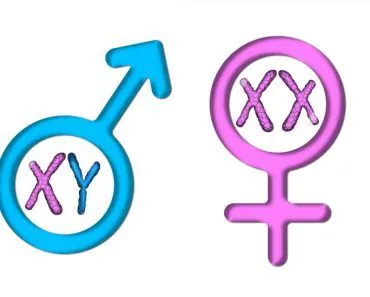
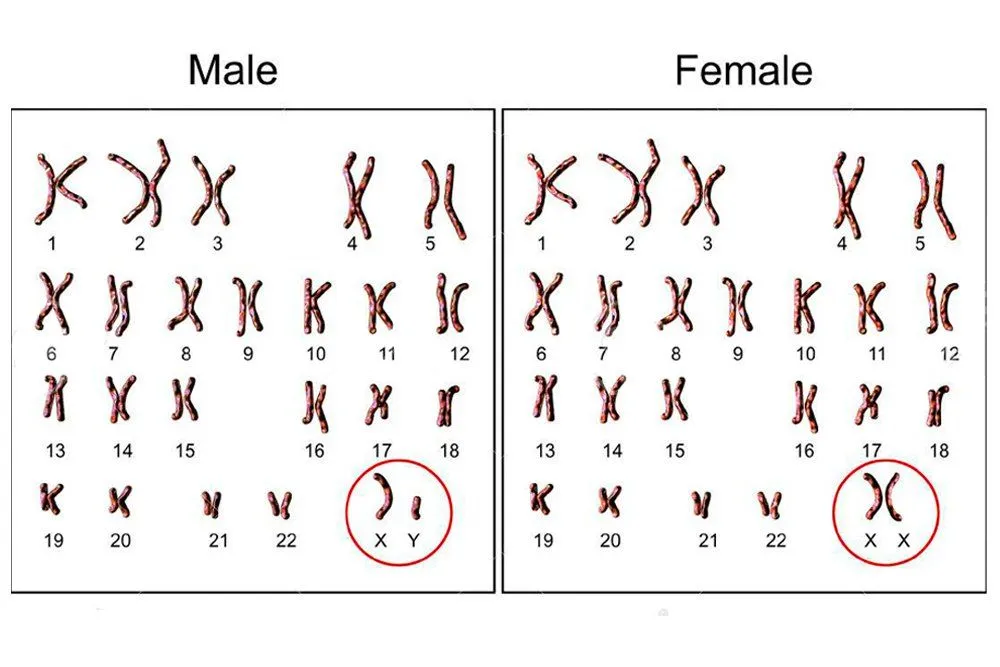
Humans have 46 chromosomes, which exist in pairs. Therefore, we have 23 pairs of chromosomes. Of these, 22 are called autosomes, and one pair is called the sex chromosomes. Autosomes determine our characteristics, such as height, hair color, skin color, metabolic rate, etc. while the sex chromosomes determine the sex of the individual. There are 2 sex chromosomes – X and Y. Females have 22 autosomes and two X chromosomes, i.e., 22 + XX, while males have 22 autosomes and an X and Y chromosome each, i.e., 22 + XY.
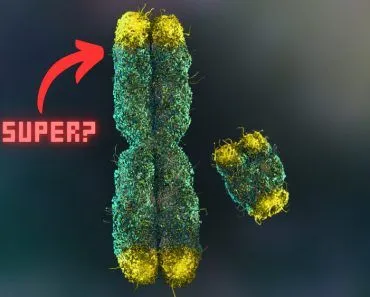
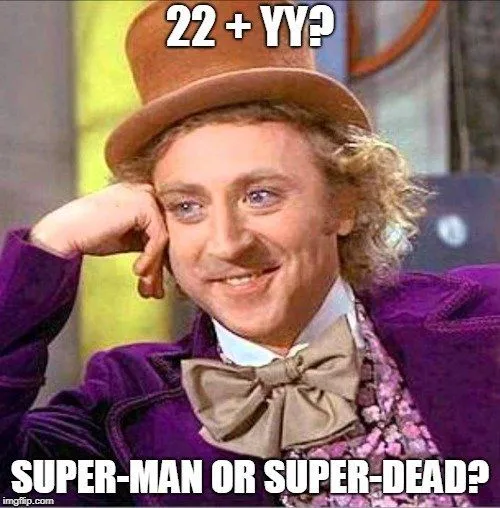
This therefore proves that X is the female chromosome, and Y is the male chromosome. Why then, are men not YY? Does having an X chromosome make them only half men? Or would having YY make them super-men?
Why Isn’t YY Possible?
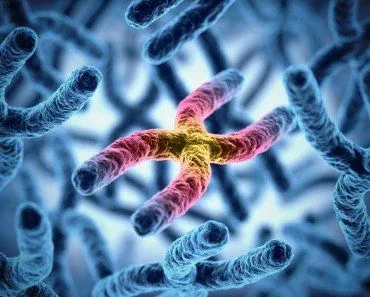
While they are called sex chromosomes, the X and Y chromosomes also carry information for purposes apart from sex determination. Let’s do a brief recap before we delve into these details. Chromosomes are the genetic material in our cells. Each chromosome has a large number of genes on it, which are the actual information-carrying structures.
While our sex chromosomes are responsible for determining our sexual nature, they also have genes for various other functions. These functions may or may not be related to our sexual nature and development. Now, here is where the tricky part begins. The X chromosome has about 800-900 protein-coding genes, in contrast to the Y chromosome, which has only about 107 protein-coding genes (as revealed by the first complete sequencing of the Y chromosome in 2023). That's a staggering imbalance.
The X chromosome has certain genes on it that are imperative for the survival of the fetus. Therefore, for any individual to survive, it requires at least one X chromosome. If an organism is YY, it won’t be a super-man, it would just be super-dead!
What Genes Are Missing On The Y Chromosome?
There are approximately 19,000-20,000 protein-coding genes in humans. The X chromosome has approximately 5% of the DNA required for a person to survive, while the Y chromosome has less than 2%. Obviously, without an X chromosome, the individual would perish, but are the genes on the X chromosome even that important?
The X chromosome has a gene known as DMD, which is responsible for the formation of Dystrophin, a protein. Dystrophin is required for the formation of the skeletal and cardiac muscles. It strengthens the muscles and protects them from damage. It is also present in small amounts in the nerves of brain cells.
Another critical gene is the CYBB gene. This codes for the formation of a protein known as cytochrome b-245 beta chain. This protein is a key part of an enzyme complex called NADPH oxidase, which is an essential part of the immune system.
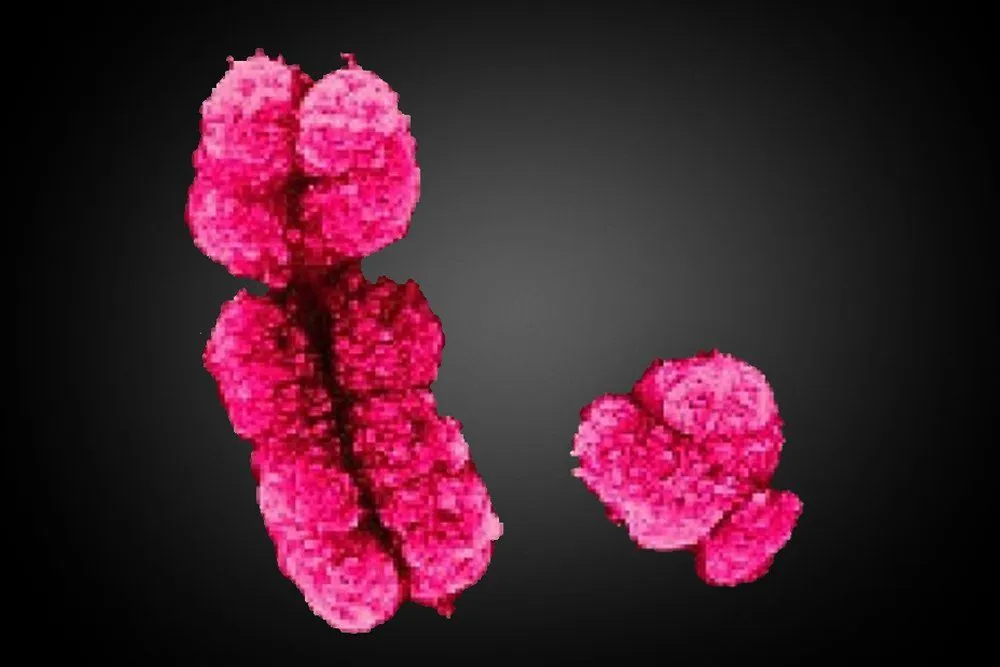
These are just 2 among a number of genes that are missing from the Y chromosome. As is clearly evident, without these genes, it is impossible for a human to survive, so every individual requires at least one X chromosome. Although the Y chromosome lacks these genes now, there was a time when it did have the required genes for the normal survival of a human. Unfortunately, over the course of 300 million years of evolution, it lost almost 95% of its genes. However, that is a topic for another time!
Can A Man Have Two X Chromosomes? (And Other Variations)
So far we’ve treated XX and XY as the only two options, but nature isn’t quite that tidy. Sometimes an egg or sperm carries an extra sex chromosome or is missing one, and the resulting person ends up with a count that isn’t the textbook 46. These are called sex chromosome aneuploidies, and they’re more common than most people realize.

The most common one is Klinefelter syndrome (47,XXY), where a person has two X chromosomes and a Y. Because that Y carries the male-determining instructions, these individuals develop as males, so yes, a man can absolutely have two X chromosomes. According to MedlinePlus, Klinefelter syndrome affects about 1 in 650 newborn boys, making it the most common sex chromosome disorder, and many cases are never diagnosed. Features can include taller-than-average height, smaller testes, lower testosterone, and reduced fertility.
The other variations follow the same logic. In 47,XYY syndrome (sometimes called Jacobs syndrome), a boy has an extra Y; it occurs in roughly 1 in 1,000 newborns, and most of these men have typical development and can father children. Trisomy X (47,XXX) gives a girl a third X chromosome, again at about 1 in 1,000 female births, usually with few or no obvious features. And in Turner syndrome, a girl has a single X and is missing the second sex chromosome (written 45,X), which occurs in about 1 in 2,000 female newborns and is associated with short stature and reduced ovarian function. ScienceABC has a related piece on whether the XX/XY system even works the same way across the animal kingdom.
Can You Be XX And Male, Or XY And Female?
Here is where the neat “X is female, Y is male” rule from earlier starts to wobble. It turns out that maleness doesn’t come from the Y chromosome as a whole, but from a single gene riding on it called SRY (the sex-determining region Y). The SRY gene makes a protein that switches on the program for building testes. Flip that switch and the embryo develops as male; leave it off and it develops along the female pathway. The chromosomes are really just the usual carriers of that switch, not the switch itself.
This is why exceptions exist. Sometimes, during sperm formation, the SRY gene gets accidentally copied onto an X chromosome. A child who inherits that X ends up with two X chromosomes but still develops as male, a condition called 46,XX testicular difference of sex development (historically known as de la Chapelle syndrome). MedlinePlus reports it in roughly 1 in 20,000 people who appear male, and about 80% of cases carry a misplaced SRY gene.
The mirror image also happens. In Swyer syndrome (46,XY complete gonadal dysgenesis), a person has both an X and a Y chromosome, but their SRY gene is missing or broken. Without a working SRY signal, the testes never form, and the individual develops a uterus and fallopian tubes despite being chromosomally XY. So the honest answer to “which chromosome makes you male?” is: usually the Y, but really the SRY gene it carries, which is why the rule has exceptions. If you’re curious how chromosomes relate to identity more broadly, we’ve also written about the difference between sex and gender.
If Females Have Two X Chromosomes, Why Aren’t They “Double-Dosed”?
We said the X chromosome carries hundreds of essential genes, and that one X is enough to keep a person alive. That raises an obvious puzzle. If a single X is sufficient, what happens in females, who carry two? Wouldn’t a double dose of all those X-linked genes throw everything out of balance?

The body solves this with an elegant trick called X-chromosome inactivation. Early in development, each cell in a female embryo randomly switches off one of its two X chromosomes. That silenced X condenses into a tight, dense little package called a Barr body, and stays switched off in all the cell’s descendants. The result, first proposed by geneticist Mary Lyon, is that every cell, male or female, runs on effectively one active X. This balancing act is known as dosage compensation.
You can actually see this happening, and the clearest example wears fur. Calico and tortoiseshell cats are almost always female, and their patchwork of orange and black is a direct readout of X inactivation: the coat-color gene sits on the X chromosome, and in each patch of skin a different X has been switched off. So the reason females aren’t harmed by carrying two X chromosomes is the same reason a calico cat has its colors, and it’s the same reason a single X is enough for everyone: the cell only ever needs one working copy.
References (click to expand)
- Can a Zygote Survive Without an X Sex Chromosome?. The Seattle Post-Intelligencer
- Wilson Sayres, M. A., & Makova, K. D. (2012, December 4). Gene Survival and Death on the Human Y Chromosome. Molecular Biology and Evolution. Oxford University Press (OUP).
- CYBB gene: MedlinePlus Genetics. MedlinePlus
- DMD gene: MedlinePlus Genetics. MedlinePlus
- Klinefelter syndrome: MedlinePlus Genetics. MedlinePlus
- Turner syndrome: MedlinePlus Genetics. MedlinePlus
- 47,XYY syndrome: MedlinePlus Genetics. MedlinePlus
- Trisomy X: MedlinePlus Genetics. MedlinePlus
- SRY gene: MedlinePlus Genetics. MedlinePlus
- 46,XX testicular difference of sex development: MedlinePlus Genetics. MedlinePlus
- Dosage Compensation: Transcriptional Regulation of an Entire Chromosome. Developmental Biology, NCBI Bookshelf.
- X Chromosome. National Human Genome Research Institute (NHGRI).