Table of Contents (click to expand)
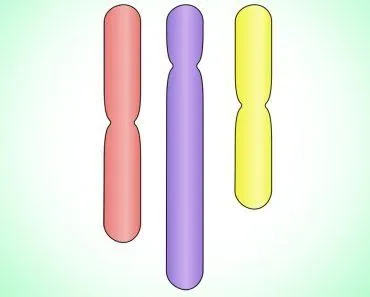
Homologous chromosomes (also called homologs) are a matching pair of chromosomes, one inherited from the mother and one from the father, that have the same length, centromere position and genes in the same order. They may carry different alleles of those genes, which drives the genetic variation seen in offspring.
In order for cell replication to occur, chromosomes from both the mother and the father must be duplicated so that new, theoretically identical cells can be produced that boast both sets of genetic material.
Homologous chromosomes, sometimes simply called homologs, are pairs of chromosomes of a similar length and centromere position that carry the same genes in the same order, or loci. The catch is that the two copies can hold different versions, or alleles, of those genes. That mismatch is exactly what produces genetic variation in offspring, and both members of the pair direct phenotypic effects in the organism.
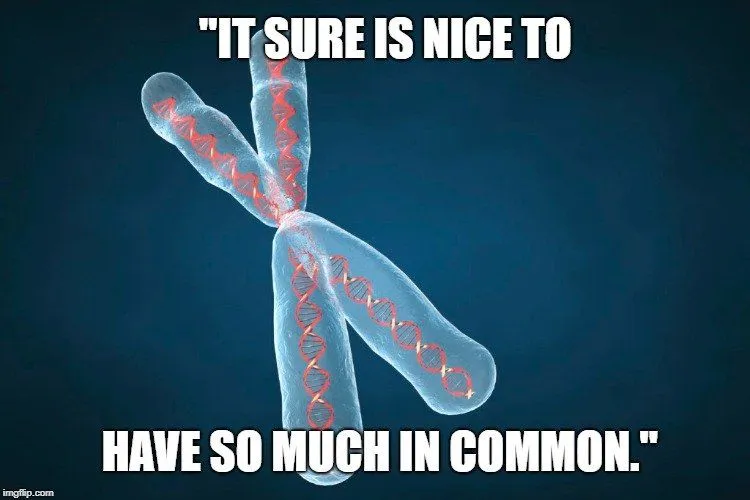
As many of you likely know, human cells carry 23 pairs of chromosomes, for a total of 46. Of those, 22 pairs are autosomes and one pair is the sex chromosomes. The two members of each pair are the homologous chromosomes, one coming from your mother and one from your father. A quick distinction worth keeping straight: the 22 autosome pairs are truly homologous in everyone, and so is the XX pair in females, but in males the X and Y are only partly homologous, since they differ in size and gene content.
Homologous Chromosomes In Meiosis
In meiosis, homologous chromosomes play an extremely important role, as their presence and interactions allow for the genetic variability that we see in offspring; in other words, the interactions of the homologous chromosomes are the reason why two siblings will never look exactly the same, unless they are twins, of course. To understand this properly, we’ll have to briefly look through the process of meiosis and the actions/movements of these chromosomal pairs.
By the first stage of meiosis (prophase I), all the DNA has already been replicated in the cell, meaning that all of the potential homologs are present, each one now consisting of two identical sister chromatids joined at their centromere. This is the distinction that trips most students up: sister chromatids are exact copies of a single chromosome, whereas the two homologs in a pair are merely similar (not identical), because one came from each parent.
In prophase I, the homologous chromosomes (one from the father and one from the mother) will pair up with one another. At this point, synapsis can begin, which consists of a protein infrastructure forming to hold the pairs together. Different parts of the homologous chromosomes will “cross over” and exchange certain chunks of genetic material.
These exchanges take place at sites called chiasmata, which bind the chromosomes until all the recombination events are finished at that location.
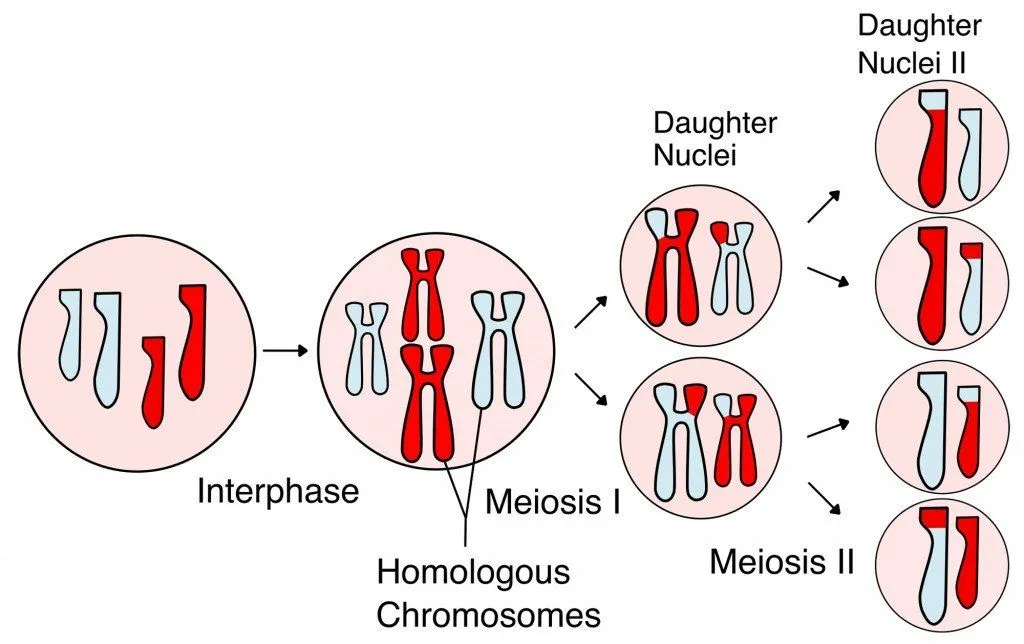
Once the exchange of homologous sections of the chromosomes is complete, the protein network holding the two homologous chromosomes together will dissipate, allowing them to separate once again.
At this point, once the cell enters metaphase, the homologous chromosomes will begin lining up in pairs along the metaphase plate, guided and controlled by the spindles, which emerge from the centromere.
In the final stage of meiosis I, anaphase, the homologous chromosomes are pulled apart into their respective daughter cells. In meiosis II, those individual homologues, composed of two sister chromatids that have had recombination diversity introduced, will be pulled apart during anaphase II. The end result of meiosis will be 4 unique haploid cells, which will go on to act as gametes.
Homologous Chromosomes In Mitosis
Although the general purpose of homologous chromosomes is the same in somatic and sex cells, their role and activity in mitosis is slightly different than in meiosis. Furthermore, errors that may affect these chromosomal pairs will also have different effects between these two forms of cell division.
In mitosis, all of the chromosomes will replicate themselves, but the homologous chromosomes won’t necessarily line up and undergo genetic recombination, also known as crossing-over, which is seen in meiosis. This can happen between multiple chromosomes or different segments of the same chromosome.
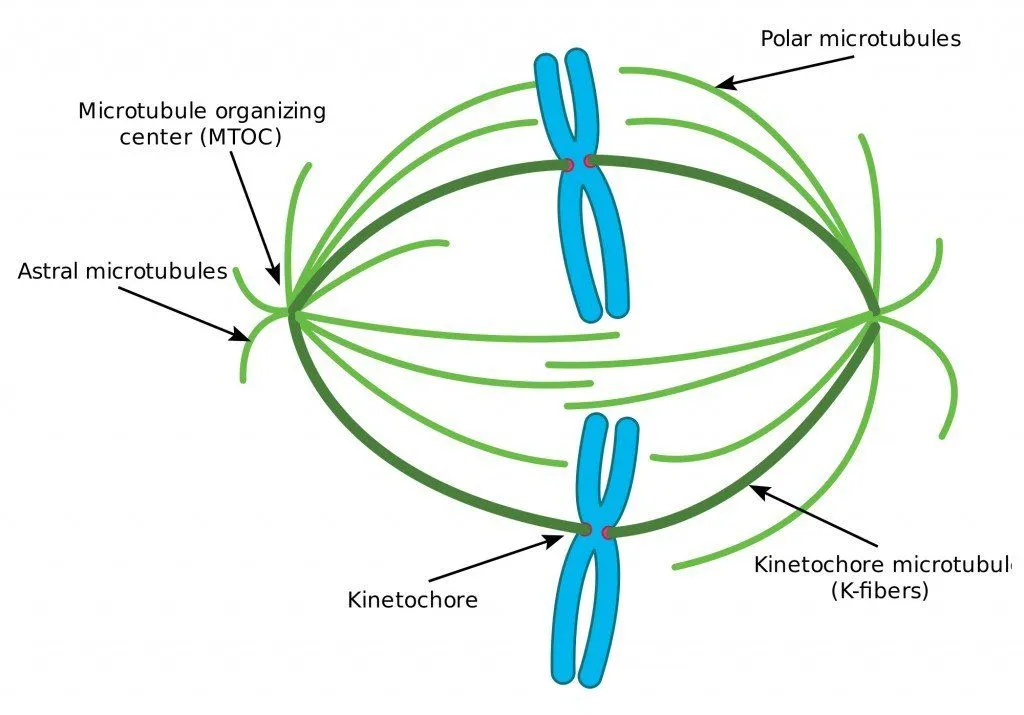
Rather than this recombinative step, all the sister chromatids (unpaired with its homologue) in mitosis will line up along the metaphase plate and allow the centromeres to pull them apart at the centromeres. Each subsequent daughter cell will contain one complete set of chromosomes.
Problems With Homologous Chromosomes
Clearly, these pairs of homologues are important for the genetic diversity of organisms, but when something goes wrong with these chromosomes, there can also be negative side effects. For example, if these homologous chromosomes aren’t separated properly during meiosis I, the resulting daughter cells will have an abnormal number of chromosomes. This sort of “failed separation” is called nondisjunction, which you can learn about in detail here.
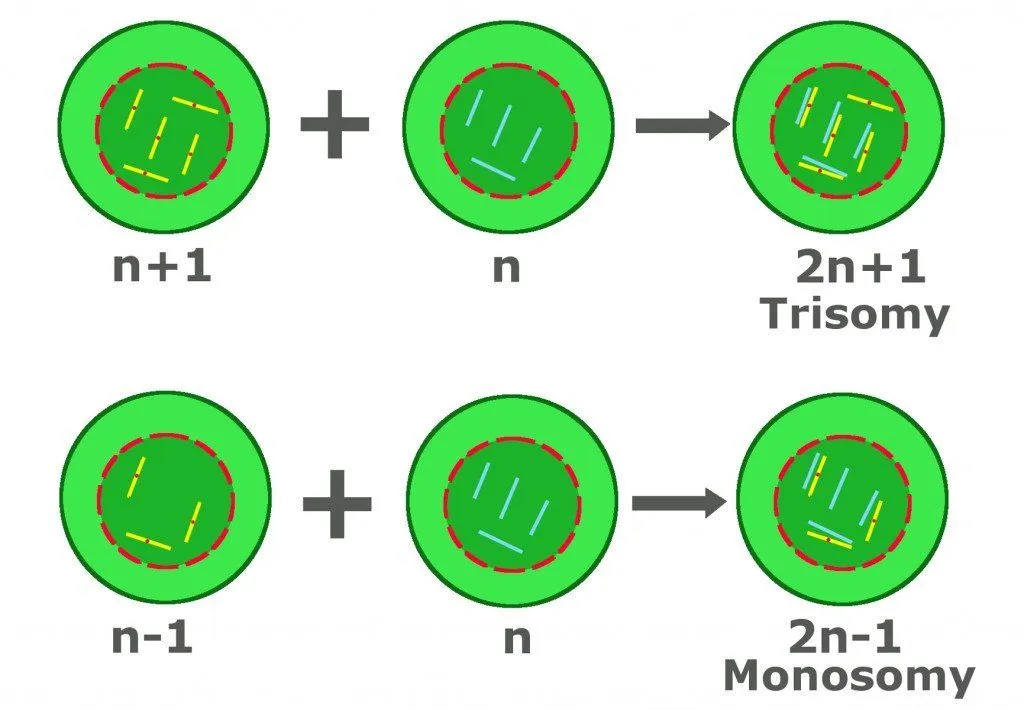
Similarly, if the individual homologues don’t separate into their respective sister chromatids during meiosis II, the resulting daughter cells will also have either too many or too few chromosomes, conditions called trisomy (three copies of a chromosome) and monosomy (a single copy). Collectively, having the wrong chromosome count is known as aneuploidy. For the most part, the actions and movements of homologous chromosomes are closely controlled by internal mechanisms of the cell, but errors can occur, resulting in a number of genetic conditions. Down syndrome, for instance, is a trisomy of chromosome 21, and roughly 90% of cases trace back to nondisjunction during the mother's meiosis. In other cases, errors related to the exchange and replication of these homologous chromosomes can result in death or miscarriage.
A Final Word
As humans, it is important to look at the world around us, as well as the infinite worlds within us. Our cells and their self-sustaining replication process is one of the most remarkable parts of our existence. Therefore, understanding these processes, and the key components they involve, provides insight to everything from the diseases that affect us to the color of our eyes we use to see the world!
References (click to expand)
- homologous chromosomes definition.
- Gandhi, M., Evdokimova, V. N., T.Cuenco, K., Nikiforova, M. N., Kelly, L. M., Stringer, J. R., … Nikiforov, Y. E. (2012, May 29). Homologous chromosomes make contact at the sites of double-strand breaks in genes in somatic G 0 /G 1 -phase human cells. Proceedings of the National Academy of Sciences. Proceedings of the National Academy of Sciences.
- Gerton, J. L., & Hawley, R. S. (2005, June). Homologous chromosome interactions in meiosis: diversity amidst conservation. Nature Reviews Genetics. Springer Science and Business Media LLC.
- How many chromosomes do people have? MedlinePlus Genetics. U.S. National Library of Medicine.
- Autosome. National Human Genome Research Institute (genome.gov).