Table of Contents (click to expand)
The link between weather and joint pain is real but modest, and the science is still mixed. The largest study to date found people with chronic pain were about 20% more likely to hurt on humid, windy, low-pressure days, with humidity the strongest factor and temperature showing little effect. The leading idea is that falling barometric pressure lets tissue around a joint swell slightly, but this remains an unproven hypothesis.
You have probably heard the adults in your house, especially your grandparents, complain about the pain of an old injury in certain parts of their body when the weather turns.
People report flare-ups in all sorts of conditions, but the complaints tend to cluster around damp, cold weather and the hours before a storm rolls in. In fact, the grandfather of a friend of mine can predict an approaching rainstorm when a particular spot on his knee begins to ache. Strangely enough, he is often correct!

Why do fractured bones hurt so much in certain weather conditions? Is there any real connection between joint pain and weather conditions, or is it purely psychological?
Short answer: There does seem to be a link between joint pain and changes in the weather, but it is modest and the evidence is mixed. There is no proven theory of how it works. The leading hypothesis blames a drop in barometric pressure ahead of a storm, while the largest study to date points to humidity as the strongest factor.
Pain In Bone Joints And Old Injuries Due To Changes In Weather
You may have heard arthritis patients complain about how their affected body parts get tensed and flared when the sky turns cloudy or the air becomes too humid. Even in your own case, you may have observed that certain old injury spots start to ache in particular kinds of weather.
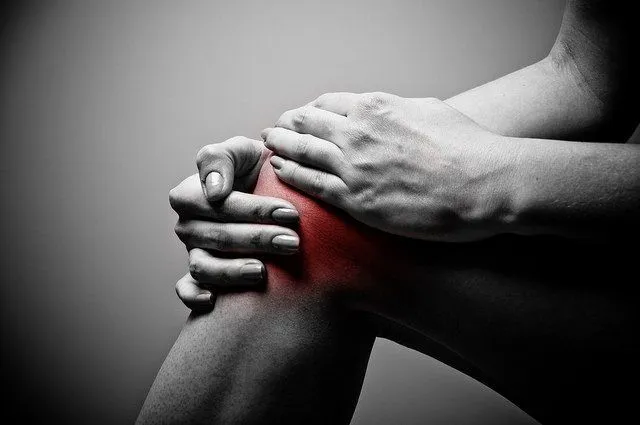
As mentioned earlier, the link feels so strong to some people that they swear they can predict a change in the weather from their joints… and sometimes they are right!
So is there really something to it? When researchers have put the idea to the test, the picture turns out to be more complicated than the folklore suggests. There does appear to be a connection, but it is a weak one, and explaining how it might work has mostly come down to a single popular hypothesis.
Changes In Barometric Pressure And Joint Aches
Barometric pressure is the force exerted by the atmosphere at a given point. It is measured by a device called a barometer.
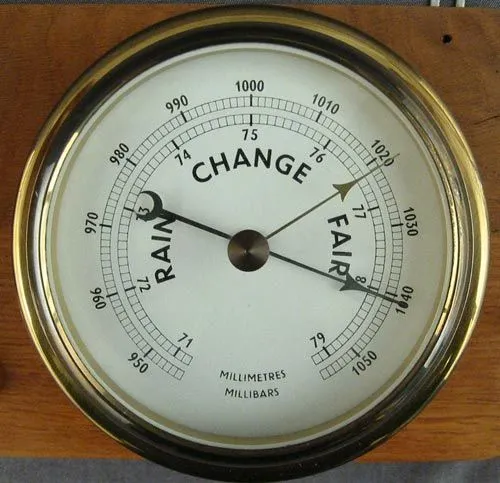
In simple words, barometric pressure is the weight of the air that surrounds and pushes down on us. Its magnitude varies with humidity and altitude.
A gradual increase in the barometric pressure is usually seen as a sign of improving weather, while a dip in the barometric pressure may reflect imminent inclement weather. The barometer “falls” (i.e., there is a drop in the barometric pressure) before the onset of rains or in stormy weather conditions.

A drop in the barometric pressure before a storm causes the atmosphere to push less against the body, which allows the tissues around the joints to expand. These expanded tissues may then press on the surrounding nerves, resulting in a painful sensation or ache in that joint. (Note: this is just a hypothesis as to how dipping barometric pressure can cause joint pains and is not experimentally proven as of now.)
Barometric pressure is not the only suspect. The largest study on the subject, the UK Cloudy with a Chance of Pain project, tracked the daily symptoms of thousands of people through a smartphone app and matched them to local weather. It found that people with long-term pain were about 20% more likely to hurt on days that were humid, windy, and low in pressure. High relative humidity turned out to be the strongest factor, while temperature, the variable most people blame, showed no link once the figures were averaged across everyone.
Even though the relation between weather and joint pain has been under scientific scrutiny for the better part of a century, we still have not pinned down a consistent, reliable effect. A systematic review of studies on rheumatoid arthritis, tellingly titled Does rain really cause pain?, found no relationship at all between weather and reported pain when the data were pooled across patients, even though a minority of individuals did seem to be sensitive to it.

There are several reasons behind this: first, the swelling and discomforting sensation associated with changing weather occurs at too small of a scale to be objectively detected and measured by researchers. Therefore, they have to count on people’s subjective descriptions of their pain, which cannot be relied upon completely to derive 100% accurate conclusions.
What makes things even more difficult is that people respond differently to the same set of environmental conditions. While many people complain about their bone joints when the barometric pressure drops, there are plenty of folks who experience pain when the pressure rises. In other words, there are a lot of mixed and even contradictory responses to the same set of weather conditions, which exacerbates the debate further.
Furthermore, it’s not as if barometric pressure is the only variable in question here; we don’t know for sure which combination of weather conditions is the most discomforting.
Overall, we don’t know exactly why changing weather lines up with sore joints for so many people, especially those with arthritis, or even whether the weather is truly causing the pain rather than simply coinciding with it. What we can say is that the experience is real and widespread. On a lighter note, plenty of folks still trust their aching knee over the forecast!
References (click to expand)
- Winter Aches and Pains | University of Utah Health. The University of Utah
- Dixon, W. G., Beukenhorst, A. L., Yimer, B. B. et al. (2019). How the weather affects the pain of citizen scientists using a smartphone app. npj Digital Medicine. NCBI.
- How Changes in Weather Affect Joint Pain. Cleveland Clinic.
- Smedslund, G., & Hagen, K. B. (2011, January). Does rain really cause pain? A systematic review of the associations between weather factors and severity of pain in people with rheumatoid arthritis. European Journal of Pain. Wiley.