Our bodies have evolved to endure the atmospheric pressure, and we don’t feel it. However, if our bodies were just empty shells, they would be crushed under the weight of the atmospheric pressure.
One kind of pressure affects everyone on Earth, including superheroes like Hulk, Iron Man, and Captain America.
Although the air encompassing us may appear weightless, it is far from being so. Why do we assume that air is weightless? Does it not possess the right to have some weight of its own? After all, the atmosphere is a part of our planet, containing numerous gases in varying amounts.
Weight Of The Atmosphere
Air comprises an enormous number of molecules, which may be small but still possess some weight. Despite a single molecule being extremely light, many air molecules constantly press down on us. This means that we have a large number of air molecules that, while individually light, become heavy in great numbers.
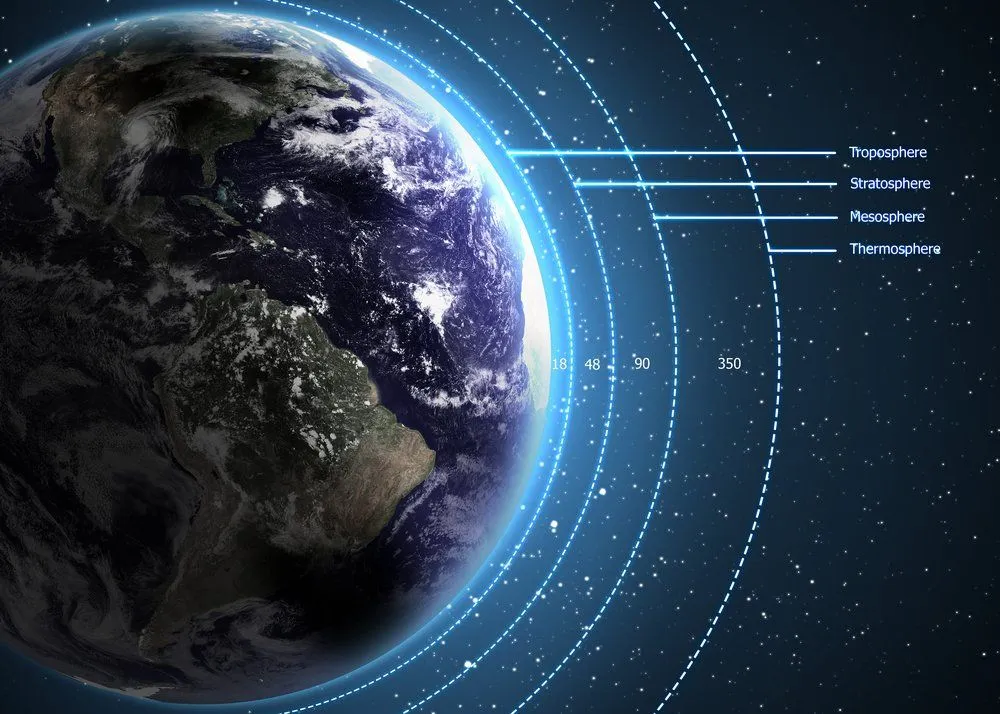
Have you ever felt the pressure of lifting something very heavy on your shoulders or head? This is similar to how atmospheric pressure works. Thousands of air molecules are constantly pressing down on us, and the standard value of atmospheric pressure at sea level is 14.7 pounds per square inch. To put it into perspective, it’s like carrying a small car on your head all the time.
You may wonder why we don’t feel this pressure.
Does Air Really Have Weight?
It feels absurd to say that nothing weighs something, yet air is anything but nothing. The entire atmosphere has a mass of roughly 5 × 10¹⁸ kilograms (about 5 quintillion kg, or some 11 billion billion pounds). That is a staggering figure, and it is also why the popular question “is air weightless?” has a firm answer: no. Air absolutely has weight, and the pressure we measure at the surface is simply that weight pressing down.

Before that number scares you, here is the reassuring part: all that air is only about one millionth of the total mass of Earth. Astronomers like to compare it to the fraction of your body mass made up by the hair on your head, a thin film draped over a very large planet. When that film is gathered under gravity into the column of air sitting above any one spot, it works out to a familiar value. Each square centimeter of the surface carries roughly 1.03 kg of air above it, which is exactly the 101,325 pascals (14.7 psi) of standard sea-level pressure we keep mentioning. So when people ask why atmospheric pressure on Earth exists at all, the honest one-line answer is simply this: gravity is pulling down on a very deep, very real ocean of air, and you live at the bottom of it.
Equilibrium: The Great Equalizer
The air around us exerts pressure on our entire body. However, what is fascinating is that the same amount of pressure is exerted back onto the air molecules by the inside of our bodies, creating a state of equilibrium.
Simply put, the human body has evolved over time in the presence of air and in accordance with the pressure exerted upon it. If the human body were an empty shell, it would have popped like a tin can under our atmospheric pressure. (That is exactly what happens in the classic high-school demo where a tin is half-filled with steam, capped, and then collapses as it cools, because the outside air has no inside air to push back against.) But that doesn’t happen to us.
This means that there is a certain equalization of pressures involved, which is why there is no pressure difference and why we don’t feel burdened down by air. The pressure of the air outside our body is the same as that of the air inside our body. The air that is constantly present in our lungs, ears, and nose has the same atmospheric pressure as the air on the outside of our ears, nose, and chest. Since there is no pressure difference, we don’t feel anything at all as far as atmospheric pressure is concerned.
This is also the reason a sturdy desk, a closed book or a tightly screwed jar on your shelf doesn’t get crushed by atmospheric pressure. Air pushes on every face of the object from all directions at once (a consequence of Pascal’s principle), so the downward push on the desktop is cancelled by an equal upward push from underneath, and the trapped air inside the jar pushes back outward. As long as nothing seals the inside air out (as in the steam-can demo), the forces add to zero and the object stays comfortably uncrushed.
When There Is A Pressure Difference…
You understand by now that you don’t feel the atmospheric pressure due to an absence of a pressure difference between the external air and the air that’s inside your body, which we’ll call ‘internal air’.
However, what happens if there is a pressure difference? Is it rare or dangerous?
In fact, pressure changes are quite common, especially if you are a frequent flier. You may have experienced it when your ears ‘pop’ during takeoff or landing. This is due to a change in external and internal air pressure. As you gain altitude, the pressure in your ear becomes unequal to that in the aircraft’s cabin. This can be uncomfortable and make it difficult to hear.
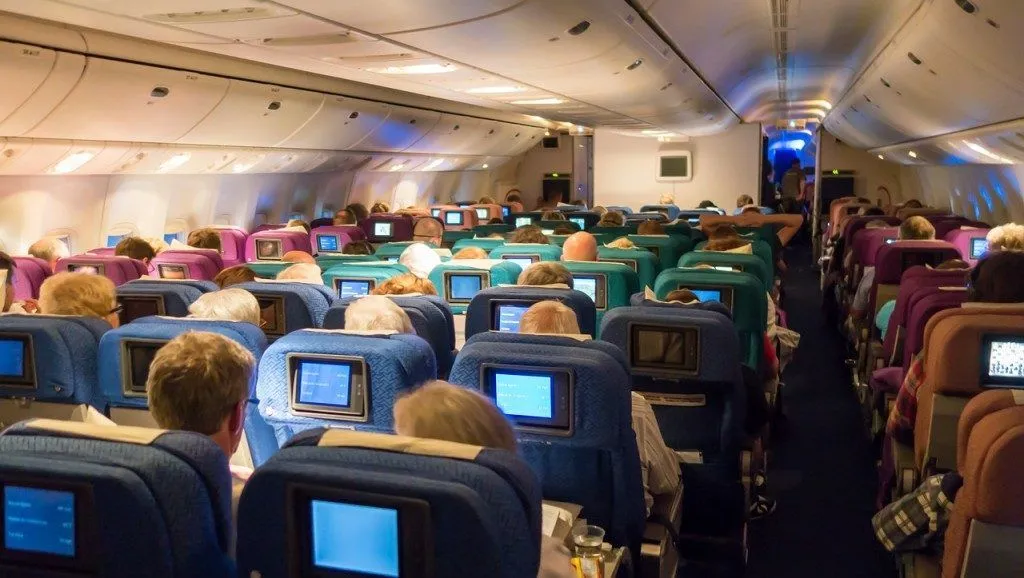
There are many other instances of changing air pressure, most of which primarily affect the nose and ear. There is no ‘cure’ for it, per se, but certain methods could definitely help you open your eardrums and get the pressure back to normal. One such technique involves closing the nostrils and mouth and gently blowing air through the nose. Big yawns also help to ‘un-pop’ the ears.
What Happens If The Pressure Difference Becomes Extreme?
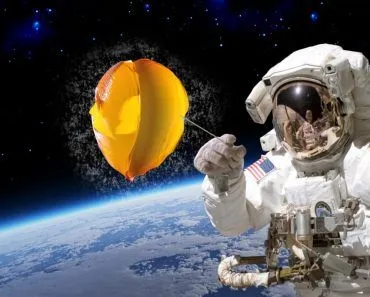
A popping ear is a gentle pressure difference. But push the imbalance far enough in either direction and the friendly equilibrium that protects you turns lethal, which is also the honest answer to why we couldn’t live without atmospheric pressure. Take it all away and the trouble starts surprisingly low. There is an altitude called the Armstrong limit, around 18.3 km (about 60,000 ft, or 11.4 miles), where the surrounding pressure drops so low that water boils at normal body temperature (37 °C / 98.6 °F). Above it, an unprotected person’s saliva, tears and the moisture lining the lungs literally begin to bubble, an effect called ebullism. This is precisely why an astronaut steps outside into the vacuum of space sealed inside a pressurized suit.

Now run the difference the other way and you get the diver’s problem. Water is far heavier than air, so pressure climbs fast underwater, by about one extra atmosphere (1 bar) for every 10 meters (33 ft) of depth. A diver at 10 m is already under twice the pressure you feel reading this. The reason a scuba diver can survive what would crush a sealed tin can is the same equilibrium principle from earlier: their air-filled spaces (lungs, sinuses, the air delivered by the regulator) stay filled with air at the surrounding pressure, so the inside pushes back as hard as the outside pushes in. Deep-sea fish go one better. Most of their body is water, which barely compresses, and they carry no large air pockets, which is exactly why deep-sea fish are not crushed on the ocean floor. The lesson is the same in the sky and in the sea: it was never the sheer size of the pressure that mattered, only the difference across you. (Curious about the opposite extreme, with no air at all? See what would happen to a human body exposed to the vacuum of space.)
We can’t be thankful enough for the wonders that nature presents all around us. It works in mysterious ways and effectively balances every variable in its ambit to ensure that all the natural conditions are stacked up in a way that sustains and progresses life on Earth.
Last Updated By: Ashish Tiwari
References (click to expand)
- Merriam, J. B. (1992, June 1). Atmospheric pressure and gravity. Geophysical Journal International. Oxford University Press (OUP).
- Why are you not crushed by atmospheric pressure?.
- Boycott, A. E., & Haldane, J. S. (1908, December 15). The effects of low atmospheric pressures on respiration. The Journal of Physiology. Wiley.
- We found a match - openurl.ebsco.com
- Valsalva maneuver. Wikipedia.
- Pressures in the Body. Lumen Learning / SUNY Physics.
- Earth’s Atmosphere. Astronomy (OpenStax). Lumen Learning / SUNY.
- Aerospace Pressure Effects. StatPearls. NCBI Bookshelf.
- How does pressure impact animals in the ocean? NOAA Ocean Exploration.