Table of Contents (click to expand)
Yes, tears are salty. Human tears contain roughly 0.9% sodium chloride (about 9 grams per liter), the same salt concentration as the saline drip used in hospitals and very close to that of blood plasma. The salt is mostly sodium and chloride, with smaller amounts of potassium, bicarbonate, calcium and magnesium, which are electrolytes the body uses to run its nerves and muscles.
During particularly sad movies, when you’re going through a personal tragedy, or simply while cooking yourself an onion-heavy meal, you’ve experienced the sensation of tears running down your cheeks. Crying is something that we have been doing since birth; in fact, it’s probably the very first thing you did after you came wailing into the world. Given how universal the act of crying is, a few of those tears have undoubtedly run into every person’s mouth on the planet, revealing their salty truth!

To be honest, the unusual salty taste of tears remains a source of surprise whenever they strike one of my taste buds, begging the question: why? Why do our tears have such an undeniable salty aftertaste?
Before we can delve into the full explanation of that question, let’s first take a look at the composition of our tears.
Composition Of Tears
Our eyes are one of the most impressive adaptations in our body, not only gifting us with the ability to see, but also the complex mechanisms and systems to keep our precious eyes safe. Ensuring that the eye doesn’t become dried out when open is of critical importance, which is why we blink. Each time we close our lids, a thin layer of lacrimal fluid is spread across the surface of the eye. These “everyday” tears are called basal tears, and are composed mostly of water, with lipids, mucin, electrolytes (mainly sodium and chloride, with smaller amounts of potassium, bicarbonate, calcium and magnesium), and a cocktail of defensive proteins thrown in. The headline defenders are lysozyme, which chews through the cell walls of bacteria, and lactoferrin, which starves bacteria of the iron they need to grow. Secretory IgA antibodies, along with antioxidants like ascorbate (vitamin C) and urate, round out the protective payload. Many of the components of basal tears are intended to protect the eye from foreign pathogens or other potential bacterial threats.
The second type of tears that form in our eyes are called reflex tears, and as the name implies, they form in response to an intense external stimuli. If you are caught outside in a sandstorm, or perhaps touch your eye after slicing a jalapeno pepper, these reflex tears form to flush out the offending stimuli. The irritants that can trigger such reflex tears may also do so through the mucus membranes, the nose or mouth, all of which are linked to the same defensive mechanism of tears for rapid cleansing.
 The final type of tears are called psychic tears (or emotional tears), and are the tears generated through intense emotional experiences (happiness, grief, exhaustion, amusement, and the like). Interestingly enough, the pathway by which such “emotional tears” are generated is quite different, controlled by the limbic system of the brain, which signals through the parasympathetic nervous system to release neurotransmitters that trigger the lacrimal gland to produce tears. Not only is the pathway of emotional tear generation different, but so is the composition of the tears. Biochemist William H. Frey II famously found that emotional tears carry a higher concentration of protein-based hormones linked to stress (prolactin and adrenocorticotropic hormone, or ACTH), as well as leucine-enkephalin, a natural painkiller produced by the brain.
Clearly, not all tears are made equal. Artist Rose-Lynn Fisher has even photographed dried tears under an optical microscope (her project, The Topography of Tears), and tears collected during grief, laughter or onion-chopping each leave behind their own salt-and-protein landscape on the slide. The visual differences are partly chemistry and partly down to how the drop dries, so the images are more striking than diagnostic, but the underlying point holds: a tear of joy is biochemically different from one triggered by a chopped onion.
But Why Are Tears Salty?
As mentioned, basal tears do contain sodium and potassium, two of the most important electrolytes that we have in the body. For those who don’t know, electrolytes are natural salts that the body requires for nervous system function and the transfer of information between different nerve cells. The most important electrolytes (salts) we carry around in our body fluids include sodium, potassium, calcium, bicarbonate, phosphate and magnesium, among others. In tears, sodium is by far the most abundant ion, present at roughly 120 to 170 millimoles per liter, with chloride balancing it out, which is why “tear chemistry” reads a lot like a dilute saline solution.
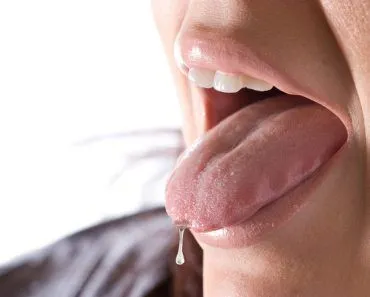
 When you stick out your tongue and taste a bit of salt in your tears, it demonstrates just how sensitive our sense of taste really is. Roughly 98–99% of a tear is plain water, while the remaining 1–2% is the cocktail of salts, proteins, lipids and mucin we explained above. The sodium chloride alone clocks in at about 0.9% by weight, the same concentration as the “normal saline” bag hanging from an IV stand, and very close to the salt level of blood plasma. Tears feel comfortable in your eye because they match the salinity of the rest of your body, which is also why they don’t sting on the way out (and why your eye doesn’t sting when you splash it with sterile saline). Yet, even with such a modest level of salinity, your tears make the surface of the eye an unpleasant place for bacteria. Your tears are used most often as an extension of your immune system, so the salty presence in your tears makes perfect sense.
Furthermore, we are salty creatures. The average adult body carries roughly 250 grams (about half a pound) of sodium chloride at any one time, dissolved through every fluid we have, so it makes sense that this very natural fluid would also have some concentration of salt. The water in our bodies is inherently salty (albeit a good deal less salty than seawater, which packs roughly 35 grams of salt per liter, around 35 times the concentration in tears), and it would require a lot of cellular energy to actively strip every ion out and ensure that our tears were 100% pure water. Additionally, some of the other salts and ions found in our tears help in lubrication, protection and healing processes within the eye.
The best thing about having three different kinds of tears, however, is that the body can react with an appropriate salinity concentration and type of tear depending on the threat at hand!

A Final Word
The fact that our tears are salty is yet another argument for the remarkable complexity and interconnectedness of our bodies. Natural selection has found the most convenient and effective path forward, ensuring that our eyes are protected from harm by using compounds already present in the body’s fluids. Even the simplest things, such as the (reflex) tears streaming from the corners of your eyes on a convertible ride, tell an impressive story of human evolution and our amazing bodies!
References (click to expand)
- Biochemistry, Tear Film. StatPearls. NCBI Bookshelf.
- Why are tears so salty? UCSB Science Line. The University of California, Santa Barbara.
- What are Tears Made of? The Biochemistry of Emotion. News-Medical.
- Filik, J., & Stone, N. (2008, June). Analysis of human tear fluid by Raman spectroscopy. Analytica Chimica Acta. Elsevier BV.
- Tears. Wikipedia.