We hate the sound of our own voice because, in our heads, we hear it two ways at once: through the air and through the bones of our skull. Bone conduction adds low frequencies that make our voice sound deeper and fuller. A recording captures only the air-conducted sound, so our voice comes back higher and thinner than we expect.
I used to think that I had a really awesome voice. At a certain point in life, I even thought that I could become a singer, orator, broadcaster or something else with this awesome God-given talent.
Unfortunately, on one fateful day, I heard my own voice on a recording, and to my horror, it sounded nothing like I had imagined. I hated the way I sounded, and I thought that something must have been wrong with the recorder. But, just like mirrors, recorders do not lie. The way you sound in a recorder is the way that people hear your voice, but it turns out that I’m not alone. In fact, most people hate the way their own voice sounds.
Why Is It That We Sound So Different Than We Imagine?
When we hear someone else talking, sound waves (pressure waves) from their mouth pass through the air before reaching our ear canals. The eardrum passes this sound vibration from middle ear bones to the inner ear. The inner ear is also called a cochlea, which contains thousands of tiny hair cells. Hair cells change sound vibrations into electrical signals, which are then sent to the brain. At that point, the brain tells you that you are hearing a sound and what that sound is.
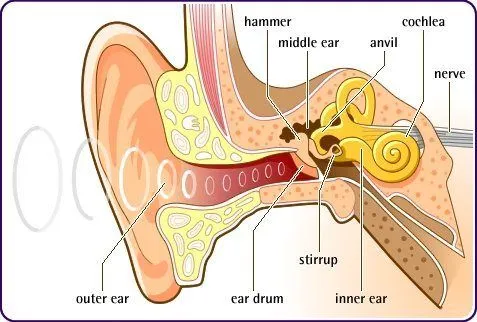
Now, when we hear ourselves talk, there are two types of sound that we hear. First is the regular sound, which travels through the air into our ear canal, and then finally into the inner ear. This is called air conduction. However, when we talk, the inner ear also picks up vibrations happening inside our body. This sound travels through your bones and flesh, moving directly into the inner ear, and it is known as bone conduction.
Therefore, when we hear our own voice, we hear these two sounds – both external and internal. The skull bones carry low-frequency vibrations especially well, so bone conduction emphasizes the deeper, lower notes in our voice and gives it a richer, fuller quality. This is the reason why you sound like Batman inside your head, but something closer to the Joker in real life.
When we hear ourselves from a recording, we only hear the external, air-conducted sound. This is also how everyone else hears us. We lose the bone-conducted vibrations entirely, which strips out those flattering low frequencies. The result is that the recorded voice sounds higher and thinner than the one we are used to, and that mismatch is exactly why we cringe. How we wish that others could hear the voice inside our head! Sadly, it doesn’t work that way.
Don’t worry, though, you’re not the only person who hates their own voice. Almost everyone does (except Morgan Freeman, I would assume).
Is It Just The Pitch, Or Is Something Else Going On?
Here is the twist: the acoustics are only half the story. If it were purely about a missing slice of bass, we would notice that our recorded voice sounds a little off and move on. Instead, most of us recoil. Psychologists have a name for that reaction, and it is wonderfully dramatic: voice confrontation.
The term comes from a 1966 study by psychologists Philip Holzman and Clyde Rousey, who played people recordings of their own voices and watched them squirm. They argued that the discomfort is not just about timbre. A recording also exposes the bits of ourselves we cannot edit out, the hesitation, the nasal edge, the flatter-than-expected delivery, cues that hint at our mood and personality. Hearing all of that laid bare, with no chance to spin it, is what really stings.
In other words, your brain has spent your whole life building a mental image of how you sound, and the recording bluntly contradicts it. That clash between expectation and reality is the cringe. The good news? Studies on the so-called mere-exposure effect suggest the more you listen back to yourself, the less alien that voice becomes. So if you have ever wondered why podcasters and broadcasters seem so comfortable in their own skin, part of the answer is simple: they have heard themselves so many times that the stranger in the recording has become an old friend.
So Which Version Do Other People Actually Hear?
This is the question that stings the most, so let me answer it bluntly: the recording wins. When you speak, the voice in your head is a blend of two routes. Sound travels out through the air and back into your ear canals, and at the same time vibrations travel directly through the bones and soft tissue of your skull into your inner ear. Other people only ever receive the air-conducted half. They have no access to the bone-conducted rumble that you add for free your whole life, so the warmer, deeper voice you hear when you talk is, quite literally, for your ears only.
A recording does the same thing a listener's ears do: a microphone picks up only the air-borne sound, with none of the skull vibrations. As the University of Tokyo's researchers put it, the air-transmitted version captured on a recording is the version everyone else hears when you speak. There is a neat way to prove the bone-conducted contribution to yourself. Cover your ears tightly and hum or talk, and you can still hear your voice perfectly well, because at that moment you are listening to it almost entirely through your bones. So when a recording makes you wince, you are not hearing a distorted you. You are finally hearing the genuine, public you, minus the private bass line your own head has always supplied. The cringe is the gap between the two closing in real time.
Why Does Your Voice Boom When You Block Your Ears?
Try that ear-covering trick again and pay attention to the quality of the sound. Your voice does not just survive when you plug your ears, it actually gets bigger, lower and almost cavernous, as if you have stepped into a barrel. (This is a separate phenomenon from the ocean-like whoosh you hear when you cup a hollow hand over your ear, which is outside ambient noise resonating in the cupped cavity rather than your own voice.) Audiologists have a name for this: the occlusion effect. When the ear canal is open, the low-frequency vibrations that your own speech sends rattling through the canal walls simply leak back out into the room. Block the opening with a finger, an earplug or an earbud, and those vibrations have nowhere to go, so they reflect back toward the eardrum instead and pile up.

The build-up is concentrated in the low notes, below roughly 1 kHz, and it is far from subtle: acoustic studies of a sealed ear canal find the trapped sound pressure climbing by around 10 to 15 dB near 1 kHz and tens of decibels more in the very lowest bass, well below 500 Hz. That is the same bone-conducted bass your skull already feeds you, only now amplified because it cannot escape. This is more than a party trick. It is a real headache for new hearing-aid wearers, who often complain that their own voice suddenly sounds hollow, boomy or like they are talking inside a tin can. Manufacturers fight it by venting the earpiece so the low frequencies can drain away again, which is exactly why so many modern aids sit behind the ear with an open, perforated tip. In short, the occlusion effect is the deep, private version of your voice turned all the way up, and one more reminder of how much of your own sound only you were ever meant to hear.
References (click to expand)
- How Air and Bones Can Help You to Hear. Frontiers for Young Minds
- Physiology, Cochlear Function. StatPearls. NCBI Bookshelf
- Holzman PS, Rousey C. The voice as a percept. Journal of Personality and Social Psychology (1966). PubMed
- Here's Why You (Probably) Hate The Sound of Your Own Voice. ScienceAlert
- Why do recordings of one's own voice sound so strange? The University of Tokyo
- Stenfelt S, Reinfeldt S. A model of the occlusion effect with bone-conducted stimulation. International Journal of Audiology (2007). PubMed
- On the removal of the open earcanal high-pass filter effect due to its occlusion. Acta Acustica
- Rethinking Hearing Aid Occlusion. The Hearing Review