Different musical instruments make different sounds because of the different ways they vibrate. The material they’re made of, the size of the instrument, and the way the instrument is played all affect the vibration and, as a result, the sound that the instrument makes.
Music is an essential part of our lives; for some it is a form of entertainment, and for others, it is a beloved escape. It is and has been an integral aspect not only of individual cultures, but entire nations and humanity as a whole. We have used music to organize our society, celebrate our festivals, express love and prepare for war, among many other things.
Over the years, we have seen an evolution of music and its various genres, driven by artists who release a single or an album of songs.
A song is produced by mixing different instruments and vocals together, creating new sounds from it. However, have you ever wondered why every instrument sounds so different? Why does a drum sound hard and deep, but a flute sounds so fluid and airy? Why does a piano sound mellow, compared to an electric guitar with its gritty, grungy sound?
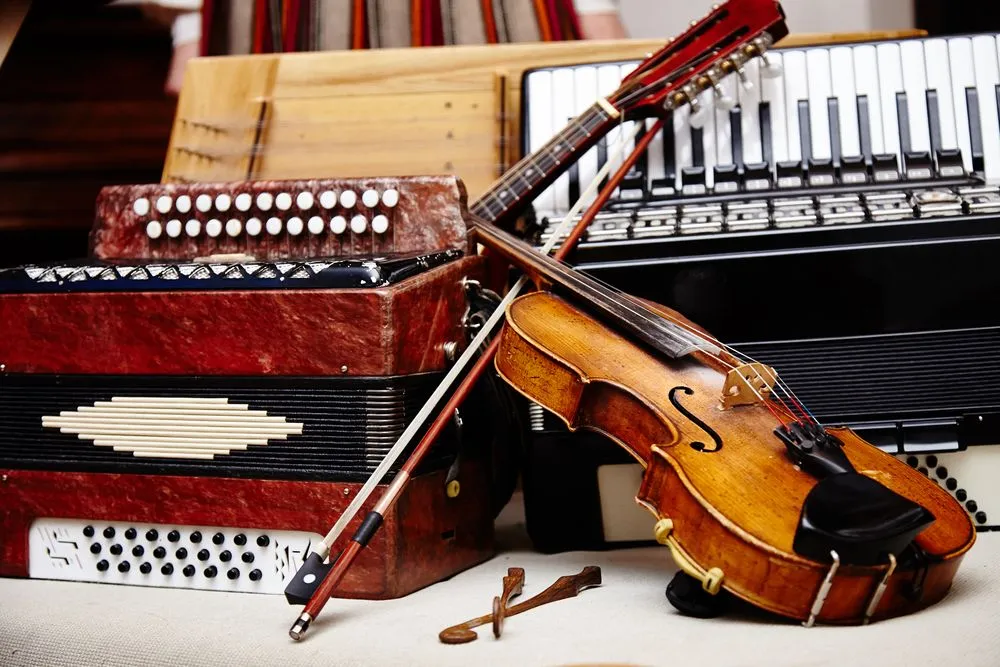
To understand why different instruments make different sounds, we will first have to understand the physics of music.
What Is Sound?
Sound is a wave that is created when an object vibrates. The vibration of the object is transferred through the displacement of the particles in the particular medium. When we hear something, the sound wave is transferred from the vibrating object and strikes our eardrum, which is then processed by our brain as the perception of sound.

The quality of the sound that is heard depends on the physical properties of the sound wave. These physical properties are characterized as follows:
Wavelength
A wave travels in intervals of corresponding crests and troughs. A wavelength is considered to be the completion of one cycle of such a crest and trough.
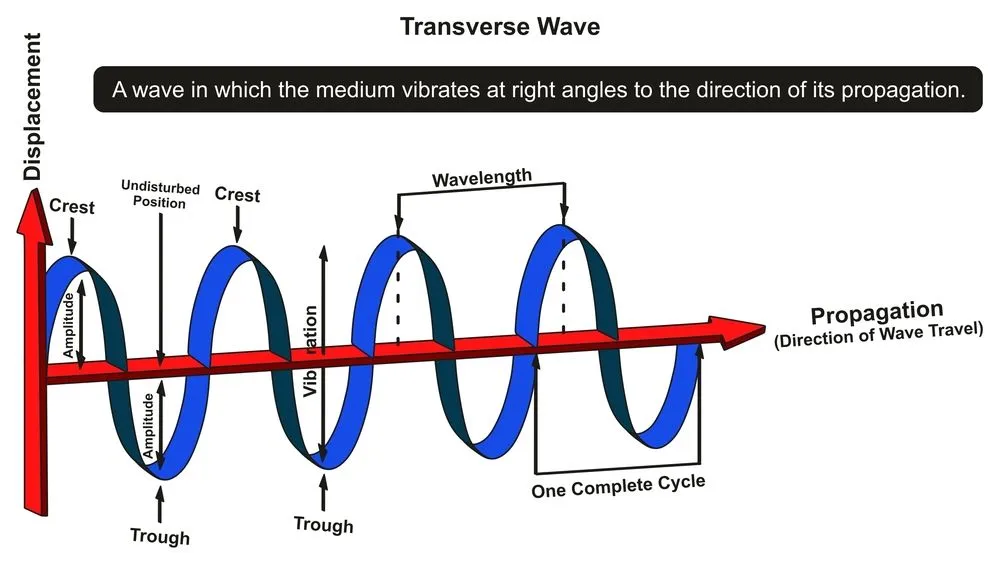
The thing to note here is that the particles themselves don’t travel through the medium, but rather displace the adjacent particle; this is how a wave travels. Similar to the wave formed when a loose rope is jerked, the strings of rope don’t travel, but they displace the adjacent particles, forming a wave by essentially making a back-and-forth movement.
Frequency
The number of times waves go back and forth in a second is the frequency of that sound. Thus, Frequency = Complete cycles of waves / Unit of time. Its unit of measurement is Hertz, meaning that a frequency of 1 Hz is equal to 1 back-and-forth movement in 1 second.
The frequency of the sound determines its pitch, which is how high or low the sound is. A greater frequency, higher pitch sound would be nails-screeching on a chalkboard. A lesser frequency, low-pitched sound would be a deep bass drum.
The human ear detects a limited amount of frequencies. On the lower end, the deepest we can hear is 20 Hz and on the higher end, we can hear up to about 20000 Hz.
Amplitude
Amplitude is the height of the wave. The height determines the loudness of a sound. A higher amplitude results in a louder sound. The center of the wave is thought of as the resting position of the wave. The amplitude measurement is done from the center to the top and bottom ends of the crest and trough, respectively.
Notes
You have likely seen the keys of a piano at some point in your life. Each key corresponds to a note. Within one octave, the keys are arranged as 7 white keys and 5 black keys (12 in total). Each key makes a unique sound because it vibrates at a specific frequency. The twelve notes in an octave (C, C♯, D, D♯, E, F, F♯, G, G♯, A, A♯, B) cycle from one C to the next C, and that span is what is called an octave (the higher C vibrates at exactly twice the frequency of the lower one).
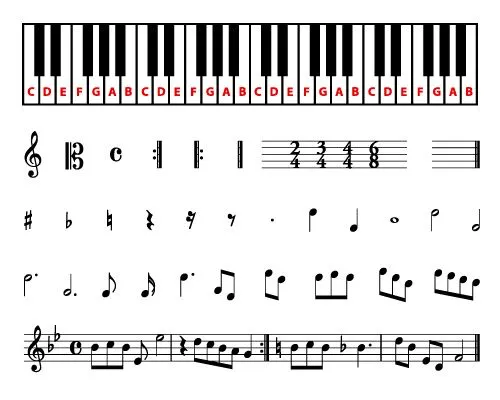
For example, C1 vibrates at 32.70 Hz and the next C up, C2, vibrates at 65.41 Hz, exactly double. A1 sits between them at 55.00 Hz. The octave above C2 starts at C3 (130.81 Hz), then C4 (the familiar “middle C” at 261.63 Hz), and so on, with each octave doubling the frequency of the one below.
These musical notations are universal to every instrument. The A4 played on the piano is the same frequency as the A4 played on the guitar. However, if that’s true, why do they make different sounds?
What Gives Instruments Their Particular Sound?
Overtones And Harmonics
The proposition seems intuitive, that a note carrying the same frequency should sound the same on every instrument, but there is much more happening behind the scenes.
When we pluck the string of a guitar on the A3 note (110 Hz), the sound we hear is not made of just one frequency. The sound contains hidden frequencies underneath the base frequency (A3).
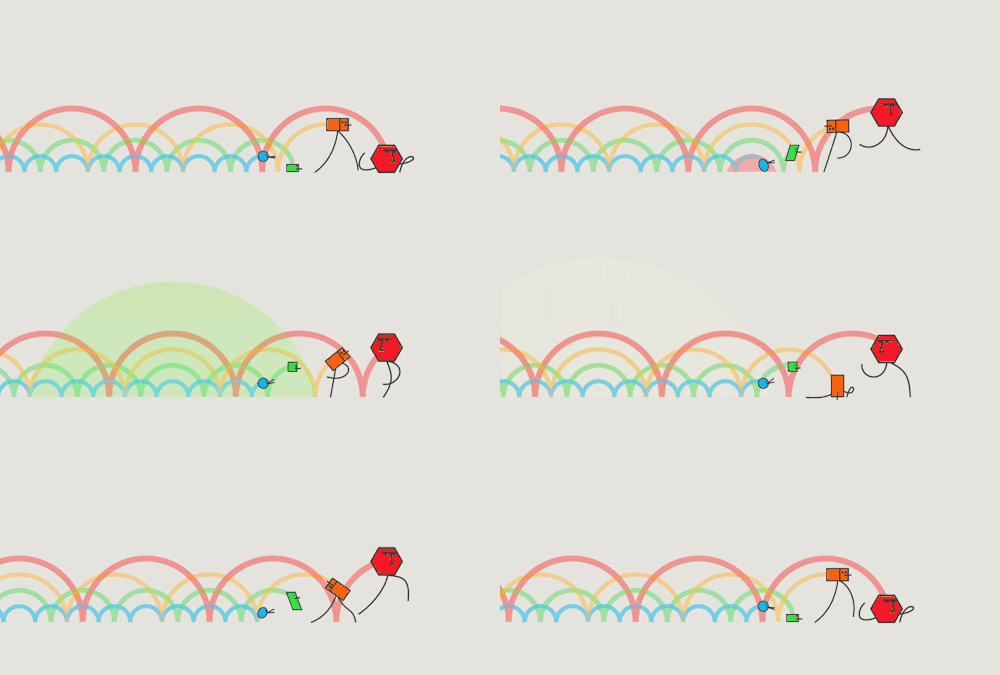
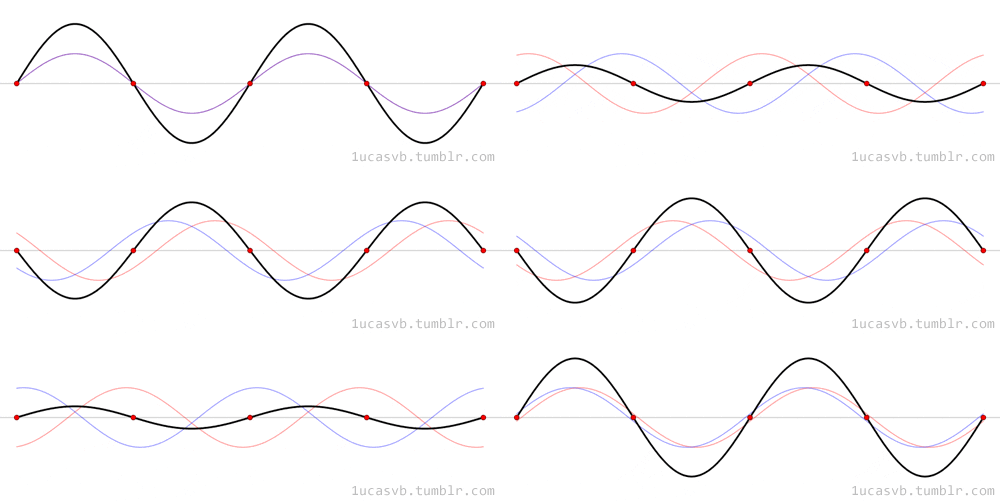
So the string vibrates once at 110 Hz, it vibrates twice at 220 Hz and three times at 330 Hz. This is happening simultaneously, so all of them add up together to give the guitar its unique sound.

These steps of frequencies are overtones, so 220 Hz becomes the 1st overtone and 330 Hz becomes the 2nd overtone. This can happen infinitely. The movement of the string becomes very complex when observed in reality due to this interaction of waves. We are unable to differentiate between the many overtones since it appears to be one sound, even though it is actually the sum of so many.
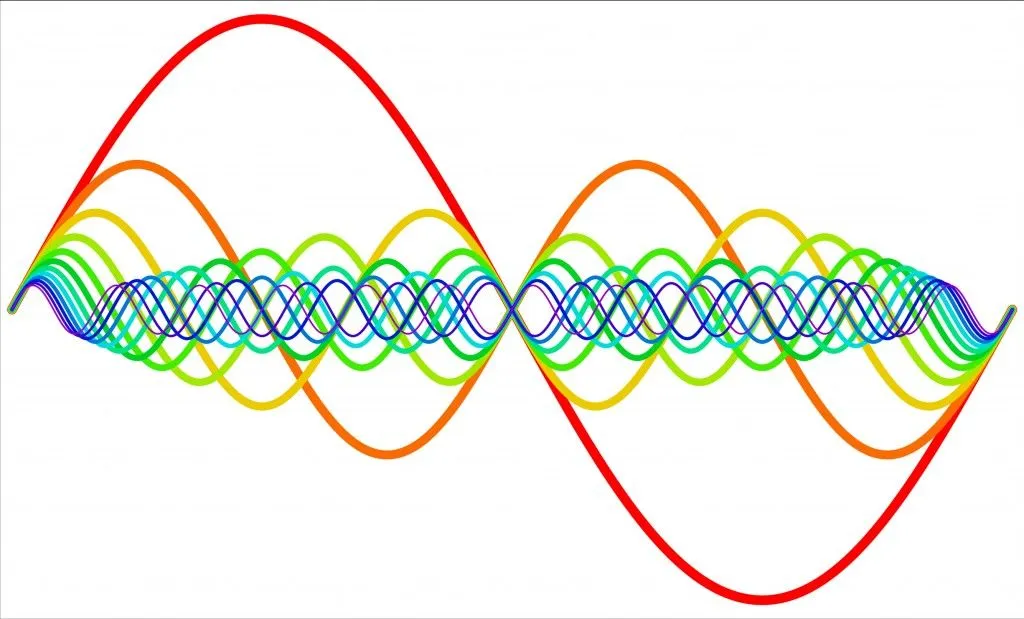
Although we hear many frequencies together, in all, the string vibrates only 110 times per second. This happens because in the time the fundamental frequency completes one full cycle, the 1st overtone completes two cycles and the third completes three cycles. Thus, the entire pattern vibrates at the fundamental frequency of 110 Hz, which is made more complex by the added frequencies.
The additional frequencies are integers of the fundamental frequency. These integers are called Harmonics. In a harmonic series, the next frequency is always a multiple of the fundamental frequency. If the base frequency were 110 Hz, the next would be (2×110 = 220), (3×110 = 330) and so on.
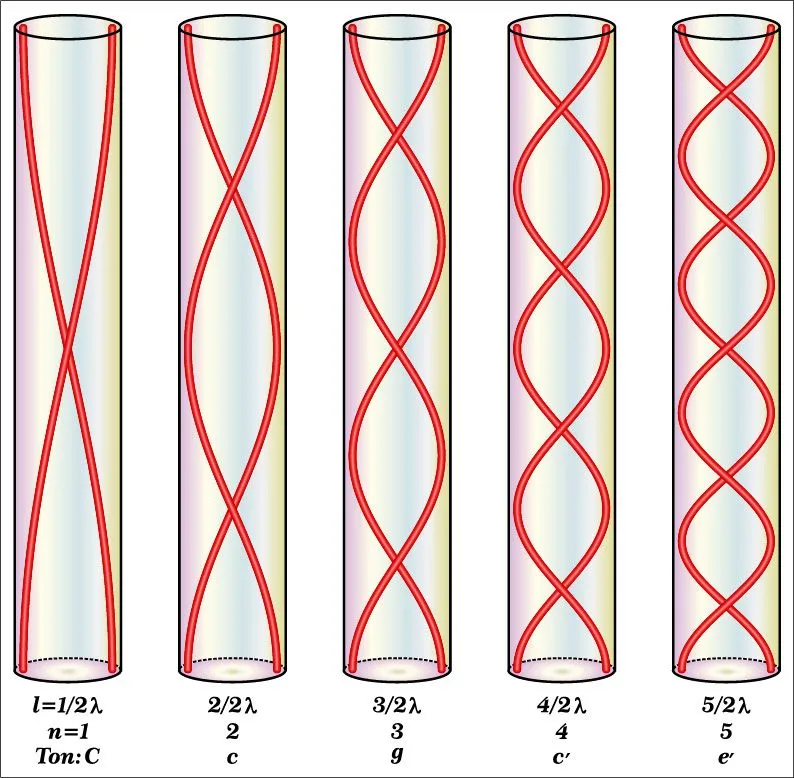
Overtones correspond to harmonics, but at times overtones are not integers of the fundamental frequency, which is where both the terms depart from each other.
Overtones and Harmonics are one of the reasons why a guitar sounds different than the piano because they have strings of different lengths producing different frequencies.
Timbre
Our ears are very good at perceiving different sounds. One way it does this is through the “timbre” of the sound. Timbre is the tonal quality or the tonal color of the sound. The timbre of the sound is determined by the overtones and harmonics the sound makes.
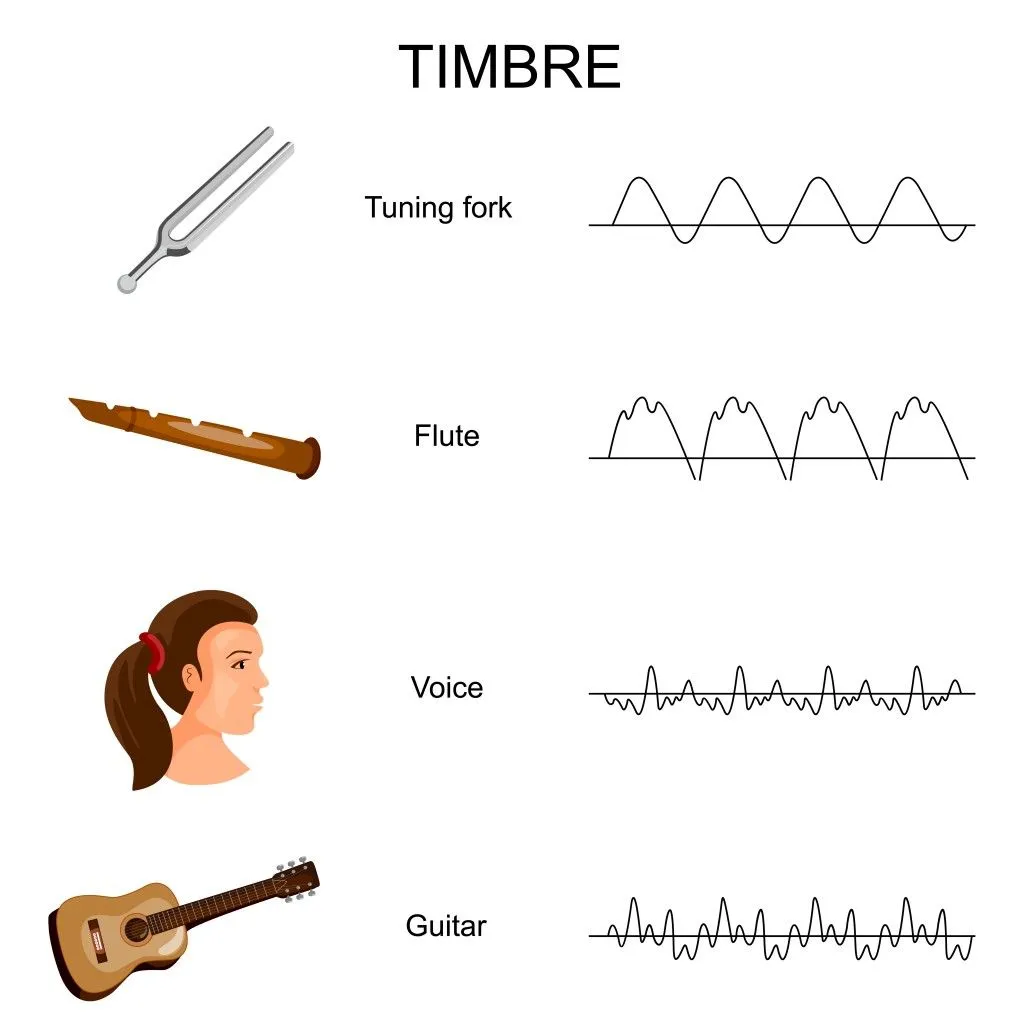
The amplitude and pitch change in each harmonic gives instruments their particular timbre. This ‘quality’ of the sound is as much a perceptive phenomenon as a physical one. People can differentiate between two sound sources due to the perceptive capabilities of the ear.
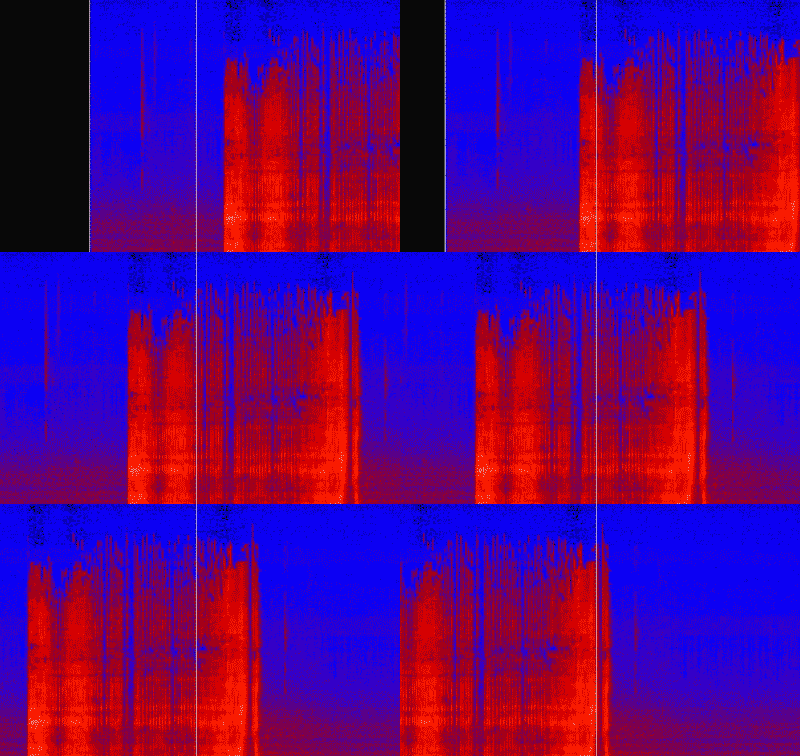
The physical characteristics of the sound that determine its timbre are spectrum and envelope. A spectrogram displays the various frequencies of a sound in a visual form. The envelope describes how a sound changes over time, in both amplitude and pitch.
Material
The material of instruments is also one of the major reasons for their differentiated sounds, as the material directly affects the timbre of an instrument.
Different materials also have different densities, which affect the speed of the sound. Some materials are very reflective, which adds more layers to a sound.
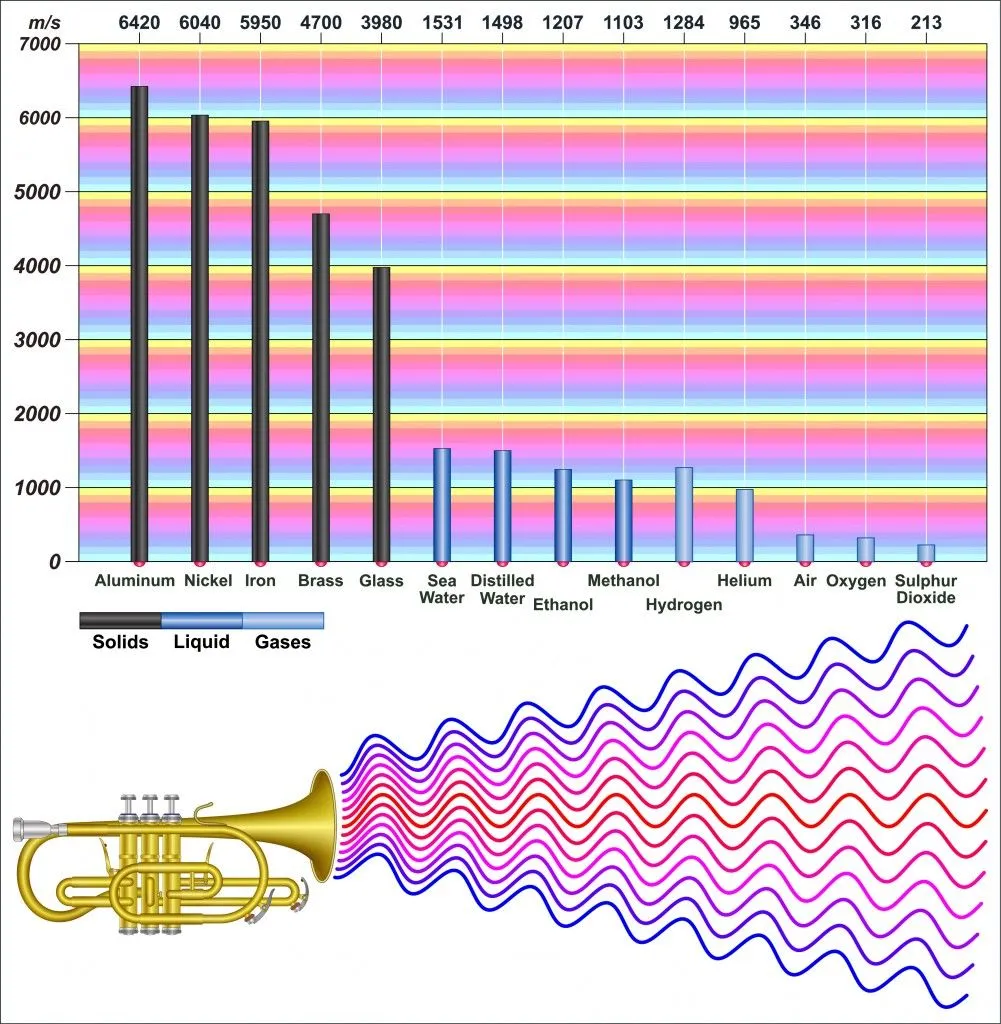
The vibrations of materials are also a factor to consider. Metal vibrates differently than plastic, giving richer and crisper sound.
How Do Different Families Of Instruments Produce Sound?
We have covered what sound is and why the same note can wear a different costume on every instrument, but how does an instrument get its vibration going in the first place? It turns out that almost everything we play, from a concert grand to a tin whistle, belongs to one of three families, sorted by what actually vibrates.
String instruments (guitars, violins, pianos and harps) make their sound from a stretched string that is plucked, bowed or struck. A thin string on its own barely disturbs the air, so its real job is to hand its vibration off to a larger surface. A player raises the pitch by pressing the string against the fingerboard to shorten the length that is free to vibrate, and tunes the open string by tightening or loosening it at the peg.
Wind instruments (flutes, clarinets, trumpets and organ pipes) vibrate a column of air sealed inside a tube. The way the air is set buzzing differs from one to the next: a flute player splits the airstream across a sharp edge, a clarinet or oboe uses a vibrating reed, and a trumpet player buzzes their lips into a mouthpiece. However it starts, the air column resonates and fixes the pitch. Woodwind players reach higher notes by opening tone holes, which effectively shortens the working length of the air column, while brass players add or remove tubing with valves and a slide.
Percussion instruments (drums, xylophones and cymbals) sound when a stretched membrane or a solid bar is struck. Most drums have no clear pitch, because the overtones of a vibrating circular membrane are not tidy multiples of the fundamental (the first overtone of an ideal drumhead sits about 1.59 times above it), so our ears read the result as a thud rather than a note. Tuned percussion like the orchestral timpani is the exception: the kettle of trapped air beneath the head nudges those overtones into a near-harmonic set, giving a definite pitch that the player adjusts with a foot pedal that tightens or loosens the skin. Across all three families, a musician plays louder by simply feeding in more energy, plucking, blowing or striking harder, which raises the amplitude of the vibration without changing its pitch.
How Do An Instrument's Shape And Size Affect Its Sound?
This is the question our readers ask us the most, and it really has two answers. The size of the vibrating part sets the pitch an instrument naturally produces, while the shape of its body decides how loud and how rich that sound finally reaches your ear.

Start with pitch. Three things govern how fast a string vibrates, and therefore how high it sounds: its length, its tension and its thickness. A string sounds lower when it is longer, looser or heavier, and higher when it is shorter, tighter or thinner. That is exactly why a double bass, strung with long, thick strings, rumbles far below a violin, and why the lowest strings on a guitar are the fat ones. The same rule runs through wind instruments, except the vibrating "string" is now a column of air: the longer the tube, the longer the wave that fits inside it, and the lower the note. A short trumpet sings high, but coil that tubing out to the length of a tuba and the pitch drops by octaves.
Shape is what turns that vibration into something you can actually hear. A bare vibrating string moves so little air that, on its own, it would be almost silent. The body of an acoustic guitar or a violin fixes this: the strings pass their motion through the bridge to the large, springy top plate, or soundboard, which pushes far more air than a string ever could. The hollow box adds a second trick. The air trapped inside breathes in and out through the soundhole, behaving just like the air you set humming when you blow across the top of a bottle. This resonance reinforces the instrument's lowest notes, typically somewhere around 90 to 110 Hz on a guitar, which is why covering the soundhole leaves it sounding thin and weak. This selective boosting of some frequencies over others is the single biggest reason that a hollow wooden box and a solid plank wearing the same strings sound nothing alike.
In Conclusion
Sound is one of the fundamental forces of nature, one that is an important part of the human experience. The differentiation of different sounds has helped us survive, by allowing us to communicate with each other in moments of danger. It has also helped us connect with others by helping us express the intangible.
Overtones, harmonics, timbre, and materials differentiate sounds and give instruments their unique quality. Thank God for that! How bland would this world be if every instrument sounded the same?
References (click to expand)
- What Is Sound?. cs.toronto.edu
- Frequencies of Musical Notes, A4 = 440 Hz. Michigan Technological University
- Sound Quality or Timbre - Hyperphysics. Georgia State University
- Biology/Chemistry - mypages.iit.edu
- Strings, standing waves and harmonics. UNSW School of Physics
- Pipes and harmonics. UNSW School of Physics
- Brass instrument (lip reed) acoustics: an introduction. UNSW School of Physics
- How an Acoustic Guitar Works. Physics LibreTexts
- Drums. Sound: An Interactive eBook. Physics LibreTexts