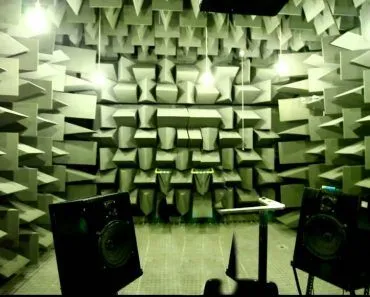
The reason that echoes aren’t heard in rooms is that the reflected sounds are received in less than 0.1 seconds, or the reflecting surfaces are at distances of less than 17 meters. Reverberations can also be heard in an empty apartment. An additional reason why you might not hear echoes in a room is that wooden furniture and cushions absorb sound, rather than reflecting it.
In a popular Greek folk story, Zeus is depicted as often descending from Mt. Olympus to visit Earth and mingle with beautiful nymphs. Eventually, Hera, his temperamental wife, grows suspicious and decides to catch him red-handed.
One mountain nymph, in an attempt to protect Zeus, ensnared Hera in circumlocutions. Realizing her subterfuge, the enraged Hera condemned the nymph to only repeat the last words anyone spoke to her in any conversation for the rest of her life. The nymph was named Echo.
When you stand on top of a hill or in the midst of a vast jungle amongst soaring trees and shout your name, your bellow, after a short delay, is heard recursively, although successively fainted or dwindled. This returned sound is an echo.

An echo is a sound that returns to its source like a boomerang. In order to return back in the direction of its source, a sound or light wave must either trace a path in space that is reminiscent of a parabola (like the curvilinear motion of light traveling around the sun as a consequence of the curvature of space itself due to the sun’s gravity, as predicted by General Relativity) or simply, reflect from a surface. An echo is the latter, it is a reflection of sound waves from objects in the vicinity of the source.
Yet, if an echo is merely a reflection of sound, why don’t we hear them in small rooms, where there are even more surfaces to reflect from? The answer lies in how the human brain perceives sound.
How Is An Echo Heard?
For a reflected sound to be perceived distinctly, the sound must possess a sufficient magnitude and return after a certain delay. The delay is directly proportional to the distance of the reflecting surface from the source of the sound and the listener.
Our hearing apparatus is the pair of ears attached to both sides of our head. Once a sound is emitted, the human ear cannot distinguish the perceived sound from the original if the delay is less than one-tenth of a second.
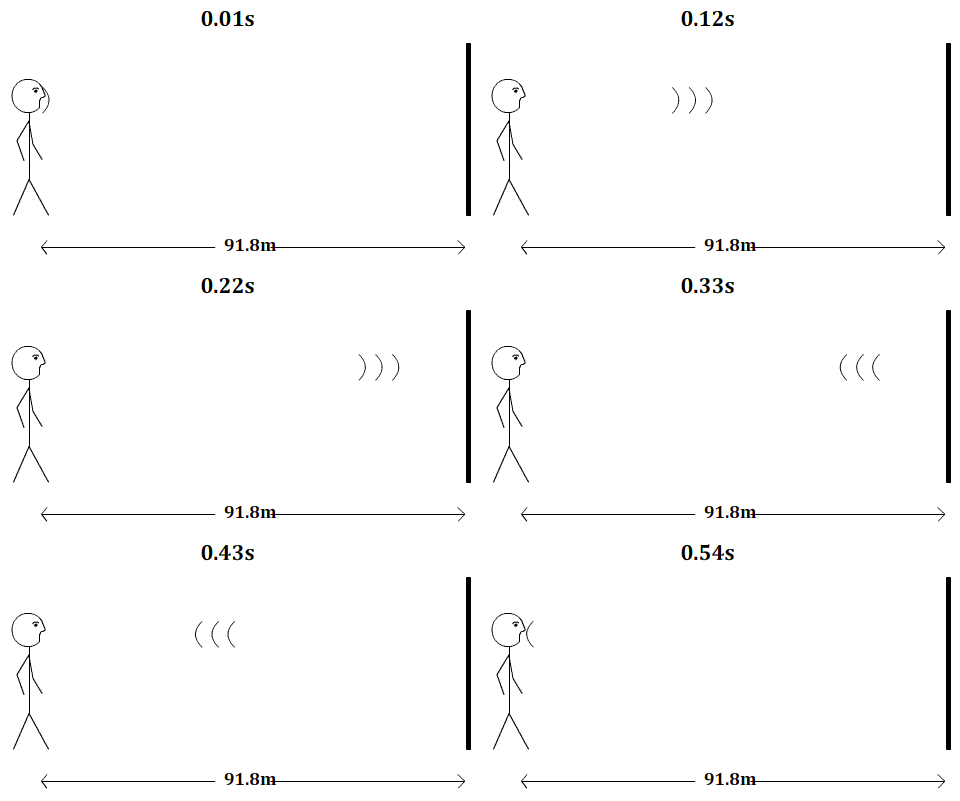
If the velocity of sound in air is approximately 343 m/s (the standard value at 20 °C), then the total distance it travels (incident plus reflected) within this 0.1-second window is about 34 m (110 ft). This implies that the obstacle must be at least about 17 m (roughly 56 ft) away for the reflected sound to be distinguishable from the incident sound and perceived as an echo. When an echo returns in one second, the obstacle is about 170 m (560 ft) away; in two seconds, about 340 m (1,120 ft).
An echo should not be confused with a reverberation, which is also a reflection of sound. However, the major difference between an echo and a reverberation is that the latter is a reflected wave that is received within one-tenth of a second. This follows that the obstacles are placed at very short distances, specifically, less than 17 meters.
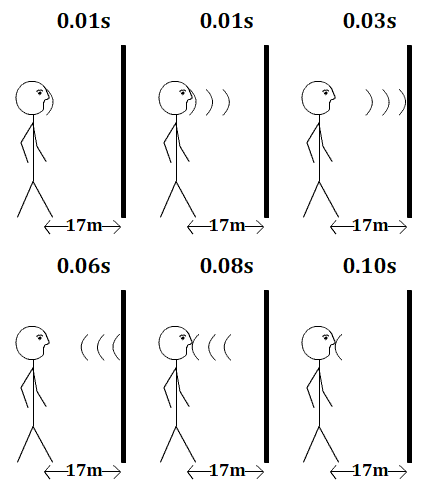
Reverberation actually facilitates resonance by combining the incident and reflected waves into one prolonged sound wave. This is evident when you cordially sing in your washroom or in the squeals that your Jordans let out when they are dragged on the floor of an empty basketball court.
So, the reason that echoes aren’t heard in rooms is that the reflected sounds are received in less than 0.1 seconds, or the reflecting surfaces are at distances of less than 17 meters.
Reverberations can also be heard in an empty apartment. An additional reason why you might not hear echoes in a room is that wooden furniture and cushions absorb sound, rather than reflecting it.
Why Do Mountains And Hills Produce Such Clear Echoes?
Mountains tick every box on the echo checklist. Remember the two conditions a reflection must meet to be heard as a separate sound: it has to arrive at least a tenth of a second late, and it has to come back loud enough to register. The face of a cliff or the far wall of a valley sits hundreds of meters away, comfortably beyond the roughly 17 m (56 ft) threshold, so the returning wave arrives long after your shout has faded, and your brain files it as a distinct second voice instead of smearing it into the first.

Distance is only half the story. The other half is that bare rock behaves like an acoustic mirror. Stone is hard, dense and heavy, so it soaks up very little sound energy and hurls most of it straight back at you. Soft things such as foliage, snow and loose soil would swallow the wave instead, which is why a thickly wooded slope answers you far more meekly than a sheer granite cliff or a quarry wall. In nature, canyon walls and rock cliffs facing open water are among the most dependable echo chambers on Earth.
The open ground in front of the cliff helps as well. With no furniture, ceiling or nearby walls to scatter the sound along the way, your voice travels out in a clean line, bounces once off the giant reflector and returns along a clean line. That is why a single "hello" from a lookout such as Echo Point in Australia's Blue Mountains, which faces the Three Sisters across the broad Jamison Valley, can come back as a crisp, unmistakable copy of itself.
Can You Ever Hear An Echo Indoors? Meet The Flutter Echo
Ordinary rooms lose the echo game because their walls are both too close and too soft. Strip a room bare, though, and leave two hard walls squarely facing each other, and a peculiar cousin of the echo shows up: the flutter echo. Clap your hands once while standing between two parallel, uncluttered walls (an empty hallway, a stairwell or a tiled bathroom will do nicely) and, rather than a single reflection, you hear a rapid, buzzy "zing" or a faint metallic ringing that dies away in an instant.
What is happening is that the single pulse of your clap gets trapped, bouncing back and forth between the two walls and shedding a little energy on each trip. When the walls are far apart, roughly 18 m (60 ft), the reflections return slowly enough that you can actually hear them as a distinct "tap-tap-tap", about 17 slaps every second. Bring the walls in to around 6 m (20 ft) and the slaps come back some 57 times a second, fast enough that your ear stops counting individual taps and instead fuses them into a low buzzing note, an auditory trick that acousticians call a pseudotone.
So can you hear a true echo in a room? Almost never in a normal one, since soft furnishings and angled surfaces break the sound up before it can bounce back cleanly. Flutter echo surfaces only in the rare space that offers two bare, parallel, hard reflectors with nothing in between to interrupt the volley. That is exactly why recording studios and conference rooms take such pains to angle their walls or line them with absorbing panels, the same instinct taken to its extreme inside an anechoic chamber, where every surface is built to swallow sound rather than return it.
Echolocation As A Way Of Navigating
Bats and marine mammals like dolphins are known to use echolocation to navigate and “see” in the dark. Bats are known to use echolocation to avoid obstacles as small as a single hair, as well as identify and catch flying insects! They disperse an ultra-high frequency sound wave, indiscernible to humans, towards an object, which reflects it back towards them.

These animals have exceedingly sensitive ears that they use to pick up the bounced-off waves. The reflected echo is then used to paint a 3D image of the obstacle in their “sight”. The echoes must be loud and ephemeral, such that a packet of sound returns before the next one is transmitted.
Human Echolation: Daniel Kish
Humans have mimicked this ingenious audio imaging system by deploying ships or submarines with SONAR technology. However, some individuals have taken a step forward and have honed their senses to implement echolocation themselves! This is particularly seen in blind people who use it for navigation.
The enhancement of one sense after the loss of another is a fairly common phenomenon. The reason is that the circuit of neurons responsible for sensing hearing, seeing and olfactory stimuli are crammed adjacently in a very tight space. Furthermore, the brain is highly parsimonious, so when a crucial area of wires become obsolete, the plasticity of our brain causes the wires nearby to overlap or take over and utilize them instead, thereby enhancing their corresponding function.
In the case of blindness, the defunct visual cortex of a blind person is put to use to sense aural and tactile stimuli.

For instance, consider Daniel Kish, who was impeded with retinal cancer and lost his vision in infancy. Daniel taught himself to navigate by echolocation by making swift clicking sounds that got reflected from objects in his proximity. As a young boy, he judged his height while climbing trees by uttering these high-frequency squeaks and listening for their echoes off the ground below.
He subsequently taught himself to ride a bike by judging the distance of curbs by echolocation. Witnessing this monumental feat, many blind people have followed in his steps and taught themselves to use similar clicks to navigate. He now trains other people who are blind to ‘see’ the same way he does.
fMRI work led by Lore Thaler (Thaler, Arnott & Goodale, PLOS ONE, 2011) confirmed that, in trained blind echolocators like Kish, the clicks-and-echoes actually activate the visual cortex, the same brain region a sighted person uses to interpret images. The brain has effectively repurposed sight hardware to process sound.