Table of Contents (click to expand)
The Ship of Theseus paradox asks whether an object whose every part is gradually replaced remains the same object. Plutarch recorded the puzzle around 75 CE: as the Athenians swapped out the ship's rotting planks one by one, philosophers split over whether the rebuilt vessel was still Theseus' ship. There is no settled answer; Aristotle credits the ship's form, Hobbes points to the original timbers, and Locke ties identity to continuity through small changes.
What is your identity?
Is it your name? The way you look? The way you speak or your distinct hand gestures?
As a people, we are obsessed with identity. We meet new people and the first thing we do is ask them how they should be addressed. In many cultures, the surname indicates the person or family’s role in society or occupation (often in the past). Baker, Archer, Weaver, Smith, and Cooper are common English surnames that started life as a job description before they ever became names.
Apart from names, our face and appearance indicate our identity. Having an interestingly shaped nose or wild, unruly hair becomes a person’s identifying characteristic. There are so many people in this world that are famous solely for the way they look. Their features become their identity.

A New You?
According to researchers at the Weizmann Institute, the human body replaces around 330 billion cells a day, roughly 1 percent of all your cells. That works out to almost 3.8 million new cells every second. At this rate, in a little over three months you've shuffled in a fresh equivalent of your entire body (mostly blood and gut-lining cells; some tissues, like the cells in your eye lens or the bulk of your skeleton, hold on much longer).
Are you, therefore, the same person you were a hundred days ago?

Consider this: you fall down the stairs and break multiple bones. The doctors at the hospital say they need to insert metal rods in multiple fracture sites to help you heal. At this point, you feel more metal than man. Have you become a new part-organic, part-metal creature?
Plastic surgery can help you change your physical appearance. In some cases, the changes are so drastic that the person becomes unrecognizable. Despite the fact that they look different, are they still the same person?
In many cultures, after marriage, one partner (usually the wife) adopts the other partner’s last name (usually the husband’s). And people can change their names regardless of marriage. Are they still the same people they used to be before they changed their names?
If your answer to all or most of the questions above is ‘yes’, then I feel compelled to ask… why? Why are they still the same person? We use names and faces to identify people, so when their names and/or faces have changed, they have too, right? You might disagree and say that their faces and names may have changed, but their personality hasn’t. My cells may be brand new, but I still act and think and feel the same. I may have multiple nuts, bolts, and rods in my body, but I still hold the door open for people.
This question of ‘What am/is I/it?’ is at the heart of the Ship of Theseus paradox.
The Ship Of Theseus
Theseus was the son of King Aegeus of Athens. After Athens fell to King Minos of Crete in war, Athens owed Crete a grim tribute: every nine years, seven boys and seven girls were shipped off to be sent into the Labyrinth, the maze that housed the Minotaur, a ferocious bull-headed beast. Theseus volunteered to go as one of the boys. His father was deeply saddened at the thought of potentially sacrificing his son, but Theseus reassured him that should he return alive, the ship would be bearing white sails. If he died, the sails would remain black.
Theseus killed the Minotaur and escaped, but he forgot to swap the black sails for white on the journey home. Spotting the dark sails from the shore, Aegeus assumed his son had been killed and hurled himself into the sea, which (according to legend) thereafter bore his name: the Aegean. Theseus was grief-stricken to hear about his father’s death, but soon took the throne as the new king.
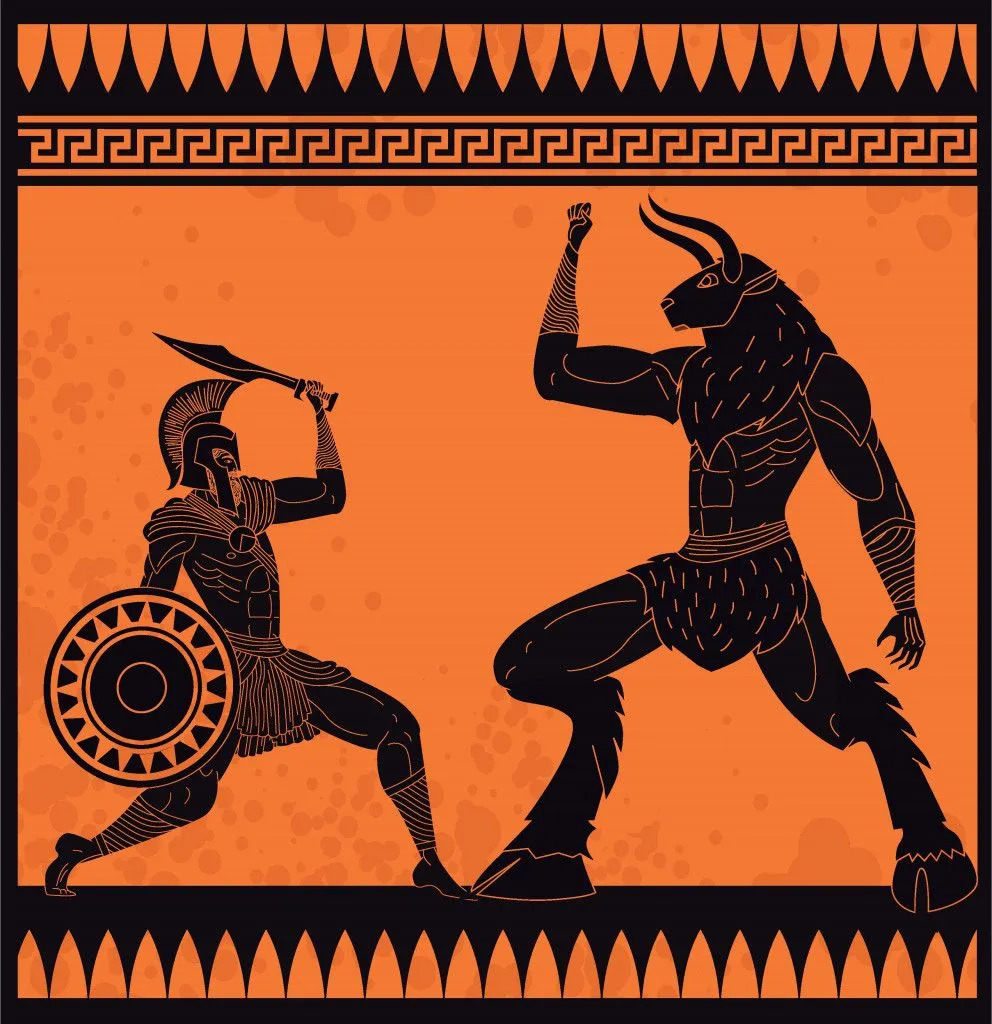
The ship was famously named the Ship of Theseus, and (according to Plutarch) the Athenians preserved it as a public memorial for centuries afterwards as a reminder of Theseus’ bravery and intelligence, as well as the tragedy of King Aegeus.
The Paradox
The Greek biographer Plutarch, writing around 75 CE in his Life of Theseus, is the earliest source we have for this version of the paradox. He noted that as the ship started to rot, the Athenians replaced the decaying planks one by one. If all the original parts of the ship were eventually replaced, would it still be the ship upon which Theseus sailed to Crete? Plutarch reported it as a long-running debate among the philosophers of his day: when every piece of an object has been swapped out, does the object stop being its original self?
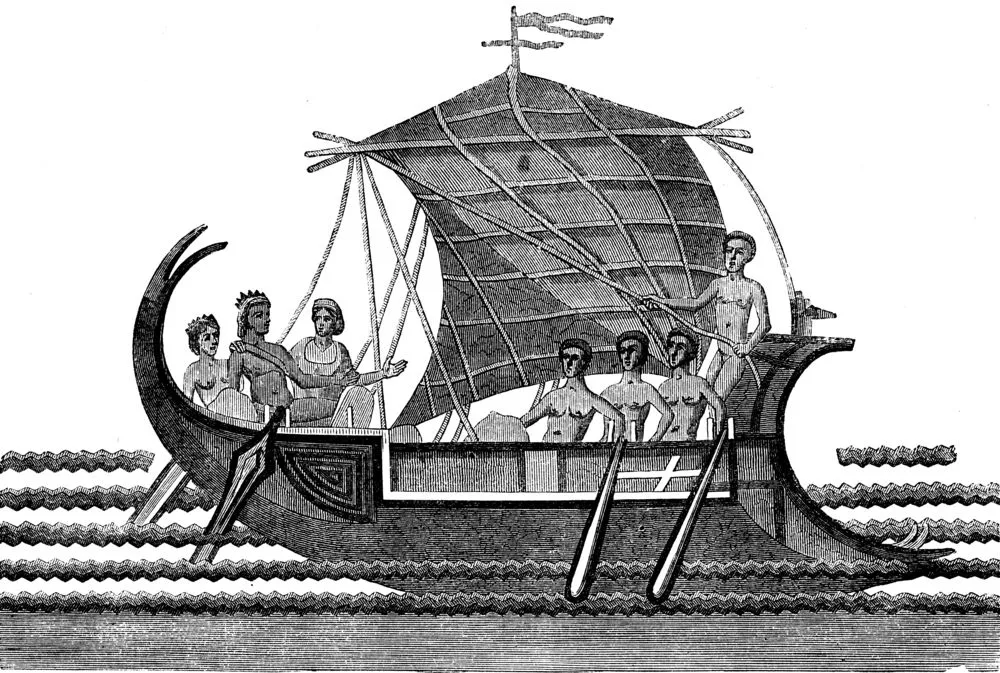
The English philosopher Thomas Hobbes sharpened the question in his 1655 work De Corpore. Suppose someone quietly saves every discarded plank and, once the repairs are done, reassembles them into a second ship that looks exactly like the original. Now there are two ships in the harbor. Which one is the real Ship of Theseus?
Both?
Neither?
Try the logical principle of transitivity. It states that if A=B and B=C, then A=C. Let A be the original ship Theseus sailed, B the patched-up ship still floating in the harbor, and C the ship rebuilt from the original timbers. Set A=B (the patched ship is the original because identity persisted through gradual repair) and A=C (the rebuilt ship is the original because it consists of the original wood), and transitivity forces B=C. But B and C are clearly distinct objects sitting side by side. The logic breaks.
Another English philosopher John Locke explained it using a sock.
Imagine that a sock with a hole in it is patched. It tears again and is patched again. It tears once more and is once more patched. This continues to the point where the entire sock is just patchwork. Does it still remain the original sock?
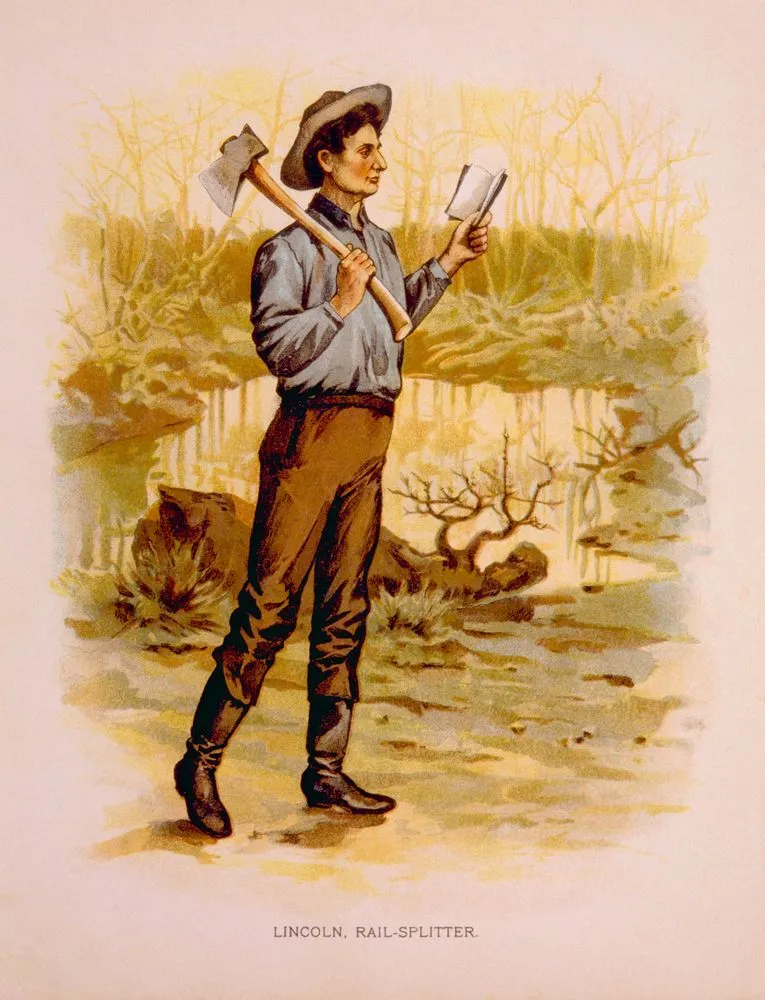
Another example is Abraham Lincoln’s axe. If both the axehead and the handle are replaced at different times, is the axe still the axe that Abe Lincoln swung?
A common version discussed in law school is that if a murder weapon has all of its parts replaced at different times, would it still be the weapon used in the murder?
So, Is There an Answer?
If you have read this far hoping for a tidy verdict, here is the honest news: there isn't one. What philosophers have built instead are rival frameworks, and which "answer" you get depends on which framework you accept.
One camp, known as endurantism (or three-dimensionalism), holds that an object is wholly present at every single moment of its existence. On this view the ship simply endures through its repairs, staying one and the same thing even as its planks come and go, much as you remain you while your cells are quietly swapped out. Gradual replacement is just something the ship lives through.
A rival camp, perdurantism (or four-dimensionalism), argues that objects are stretched out in time the way they are stretched out in space. Just as the ship has a bow-part and a stern-part, it also has a Monday-part and a Tuesday-part, each one a "temporal part" of a larger whole that the philosopher David Lewis pictured as a kind of "spacetime worm." On this reading the puzzle dissolves: the patched ship and the ship rebuilt from the old timbers are simply two different bundles of temporal parts that happen to overlap for a while.
A third view, mereological essentialism (associated with the 20th-century philosopher Roderick Chisholm), takes the strict line that a thing has its parts essentially. Change even one plank and, philosophically speaking, you no longer have the numerically identical object. By that standard the ship stopped being the Ship of Theseus the moment the first board was pried loose.
Notice that none of these is a fact you can go out and measure. They are competing rules for how we decide to use the word "same." That is why the paradox has stayed unsolved for two thousand years: the disagreement isn't really about the ship, it's about what we mean by identity.
The Same Puzzle, From a Greek River to a British Sitcom
Plutarch may have given us the ship, but the underlying worry is older still. Around 500 BCE, roughly six centuries before Plutarch wrote, the Greek philosopher Heraclitus was already wrestling with sameness and change. His one genuinely surviving river fragment observes that on those who step into the same rivers, "other and other waters flow." The snappier version you have probably heard, that you cannot step into the same river twice, appears to be a later paraphrase popularized through Plato rather than Heraclitus' own words. Either way, the question is the same as Theseus' ship: if the water is never the same, in what sense is it the same river?

The puzzle keeps resurfacing in homelier disguises, too. Handymen know it as "grandfather's axe," the axe that has had both its head and its handle replaced more than once. British readers may recognize it instantly from a 1996 episode of the BBC sitcom Only Fools and Horses, in which the road sweeper Trigger proudly shows off a council award for keeping the same broom for 20 years, before cheerfully admitting it has had "17 new heads and 14 new handles." How, a colleague asks, can it possibly be the same broom?
Even Marvel has had a turn. In the 2021 series WandaVision, the android Vision defuses a standoff with a second version of himself by walking through the Ship of Theseus with him. They reach a very philosopher-friendly truce: neither reconstruction is the "true" ship, so both have an equal claim to be it. Two thousand years on, Theseus' rotting planks are still doing their work.
A Final Word
According to Aristotle, four “causes” combine to make a thing what it is: its material (the stuff it’s made of), its form (its shape and arrangement), its efficient cause (whoever or whatever brought it into being) and its final cause (its purpose). For Aristotle, the form is what really pins down identity. So the patched ship would very much remain the original Ship of Theseus, because its form (and its purpose as Theseus’ commemorative vessel) carries on unchanged, regardless of the timbers that fill it out.
However, this view has been thoroughly argued over by many philosophers since. John Locke, in his 1689 Essay Concerning Human Understanding, anchored the identity of living things in the continuity of the same organized life, not in the matter that happens to make them up at any moment. Hobbes leaned toward the rebuilt-from-original-parts ship as the “true” Ship of Theseus. Modern thinkers like David Wiggins and Peter Geach kept the argument alive into the 20th century.
The paradox does not have a clear answer. While it is open to interpretation, the most common modern reply is that the ship and the wooden parts that make it up are two different objects which happen to occupy the same space at the same time. Change the parts gradually, and the ship persists; pile the original parts back together, and you have manufactured a second, distinct ship that looks just like the first.
References (click to expand)
- Our Bodies Replace Billions of Cells Every Day. Scientific American
- Ship of Theseus: Definition, Examples, & Solutions. Encyclopaedia Britannica
- Relative Identity. Stanford Encyclopedia of Philosophy.
- Identity Over Time. Stanford Encyclopedia of Philosophy.
- Plutarch, Life of Theseus. The Internet Classics Archive, MIT.
- The Ship of Theseus. The Philosophy Foundation.
- Temporal Parts. Stanford Encyclopedia of Philosophy.
- Heraclitus. Stanford Encyclopedia of Philosophy.
- Trigger (Only Fools and Horses). Wikipedia.
- WandaVision: Ship of Theseus Explained. Den of Geek.