Science and science fiction inspire each other. Real science gives the genre its backbone, while science fiction influences technology by handing scientists ideas to chase, from the World Wide Web to flip phones. Treating sci-fi as a hunting ground for inventions, innovators have turned many fictional concepts into reality. That, in part, is the purpose of science fiction: imagining what might one day be possible.
Self-tying Nike shoes and commercial hoverboards might not be a reality just yet, but thanks to science and technology, G.I.D.E.O.N or J.A.R.V.I.S don’t seem to be denizens of such a distant future. Most of us take the wonders of science fiction with a grain of salt, but that’s not the case for scientific visionaries. For them, the genre is a social laboratory, a minefield of ideas and inspiration. Science fiction is an extension of human creativity with science as its backbone. It somewhat resembles the “chicken or the egg” problem within the world of innovation.
Science Fiction Prototyping
In today’s age of free scientific thinking and reasoning, the line of distinction between science fact and science fiction seems to have blurred. The sci-fi world is a veritable wonderland of ideas for people who want to create or design the future.
Brian David Johnson, a Futurist at Intel (sounds like a made-up profession, but isn’t) came up with a brilliant concept called “Science Fiction Prototyping” around 2010. This is a type of research that creates science fiction prototypes, such as movies, short stories, and comics, and then uses them as tools to explore how a new invention or design might affect society.
Basically, they use current science and tech facts to create hypothetical futuristic scenarios. They weave the situations around a particular scientific development (say automated air travel), and involve societal elements that directly or indirectly interact with the new development (example: the passengers of that unmanned flight).
These imaginary settings act as prototypes for scientists and futurists that help them weigh the pros (has sensors to detect flying birds from miles away) and cons (lacks a pilot’s intuition) of a particular idea. These prototypes and the results of such mental experiments can change or improve the concept.
Even before science fiction prototyping became a serious thing, science fiction has been shaping the world for quite a while. Be it in the form of literature or visual media, sci-fi has always tingled the grey matter of innovators.
Impact Of Fiction Literature On Science And Technology
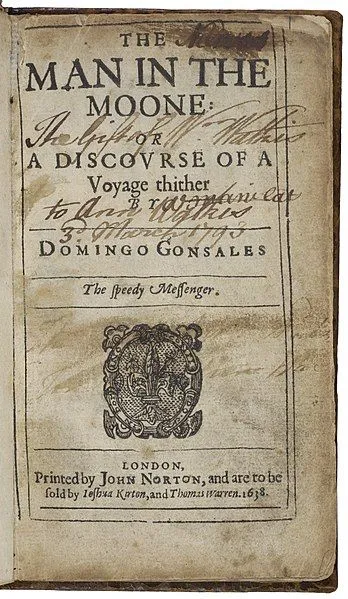
Before the scientific revolution, questioning the beliefs and teachings of the church would get people sent straight to the dungeons. Therefore, academics supported and broadcasted new scientific ideas, like the heliocentric theory, under the cloak of fiction. In the book “The Man in the Moone” (published in 1638 and often called one of the first science fiction novels in the English language), the author Francis Godwin uses science fiction to support the school of thought brought forward by thinkers like Tycho Brahe, Copernicus, Kepler, and Galileo.
The technology and process that made it possible to take “one small step for man” was predicted almost a century ago in a science fiction novel “From The Earth to the Moon”. In the novel, Jules Verne writes about lunar spacecraft and retro-rockets whose physical descriptions and functionality coincided closely with that of the Apollo-11. His novel also predicted a splash landing of the shuttle into the Pacific Ocean. Uncanny, right?
The World Wide Web, which is making it possible for you to read this, was invented by Tim Berners-Lee, a British scientist at CERN. His idea to connect the computing powers of different computers came from futurist/science fiction genius Arthur C. Clarke’s 1964 short story “Dial F for Frankenstein”. In the story, there is mention of interconnected telephones that act as a single brain, communicate with each other using codes, and ultimately try to take over the world.
In the futuristic novel “The World Set Free” by H.G. Wells, written in 1913, he describes a 20th-century technology that uses a radioactive material “Carolinum” to generate energy by inducing a degenerative process. The book left a mark on physicist Leo Szilard (later co-creator of the first nuclear reactor with Enrico Fermi), who read it in 1932 and the following year came up with the concept of a nuclear chain reaction. Starting in 1939, the two scientists worked together on a reactor driven by neutron-induced uranium fission, and in December 1942 their Chicago Pile-1 achieved the first self-sustaining chain reaction. And so, the atomic era began!
Even everyday objects like credit cards, earphones, and automatic doors appeared in science fiction literature long before they were invented.
Impact Of Sci-fi Motion Pictures On Science And Technology
Stanley Kubrick and Arthur C. Clarke’s brainchild “2001: A Space Odyssey” is a cult classic sci-fi movie, even more than half a century after its initial release in 1968! The sheer genius of the detailed scientific speculations is still baffling after all these years. In an era when mankind hadn’t even ventured beyond Earth’s orbit, the movie portrayed a space station (almost like the ISS) orbiting the earth with astronauts working on it.
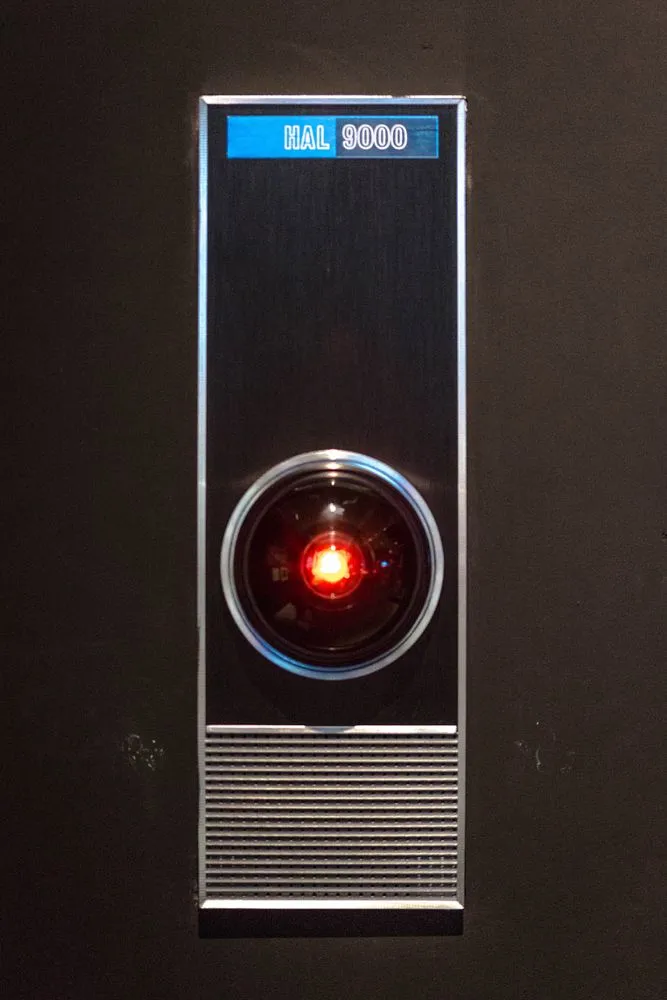
The space stations had flat-screen monitors and inflight entertainment systems, and the star of all was the sentient computer crew member (artificial intelligence) HAL 9000. Unfortunately, unlike the AI we are aware of, HAL had its own mind and ended up going on a killing spree. Another shocking but accurate depiction made in the movie was people’s extreme dependence on technology, which doesn’t sound much like fiction at all anymore.
Moving on to a positive note… remember the really cool Motorola flip phones (No, not the new touchscreen ones) that you would whip open before talking? Decades before they hit store shelves, a strikingly similar device appeared in Star Trek back in 1966: the fictional “communicator” that the crew would flip open with a flick of the wrist. That image stuck. Motorola even named its 1996 StarTAC, one of the first true flip phones, in a nod to the show. Martin Cooper, the Motorola engineer who built the first-ever handheld mobile phone (the brick-like DynaTAC, demonstrated in 1973), has said the communicator was on his mind, though he credits the wrist radio worn by comic-strip detective Dick Tracy as his earliest spark.
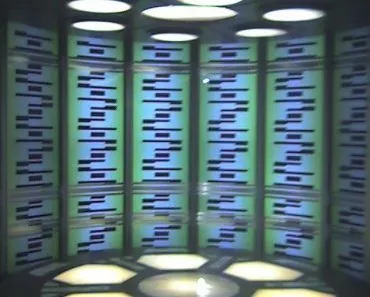
That show even featured PADD (Personal Access Display Device), which was a keypad-less device they could operate by touch. Doesn’t sound very exciting, right? But just take a second and remind yourself that this was 1966. The majority of the world was still using rotary dial phones. Star Trek’s visionary tech left its mark on real engineers too: Steve Perlman, then at Apple, has said a scene from Star Trek: The Next Generation helped inspire him to create “QuickTime”, the multimedia software that paved the way for digital video and audio playback!
The Star Wars universe created their expansive narrative around the concept of exoplanets, but that happened decades before mankind had even discovered the first exoplanet. Those same movies have gone on to inspire tech like holograms, laser weapons (though not exactly lightsabers), hovercrafts and bionic limbs, among many others.
Conclusion
Science fiction has clearly driven the human imagination “to boldly go where no man has gone before”. Not only has this genre influenced new designs and ideas, but for many, it is something that inspired them to pursue science and technology as a career path. Major advancements in technology aren’t acutely scary (like a robot uprising), so we often take them for granted, or forget where those ideas were born. Science fiction prototyping is one critical tool that will help scientists continue molding a better world for everyone.
After all, as this article has shown, we build our future from great imagination of the past!
References (click to expand)
- Science Fiction Prototyping - Medium. Medium
- Ten Inventions Inspired by Science Fiction. Smithsonian
- Science Fiction Prototyping: Designing the Future with Science Fiction | Morgan & Claypool books | IEEE Xplore - ieeexplore.ieee.org
- When science fiction inspires real technology. MIT Technology Review
- Hutton, S. (2005, May 1). The Man in the Moone and the New Astronomy: Godwin, Gilbert, Kepler. Études Épistémè. OpenEdition.
- 'Star Trek' Is Right About Almost Everything. National Geographic
- Bizony, P. (2018, March). The ageless appeal of 2001: A Space Odyssey. Nature. Springer Science and Business Media LLC.
- December 2, 1942: First self-sustained nuclear chain reaction. APS News. American Physical Society.