Table of Contents (click to expand)
The naturally occurring benzene in gasoline gives off a sweet aromatic smell that can briefly trigger the brain's reward pathway and stir up nostalgic memories, which is alluring to some people.
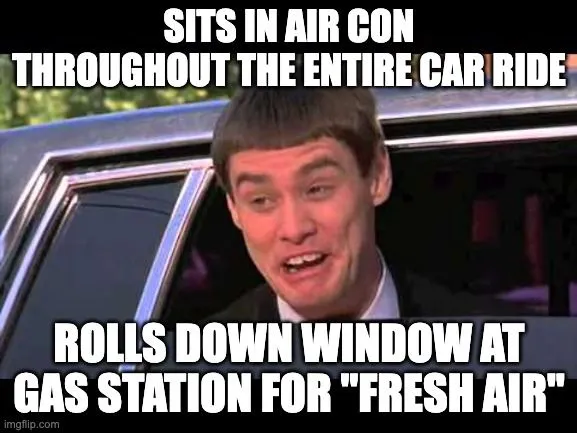
Have you ever rolled down your windows at a gas station just to take a big whiff, but then found yourself to be the only weirdo doing so?
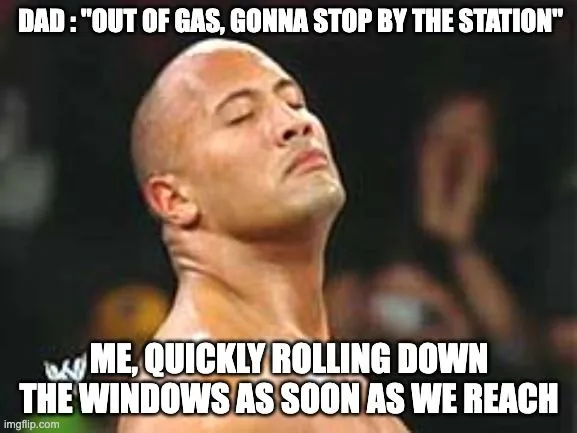
Firstly, don’t worry… you’re not alone. I’d be pulling up right behind you doing the same thing! Secondly, there’s a perfectly reasonable scientific explanation behind this seemingly odd desire.
What Makes Fuel Smell Good?
Gasoline is a complex mixture of over 150 chemical compounds, many of which are dangerous to our health, according to a public health statement issued by the CDC. The compound most often credited with the strong, sweet, gassy smell that some of us love is a hydrocarbon called benzene, along with related aromatic molecules like toluene and xylene.
To be precise, benzene isn’t deliberately added. It occurs naturally in crude oil and persists into refined gasoline as part of the aromatic hydrocarbon fraction that helps boost octane. Aromatics give gasoline that characteristic sweet, slightly chemical scent. Because benzene is a known carcinogen, regulators have steadily reduced how much can remain in fuel; in the US, the EPA’s Mobile Source Air Toxics rule has capped average benzene content at 0.62% by volume since 2011 (with a 1.3% upper limit), so today’s gasoline smells less benzene-heavy than it did decades ago.
Fair warning, the activation of the mesolimbic pathway to release dopamine is how most drugs of abuse work their evil magic. The feeling you get when there is a burst of dopamine in your system is what makes something addictive. So, casually smelling Benzene while filling your petrol tank is harmless, but intentionally sniffing it can cause addiction and health issues.
What Does Benzene Smell Like?
If you stripped benzene out on its own, what would actually hit your nose? On paper it sounds almost pleasant. Benzene (chemical formula C6H6) is a colorless to light-yellow liquid, and the agencies that handle it for a living describe its smell in surprisingly inviting terms. The US National Institute for Occupational Safety and Health (NIOSH) lists it as having an aromatic odor, while the EPA's hazard summary calls the scent sweet. The CDC's toxicology arm (the ATSDR) sticks to the obvious comparison and simply calls it petroleum-like. Put those together and you get exactly the note people chase at the pump: sweet, sharp, and unmistakably gassy.

That word aromatic is doing double duty here. In everyday speech it just means fragrant, but in chemistry it has a precise meaning: benzene is the textbook aromatic ring, six carbon atoms locked in a flat hexagon with their electrons shared evenly around the loop. Toluene and xylene, benzene's close cousins in gasoline, are built on the same ring and smell much the same way. That shared structure is why so many fuels, solvents and glues land on the same sweet, slightly chemical note.
There is a catch worth repeating, though. Benzene's pleasant smell is a terrible safety alarm. By the time the odor is strong and obvious, the concentration in the air is already far above the levels considered safe to breathe over the long run, and benzene is a recognized human carcinogen. A passing whiff at the gas station is one thing; deliberately seeking out the smell in an enclosed space is exactly what you should not do.
Is It Only Fuel?
Interestingly, gasoline isn’t the only thing that contains Benzene. Many other everyday items also release aromatic hydrocarbons (and sometimes traces of benzene): nail polish remover, oil-based paints, glues, marker pens, and the rubber cement smell of fresh tennis balls all share that same family of vapors. If you have ever found yourself lingering over those scents, the chemistry (and the dopamine response) is similar.
Is It Normal To Like The Smell Of Gasoline?
This is the part most people quietly want answered: does enjoying the smell make you strange, or somehow predisposed to harder habits? The short answer is no. Liking the smell of gasoline is common and, on its own, says nothing worrying about you. For every person who takes a deep breath at the pump, there is another who finds the same vapor nauseating. Both reactions are perfectly normal, and the difference usually comes down to two ordinary things: your memories and your brain wiring.

Smell is wired into the brain differently from sight or hearing. Most senses route their signals through a relay station called the thalamus first, but smell takes a shortcut. As Harvard neuroscientist Venkatesh Murthy puts it, "the olfactory signals very quickly get to the limbic system," the cluster that includes the amygdala and hippocampus, the brain's centers for emotion and memory. Because the path from nose to feeling is so direct, a single scent can yank up a vivid memory and the mood that came with it almost instantly. This is the famous Proust phenomenon, named for the novelist whose narrator was flooded with childhood memories by a smell and taste. If gasoline smells good to you, there is a decent chance your brain has quietly filed it next to summer road trips, a parent tinkering in the garage, or your first car. (We dig into this scent-memory link in more detail in our piece on why smells trigger memories.)
Layered on top of that nostalgia is the chemistry we covered earlier: inhaled aromatic hydrocarbons can give the brain's reward pathway a brief nudge, which simply adds to the appeal. None of this means a casual liking for the smell signals a problem. The concern is behavioral, not the preference itself. Repeatedly and deliberately inhaling fuel vapor to get high (a practice called inhalant abuse) is genuinely harmful, but that is a world away from enjoying a passing whiff at the gas station.
Conclusion
So, the reason you flare out your nostrils to get a nice big whiff at gas stations is because of the strong, yet pleasant smell of the benzene and related aromatic compounds that occur naturally in gasoline. Whether they do this by eliciting a fond memory, releasing a shot of dopamine, or a combination of both is still being researched.
References (click to expand)
- Gasoline, Automotive | Public Health Statement | ATSDR. The Centers for Disease Control and Prevention
- RIEGEL, A. C., & FRENCH, E. D. (2006, January 24). Abused Inhalants and Central Reward Pathways. Annals of the New York Academy of Sciences. Wiley.
- Pierce, R. C., & Kumaresan, V. (2006, January). The mesolimbic dopamine system: The final common pathway for the reinforcing effect of drugs of abuse?. Neuroscience & Biobehavioral Reviews. Elsevier BV.
- Gasoline Mobile Source Air Toxics | US EPA. The Environmental Protection Agency
- Hydrocarbon Toxicity: Practice Essentials, Pathophysiology .... eMedicine
- Gasoline, Automotive | Public Health Statement | ATSDR. The Centers for Disease Control and Prevention
- Benzene | NIOSH Pocket Guide to Chemical Hazards. The National Institute for Occupational Safety and Health (CDC)
- Benzene (71-43-2) Hazard Summary. The United States Environmental Protection Agency
- How scent, emotion, and memory are intertwined and exploited. The Harvard Gazette