Table of Contents (click to expand)
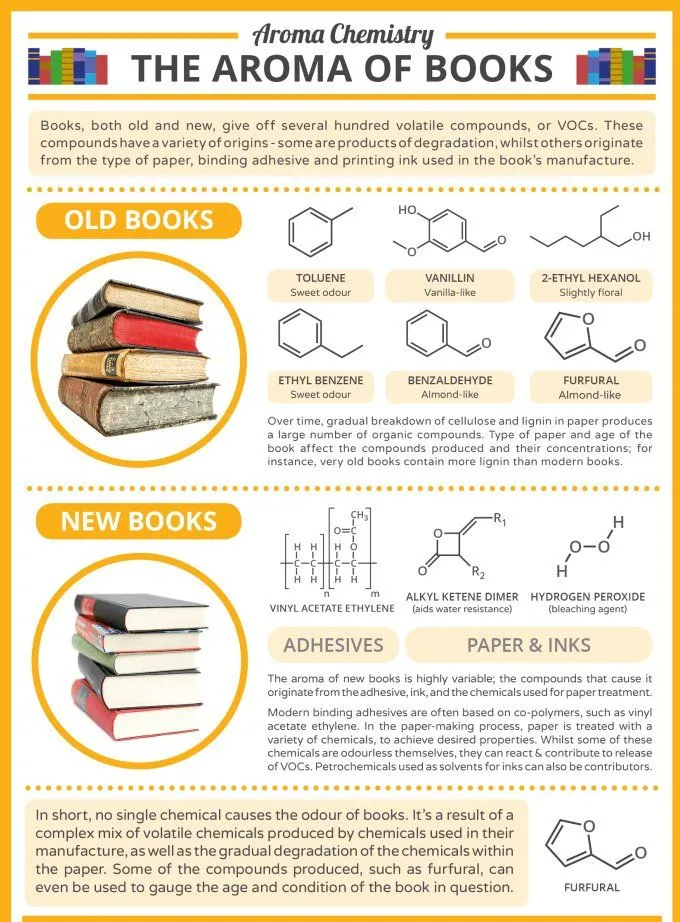
Books smell so good because of the volatile organic compounds their paper releases. In old books, the slow breakdown of cellulose and lignin gives off vanillin (vanilla), benzaldehyde (almond), furfural and toluene, creating that sweet, musty scent. New books smell of the chemicals, inks and adhesives used to manufacture and bind them.
Chris’ father gave him a book on his birthday. Immediately after ripping apart the packaging, Chris retrieved the book and gazed at it for a moment. His father thought that he must really like the stories in the book or the author, but in the next moment, Chris opened the book and stuck his nose into it.
His father shouldn’t have been so surprised, however… I’m sure many of you do the same thing.
Nothing, absolutely nothing can match the magical smell that comes out of books. Try pressing your nose against a Kindle or an iPad… it simply isn’t the same.
Smell: Old Or New?
Different people seem to like different smells when it comes to books. There are those people who like the smell of old books and there are others who like the smell of a book being opened for the first time. The aroma that emanates from books is caused by a number of chemical reactions – not just the sweet smell of great prose!
Old books have a sweet smell with notes of vanilla flowers and almonds, which is caused by the breakdown of chemical compounds in the paper, while new books smell like they do because of the various chemicals used when they are manufactured.
Why Do Books Smell?
The chemical breakdown, over a period of time, of the compounds within paper produce the smell. Paper consists of cellulose and small amounts of lignin (a complex polymer of aromatic alcohols). Paper that is even more fine contains less lignin than cheaper materials, like the paper used in newspapers.
Lignin is also what turns the color of old paper yellow, as it slowly oxidizes over the years into colored compounds and acids. Those acids, in turn, help break down the cellulose in the paper. Now, let’s get to the chemistry of that remarkable smell.
Old Books: The chemicals responsible for the sweet smell of old paper include benzaldehyde and 2-ethylhexanol (almond-like and faintly floral), vanillin (the vanilla note, a breakdown product of lignin), and furfural, toluene and ethylbenzene. Lignin breakdown also yields guaiacol, which adds a faint smoky edge. These compounds are released as the paper slowly degrades through a reaction called “acid hydrolysis”, in which acids in the paper attack its cellulose over many years. The result is that warm, sweet odor.
New Books: The smell of new books can be attributed to three factors: the paper itself (it smells good because of the chemicals used to manufacture it), the ink used to print the book, and the adhesives used in the process of book-binding.
If we look at the smell of paper itself, we would find that a lot of chemicals are used to manufacture paper (although it is largely manufactured from wood pulp). Furthermore, there are certain chemicals, such as sodium hydroxide (caustic soda), that are added to the paper to diminish its acidity and swelling of the fibers of the wood pulp used in the paper.
It’s true that the content of any book is the real purpose of purchase, but I can assure you, if you read a lot, then you are almost certainly a fan of that legendary book smell too!
What Does The Science Actually Say About Old Book Smell?
For a long time, the romance of old book smell was just that, romance. Then, in 2009, a team led by chemist Matija Strlič at University College London put it under the microscope. Their paper in the journal Analytical Chemistry, titled Material Degradomics: On the Smell of Old Books, did something clever: instead of cutting up rare documents to study them, they simply analyzed the gases drifting off the pages. They called the technique material degradomics, the idea being that the cocktail of chemicals a book exhales is a fingerprint of how its paper is breaking down.

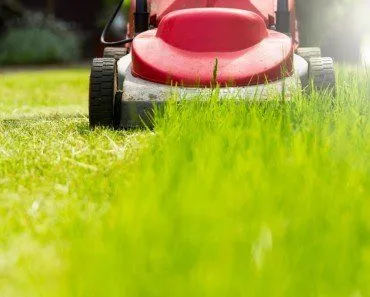
The team sampled the vapors from 72 historical papers dating to the 19th and 20th centuries. Strlič memorably described the resulting aroma as “a combination of grassy notes with a tang of acids and a hint of vanilla over an underlying mustiness.” That is the entire old-book experience in one sentence: the vanilla comes from vanillin, a direct breakdown product of lignin, those grassy notes echo the freshly mown lawn we all know, and the acidic, slightly sharp edge comes from the paper quietly digesting itself.
There is a practical payoff here, too. Because compounds like furfural are released as cellulose degrades, conservators can read those VOC levels almost like a check-up, gauging how far a book has decayed without ever touching it. So the next time you catch that sweet, musty scent, you are essentially smelling the slow chemistry of paper aging, the same signal a librarian uses to decide which volumes need rescuing first.
Is New Book Smell Toxic?
If old book smell is the scent of decay, new book smell is the scent of manufacturing. Cracking open a freshly printed book releases volatile organic compounds (VOCs) from the paper coatings, the ink and the binding adhesives, and that is exactly what reaches your nose. Because the word VOC shows up so often in warnings about paint, carpet and new-car interiors, it is fair to ask: is that lovely new-book whiff actually doing you any harm?

For everyday readers, the reassuring answer is no. VOCs are everywhere indoors, off-gassing from furniture, cleaning products and cosmetics, and as health agencies stress, the risk from any chemical depends on how much you breathe in, and for how long. A book sitting open on your lap simply does not deliver the concentrations or the years of exposure that trigger the headaches, irritation or longer-term effects associated with heavy VOC exposure. Preservation scientists make the same distinction: the VOCs a book gives off can threaten the long-term survival of the paper, yet at the levels found in a normal room they are not considered a meaningful health risk to people.
So sniff away. The compounds behind that crisp new-book scent are present in such tiny amounts, and for such short bursts, that enjoying them is closer to smelling a flower than to huffing solvents. If you are especially sensitive to chemical odors, opening a window or letting a brand-new book air out for a day clears most of the smell anyway.
References (click to expand)
- Sen D. J. (2016). Chemistry Plays Nostalgia Behind The Aroma Of Books. European Journal Of Pharmaceutical And Medical Research
- Pulp and Paper Making Processes - Princeton University. Princeton University
- Lignin - Wikipedia. Wikipedia
- How is a paper make? What's the use of sodium hydroxide in .... The Madsci Network
- Strlič, M. et al. (2009). Material Degradomics: On the Smell of Old Books. Analytical Chemistry. American Chemical Society
- 'Smell of old books' offers clues to help preserve them. ScienceDaily
- That 'Old Book Smell' Is a Mix of Grass and Vanilla. Smithsonian Magazine
- Volatile Organic Compounds in Your Home. Minnesota Department of Health
- Volatile Organic Compounds. American Lung Association